Tanzanite is the blue-violet gem variety of the mineral zoisite, and unlike almost every other gemstone on the market, it has a single known source: the Merelani Hills, a small stretch of land near Mount Kilimanjaro in Tanzania. Every tanzanite in circulation today was pulled from that one deposit. This guide covers what tanzanite actually is, why its color shifts depending on the angle you view it from, how to tell it apart from look-alikes, and how to wear and care for tanzanite jewelry. If you're comparing birthstones by month, our birthstone finder covers the full list.
What Tanzanite Actually Is
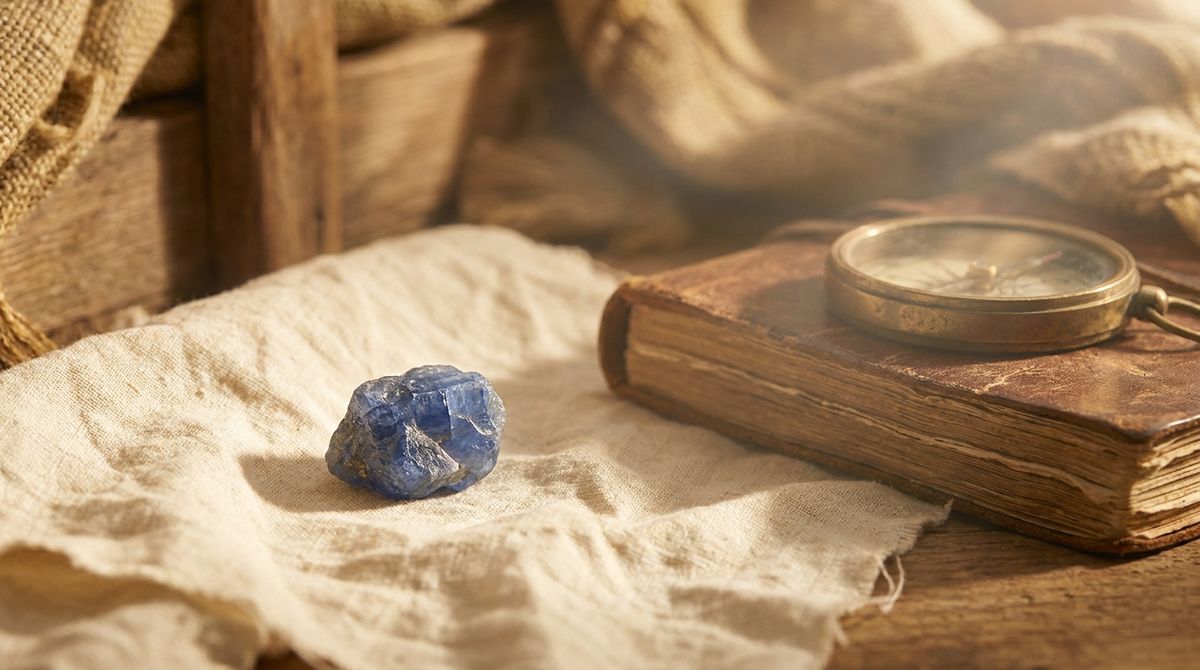
Tanzanite is a variety of zoisite, a calcium aluminum silicate mineral, colored blue-violet by trace amounts of vanadium. Most zoisite found in nature is an unremarkable brown or grayish color; tanzanite's signature blue-violet only shows up when the stone is heated, a standard and disclosed treatment used on nearly every tanzanite sold today. Left untreated, the rough tanzanite pulled from the ground looks closer to a dull brown than the saturated blue-violet seen in finished jewelry — heat is what unlocks the color the gem is known for.
On the Mohs hardness scale, tanzanite rates only 6 to 6.5, considerably softer than most gems set in fine jewelry, and it also has perfect cleavage — a plane along which the crystal can split cleanly if struck. That combination makes tanzanite more vulnerable to chipping and cracking than harder, tougher gems like sapphire, whose relative durability is covered in our sapphire meaning guide. It's a gem to wear with some care rather than the kind that shrugs off daily knocks.
Properties: Physical, Mental, and Metaphysical
Physical
Tanzanite's most distinctive physical trait is trichroism — pleochroism in three colors — meaning the stone can show blue, violet, and a burgundy or red-brown tone depending on the angle it's viewed from. A single rough crystal can display all three colors simultaneously along its different axes. Cutters take this into account deliberately, orienting the rough so the finished stone's face-up color favors the blue-violet that the market prizes, rather than the less desirable red-brown or overly violet angles. That decision, made at the cutting wheel, has a real effect on how blue or how violet any individual tanzanite ultimately reads.
Mental
In wellness and crystal traditions, tanzanite is described as a stone that encourages insight, transformation, and clear thinking — associations that lean on its relatively recent discovery and its striking, shifting color rather than any long folk history, since tanzanite has only been known to the wider world since the late 1960s. As with any gemstone's symbolism, covered in more depth in our different gemstones meaning guide, that's a belief carried by modern crystal culture and tradition, not a measured or scientific effect.
Metaphysical
Because tanzanite is such a young gemstone by trade standards, its metaphysical reputation is largely a product of the twentieth and twenty-first centuries rather than ancient lore. Some crystal traditions link its color-shifting nature to ideas of intuition and change, drawing a loose parallel to lapis lazuli, another deep blue-violet stone with a far older set of symbolic associations, detailed in our lapis lazuli meaning guide. None of these claims have a basis in science, and they're worth reading as belief and modern tradition rather than documented fact.
Discovery, Naming, and a Single Source on Earth
Tanzanite has one of the shortest histories of any major gemstone. It was discovered in 1967 in the Merelani Hills, near Mount Kilimanjaro in Tanzania, and to date it has never been commercially found anywhere else on the planet — every tanzanite on the market traces back to that one deposit. Geologists have pointed out that the specific combination of heat and pressure needed to form gem-quality blue-violet zoisite is remarkably rare, which is part of why no second source has ever turned up.
The gem was originally introduced to the trade under its mineralogical name, blue-violet zoisite — a name Tiffany & Co. considered too cumbersome for jewelry counters. In 1968, Tiffany renamed the stone "tanzanite," after Tanzania, the only country where it's found, and began marketing it under that name instead. The rebrand worked: tanzanite quickly became one of the best-known gemstone discoveries of the twentieth century. In 2002, the American Gem Trade Association (AGTA) added tanzanite to the modern birthstone list as an additional option for December, alongside turquoise and blue zircon, making it one of the newest birthstones on the calendar.
How to Tell Real Tanzanite From Look-Alikes
Because tanzanite's blue-violet color and relative rarity have made it desirable, it's been imitated by both synthetic materials and less valuable natural stones cut and colored to resemble it. Synthetic forsterite and color-treated synthetic corundum have both been sold as tanzanite substitutes; a jeweler with standard gemological equipment can usually separate these from genuine tanzanite through refractive index and other optical tests, since the substitutes don't share tanzanite's exact optical properties.
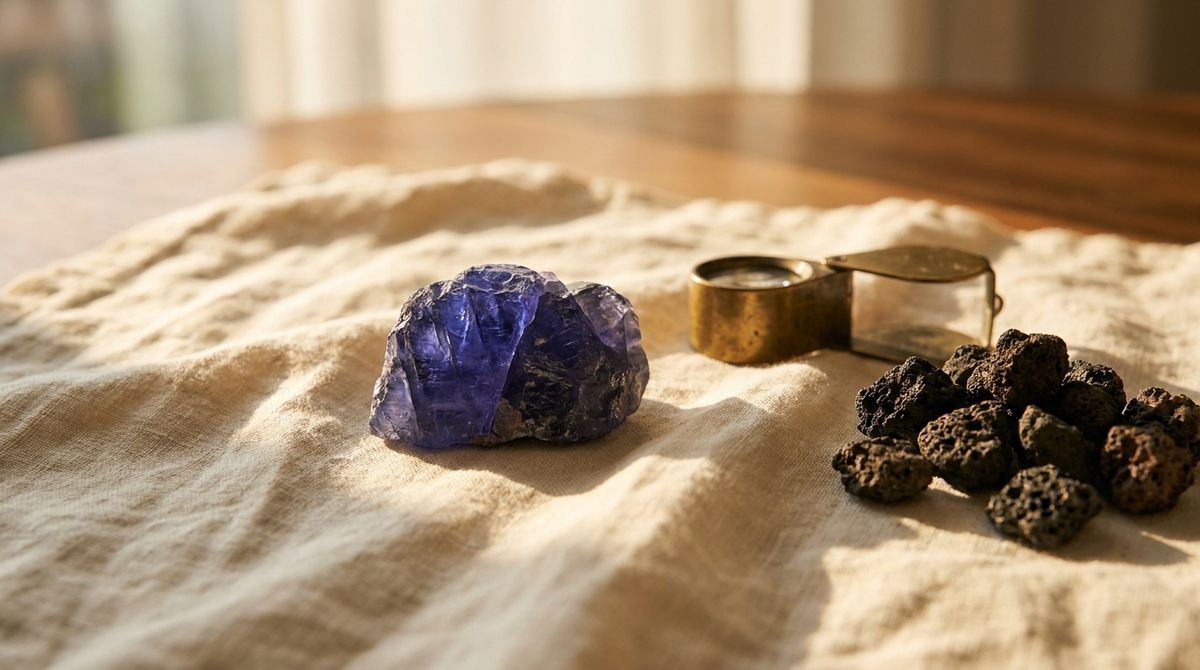
Tanzanite's trichroism is itself one of the more reliable identifying traits in a jeweler's hands — few materials show the same shift between blue, violet, and burgundy depending on viewing angle. Iolite, another pleochroic stone, is sometimes confused with tanzanite for this reason, but the two are mineralogically distinct and a trained eye or standard testing separates them reliably. If you're buying tanzanite represented as natural and heat-treated only, a gemological report from a recognized lab is the most reliable way to confirm that.
How to Wear and Care for Tanzanite Jewelry
Tanzanite's softness and perfect cleavage mean it's better suited to pieces that see occasional wear — pendants, earrings, and evening rings — than a ring worn every day for manual work. A sharp knock at the wrong angle can chip or split the stone along its cleavage plane, a risk that's much lower with harder, tougher gems.
Clean tanzanite jewelry with a soft cloth and mild soap and water, and avoid ultrasonic and steam cleaners, which can stress the stone along its cleavage plane and worsen any existing inclusions. Store tanzanite pieces separately from harder gems, since anything harder than 6 to 6.5 on the Mohs scale can scratch it if the pieces rub together in a jewelry box or drawer. Remove tanzanite jewelry before swimming, cleaning, or exercise, and avoid sudden temperature changes, which can also stress the stone.
For FARUZO's personalized pieces, which are made in stainless steel with a gold-, rose-gold-, or silver-tone plated finish, the same handling principle applies to any accent stone set into the piece: gentle cleaning, careful storage, and keeping the piece away from harsh chemicals and rough impact protects both the stone and the finish.
Frequently Asked Questions
Is tanzanite a real, officially recognized birthstone?
Yes. The American Gem Trade Association (AGTA) added tanzanite to the modern birthstone list in 2002 as an additional option for December, alongside the traditional turquoise and blue zircon.
Why is almost all tanzanite heat-treated?
Because tanzanite's rough is naturally a dull brown, and heating is what removes that brown tone and brings out the blue-violet color the gem is known for. It's a standard, widely disclosed practice in the trade, not a defect or a way of disguising a lesser stone.
Where does tanzanite come from?
Tanzanite has only ever been commercially found in one place: the Merelani Hills, near Mount Kilimanjaro in Tanzania. It was discovered there in 1967 and has never been found in commercial quantities anywhere else.
Is tanzanite durable enough for an everyday ring?
Not ideally. At 6 to 6.5 on the Mohs hardness scale, with perfect cleavage, tanzanite is softer and more prone to chipping than gems like sapphire. It's better suited to pieces worn occasionally, such as pendants and earrings, rather than a ring worn daily for manual work.
Why does tanzanite look like a different color depending on the angle?
Tanzanite is trichroic — pleochroic in three colors — meaning it can show blue, violet, and burgundy or red-brown depending on the viewing angle. Cutters orient the rough deliberately to favor the blue-violet face that the market prizes most.