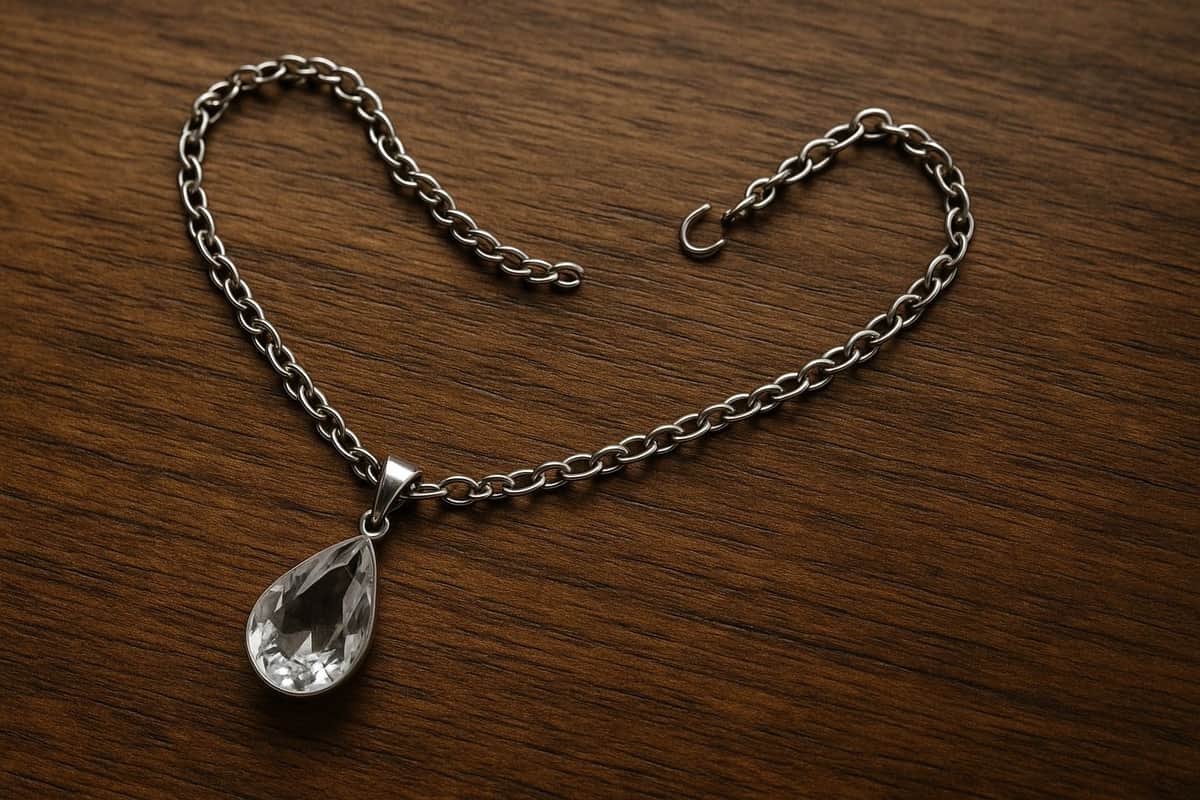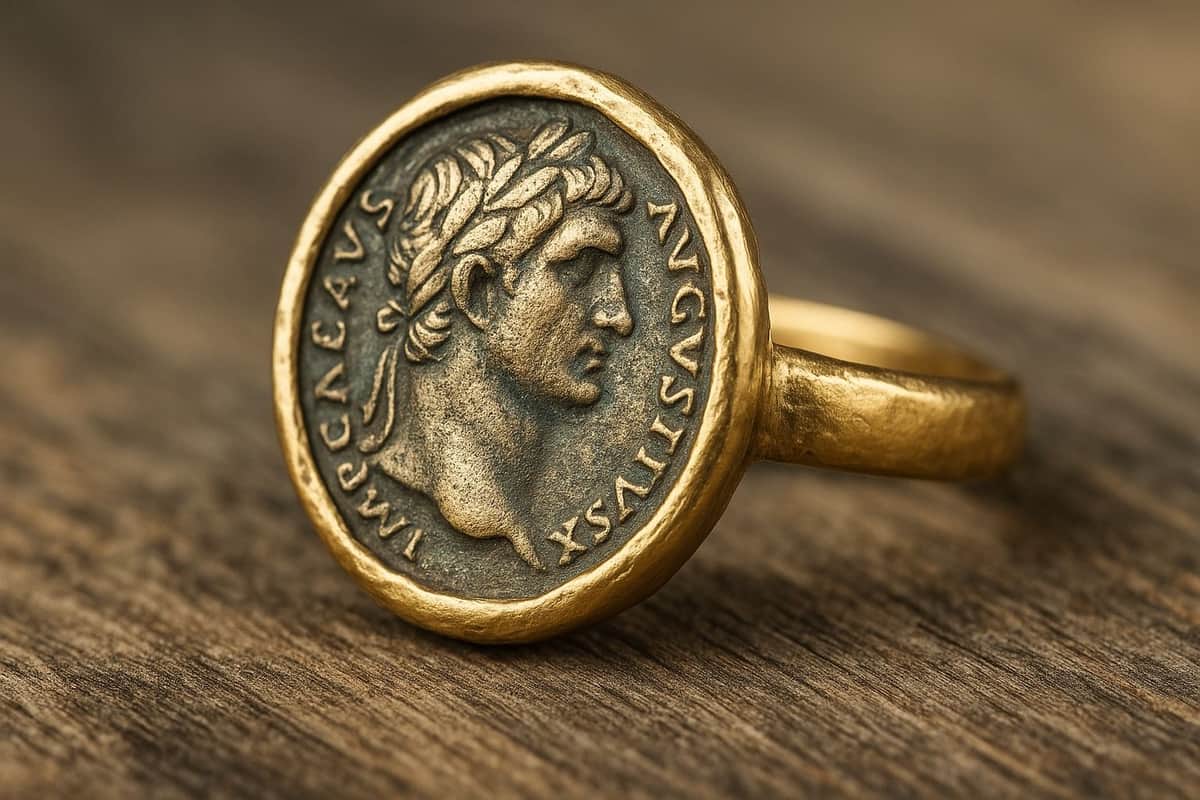
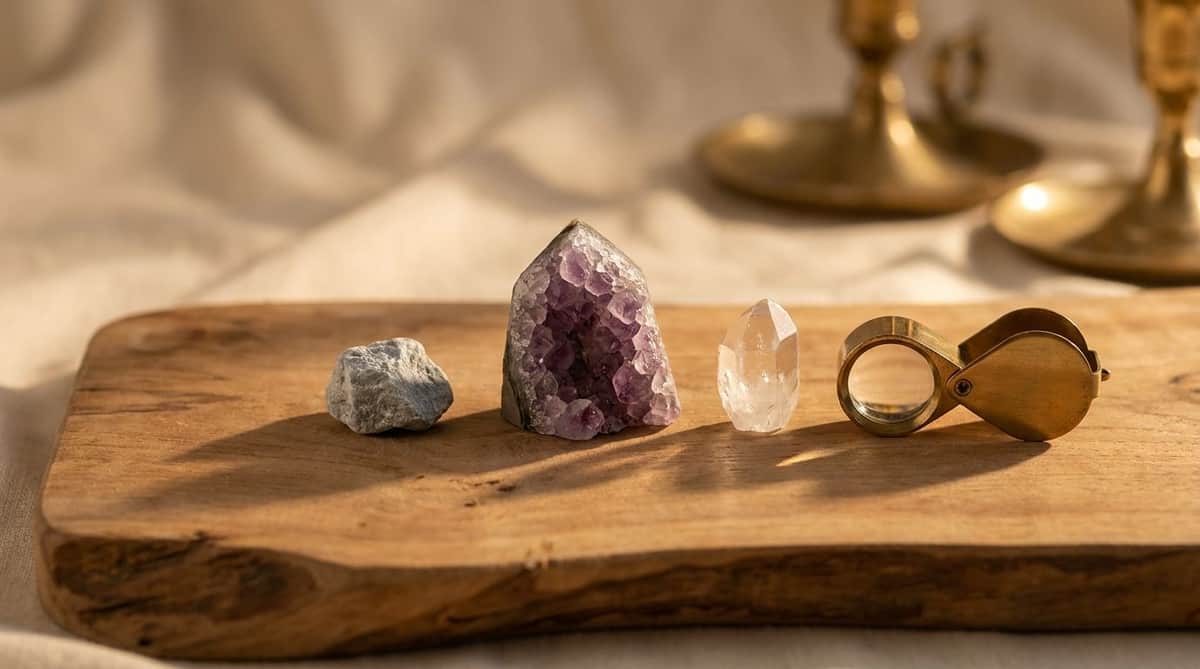
Let’s say you're buying a gemstone ring—or maybe even a custom necklace—and you’re wondering: *“Will this stone last? Is it going to scratch in a month?”*
This is where the Mohs Hardness Scale comes in.
It’s not just for geology nerds (though we love them). It’s a simple but powerful way to know how tough your gemstone actually is—and how it’ll hold up in everyday life.
Let’s break it down in plain English.
What Is the Mohs Hardness Scale? (No Jargon, Just Real Talk)
The Mohs Scale of Mineral Hardness was created in 1812 by Friedrich Mohs, a German mineralogist who wanted a simple system to compare minerals.
He asked one straightforward question: > *“Can this mineral scratch that one?”*
He ranked ten common minerals from softest (1) to hardest (10). It’s not a precise lab measurement—it’s a real-world way to figure out what can scratch what.
The Mohs Scale: Ranked 1 to 10 (With Examples)
Here's the original ten, in order, plus a real chart so you can see the jump in hardness at a glance:
- 1. Talc — baby powder, soapstone
- 2. Gypsum — plaster, drywall
- 3. Calcite — limestone, seashells
- 4. Fluorite — the fluoride in toothpaste
- 5. Apatite — close to tooth enamel
- 6. Feldspar — found in granite countertops
- 7. Quartz — amethyst, citrine, everyday sand
- 8. Topaz — often used in rings
- 9. Corundum — sapphire, ruby
- 10. Diamond — engagement rings, cutting tools
💡 Need a mental shortcut? If a mineral can scratch glass (about 5.5), it’s probably quartz or harder. If it can’t scratch your fingernail (about 2.5), it’s really soft.
How to Read the Mohs Scale Without Overthinking It
- Higher number = harder stone
- Harder stones can scratch softer ones
- Softer stones are more likely to get damaged over time
But here's the catch: the Mohs scale is relative, not linear. So diamond (10) isn’t just a little harder than corundum (9)—it’s a lot harder. The jump between levels isn’t equal.
Why This Scale Still Matters (Especially for Jewelry Buyers)
You don’t need to be a scientist to use the Mohs scale. If you wear jewelry, especially rings, you’re already dealing with hardness every day.
Here’s how:
- Rings face constant wear — scraping against keys, door handles, countertops.
- Bracelets and watches get knocked around.
- Earrings and necklaces? Less contact = safer for softer stones.
Knowing a gemstone’s hardness tells you how careful you’ll need to be.
Where Does Gold Rank on the Mohs Scale? (And Other Popular Gems)
Gold surprises people here. Pure (24k) gold is soft — only about 2.5 to 3 on the Mohs scale, closer to gypsum than to any gemstone. Wear a ring in solid 24k gold and it will pick up dents and scratches fast. That's exactly why fine jewelry is almost never made in pure gold: jewelers alloy it with metals like copper, silver, or zinc to make
10k, 14k, and 18k gold — each a different balance of purity and everyday durability.
For the gemstones people search for most alongside gold: garnet and agate both sit around 6.5–7.5 (garnet is a ring-safe, everyday stone; agate is a quartz variety, so it shares quartz's toughness), and emerald runs 7.5–8 but is graded down in real-world wearability because emeralds are naturally included and prone to fracturing even though the raw mineral is fairly hard.
Mohs Hardness Scale for Popular Gemstones (Amethyst, Diamond, Emerald & More)
These are the exact gems people search for most — here's precisely where each one falls on the Mohs scale, in plain terms.
Amethyst Mohs Hardness Scale: How Hard Is Amethyst?
Amethyst sits at 7 on the Mohs hardness scale — the same rating as quartz, since amethyst is a quartz variety. That's durable enough for daily rings and bracelets, though it can still be scratched by harder stones like topaz, sapphire, or diamond, so store it separately from those in a jewelry box.
Diamond Mohs Hardness Scale: Why Diamond Is a 10
Diamond is the hardest natural material on Earth, ranked exactly 10 on the Mohs scale. Nothing else sold in jewelry can scratch it, which is why diamond is the standard choice for engagement rings and everyday pieces that need to resist scratching for decades.
Emerald Mohs Hardness Scale: 7.5–8, But Handle With Care
Emerald ranks 7.5 to 8 on the Mohs scale — hard enough to resist scratches, but emeralds are almost always naturally included (visible internal flaws), which makes them prone to chipping or cracking from a sharp knock. Save emerald rings for occasions where the stone won't take a hit.
Agate Mohs Hardness Scale: A Durable Quartz Variety
Agate is a banded quartz variety and ranks 7 on the Mohs scale, the same as amethyst and citrine. That's tough enough for rings worn daily, and one reason agate shows up so often in statement and stacking pieces.
Crystal Hardness Scale: Where Does Quartz Fall?
“Crystal” in jewelry usually means quartz-family stones — amethyst, citrine, agate, rock crystal — and all of them land at 7 on the Mohs scale. That's the exact reference point Friedrich Mohs used when he built the scale: quartz is literally step 7 of his original ten minerals.
Onyx Mohs Hardness Scale: How Hard Is Onyx?
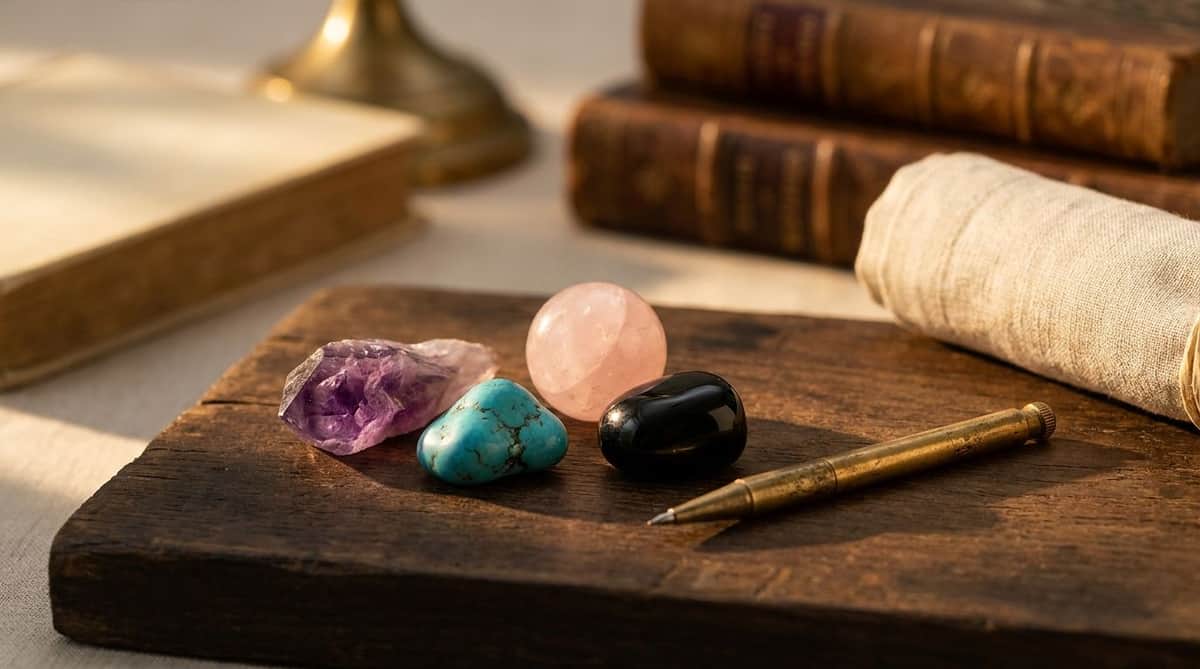
Onyx is a banded variety of chalcedony (microcrystalline quartz) and ranks 7 on the Mohs scale, the same as agate and amethyst. That's tough enough to hold a deep, glossy polish through years of daily wear in rings and pendants without dulling.
Turquoise Mohs Hardness Scale: Why It Needs a Protective Setting
Turquoise ranks only 5 to 6 on the Mohs scale, softer than window glass and a steel knife blade. It scratches more easily than quartz-family stones, so turquoise does best in a bezel or protective setting, and is safer set in earrings or a pendant than in a ring worn every day.
Moonstone Mohs Hardness Scale: A Feldspar, Not a Quartz
Moonstone is a feldspar, not a quartz variety, and sits at 6 to 6.5 on the Mohs scale — about the same as glass. It can pick up fine scratches from grit or from rubbing against harder stones, so store it separately and skip it for rings that see rough daily use.
Rose Quartz Mohs Hardness Scale: Durable Like Every Quartz
Rose quartz is, as the name says, a quartz variety, so it ranks 7 on the Mohs scale — identical to amethyst, citrine, and agate. That makes it one of the more forgiving pink gemstones for daily-wear rings and bracelets.
💎 Quick Gemstone Hardness Tier List
- Daily-Wear Safe (8–10): diamond, sapphire, spinel, ruby — great for rings & bracelets
- Caution with Care (6–7.5): topaz, quartz (amethyst, citrine, agate), garnet — good for pendants or earrings
- Handle with Love (below 6): opal, pearl, turquoise, malachite — best for occasional or dress wear
How the Mohs Scale Helps in Jewelry Shopping
Let’s say you're picking out a custom necklace. You love the look of opal—but should you get it in a ring or a pendant?
Here’s how the Mohs scale helps you decide:
- Opal (Mohs 5.5–6.5) is soft, so in a ring, it’ll take a beating.
If you're set on a softer birthstone, our birthstone rings are built with protective settings that make sense for exactly this tradeoff.
- But in a necklace or pair of earrings, it’s way safer—it won’t be rubbing against things constantly.
Same goes for pearls. Gorgeous? Yes. Durable? Not so much. Mohs 2.5–4.5 = very soft.
Jeweler’s Pro Tip: It’s Not Just About Hardness
A harder stone isn’t always tougher. - Hardness means scratch resistance. - Toughness means resistance to breaking or chipping.
For example:
- Diamond (Mohs 10) is super hard—but can still chip if hit the wrong way.
- Jade (Mohs ~6.5) isn’t that hard—but is very tough and rarely breaks.
So when buying jewelry, especially for daily wear, look for stones that are both:
- Hard enough to resist scratches
- Tough enough to handle impact
Real-Life Jewelry Examples Based on the Mohs Scale
- Diamond (10): engagement rings, everyday wear — good for, but can chip if struck at an angle
- Sapphire (9): all types of jewelry — very durable
- Garnet (~7): rings, pendants, everyday wear — durable, though inclusions can weaken a stone
- Agate (~7): statement rings, pendants — a tough quartz variety, holds up well to daily knocks
- Emerald (7.5–8): necklaces, special-occasion rings — can fracture due to natural inclusions
- Amethyst (7): pendants, earrings — scratches over time in rings
- Opal (5.5–6.5): earrings, necklaces — avoid water & rough surfaces
- Pearl (2.5–4.5): occasional-wear necklaces — keep away from perfume, sweat, sun
❓ Still Confused? Here Are Some FAQs (Real Questions People Ask)
Can a gemstone with the same Mohs rating scratch another one?
Usually not, unless one is slightly higher or there's a huge difference in polish or cut.
Does hardness mean it won’t break?
Nope. Hardness = scratch resistance. Not break resistance. That’s toughness, and it’s a whole different chart.
Can I wear soft stones every day?
Yes—but you’ll need to be extra cautious. Choose protective settings, and avoid things like yard work, gym sessions, or harsh cleaning chemicals. That caution about protective settings and rough handling is squarely aimed at stones like malachite, sitting at just 3.5–4 on the scale.
Is gold hard or soft on the Mohs scale?
Soft. Pure gold is about 2.5–3 on the Mohs scale — soft enough to scratch with a fingernail if you press hard. That's why jewelry gold is alloyed into karats (10k, 14k, 18k) rather than sold pure; the added metals raise durability for daily wear.
📝 Jewelry Buyer’s Recap (What to Remember)
Here’s your simple cheat sheet before buying:
- For daily rings: Stick to Mohs 8+.
- For pendants/earrings: You can go softer—but protect them.
- Opals & pearls are beautiful but fragile—save for gentle wear.
- Always check both hardness and toughness, especially for rings.
- A great jeweler will help you pick a setting that protects the stone.
Final Word: Mohs Isn’t Just for Science Class—It’s a Buyer’s Best Friend
When you know a stone’s hardness, you’re not just buying something pretty. You’re buying something that fits your lifestyle, your habits, and your expectations.
So next time you fall in love with a gemstone—ask about its Mohs rating. It might just save you from heartbreak (and scratches).
Want more practical buying guides like this one? Browse the rest of our Jewelry 101 guides for care, sizing, and material tips.