A men's leather bracelet is the lowest-maintenance personalized piece most guys will ever wear — no polishing, no tarnish, and it only looks better as it breaks in. But "leather bracelet" covers a wider range of actual products than most buyers realize: braided cord, flat engraved cuffs, wrap styles, real hide versus vegan alternatives, and clasps that range from a simple magnetic closure to a full buckle. Here's how to tell them apart, what actually holds up to daily wear, and how to get the fit right before you order.
The Four Styles You'll Actually See
Almost every men's leather bracelet on the market falls into one of four silhouettes, and the style decides as much about comfort and durability as the leather itself does:
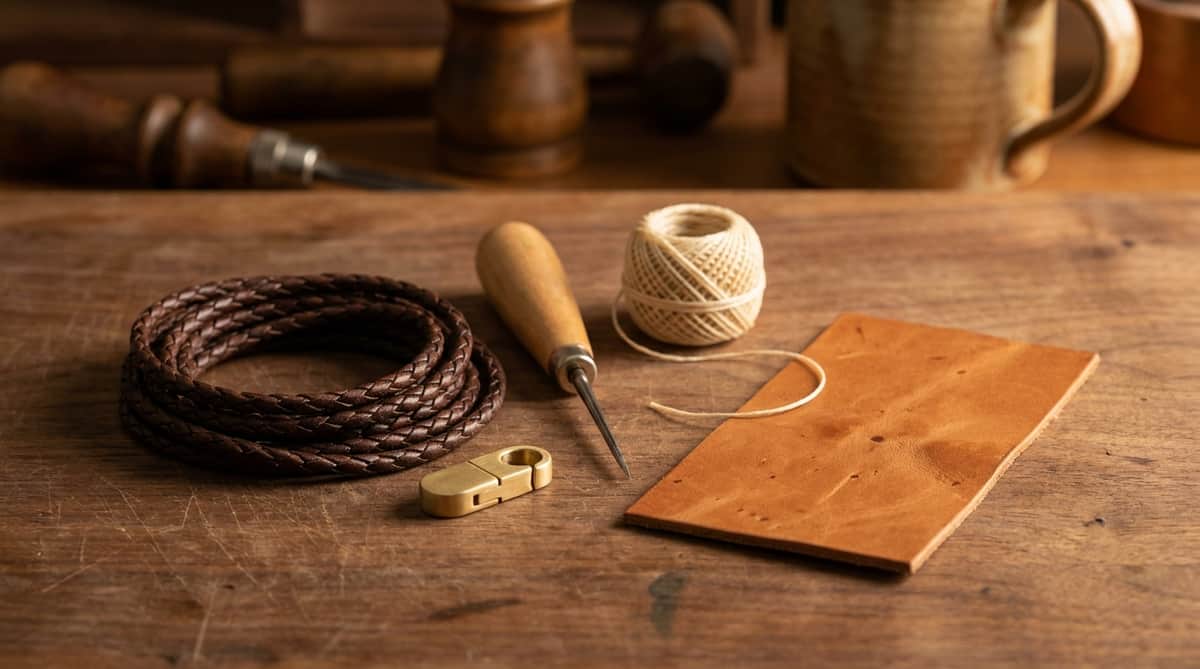
- Braided cord: several leather strands woven together into a rope-like band, usually finished with a metal magnetic or hook clasp. The most casual and the most forgiving of daily wear, since the braid flexes with the wrist instead of sitting rigid against it.
- Flat band or cuff: a single wide strip of leather, often with a metal plate riveted on for engraving. The most legible option if the point is a visible engraved name or date, but also the most exposed surface — scuffs and scratches show up fastest here.
- Wrap bracelet: a long, thin cord that winds two or three times around the wrist before closing with a button, snap, or magnetic clasp. Reads more layered and textured than a single band, and the extra length means a looser wrap sits more loosely than a tight one — adjustability built into the style itself.
- Buckle strap: styled like a miniature watch strap, closing with a pin buckle through pre-punched holes. The most precise and most secure fit of the four, at the cost of being the least adjustable once you're between hole sizes.
Real Leather vs. Vegan Leather
The two aren't just an ethical choice — they wear differently, and that changes which one makes sense for a given buyer:
- Genuine leather softens and darkens slightly with wear (a process leatherworkers call patina), which most buyers consider a feature rather than a flaw — it makes the piece look more worn-in and personal over time. It's also more water-sensitive: repeated soaking dries it out and can crack the surface eventually.
- Vegan (synthetic) leather holds its original color and texture longer with less day-to-day care, handles light moisture better, and is the only option for a buyer who wants a leather look without any animal material. The tradeoff is that it doesn't develop the same patina — it tends to look the same on day 500 as it did on day one, for better or worse.
Neither is objectively the "better" leather; it depends on whether a buyer wants the bracelet to visibly age with them or stay exactly as it arrived.
Where the Metal Hardware Matters
Even an all-leather-looking bracelet almost always has metal somewhere — the clasp, a magnetic closure, rivets, or an engraved ID plate riveted to the strap. That metal, not the leather, is usually what fails first on a cheap bracelet: a thin-gauge clasp bends, a plated finding flakes, or a magnetic closure weakens with repeated opening and closing. FARUZO's leather bracelets use hardware plated over 316L stainless steel, which is nickel-safe and resists the everyday tarnish that plated brass findings are prone to — worth checking on any leather bracelet, since the strap can look fine for years while cheap hardware gives out first.
Getting the Fit Right
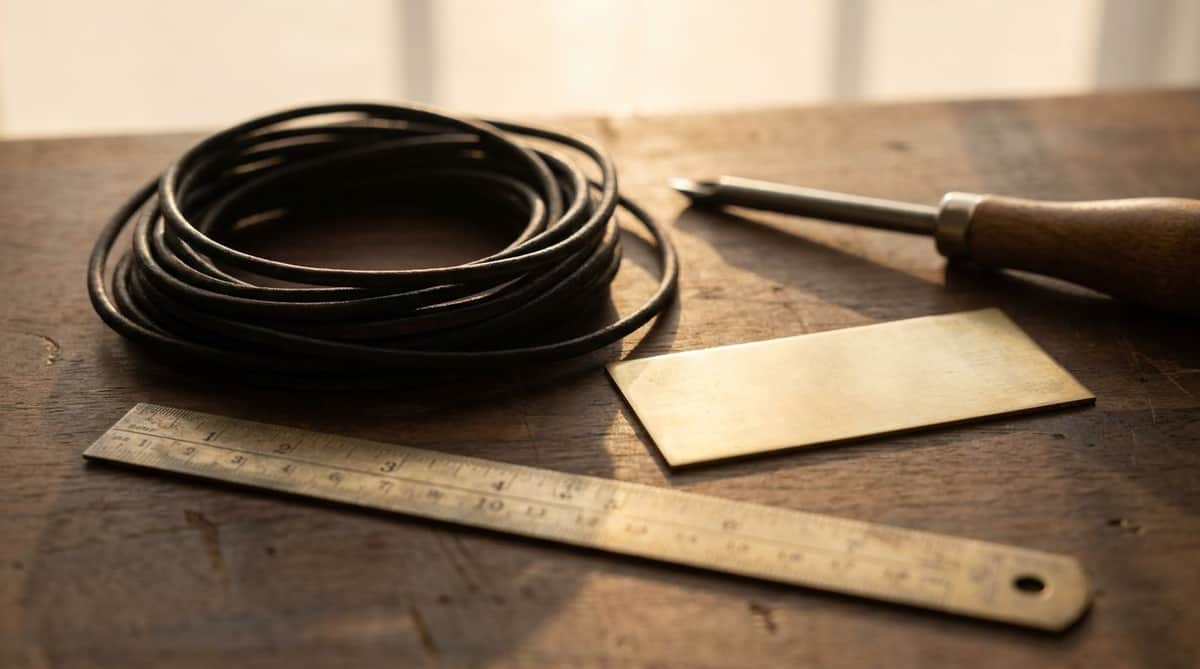
Most men's wrists fall in the 7.5–9 inch (19–23 cm) range, and how much that matters depends on the style: a buckle strap needs to land close to the right hole on the first try, while a wrap bracelet or an adjustable-cord braid has several inches of built-in give. Measure an existing bracelet that fits well, or wrap a soft tape (or a strip of paper, marked and then measured with a ruler) around your wrist just below the wrist bone — that's the number to order against. Our full bracelet-sizing guide walks through the measuring step in more detail, which is worth doing before ordering a buckle-style strap in particular, since those don't forgive a size guess the way a braided or wrap style will.
When a Leather Bracelet Is the Right Choice
It tends to suit the buyer who wants something personalized but doesn't normally wear visible jewelry — a leather band with a small engraved plate reads as a quiet accessory first, not a statement piece, which is exactly why it works as a gift for someone who'd never wear a chain or a ring. It also pairs more casually day to day than a metal link bracelet, making it a natural fit for everyday wear rather than occasion-only use. If the priority is instead a piece built to never need replacing, a solid engraved stainless steel bracelet is the more durable long-term choice, since the leather itself eventually wears out even when the attached hardware doesn't.
Caring for It So It Lasts
A leather bracelet's lifespan comes down to a few habits: take it off before swimming, showering, or heavy sweating (a gym session counts), wipe it dry with a soft cloth if it does get wet, and avoid leaving it in direct sun or a hot car, which dries out the leather faster than normal wear does. For genuine leather specifically, an occasional, very light application of leather conditioner keeps it supple rather than stiff — vegan leather doesn't need this step at all. However it wears in, it won't tarnish or turn skin green, since the hardware underneath is nickel-safe plated steel rather than base metal. Browse FARUZO's men's leather bracelets to see the current braided, wrap, and buckle styles, or the broader personalized men's bracelets collection if you're comparing leather against metal options side by side.
Frequently Asked Questions
Does a leather bracelet stretch out over time?
Genuine leather does stretch slightly with wear, especially in a braided or wrap style, since the fibers relax under the regular flexing of being worn. It's usually a small enough change that it just makes the bracelet more comfortable, not loose enough to fall off — but it's part of why a buckle strap with multiple holes tends to fit better over the long run than a fixed-length band.
Can a leather bracelet get wet?
Light, occasional contact with water won't ruin it, but repeated soaking is the main thing that shortens a leather bracelet's life — it dries out the material and can eventually cause cracking at the fold points. The habit worth building is simple: take it off before anything that counts as submersion (showering, swimming, dishwashing), and it'll outlast one that's worn through all of that.
What's the most durable men's leather bracelet style for daily wear?
A braided cord, generally, because the multi-strand construction distributes stress across several strands instead of one single surface, and it flexes with the wrist rather than cracking at a single fold line the way a flat cuff can over years of wear. A buckle strap is close behind in durability, but its single leather layer at the fold point is the more likely failure point eventually.
Is vegan leather as durable as real leather for a bracelet?
For day-to-day wear, yes, and in some ways it holds up better short-term, since it's less sensitive to moisture and doesn't need conditioning. Genuine leather's real advantage is long-term character — it develops a patina that most buyers see as a plus — not raw durability, so the "more durable" answer depends on whether a worn-in look counts as durability holding up or wearing out.