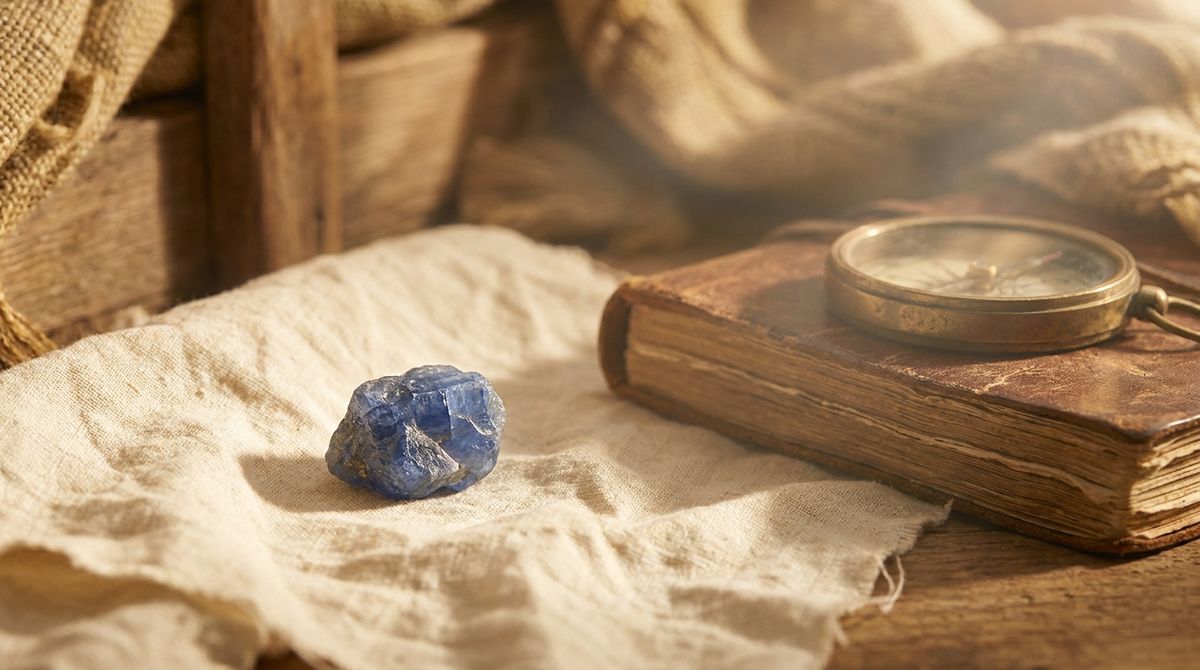
Sapphire is best known as a deep, cornflower blue — the color behind some of the most famous engagement rings in the world — but "sapphire" is actually a much bigger category than that. It's the name for corundum, a single mineral species, in any color except red; red corundum has its own name, ruby, and everything else on the color wheel falls under sapphire instead. This guide covers what sapphire actually is, the varieties and sources behind the trade, how to tell a genuine stone from a look-alike, and how to wear and care for sapphire jewelry. If you're comparing birthstones by month, our birthstone finder covers the full list.
What Sapphire Actually Is
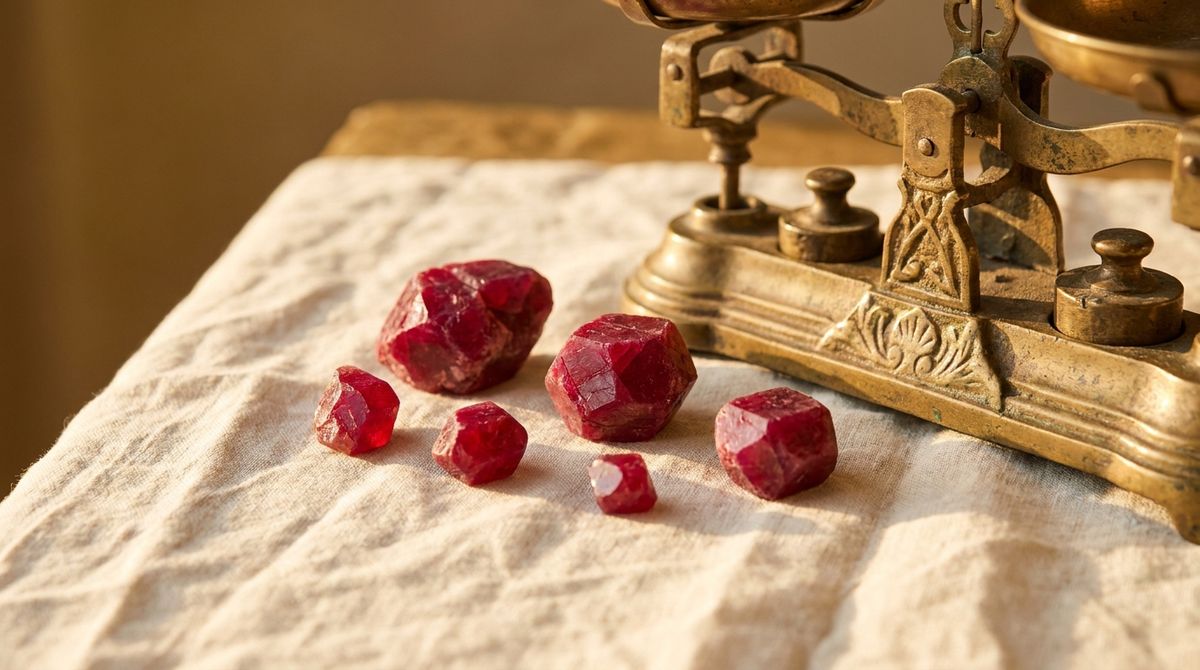
Sapphire is corundum, a crystalline form of aluminum oxide (Al₂O₃) that is colorless in its pure state. Trace elements are what give it color: iron and titanium together produce the blue most people picture when they hear "sapphire," while other trace elements produce sapphire's pink, yellow, green, purple, and colorless varieties. The one color corundum doesn't keep under the sapphire name is red — red corundum is classified as ruby instead, on the strength of trace chromium rather than iron and titanium. Blue and red corundum are, in other words, the same mineral wearing different trace chemistry.
On the Mohs hardness scale, corundum rates a 9, second only to diamond among natural minerals. That hardness comes from the tightly packed aluminum oxide structure itself, not from any treatment, and it's identical whether the corundum in question is a blue sapphire, a padparadscha, or a ruby — hardness tracks the mineral, not the color. Combined with corundum's tendency to form in well-defined, facetable crystals, that durability is a large part of why sapphire has been used in fine jewelry, including rings meant for daily wear, for centuries — and it's also September's birthstone.
Properties: Physical, Mental, and Metaphysical
Physical
Sapphire is transparent to translucent and most commonly faceted to bring out its color and brilliance, though included stones are sometimes cut as cabochons instead — a cut that can also reveal asterism, a star-shaped light effect seen in some sapphires. That effect comes from needle-like rutile inclusions aligned along the crystal's internal structure; cut as a rounded cabochon rather than faceted, the light reflects off those needles as a moving, typically six-rayed star across the stone's surface. Star sapphires are prized specifically for this optical effect, the same phenomenon that produces star rubies in corundum's red variety.
Mental
In wellness and crystal traditions, sapphire is described as a stone of wisdom, clarity, and loyalty — associations tied to its long history as a stone favored by royalty and clergy, and to the calm, steady read of its blue color. As with any gemstone's symbolism, covered in more depth in our different gemstones meaning guide, that's a belief carried by folklore and tradition, not a measured or scientific effect.
Metaphysical
Sapphire's reputation for protection and insight has deep historical roots. Ancient Persians reportedly believed the sky itself took its blue color from a giant sapphire the earth rested on. Medieval European clergy wore sapphire rings as a symbol of heaven and purity, and the stone was widely believed across several cultures to protect its wearer from envy and harm. None of these claims have a basis in science, and they're worth reading as belief passed down through tradition rather than documented fact — the same caution that applies to any stone's folklore, and one lapis lazuli, another deep-blue stone with its own long list of symbolic associations, shares in our lapis lazuli meaning guide.
Padparadscha, Star Sapphires, and Where Sapphire Comes From
Blue may be sapphire's signature color, but the trade has its own vocabulary for the rarer varieties too, and the one collectors prize most is padparadscha — a delicate pink-orange sapphire named after the Sinhalese word for lotus blossom. Padparadscha sapphires are genuinely rare and command prices well above most other fancy-color sapphires as a result.
Source matters as much as color in the sapphire trade. Kashmir sapphires, mined mainly between the 1880s and 1930s, are historically considered the finest blue sapphires ever produced, prized for a velvety cornflower-blue color; the original deposits are now largely depleted, which only adds to their reputation among collectors. Sri Lanka has produced sapphires — commonly called Ceylon sapphires — for centuries and remains one of the trade's most significant sources today. Myanmar and Madagascar are both major modern producers as well, and Montana, in the United States, is one of the few domestic American sources of gem-quality sapphire. Star sapphires, the asterism-bearing stones described above, can come from any of these origins and are valued on their own scale, based on the strength and symmetry of the star rather than color alone.
How to Tell Real Sapphire From Look-Alikes
Blue sapphire has been imitated for as long as it's been prized, and colored glass is the most common and easiest-to-catch substitute — it typically shows swirl marks, bubbles, or a softness that a jeweler can spot with basic magnification. Synthetic sapphire is a harder case: it shares sapphire's chemistry and hardness exactly, since it's grown as corundum rather than a different material entirely, which is precisely why it takes a trained eye rather than a hardness test to catch it. Natural inclusion patterns are the usual giveaway — synthetics tend to be too clean, or show curved growth lines instead of the straight, angular inclusions typical of natural corundum.
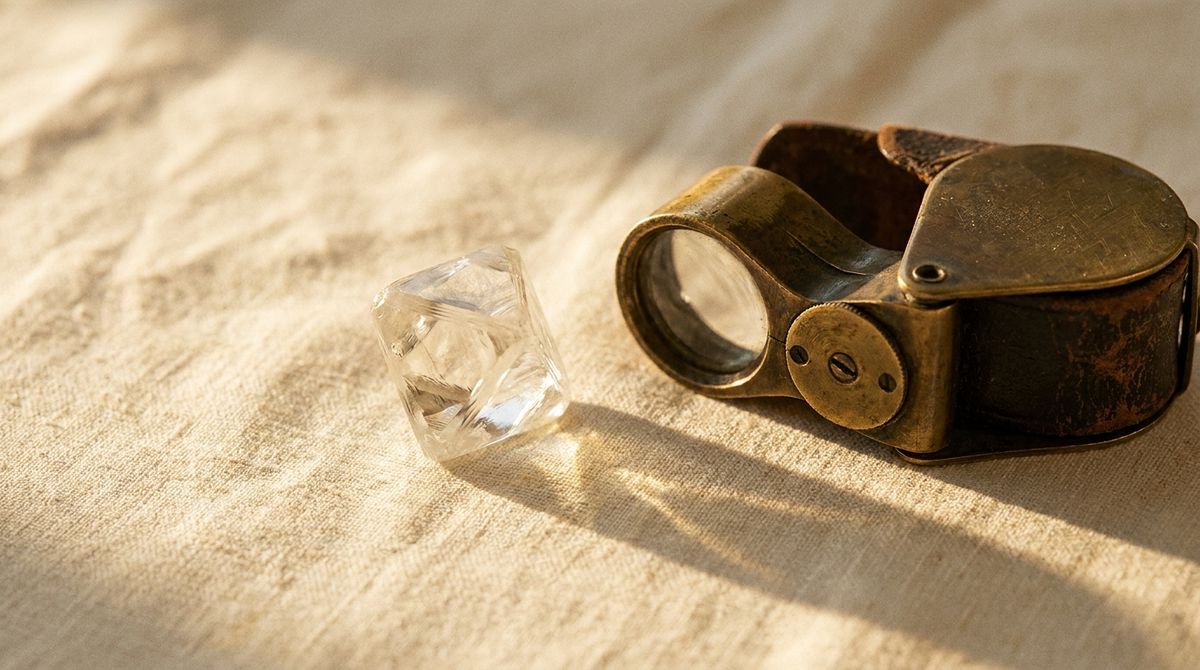
Colorless sapphire has its own history as a substitute — for diamond rather than for blue sapphire. Before cubic zirconia and moissanite existed, white sapphire was one of the standard diamond alternatives, alongside natural zircon, and it's still used that way today; our diamond meaning guide covers how diamond itself is identified and graded, for comparison. A refractometer and standard gemological testing separate sapphire from all of these substitutes reliably. If you're buying a sapphire represented as natural, a gemological report from a recognized lab is the only way to confirm origin and treatment status with certainty.
How to Wear and Care for Sapphire Jewelry
Sapphire's hardness (a 9 on the Mohs scale, tied with ruby as corundum) is a genuine practical reason it's stayed a popular choice for engagement rings for generations — most famously the sapphire ring first worn by Princess Diana and later by Catherine, Princess of Wales — not just a symbolic one. Hardness alone isn't the whole story, though: like any faceted stone, a hard enough direct impact can still chip a facet edge, so a setting that protects the edge is worth considering for a ring worn daily. Warm water, mild soap, and a soft brush handle routine cleaning safely; save ultrasonic and steam cleaners for sapphires you know are untreated or simply heat-treated, since fracture-filled or otherwise clarity-enhanced stones can be affected by the heat and vibration. When treatment history is uncertain, hand-cleaning is the safer default.
FARUZO's personalization system offers sapphire as the September birthstone option on several pieces, set in stainless steel with a gold-plated, rose gold-plated, or silver-tone-plated finish — browse the birthstone rings and birthstone necklaces collections for the current settings.
Frequently Asked Questions
Is sapphire always blue?
No. Sapphire is corundum in any color except red — blue is the most familiar and most associated with the name, but sapphire also comes in pink, yellow, green, purple, colorless, and the rare pink-orange padparadscha.
What's the difference between sapphire and ruby?
They're the same mineral, corundum. Red corundum is called ruby; every other color of gem-quality corundum is called sapphire instead.
Is sapphire a real birthstone?
Yes — sapphire is the modern and traditional birthstone for September. You can see how it fits alongside the other months in our birthstone finder.
What is a padparadscha sapphire?
A rare pink-orange sapphire variety, named after the Sinhalese word for lotus blossom. It's one of the most prized and highest-priced sapphire colors after blue.
What is a star sapphire?
A sapphire cut as a rounded cabochon that displays asterism — a star-shaped light effect caused by needle-like rutile inclusions aligned within the crystal. The effect only shows when the stone is cut to preserve it, rather than faceted.