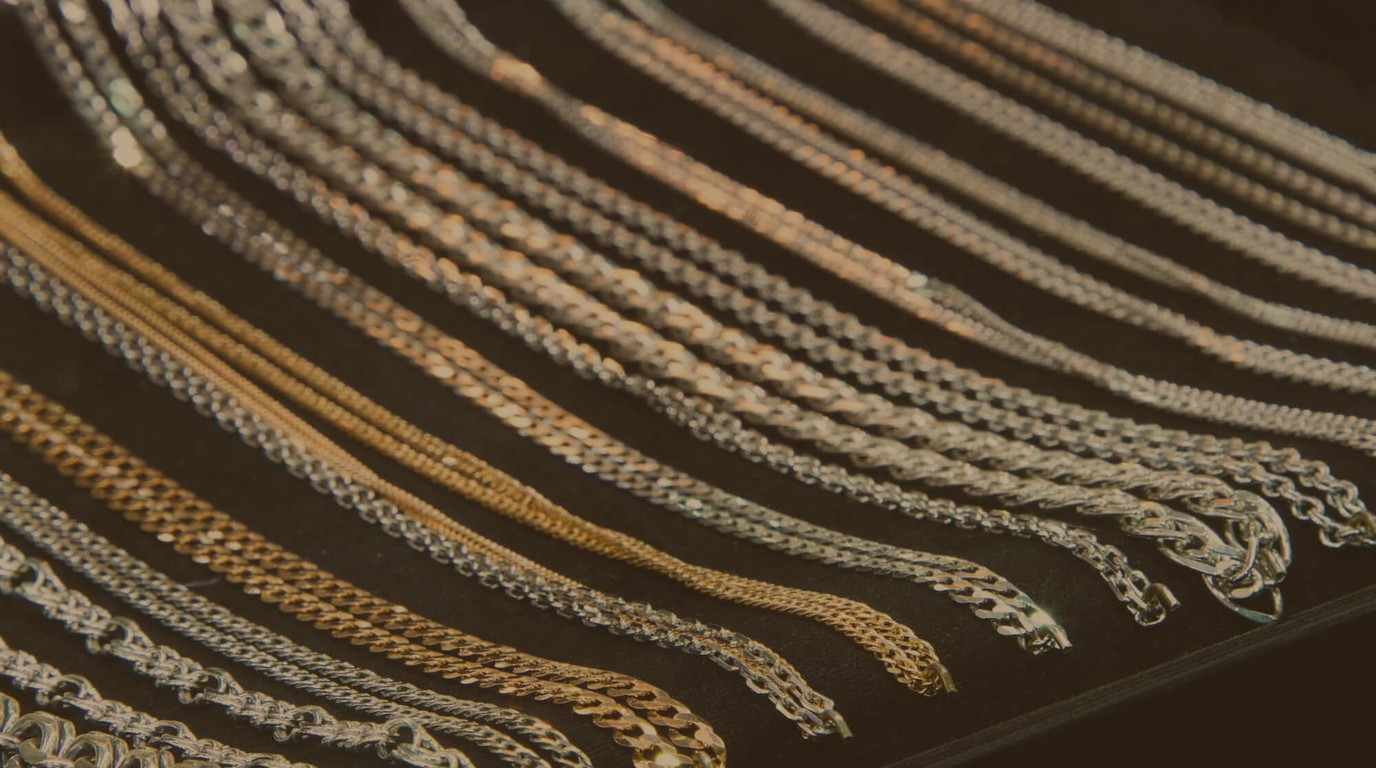
A chain necklace is defined by one thing: the shape of its links and the way they connect. That shape decides how a chain looks, how strong it is, how it drapes and which pendants it can carry. This guide covers the common chain styles one by one, from classics such as curb, Figaro and rope to rarer designs, with a short note on strength and best use for each. Chains sold under several names are grouped into one entry. A few close cousins, such as ball and bead or box and Venetian, keep their own.
If you are comparing materials as well, our guide to the different styles of gold chains is a good companion.
Quick comparison
| Chain | Looks like | Strength | Best for |
|---|---|---|---|
| Anchor (Mariner) Chain | Oval links with a bar across the middle | Strong | Pendants and everyday wear |
| Ball Chain | Small metal spheres joined by connectors | Delicate to medium | Light pendants, casual necklaces |
| Bar Chain | Straight bar links joined by small rings | Medium | Minimal necklaces and bracelets |
| Bead Chain | Small beads joined by short connectors | Delicate | Light pendants and anklets |
| Belcher (Rolo) Chain | Even round or oval interlocking links | Medium | Pendants and charms |
| Byzantine Chain | Dense interlocking weave, slightly square | Strong | Statement chains and bracelets |
| Cable Chain | Identical round or oval links in a row | Medium | Pendants, layering, daily wear |
| Curb (Cuban) Chain | Twisted links that lie flat | Strong | Men's chains, heavier pendants |
| Figaro Chain | Short links, then one long link | Medium to strong | Necklaces and bracelets |
| Foxtail Chain | Tight, dense round weave | Strong | Wearing alone or with a light pendant |
| Franco Chain | Tight V-shaped links, square feel | Very strong | Men's chains, heavier pendants |
| Herringbone Chain | Flat zigzag band of tiny links | Delicate | Wearing alone near the neck |
| Omega Chain | Flat metal segments forming a smooth band | Medium | Chokers, wearing alone |
| Popcorn Chain | Puffed, hollow, bumpy links | Delicate | Everyday, light pendants |
| Rope Chain | Links twisted in a spiral like rope | Strong | Necklaces and bracelets |
| Singapore Chain | Thin twisted rope of small links | Medium | Everyday, light pendants |
| Snake Chain | Smooth, round, gapless tube | Medium | Clean look, light pendants |
| Wheat (Spiga) Chain | Four woven strands, like a wheat ear | Strong | Pendants and charms |
| Venetian Chain | Square links in a boxy row | Strong | Pendants, minimal look |
| Box Chain | Small square links, smooth and even | Strong | Pendants, everyday |
| Flat Chain | Flat links lying against the skin | Medium | Everyday, light pendants |
| Link Chain | Plain round or oval links in a row | Medium | Pendants, charms, anklets |
| Paperclip Chain | Long narrow oval links | Medium | Layering, wearing alone |
| Prince of Wales Chain | Woven rope-like textured tube | Strong | Alone or with a pendant |
| Serpentine Chain | Smooth wavy S-shaped links | Medium | Alone, light pendants |
| Satellite Chain | Thin chain with spaced small beads | Medium | Layering, small pendants |
| Twist Chain | Links twisted into a spiral | Medium | Alone or with a pendant |
| Diamond Cut Chain | Any chain with sparkling cut facets | Varies | Added sparkle |
| Heart Chain | Small heart-shaped links | Medium | Gifts, simple accent |
| Infinity Chain | Sideways figure-eight links | Medium | Sentimental pendants |
| Link and Bar Chain | Links alternating with short bars | Medium to strong | Plain or small pendant |
| Mirror Chain | Smooth, flat, reflective box links | Medium | Shiny simple necklaces |
| Bismarck Chain | Wide, flat, woven rows of links | Strong | Bracelets, statement necklaces |
| Palm Chain | Flat textured pattern | Medium | Casual textured pieces |
| Braided Chain | Interlaced links forming a braid | Medium | Texture-led pieces |
| Cashmere Chain | Fine, smooth, soft-looking chain | Medium | Everyday necklaces |
| Square Link Chain | Square links joined in a line | Medium | Minimal modern pieces |
| Cobra Chain | Dense, tightly interlocked links | Strong | Bold standalone pieces |
| Cheval Chain | Flat oval links at alternating angles | Medium | Plain or pendant wear |
| Cylinder Chain | Small smooth tube links | Medium | Minimal everyday pieces |
| Eros Chain | Fine decorative links | Medium | Gift necklaces |
| Gemella Chain | Pairs of links joined together | Medium | Bolder pattern pieces |
| Giotto Chain | Flat ring-shaped links in a line | Medium | Alone or small pendant |
| Gomitolo Chain | Looped spiral like wound yarn | Medium | Standalone pieces |
| Greek Chain | Greek key meander pattern | Medium | Classical-pattern pieces |
All chain styles by group
Classic links: Anchor (Mariner) Chain · Belcher (Rolo) Chain · Cable Chain · Curb (Cuban) Chain · Figaro Chain · Franco Chain · Venetian Chain · Box Chain · Link Chain · Paperclip Chain · Link and Bar Chain · Square Link Chain · Cheval Chain · Eros Chain · Gemella Chain · Giotto Chain
Woven and braided: Byzantine Chain · Foxtail Chain · Rope Chain · Singapore Chain · Wheat (Spiga) Chain · Prince of Wales Chain · Bismarck Chain · Palm Chain · Braided Chain
Flat and snake: Herringbone Chain · Omega Chain · Snake Chain · Flat Chain · Serpentine Chain · Mirror Chain · Cobra Chain
Decorative and specialty: Ball Chain · Bar Chain · Bead Chain · Popcorn Chain · Satellite Chain · Twist Chain · Diamond Cut Chain · Heart Chain · Infinity Chain · Cashmere Chain · Cylinder Chain · Gomitolo Chain · Greek Chain
Anchor (Mariner) Chain
Anchor chain, also called mariner chain, is made of oval links with a short bar across the middle of each link. The look is borrowed from ship anchor chain. The bar keeps the links from collapsing and twisting.
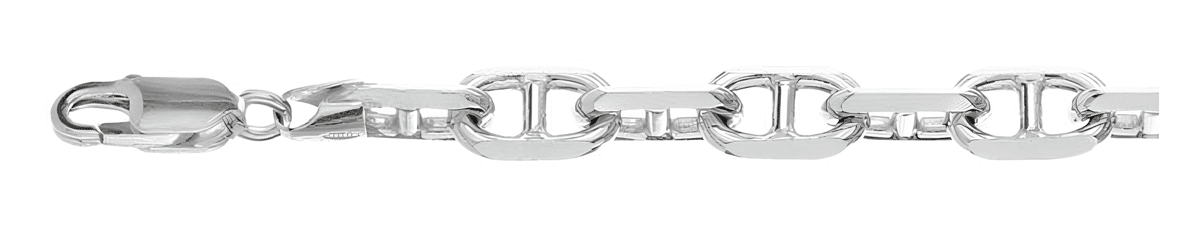
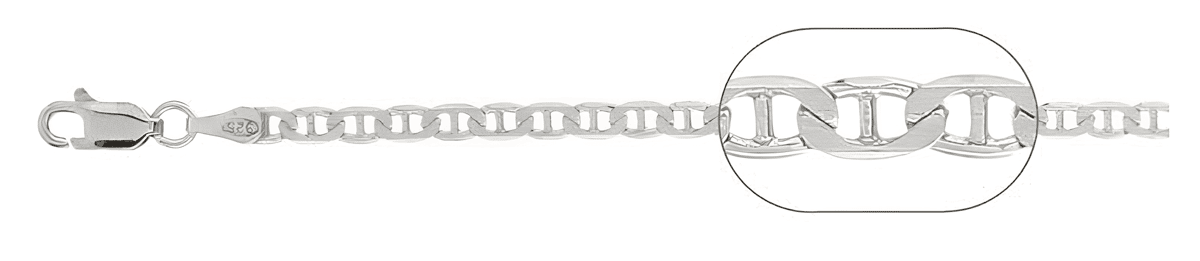
- Strength: Strong. The center bar helps each link keep its shape.
- Best for: Pendants, charms and everyday wear, for men and women.
Ball Chain
Ball chain is a row of small metal spheres joined by short connectors. It is the same style used for dog tags and light pull cords. It is flexible and has a plain, casual look.
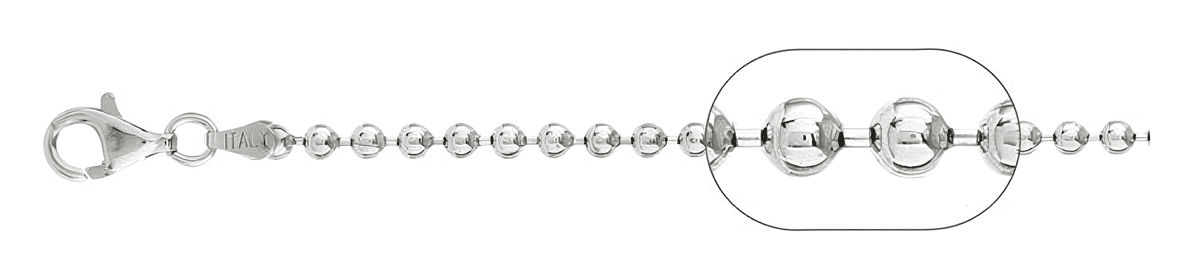
- Strength: Delicate to medium. A hard, sudden pull can break a connector.
- Best for: Light pendants and simple everyday necklaces.
Bar Chain
Bar chain is made of short, straight bar-shaped links joined by small rings or connectors. It has a clean, geometric line. It sits a little stiffer than a round-link chain.
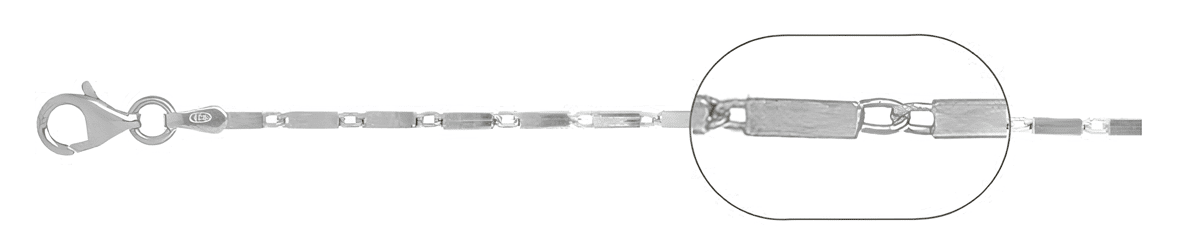
- Strength: Medium. The strength depends mostly on the small connectors.
- Best for: Minimal necklaces and bracelets worn on their own.
Bead Chain
Bead chain is usually the same style as ball chain: small round beads joined by short connectors. Some versions space beads along a plain chain instead. It looks light and simple.
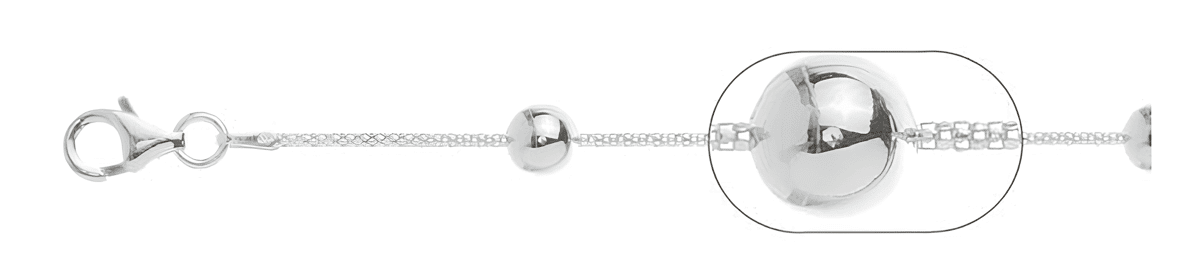
- Strength: Delicate. The beads are solid, but the connectors between them are the weak point.
- Best for: Light pendants, anklets and simple necklaces.
Belcher (Rolo) Chain
Belcher chain is made of round or slightly oval links that are all the same size and interlock evenly. Belcher links are usually a bit thicker. Rolo chain is a close variant with rounder links. It is commonly said to be named after the English boxer Jem Belcher.
Because the links are even, the chain sits smooth and drapes well.

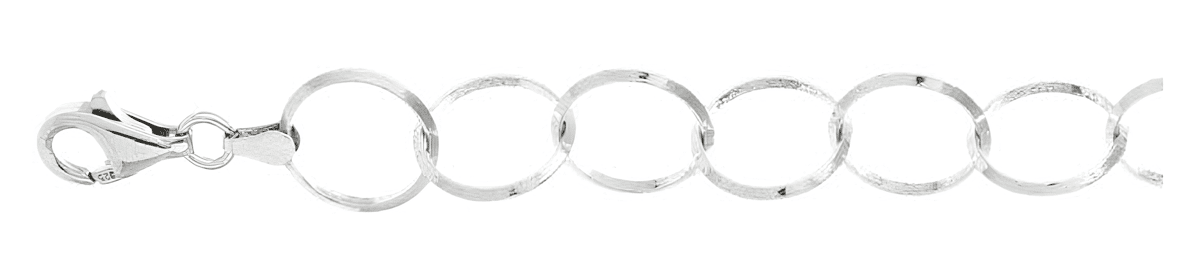
- Strength: Medium. Even links spread the load, but thin versions are still fine chains.
- Best for: Pendants and charms, for men and women.
Byzantine Chain
Byzantine chain is a weave of many small links that interlock in a repeating pattern. The result is a thick, textured chain with a slightly square profile. It is flexible and has a dense, rich look.

- Strength: Strong. Many interlocked links share the load.
- Best for: Wearing on its own as a statement chain or bracelet.
- Good to know: It is heavier and more detailed than most chains, so it often suits a bolder style.
Cable Chain
Cable chain is the most basic link chain. It is made of identical round or oval links, each one threaded through the next. Oval-link versions look a little longer, and round-link versions look more even.
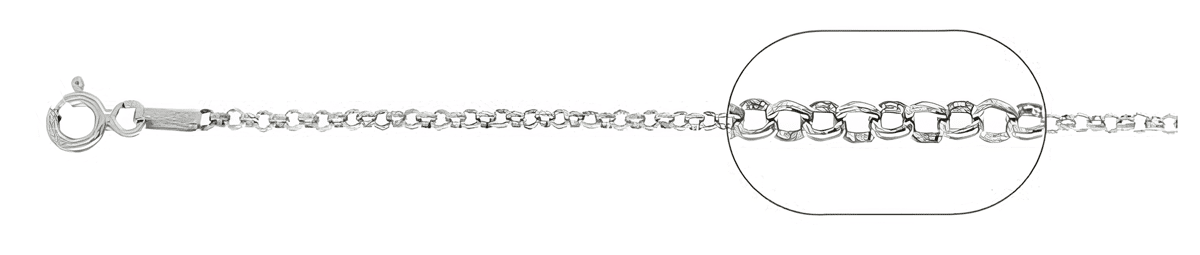
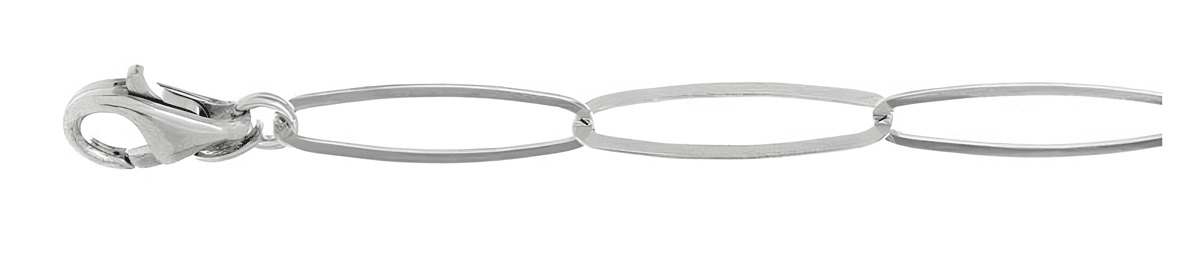
- Strength: Medium. Simple links hold up well, but very thin ones can snap under a hard pull.
- Best for: Pendants, charms, layering and daily wear.
Curb (Cuban) Chain
Curb chain has links that are twisted so they lie flat against the skin. Each link sits at an angle to the next, so the chain does not tangle easily. Cuban chain is a curb chain, usually thicker and more tightly packed.
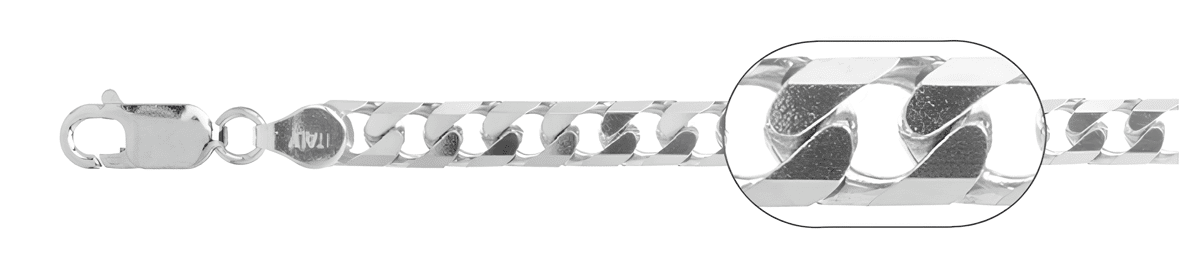
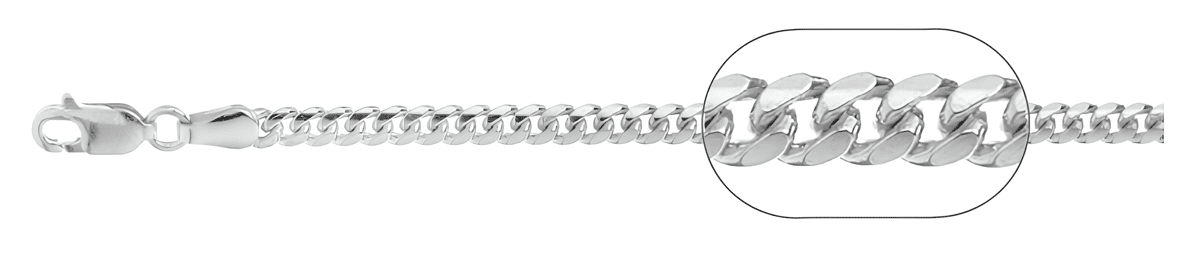
- Strength: Strong. Tight, flat links resist stretching.
- Best for: Men's chains, bolder necklaces and bracelets, and heavier pendants.
- Good to know: Thin curb chains work for fine, everyday necklaces too.
Figaro Chain
Figaro chain repeats a pattern of short links followed by one long link, often three short and one long. It is an Italian style. The mix of sizes gives it a clear rhythm.
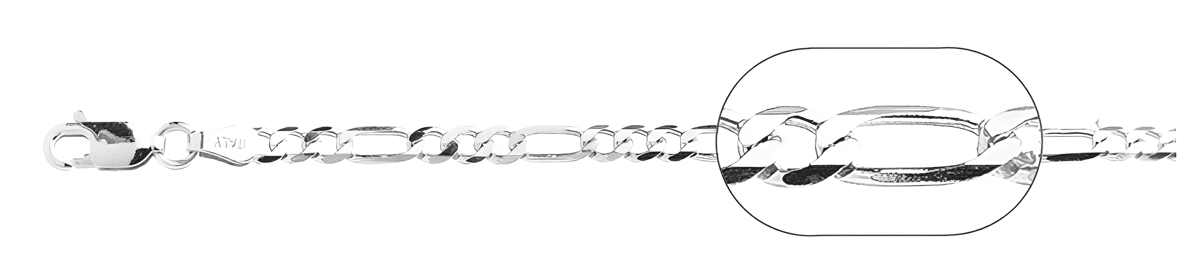
- Strength: Medium to strong. The links interlock, so a pull is not concentrated on one point.
- Best for: Necklaces and bracelets, with or without a pendant.
Foxtail Chain
Foxtail chain is a tight, dense weave of small links that forms a round, soft chain. It has a smooth surface, with little gap between links. It drapes like a fine rope.
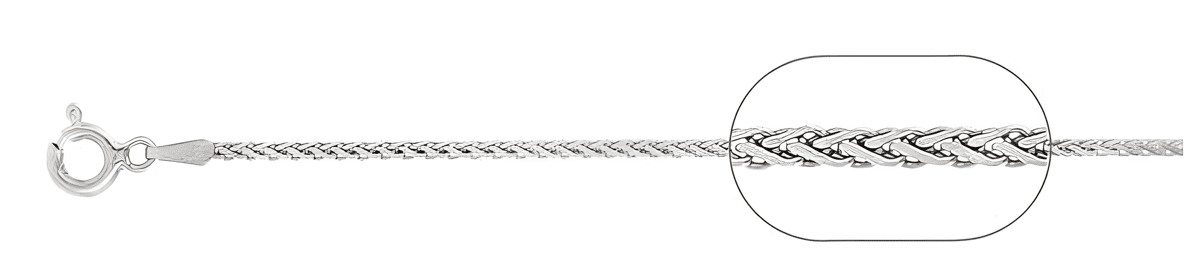
- Strength: Strong, though a sharp bend can kink it.
- Best for: Necklaces and bracelets worn on their own or with a light pendant.
Franco Chain
Franco chain is made of V-shaped links that interlock tightly. The result is a square-feeling chain with a firm, smooth surface. It is related to the curb chain.
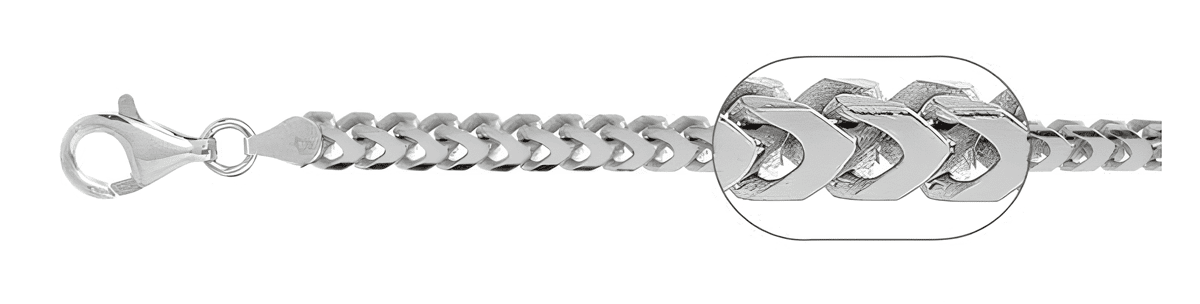
- Strength: Very strong. The tight V-links resist stretching and pulling.
- Best for: Men's chains and heavier pendants.
Herringbone Chain
Herringbone chain is a flat band of tiny angled links set tightly in a zigzag, like the bones of a fish. It lies flat and reflects a lot of light. It looks smooth, almost like a ribbon of metal.
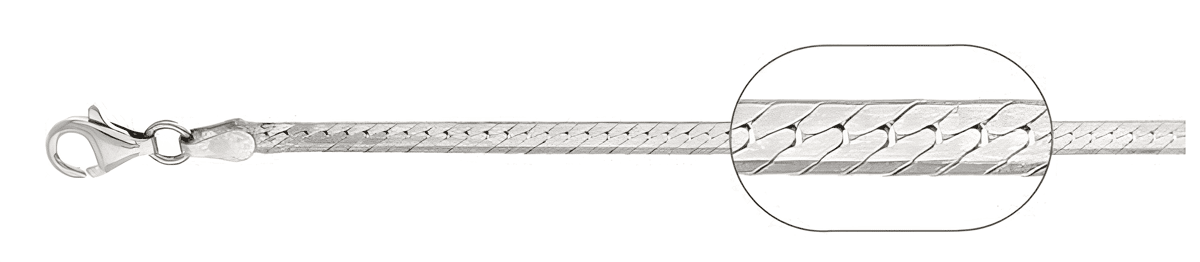
- Strength: Delicate. A kink is hard to undo, so handle it with care.
- Best for: Wearing on its own, close to the neck.
Omega Chain
Omega chain is made of flat, shaped metal segments attached to a flexible base. It forms a smooth, wide band that lies flat against the neck. It can be narrow or very wide.
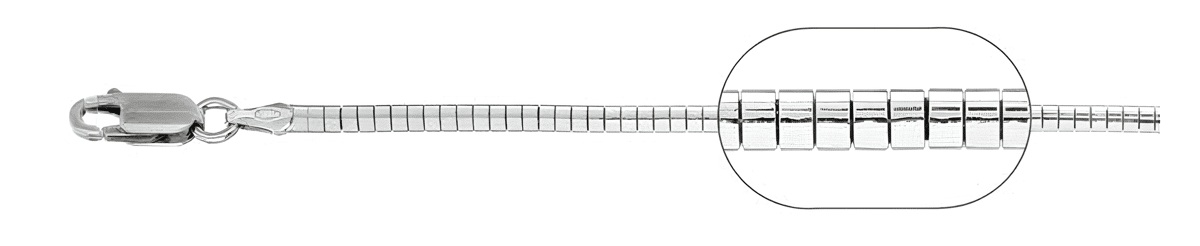
- Strength: Medium. It holds well, but it should not be bent sharply or kinked.
- Best for: Chokers and necklaces worn on their own or with a light pendant.
Popcorn Chain
Popcorn chain is made of small, puffed-out links with a rounded, bumpy look, a bit like popped kernels. The links are usually hollow, so the chain is light for its size. It catches light from many angles.
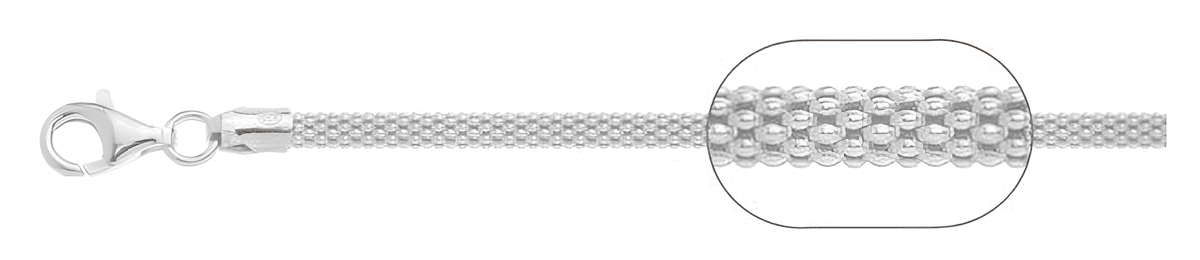
- Strength: Delicate. Hollow links can dent.
- Best for: Everyday necklaces and bracelets, with light pendants.
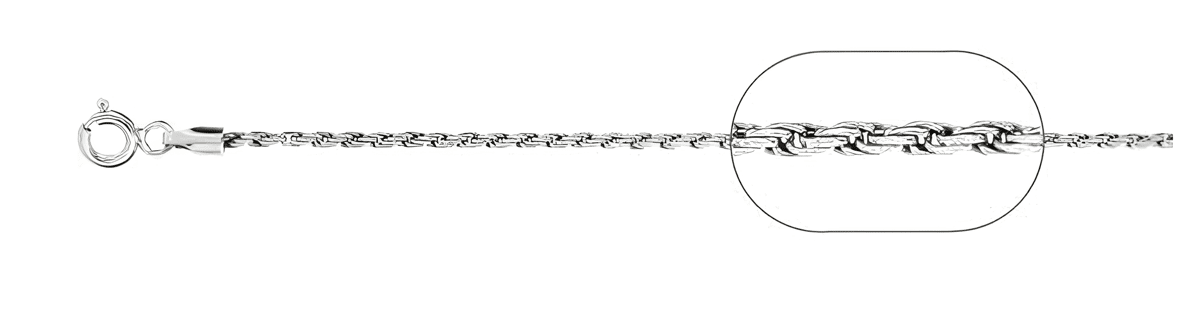
Rope Chain
Rope chain is made of small links twisted around each other in a spiral, so it looks like a twisted rope. It is flexible and has a textured surface that catches light. It comes in thin and thick sizes.
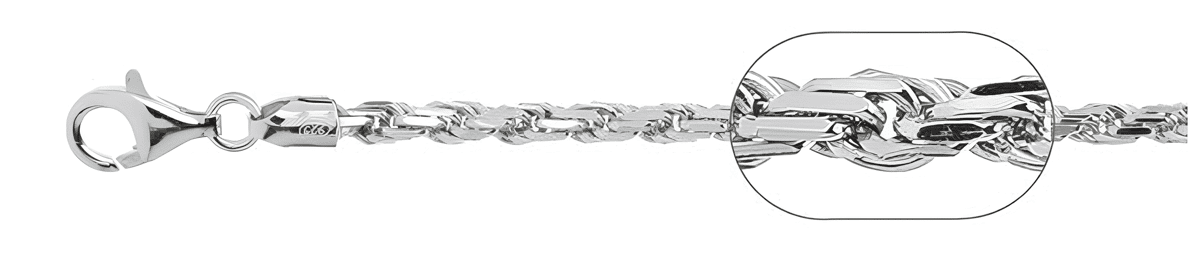
- Strength: Strong. The tight twist holds together well.
- Best for: Necklaces and bracelets, with or without a pendant.
Singapore Chain
The Singapore chain is made of small links that are twisted as they connect, so the chain looks like a thin, twisted rope. Many versions are diamond cut, which adds tiny flat faces that catch light.
It lies flat and flexible on the skin. It works on its own or with a light pendant.
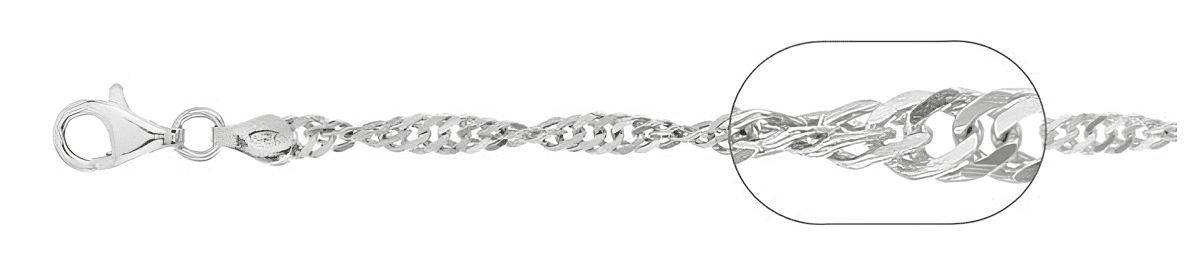
- Strength: Medium. The links are tightly interlocked, but the twist can tangle if the chain is bunched up.
- Best for: Everyday wear on its own or with a small pendant.
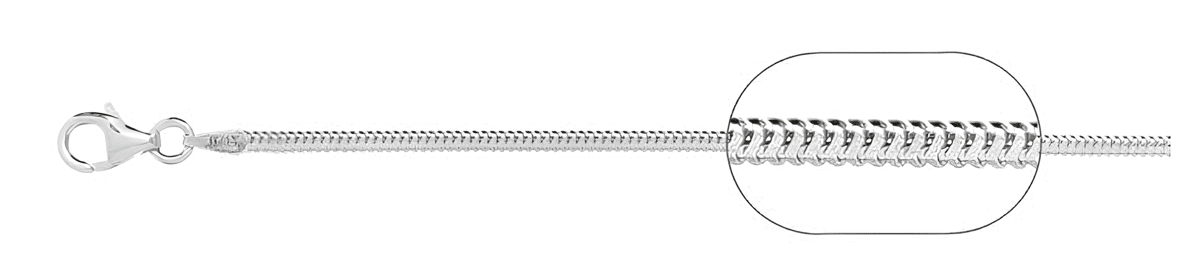
Snake Chain
A snake chain is made of tightly joined rings or plates that form a smooth, round tube. It has no visible gaps between links, so it feels like a flexible rod of metal.
It slides easily and drapes close to the neck.
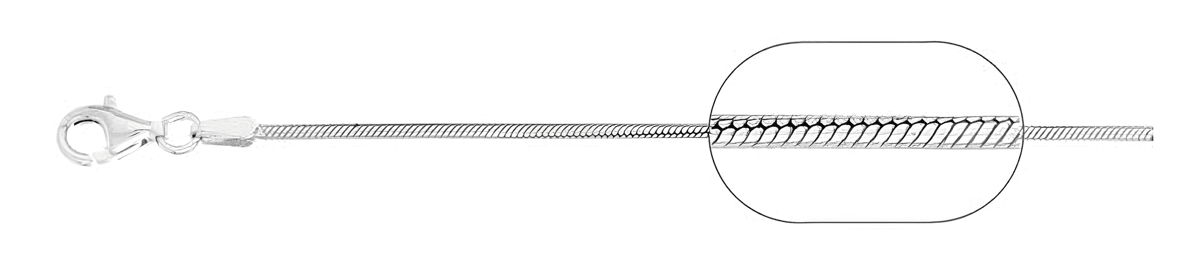
- Strength: Medium. It can kink if it is bent sharply, and a kinked section is hard to straighten.
- Best for: A clean, plain look on its own or with a light pendant.
- Good to know: Store it flat or hanging so it does not fold.
Wheat (Spiga) Chain
A wheat chain, also called a spiga chain, is made of four strands of oval links twisted around each other. The pattern looks like the ear of a wheat plant. "Spiga" is the Italian word for an ear of wheat.
The woven structure spreads tension across the links. The chain has a textured, rounded look and a bit of weight.
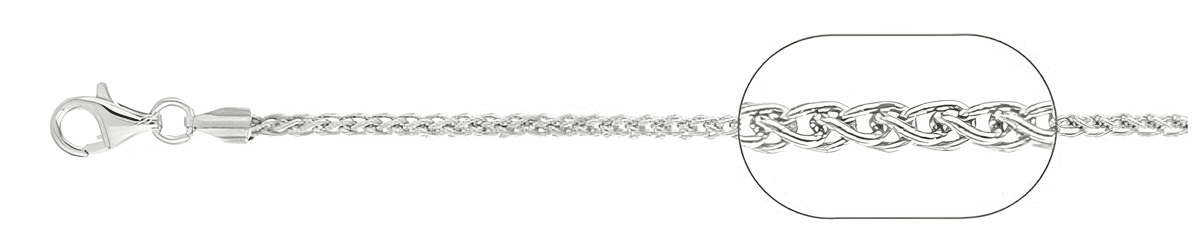
- Strength: Strong. The woven links share the load.
- Best for: Pendants and charms, or wearing alone for the texture.
Venetian Chain
A Venetian chain is made of square links joined in a row, so it has a boxy, geometric look. The name suggests a link to Venice, but its exact origin is not clear.
The links are uniform and the surface is clean. Many jewelers use the term interchangeably with box chain, so check the link shape when buying.
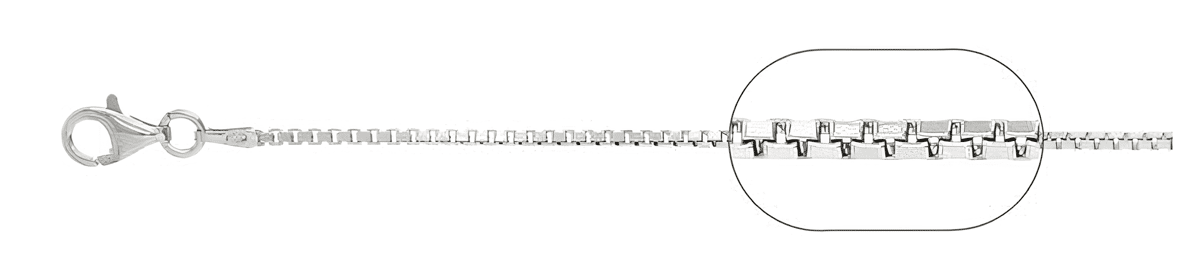
- Strength: Strong. The square links resist stretching.
- Best for: Pendants and a minimal, geometric look.
Box Chain
A box chain is built from small square links that join at the corners. This gives a smooth, even chain with a modern, geometric look.
It sits close to the neck and does not twist easily. It is often called a Venetian chain, though some makers treat the two as slightly different.
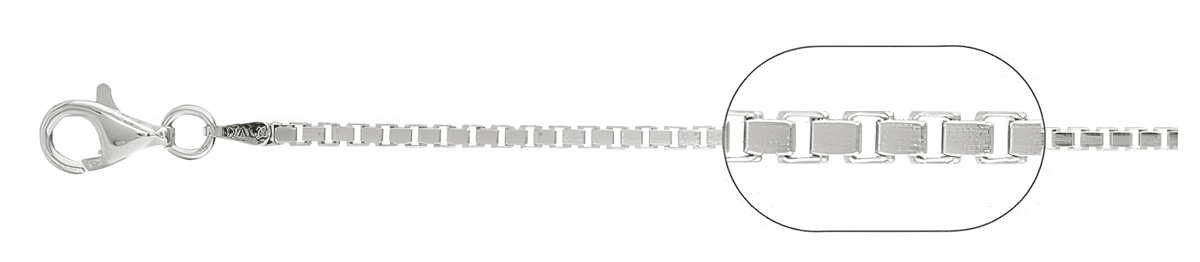
- Strength: Strong. The links are compact and hard to pull apart.
- Best for: Pendants, including custom necklaces, and everyday wear.
Flat Chain
A flat chain is made of links that lie flat against the skin instead of standing up like round links. The flat faces catch light and give a smooth, even shine.
It is a plain style that sits quietly under a pendant or charm.
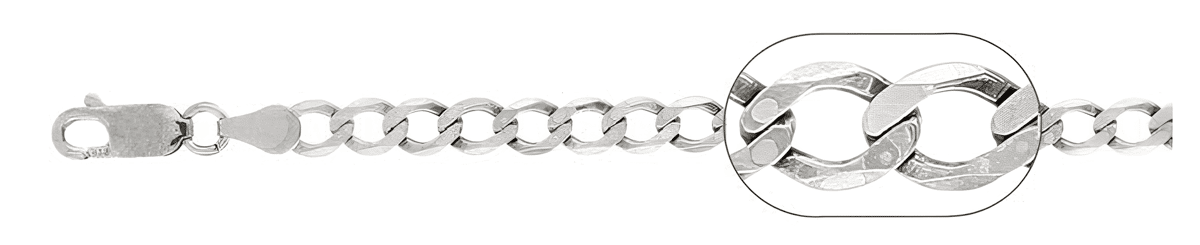
- Strength: Medium. Strength depends on the link thickness.
- Best for: Everyday wear and light pendants.
Link Chain
A link chain is the basic chain: round or oval links of the same size, each looped through the next. It is the simplest chain design and the base for many other styles.
It is flexible and easy to pair with pendants, charms and gemstones. Links can be thin and fine or thick and chunky.

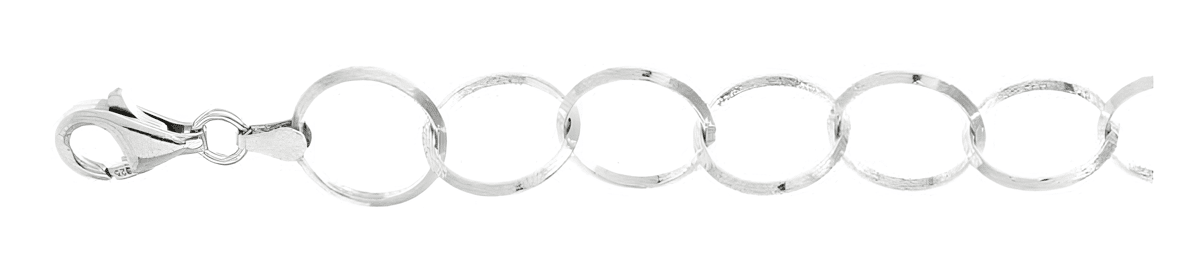
- Strength: Medium. Thicker links are stronger than fine ones.
- Best for: Pendants, charms, necklaces, bracelets and anklets.
Paperclip Chain
A paperclip chain has long, narrow oval links that look like paperclips. The links are stretched out, so fewer of them cover the same length.
The shape gives a light, open look. It is popular for layering with shorter chains.
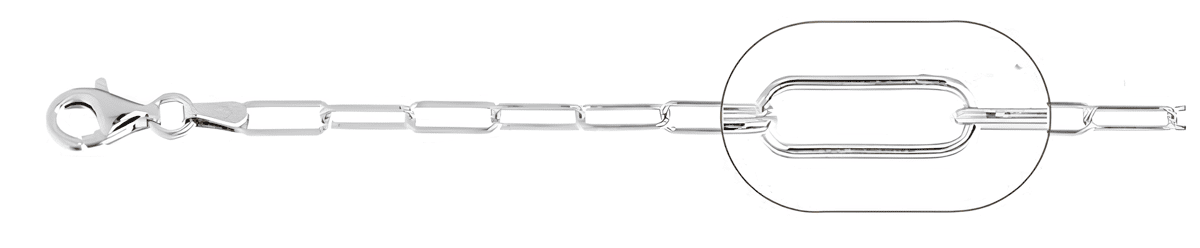
- Strength: Medium. The long links can bend if pulled hard.
- Best for: Layering and wearing alone. Small pendants also work.
Prince of Wales Chain
The Prince of Wales chain has small links woven around each other in a twisting pattern. The result is a rounded, rope-like tube with a textured surface.
It has some weight and a dense look.
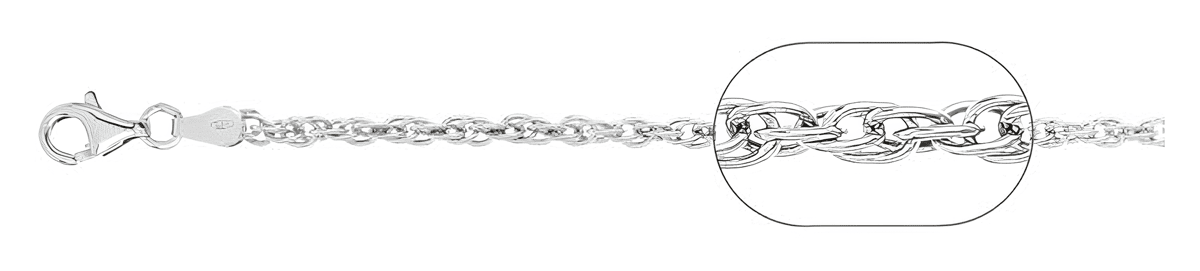
- Strength: Strong. The links interlock closely.
- Best for: Wearing alone or with a pendant.
Serpentine Chain
A serpentine chain is made of S-shaped or wavy links that lie close together. The surface is smooth and flexible and ripples like a snake's body. Some versions use flat bar-shaped links in the same wavy pattern, sometimes sold as serpentine bar chain.
It drapes easily and has a flat, polished look.
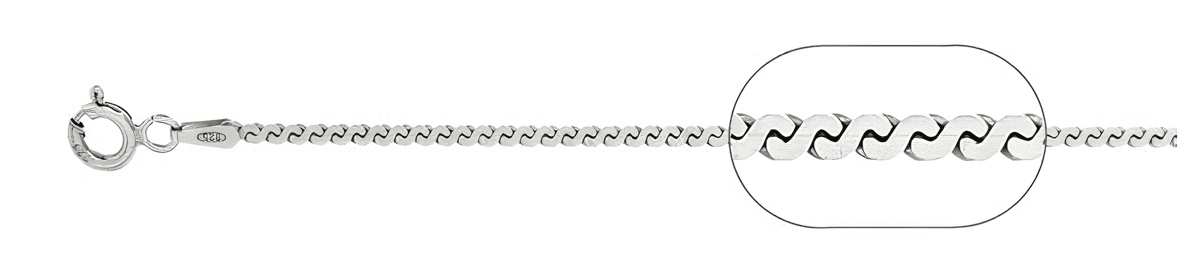
- Strength: Medium. It is flexible, so avoid pulling or twisting it.
- Best for: Wearing alone or with a light pendant.
Satellite Chain
A satellite chain is a thin cable chain with small round beads set at even spaces along it. The beads can be smooth or faceted. Some versions are called beaded satellite chains.
It looks light and a little playful. The beads add texture without making the chain heavy.
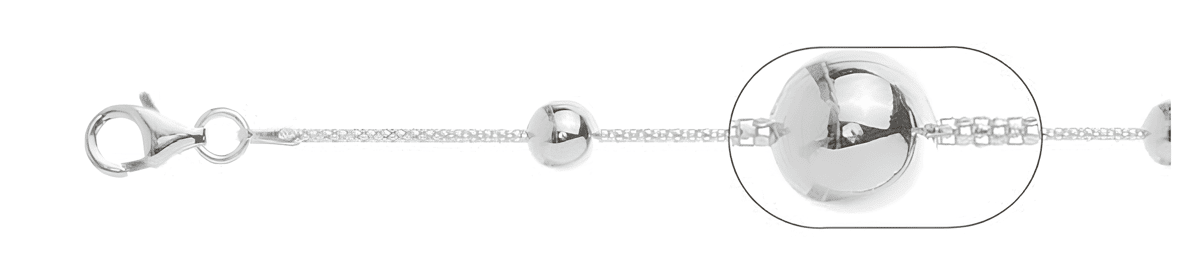
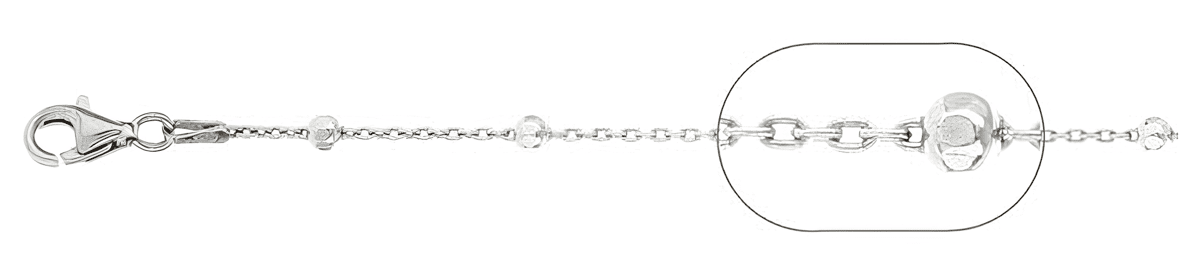
- Strength: Medium. The chain between the beads is thin.
- Best for: Wearing alone, layering, and small pendants.
Twist Chain
A twist chain has links that are twisted as they connect, which makes a spiral pattern along the chain. This adds texture and gives it a sense of depth.
It has a rounded look and catches light from several angles.
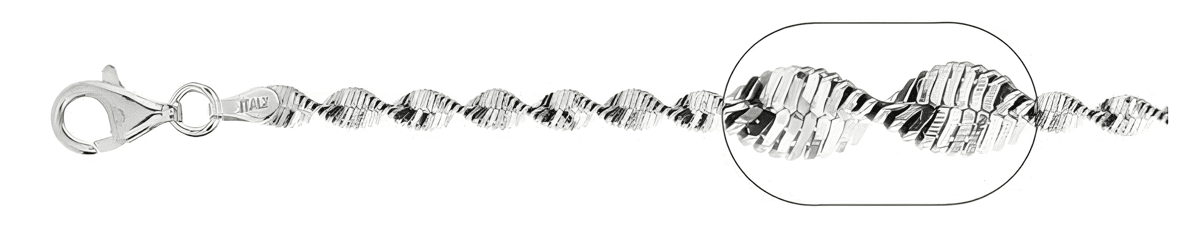
- Strength: Medium. Strength depends on link size.
- Best for: Wearing alone or with a pendant.
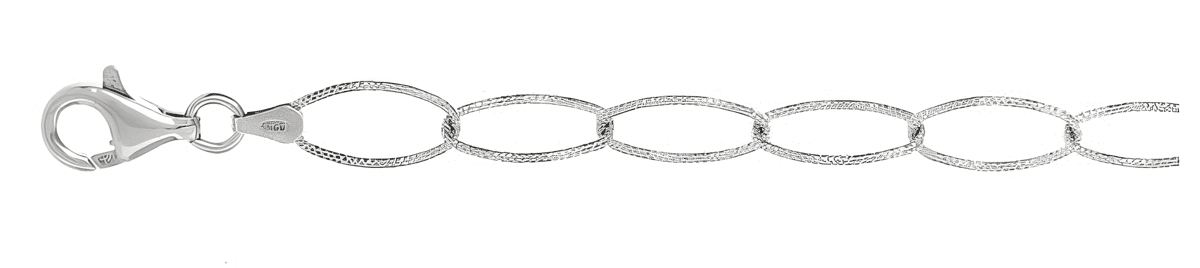
Diamond Cut Chain
"Diamond cut" describes a finish, not a link shape. A diamond-tipped tool cuts tiny flat faces into the links, so the chain catches light and sparkles.
Many styles can be diamond cut, including rope, curb and Singapore chains.
- Strength: Depends on the base chain. The cuts only change the surface.
- Best for: Anyone who wants more sparkle on a plain chain.
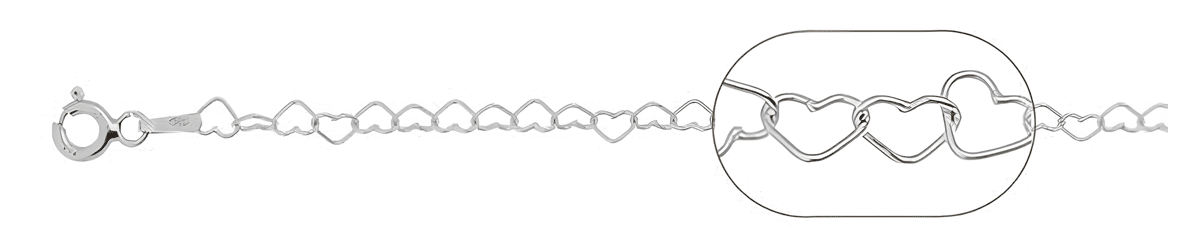
Heart Chain
A heart chain is made of small heart-shaped links joined in a row. The shape gives it a sentimental look.
It is common in gifts and in necklaces, bracelets and anklets.
- Strength: Medium. The heart shape is a weaker joint than a round link, so use gentle handling.
- Best for: Gifts, and wearing alone as a simple accent.
Infinity Chain
The links are shaped like the infinity symbol, a figure eight on its side. Each loop joins the next, so the symbol repeats along the whole chain.
The look is light, but the links are joined firmly enough to carry a small pendant or charm.
- Strength: Medium. Fine for light pendants and charms.
- Best for: Sentimental necklaces and bracelets about love or friendship.
Link and Bar Chain
Round or oval links alternate with short straight bars. The bars break up the rhythm of the chain and give it a clear, regular pattern.
It looks more structured than a plain link chain, and the pattern shows well on its own.
- Strength: Medium to strong. The bars are solid pieces between the links.
- Best for: Necklaces and bracelets worn plain or with a small pendant.
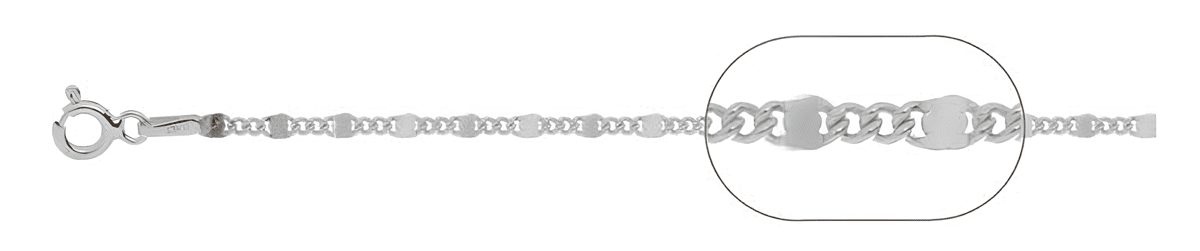
Mirror Chain
A box-style chain with smooth, flat faces that catch light like a mirror.
It lies flat and sits neatly, so it suits a polished look.
- Strength: Medium. The box construction is sturdy for its size.
- Best for: Shiny, simple necklaces and bracelets, with or without a pendant.
Bismarck Chain
A flat, wide chain made of rows of small interlocking links. The rows give it a thick, woven look with a textured surface.
It feels heavier than most chains of the same width and stays flexible.
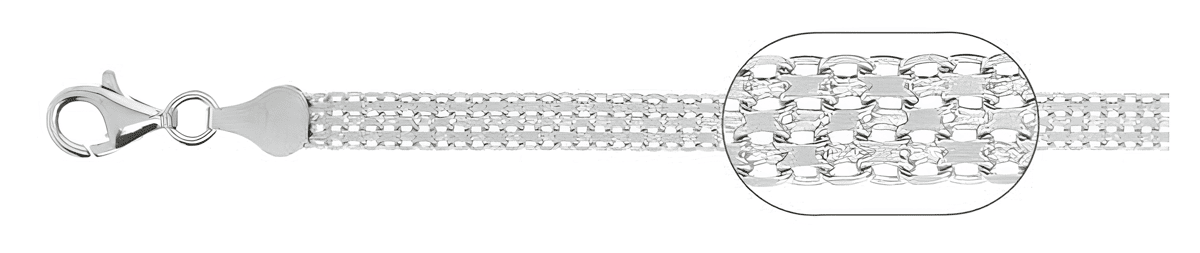
- Strength: Strong. The layered links spread the load.
- Best for: Bracelets and statement necklaces, including men's pieces.
Palm Chain
A flat, textured chain with a repeating pattern.
It is a decorative chain that looks best worn on its own or with a very simple pendant.

- Strength: Medium. It holds light to medium pendants.
- Best for: Casual necklaces and bracelets with a textured look.
Braided Chain
Several strands or rows of links are interlaced to make a braid-like pattern. This gives the chain texture and a flexible feel.
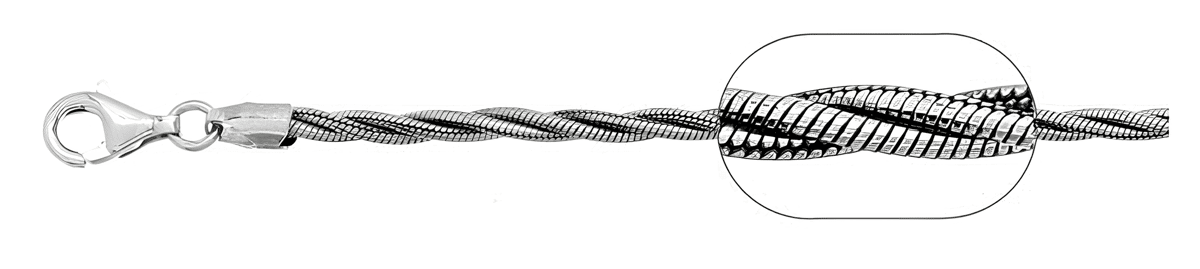
- Strength: Medium. The interlacing keeps it stable.
- Best for: Bracelets and necklaces where texture matters more than a pendant.
Cashmere Chain
A fine, smooth chain with a soft look rather than a bulky one.
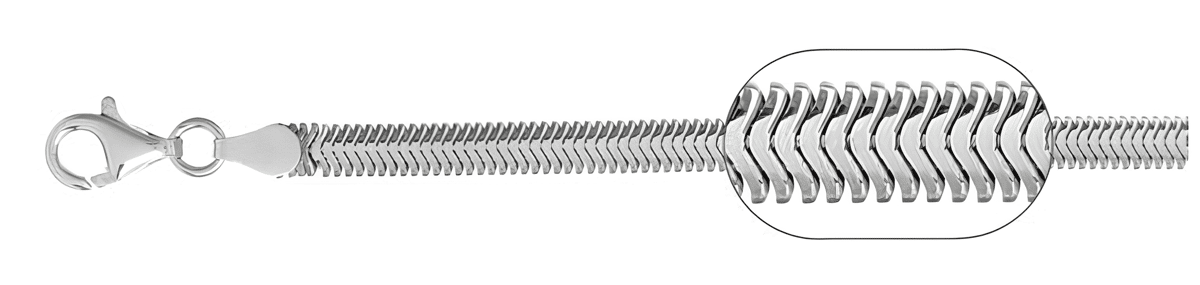
- Strength: Medium.
- Best for: Everyday necklaces with a soft look.
Square Link Chain
Square links are joined one after another. The shape gives the chain a geometric, angular look.
- Strength: Medium. It carries light to medium pendants.
- Best for: Modern, minimal necklaces and bracelets.
Cobra Chain
A dense, tightly interlocked chain. It feels weighty but bends easily.
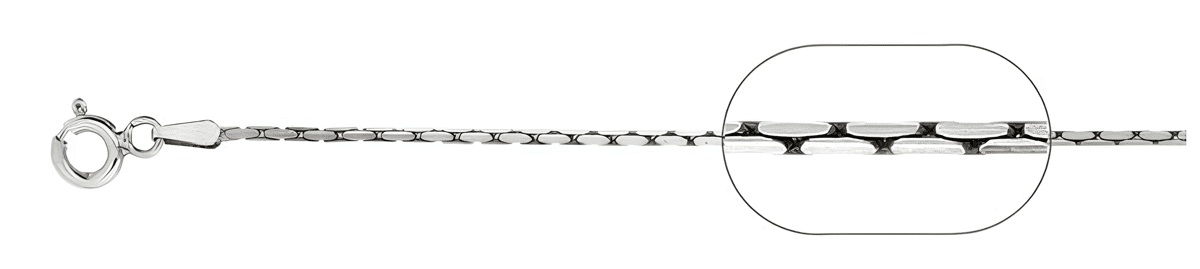
- Strength: Strong. The links interlock closely.
- Best for: Bold necklaces and bracelets worn on their own.
Cheval Chain
Also called a horse link chain. The links are flat ovals that connect at alternating angles, which makes a regular, even pattern.
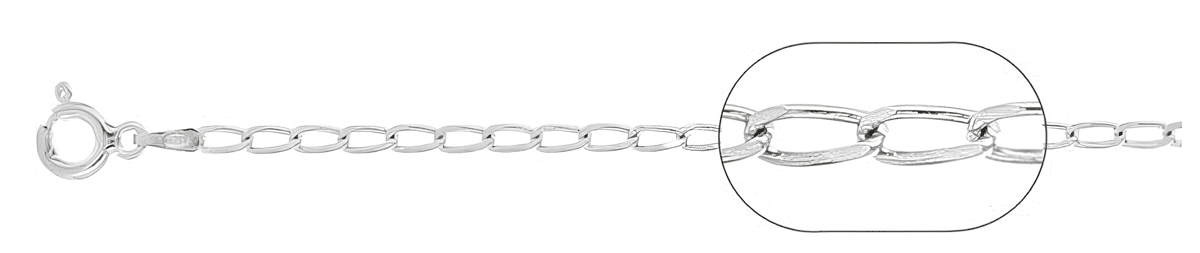
- Strength: Medium. Interlocked links hold pendants well.
- Best for: Necklaces and bracelets, plain or with a pendant.
Cylinder Chain
The links are small tubes, which gives a smooth, sleek surface. The look is plain and modern.
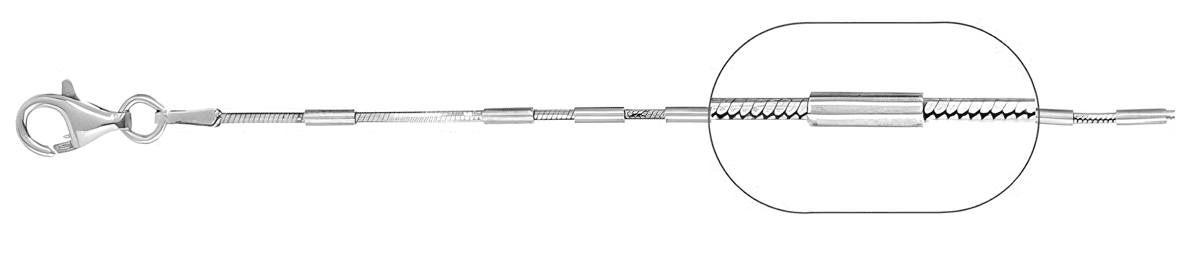
- Strength: Medium. The links lock into each other.
- Best for: Minimal necklaces and bracelets that go with most outfits.
Eros Chain
A fine, decorative chain, worn alone or with a small pendant or initial.
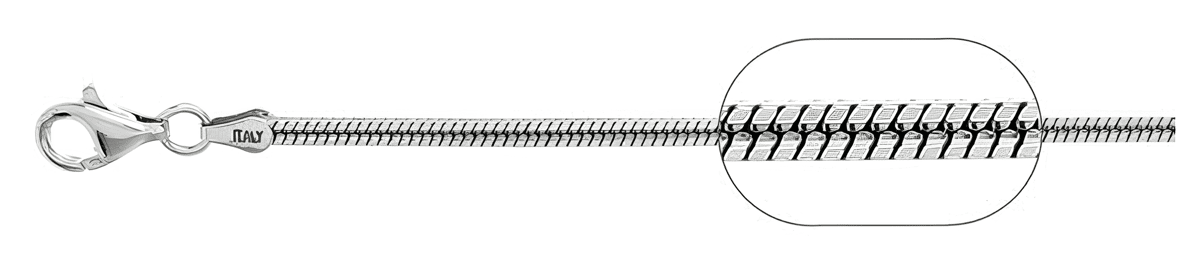
- Strength: Medium. Fine for lockets and light charms.
- Best for: Gift necklaces and bracelets.
Gemella Chain
Gemella means twin in Italian. The chain is built from pairs of links joined together, which makes a doubled pattern.
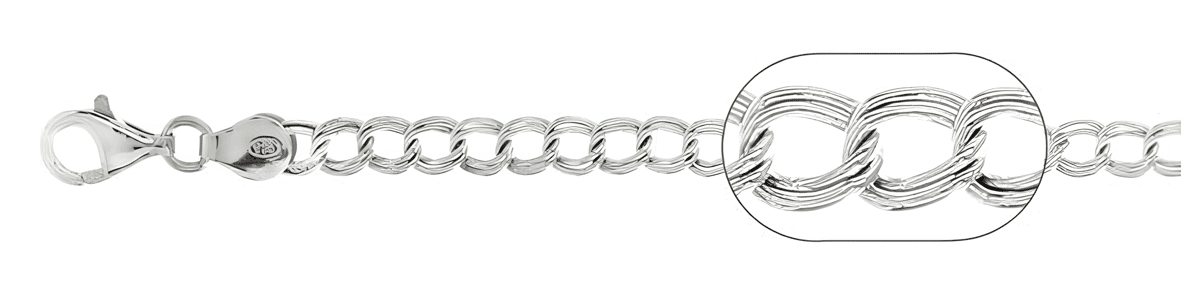
- Strength: Medium. Paired links add some reinforcement.
- Best for: Necklaces and bracelets with a bolder pattern.
Giotto Chain
Also called a ring chain. Flat, ring-shaped links connect in a line, and the flat faces catch light.
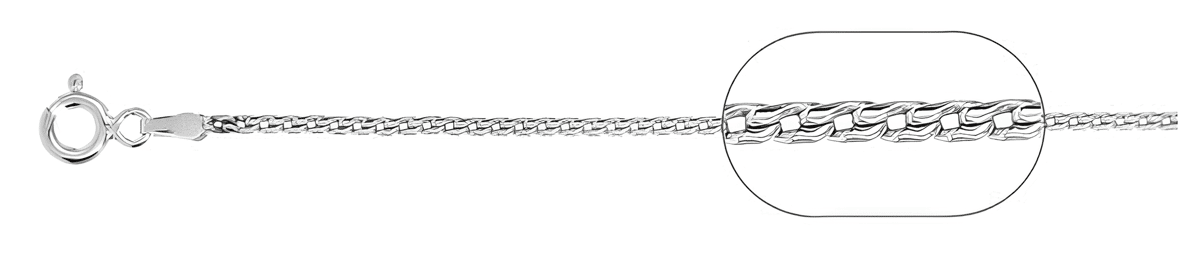
- Strength: Medium. It looks light but holds together well.
- Best for: Necklaces and bracelets worn alone or with a small pendant.
Gomitolo Chain
Also called a bobbin chain. Gomitolo is Italian for a ball of yarn, and the looped, spiral pattern recalls wound thread.
The pattern is busy enough that it needs no pendant.
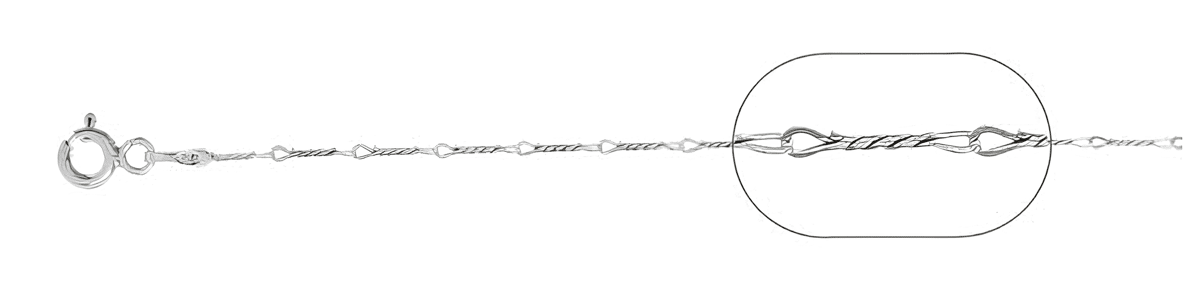
- Strength: Medium. The loops interlock in a repeating cycle.
- Best for: Standalone necklaces and bracelets.
Greek Chain
A chain based on Greek key (meander) patterns, a repeating geometric line. It is a pattern-led design rather than a plain link.
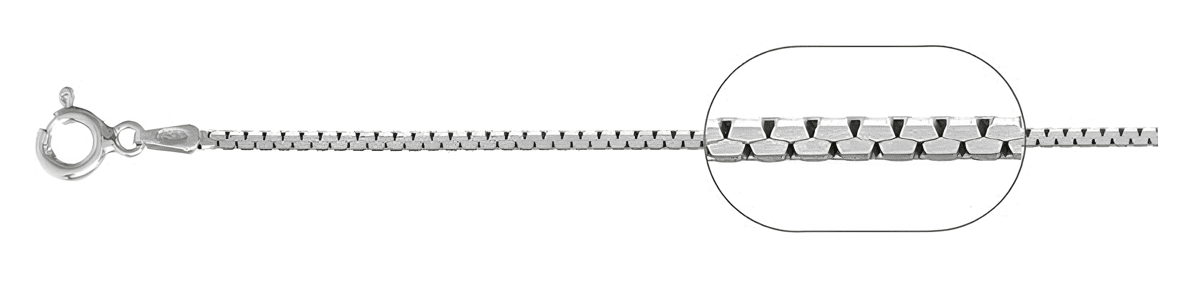
- Strength: Medium. The links interlock.
- Best for: Necklaces and bracelets with a classical pattern.
Where to go next
Chains are half the story. See our complete guide to all 44 necklace styles and how to layer multiple necklaces without tangling. If you already have a pendant or a name in mind, see how it looks on a chain in our name necklaces and paperclip name necklace.
Frequently Asked Questions
Which type of chain necklace is the most durable?
For everyday strength, curb, Franco, box (Venetian), rope, and wheat/Spiga chains rank among the toughest, thanks to their tightly interlocked links that spread tension evenly. These styles hold up well to daily wear and can comfortably carry heavier pendants. By contrast, herringbone chains are lovely but more delicate, since they can kink if handled roughly.
What is the difference between a wheat chain and a Spiga chain?
There isn't one, really: wheat and Spiga are two names for the same style. Both are made from four strands of oval links braided together so the pattern resembles a stalk or ear of wheat. The tightly woven design makes it strong enough to support heavier pendants, which is why it shows up under either name.
Which chain is best for holding a heavy pendant?
Look for chains built with solid, interlocking links that distribute weight evenly, such as the mariner (anchor), Franco, box, wheat/Spiga, and rope styles. These are engineered to carry bulkier charms without stretching or losing shape. Delicate, reflective styles like herringbone are better worn on their own or with lighter pendants.
Which chain necklaces kink or tangle the most easily?
Herringbone, snake, and omega chains have the most reputation for kinking, because their smooth, flat construction is more prone to bending permanently if twisted. They look sleek and reflect light beautifully, but they reward gentle handling and careful storage. Laid flat and untwisted, they can last a very long time.
How did the Belcher chain get its name?
The Belcher chain, also sold as rolo, is widely said to be named after Jem Belcher, an early-19th-century British boxing champion. Most other chain names simply describe the look, such as wheat, rope, snake or box.