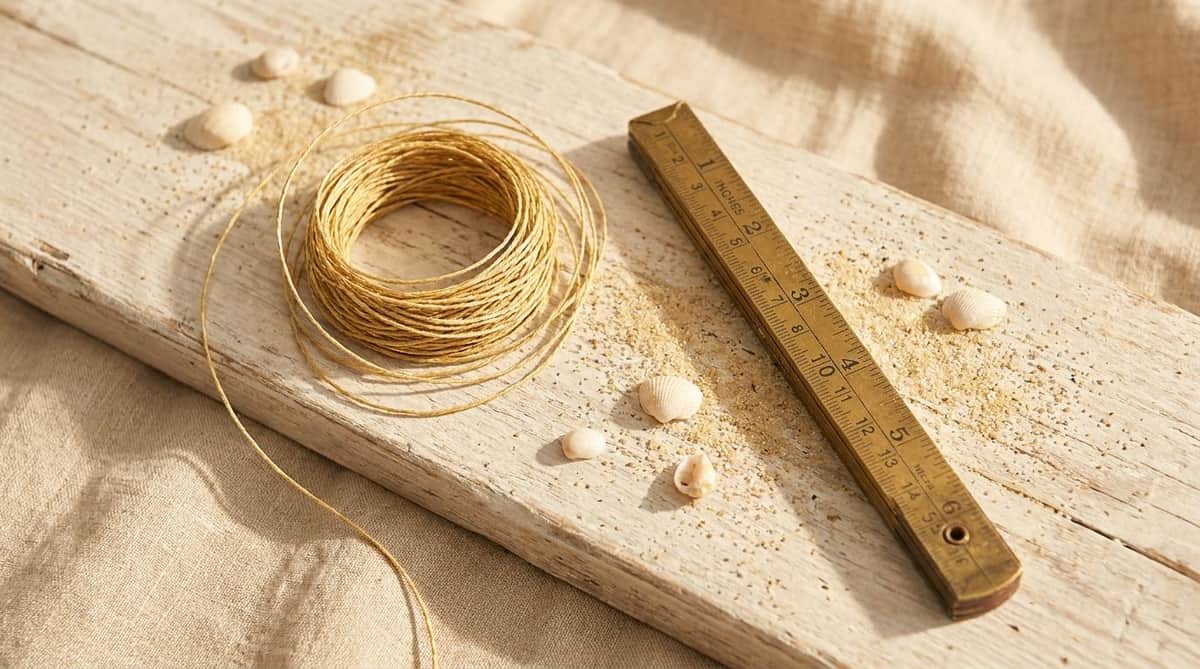
Toe rings never really went away, but they spent a long stretch in fashion's back drawer. That changed again this year: style press from Who What Wear to Grazia has been covering their return through 2025 and into 2026, tying the look to barefoot sandals, exposed-foot shoe seasons, and a broader 90s-jewelry revival.
Yes — toe rings are back in style for 2026, one of this year's clearest jewelry trends. They're worn thinner and more minimal than the chunky, beaded styles of the early 2000s, tied to a broader 90s-jewelry revival, and showing up everywhere from barefoot sandals to beach vacations.
The comeback raises the same three questions every under-covered accessory does: which toe do you actually wear one on, what size do you order, and does it mean anything beyond looking good with a pedicure. Here's what's real.
Why Toe Rings Are Trending Again
The 2026 version of the trend leans thinner and more minimal than the chunky, beaded toe rings of the early 2000s. Coverage from Who What Wear describes it as understated rather than maximalist: a single slim band, sometimes paired with an anklet, rather than a heavy statement piece competing for attention. Grazia links the renewed interest to Rihanna and other celebrities being photographed in them, the same kind of visibility that has driven other 90s-era jewelry (chokers, body chains) back into rotation over the past few style cycles.
Practically, it's a warm-weather trend: it shows up hardest in barefoot-sandal and flip-flop season, and fades once socks and boots take over.
A Tradition Much Older Than This Season
Toe rings aren't a Gen Z invention. In India, they carry real cultural weight: Hindu brides traditionally have a toe ring placed on the second toe of each foot during the wedding ceremony, as a marker of married status. The rings are called bichiya in Hindi, with regional names including metti in Tamil and jodavi in Marathi, and they're traditionally made of silver rather than gold, since gold historically held a more reverent status in Hindu custom that made it feel inappropriate for the feet. Ayurvedic tradition also associates the second toe with menstrual health, though that specific claim hasn't been tested in clinical research, so treat it as folklore rather than medicine.
The custom is believed to have spread from India into parts of Africa, and toe rings have long been worn by men as well as women in some regions, in simpler, unadorned designs. In the United States and much of the West, none of that symbolism carried over — a toe ring here reads as a fashion choice, not a marital or cultural signal, which is a big part of why Western wearers feel free to put one on whichever toe (or foot) they like.
Toe Ring Styles Right Now
Four looks are doing most of the work in current toe-ring styling:
- Minimalist barefoot band — a single thin metal ring, worn with nothing else on that foot; the easiest entry point and the one closest to 2026's understated mood.
- Layered/stacked toes — two or three slim rings across different toes on the same foot, borrowing the ring-stacking idea from hands and applying it below the ankle.
- Statement or gem-set — a single bolder piece (twisted metal, a small stone, an engraved band) worn alone for a dressier moment, like a wedding or a beach vacation.
- Toe-to-anklet chain — a toe ring connected by a fine chain to an anklet, a style that reads more "jewelry" than "accessory" and pairs naturally with strappy sandals.
Which Toe — and Which Foot
There's no rulebook in Western fashion the way there is in Indian tradition (second toe, both feet). Most people default to the second toe (next to the big toe) or the third, since those tend to have the most room and the least pressure from the shoe or sandal strap. A single ring on one foot is the most common Western styling choice; wearing the same style on both feet is really only a strict rule inside cultures where the ring carries marital meaning.
How to Size a Toe Ring at Home
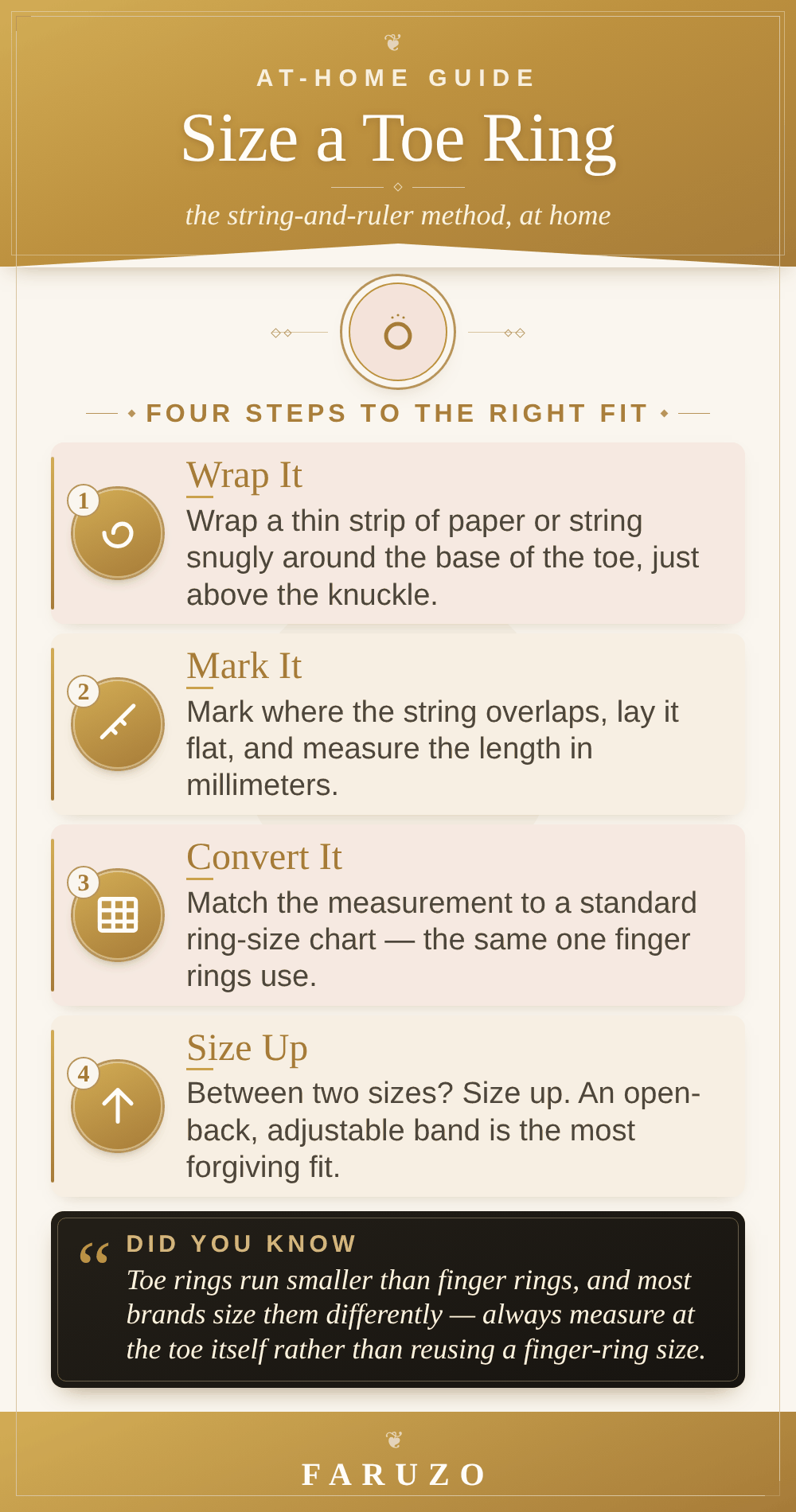
Toe rings run smaller than finger rings and most brands size them differently, so measuring first avoids ordering something that either slides off in a sandal or cuts off circulation by evening. The at-home method is the same string-and-ruler approach used for finger rings:
- Wrap a thin strip of paper or a piece of string snugly around the base of the toe, just above the knuckle where the ring will actually sit.
- Mark the point where the string overlaps, then lay it flat and measure the length in millimeters with a ruler.
- Convert that measurement to a ring size using a standard conversion chart — the same one used for finger rings works here.
- When the measurement lands between two sizes, size up rather than down: an open-back or adjustable band is the safer bet for a toe, since toes swell slightly over the course of a day the same way fingers do.
For the full string-and-chart method with a printable reference, see our ring size guide.
Materials, Comfort, and Care
Across the market, toe rings range from solid precious-metal pieces to lower-cost plated styles, and quality varies a lot by metal. FARUZO's own pieces (including our anklets, sized the same way) are 316L stainless steel with a plated finish — not a karat claim, just a metal built to survive the conditions a toe ring actually lives in. An open-back, adjustable design is worth prioritizing over a fixed closed band too, since it lets you fine-tune fit without a second measuring trip, and it's more forgiving of the small day-to-day size changes toes go through.
Toe rings live in a rough environment — sand, pool chlorine, salt water, sweat — more than most jewelry, so tarnish resistance matters more here than on a necklace you take off before a shower. Plain sterling silver is the most tarnish-prone of the common options; plated stainless steel generally holds up better to that kind of daily exposure. Our guide to whether stainless steel turns green covers the difference in more depth.
If you're already building a barefoot-sandal look and want the toe ring's tarnish-resistant cousin, it's worth looking at anklets in the same nickel-safe, stainless-steel-plated finish — browse our Name Anklet for pieces you can wear in the pool without worrying about a green ring line.
And if the toe-ring stacking idea has you eyeing a similar look for your hands, the logic is identical — our pinky ring guide covers how that stacked, layered look translates to fingers.
Frequently Asked Questions
Are toe rings in style in 2026?
Yes. Toe rings are back for 2026, styled thinner and more minimal than the chunky, beaded look of the early 2000s, and tied to the broader 90s-jewelry revival — chokers, body chains and other throwback pieces — along with barefoot-sandal and flip-flop season.
Which toe should I wear a toe ring on?
In the West, there's no fixed rule — most people choose the second or third toe for comfort and fit. In Indian tradition, a toe ring is worn on the second toe of both feet as a marker of marriage.
Do toe rings have a specific meaning?
In parts of South Asia and Africa, yes — traditionally a marker of a married woman. In the US and most Western fashion contexts, a toe ring today is read as a style choice rather than a symbol of anything in particular.
Can I wear a toe ring in the shower or pool?
You can, but the metal matters. Plain sterling silver tarnishes faster with repeated chlorine and salt-water exposure than plated stainless steel, so daily swimmers generally get more mileage out of a stainless-steel-plated band.
What size toe ring should I order?
Measure the base of the toe with a strip of string or paper, convert the measurement using a standard ring-size chart, and size up rather than down if you land between two sizes — an adjustable, open-back band is the most forgiving choice.
Do toe rings fit differently than finger rings?
Toes are generally shorter and rounder than fingers and swell slightly over the day the same way fingers do, so an open or adjustable band tends to fit more comfortably long-term than a fixed closed one.
Are toe rings only for women?
No. In parts of Tamil culture, men have historically worn simpler toe ring designs, and in current Western fashion, toe rings are worn by any gender as a style choice.