The Cuban link chain is having its biggest moment since the gold-chain-heavy '80s and '90s, and this time it's not just a menswear staple — it's showing up stacked on women's necklines, layered with thin pendant chains, and sized down into shorter, choker-length pieces that sit right at the collarbone instead of hanging loose and heavy. Here's what actually makes a chain "Cuban link," where the name and the style really come from, and how to buy and wear one without overpaying for a look that was never actually gold to begin with.
What Actually Makes a Chain "Cuban Link"?
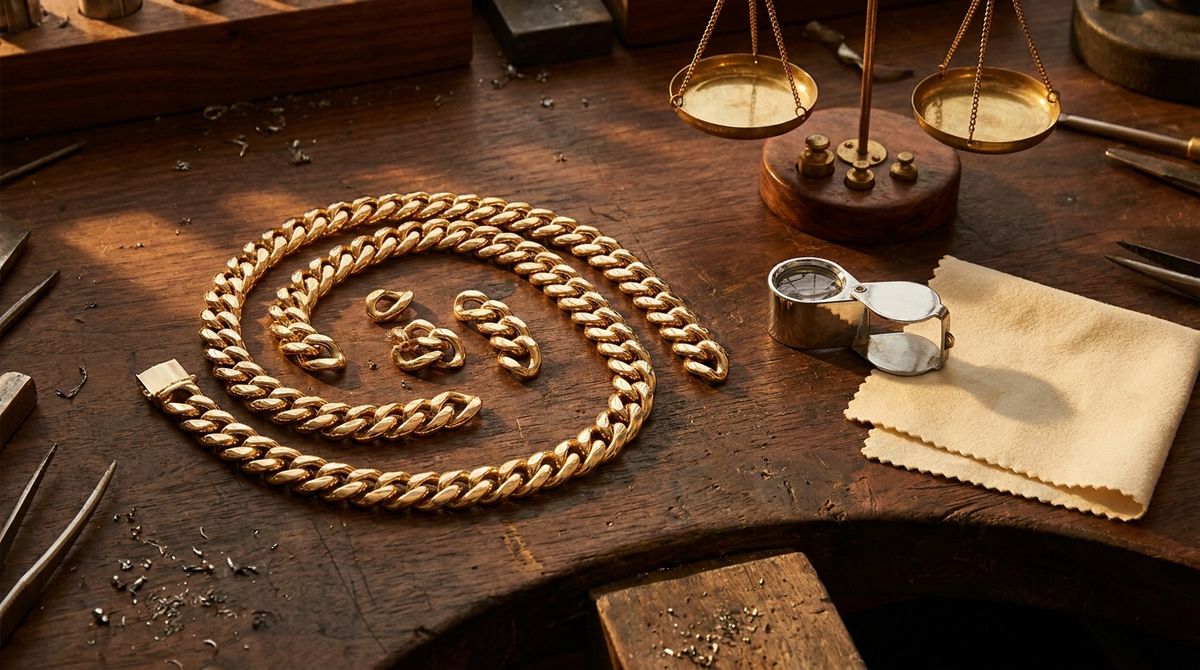
A Cuban link chain is built from flat, tightly interlocked oval links, each one twisted and fused into the next so the chain lays smooth, dense, and flexible against the skin instead of sitting stiff like a rope chain. That tight interlock is what gives it its signature weight and shine — the links overlap enough that very little of the skin or clothing underneath shows through, which is exactly the "chunky" look the style is known for. It's one of dozens of named chain constructions (curb, figaro, box, rope, and more), and our
59 Types of Chain Necklaces guide breaks down where Cuban link sits among the full family if you're comparing it to a curb or figaro chain before buying.
From Miami Streets to Hip-Hop Icon: A Short History
Industry accounts of the style consistently trace the "Cuban" name back to Miami's Cuban immigrant community in the 1970s, where the thick, interlocked chain became a recognizable local style before it spread further. It caught on nationally through hip-hop in the late '70s and '80s — early artists wore it as part of a bigger, bolder jewelry aesthetic, and by the mid-to-late '80s acts like Run-DMC and LL Cool J had made a heavy gold Cuban link chain shorthand for success and status in the genre. That status symbolism is a big part of why the style keeps resurfacing decades later: it still reads as "I made it," even at a fraction of the cost and weight of an original rapper-style chain.
Why It's Trending Again Right Now
Three things are pushing Cuban link back into regular rotation at once. First, the heavy-chain aesthetic that defined 2000s hip-hop jewelry is back in style generally, the same wave that's revived thick hoop earrings and stacked rings. Second, jewelry-trend trackers report search interest in "cuban link chain" climbing noticeably over the past year, alongside a real shift in how the style is worn — instead of one long, heavy rope hanging to the chest, the current version is often a shorter 16–20 inch length worn close to the collarbone, sometimes layered under a longer, thinner chain rather than worn alone. Third, the broader "mix metals, stack everything" styling rule that's taken over jewelry in general makes a plain, textural chain like Cuban link an easy building block rather than a statement piece you have to plan an outfit around.
Solid, Hollow, or Plated: What You're Actually Buying
"Cuban link" describes the shape of the links, not what the chain is made of — and that distinction matters more for this style than almost any other, because the look is identical across three very different price tiers:
- Solid gold — every link is fully filled, so the chain carries its full declared gold weight. Specialty gold-chain retailers commonly price a solid 14K gold Cuban link in a mid-size width (around 6mm, 22" long) in the roughly $2,500–$5,000 range, with a solid 18K version running meaningfully higher — it's the most durable option and holds real resale value because the gold content is real.
- Hollow gold — the links are gold on the outside but empty inside, so the chain looks identical to a solid one but weighs, and costs, far less. Sellers typically price hollow Cuban link chains 40–60% below an equivalent solid chain for the same visual size, with the tradeoff being that hollow links are more prone to denting or crushing under hard wear.
- Plated — a base metal chain with a thin gold (or other finish) layer over the top. This is the budget tier, and it's also where quality varies the most: how the base metal is chosen determines whether the piece is actually safe to wear every day, separate from how long the plating itself lasts.
FARUZO's own chain pieces fall into that third category by design, not by cutting corners: they're plated over 316L stainless steel rather than a cheaper, allergy-prone base metal, which is what makes the plated option nickel-safe for daily wear rather than just cheap. That's a different claim from "vermeil" (a gold layer over solid sterling silver) or solid gold, and it's worth knowing which one you're actually being sold before you pay solid-gold prices for a plated chain.
Choosing a Length and Width
Width and length do most of the work in how a Cuban link chain reads. A thinner chain (3–5mm) layers easily under other necklaces and works for everyday wear; the classic "statement" width most people picture starts around 8–10mm and up. Length follows the current styling shift described above:
- 16"–18" (choker to collarbone) — the shorter, closer-to-the-neck length driving the current trend; worn alone as a single statement or as the top layer in a stack
- 20"–22" (mid-length) — sits at or just below the collarbone; the most versatile length for layering with a longer pendant chain underneath
- 24"+ (rope length) — the original heavy, hanging-to-the-chest length most associated with '80s and '90s hip-hop jewelry; still available but less common in current styling
A thicker, shorter chain anchors a layered stack the way a wider ring anchors a hand-stack — pairing it with one or two thinner chains at slightly different lengths is the easiest way to wear it without it looking like a single, isolated piece. The same stacking logic that applies to rings and bracelets applies here; our chain link bracelet trend guide covers how Cuban, curb, figaro, and paperclip links compare on the wrist if you're building a matching set rather than just a necklace.
How to Wear and Style a Cuban Link Chain
Cuban link reads differently depending on what's underneath it. Worn over a plain T-shirt or crewneck, it's the whole look — no other jewelry needed beyond maybe a simple stud. Worn with a blazer or button-down, a shorter, thinner Cuban link reads more "finished outfit" than "statement piece." And because mixing warm and cool metal tones is now one of the most common styling choices rather than a mistake, a gold-tone Cuban link doesn't have to match every other piece you're wearing that day — see our guide to mixing metals for how to pair warm and cool tones on purpose. If you want the chain to carry a personal detail rather than reading as purely decorative, FARUZO's custom necklaces & chains for men collection builds that kind of name or initial detail into a chain-style piece.
Caring for a Cuban Link Chain
Because the links overlap so tightly, a Cuban link chain traps lotion, perfume, and everyday grime more than an open-link chain does — a soft brush and warm, soapy water gets into those overlaps better than just wiping the surface. For a plated chain specifically, skip ultrasonic cleaners and harsh chemical dips, which can wear through the plating layer faster than normal daily wear would; for solid or hollow gold, a jeweler's polishing cloth is usually enough between deeper cleanings. Store it flat or hung rather than balled up in a drawer — tightly interlocked links are more prone to kinking and tangling with themselves than a simple cable or rope chain.
Frequently Asked Questions
Why is it called a "Cuban link" chain?
The name traces to Miami's Cuban immigrant community in the 1970s, where the thick, interlocked style first became a recognizable local look before spreading nationally through hip-hop in the late '70s and '80s.
Is a Cuban link chain always real gold?
No. "Cuban link" describes the shape of the interlocking links, not the material — the same look is sold in solid gold, hollow gold, and gold-plated versions at very different price points and durability levels. Always ask which one you're buying rather than assuming from the look alone.
What length Cuban link chain is trending right now?
Shorter, choker-to-collarbone lengths in the 16"–20" range are the current trend, often worn as the top piece in a layered stack rather than alone and hanging low the way the original '80s and '90s rope-length chains did.
Can you wear a Cuban link chain every day?
Yes, with the right material for your skin and routine. A plated chain over a nickel-safe base metal like 316L stainless steel holds up to daily wear without the allergy risk some base metals carry; just avoid ultrasonic cleaners and harsh chemicals, which wear plating down faster than normal use does.
Is Cuban link a men's-only style?
Not anymore. It started as a predominantly menswear and hip-hop staple, but the current trend cycle has it worn unisex — frequently layered with thinner, more traditionally "feminine" pendant chains rather than worn as a standalone men's piece.