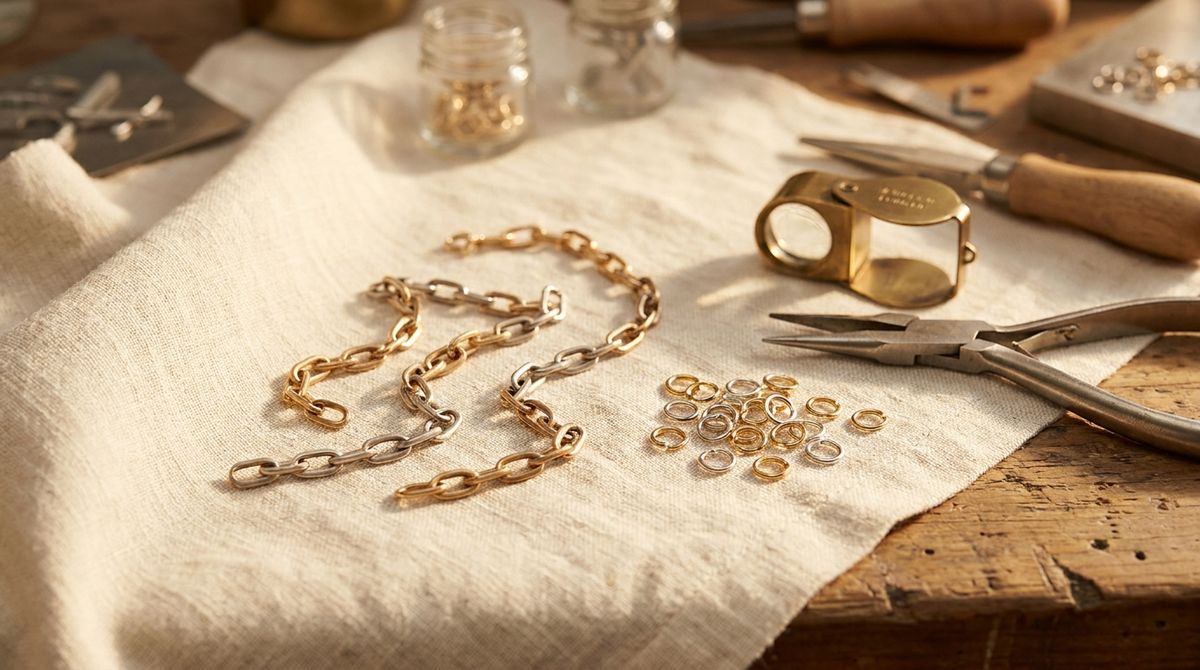
Chain link bracelets have gone from a menswear staple to one of the most-searched bracelet styles for everyone this year. Search interest for “chain link bracelet” sits well into the thousands of monthly searches, and the pull isn’t really about a single look — it’s that a plain metal chain, worn on its own or stacked with two or three others, reads as considered rather than try-hard in a way a single statement piece often doesn’t. Here’s what’s actually driving it, the link styles worth knowing before you buy, and how to wear one without it looking like you grabbed the first chain you saw.
Why Chain Links Are Having a Moment
Three things are happening at once. First, the “never mix metals” rule that governed jewelry for decades has quietly died — warm gold-tone and cool silver-tone worn together is now one of the most common styling moves rather than a mistake, which means a plain chain no longer has to match everything else on your wrist. Second, bracelet stacking itself has normalized the way ring stacking did a few years earlier: a single chain reads as unfinished, but two or three together — one chunky, one slim — reads as a look. Third, a plain link chain is genuinely versatile in a way a themed piece isn’t; it works with a T-shirt and it works with a blazer, which is a large part of why it keeps showing up across both minimalist and maximalist styling.
The Main Chain Link Styles, Compared
“Chain link bracelet” covers several distinct link shapes, and they don’t wear or photograph the same way. Here’s how the four you’ll see most often actually compare:
- Curb chain — flattened, twisted links that lie smooth against the wrist; the most common “classic chain” look, reads casual to dressy depending on thickness
- Cuban link — tightly interlocked, rounded links with more visible weight and shine; the boldest of the four, originally a menswear staple now worn unisex
- Figaro — an alternating pattern of one long link and several shorter ones; more textured and detailed than a curb chain without the bulk of a Cuban link
- Paperclip — elongated, flattened oval links with visible negative space between them; the most delicate-looking option and the easiest to layer thin
None of the four is objectively “better” — a Cuban link anchors a stack the way a wider ring anchors a hand, while a paperclip chain is closer to a support piece you’d add alongside something bolder.
Solid, Hollow, or Plated: What You're Actually Buying
The biggest quality difference in chain bracelets isn’t the link shape, it’s what the chain is actually made of underneath the finish. A lot of “gold” chain on the market is hollow brass or a base metal with a thin gold wash that wears through at the clasp and the high-contact links within months. FARUZO's chain bracelets are 316L stainless steel with a gold-plated, rose gold-plated, or silver-tone plated finish — not a karat gold chain and not sterling silver, but a solid metal core that holds its shape, resists tarnish, and is nickel-safe, which matters for a piece that sits against skin for hours at a stretch the way a bracelet does more than almost any other jewelry category.
If a listing anywhere calls a plated chain “vermeil,” that claim specifically requires a sterling-silver base underneath the gold — worth checking before you buy if durability matters to you, since a steel-core chain and a silver-core chain wear differently even when the finish looks identical on day one.
How to Wear a Chain Link Bracelet Now
Stacking is the default styling move: pair a chunkier curb or Cuban link with one or two slimmer chains, ideally in slightly different lengths so they don’t sit stacked flat on top of each other. Mixing tones — one gold-tone chain with one silver-tone — is now a deliberate look rather than an accident, and it also means you don’t need to replace every other piece of jewelry you own to add one in.
For a fuller breakdown of how tones mix without clashing, see our guide to wearing gold and silver together.
If you already wear a chain necklace, matching — not identically, just in the same general family of link — the necklace and bracelet is a simple way to make separate pieces read as a set; our guide to chain necklace styles covers the same link vocabulary from the necklace side.
Getting the Fit Right
A chain bracelet worn too loose slides around and catches on sleeves; worn too tight, the individual links dig into the wrist instead of draping. Because chain bracelets usually close with a lobster clasp on a fixed-length chain (sometimes with a couple of extender links), getting the length right matters more here than it does for a stretch bracelet.
Our bracelet sizing guide walks through measuring your wrist and choosing between a snug, standard, or loose fit — the same method applies whether the chain is curb, Cuban, figaro, or paperclip.
Keeping It Looking New
A bracelet gets more wear than almost any other jewelry category — water, hand sanitizer, friction against desks and steering wheels — so it's worth knowing that a stainless steel plated chain still benefits from the same basic care as any plated piece: keep it away from chlorine and harsh cleaning chemicals, wipe it dry after it gets wet, and store it separately from other chains so the links don't scratch each other in a drawer.
If a chain has already picked up a dull or discolored patch, our guide to cleaning oxidized jewelry covers safe at-home methods that work on plated chain the same way they work on other plated pieces.
Building a Chain Bracelet Stack Worth Keeping
A good starting stack is two pieces, not five: one chunkier chain (curb or Cuban link) as the anchor, one slimmer chain (figaro or paperclip) as the support, in two different tones if you want the mixed-metal look or the same tone if you'd rather keep it quiet. From there, a third piece — a personalized name or initial bracelet in a matching tone — is a natural next addition, since it adds meaning to a stack that's otherwise purely about the metal.
Browse FARUZO's personalized bracelets to see chain styles alongside name and initial pieces built to layer with them.
Frequently Asked Questions
Are chain link bracelets still in style in 2026?
Yes — search interest for chain link bracelets remains strong, and the styling has shifted from a single bold chain worn alone toward stacking two or three thinner and thicker chains together, often in mixed metal tones.
What's the difference between a curb chain and a Cuban link bracelet?
A curb chain uses flattened, twisted links that lie flat and smooth; a Cuban link uses tightly interlocked, rounded links with more visible weight and shine. Cuban link is generally the bolder, heavier-looking of the two.
Can you mix gold-tone and silver-tone chain bracelets?
Yes. Mixing metal tones in the same stack is now a common, deliberate styling choice rather than a mistake to avoid — the two tones read as contrast rather than clashing when the pieces are otherwise similar in style.
Is a plated chain bracelet lower quality than solid gold?
Not necessarily — quality depends more on what's under the plating than on the plating itself. A stainless steel core with a plated finish resists tarnish and holds its shape better than hollow base-metal chain, even though it isn't solid gold and shouldn't be described as vermeil or sterling silver.
How many chain bracelets should you stack at once?
Two is a reliable starting point — one chunkier anchor chain and one slimmer support chain. A third piece, often a personalized name or initial bracelet, is a common next addition once the base stack feels settled.