The tennis bracelet used to be a special-occasion piece — the kind of gift that came out for anniversaries and got put back in a box the rest of the year. That's shifted. The current wave treats it as a daily stacking piece, worn with two or three thinner bracelets rather than alone, and in finishes that don't need to match anything else on the wrist. Here's why it's back, the one step most people get wrong before it ever arrives, and how to wear it so it doesn't read as purely formal.
Why It's Called a "Tennis" Bracelet
The name comes from a specific, often-repeated story: at the 1987 US Open, tennis player Chris Evert's diamond line bracelet reportedly came loose and fell off mid-match, and she asked for play to pause so it could be retrieved before continuing. The style had existed before that under plainer names like "diamond line bracelet" or "eternity bracelet," but the moment stuck, and "tennis bracelet" became the name that caught on and never let go. Functionally, a tennis bracelet is just a flexible band set with a continuous line of similarly sized stones, with no single stone acting as a focal point — the effect comes from the unbroken row, not from one centerpiece.
Why It's Trending Again Right Now
Two things are driving the current wave. First, the broader "stack everything" styling rule that already reshaped how people wear rings and necklaces has reached bracelets: a tennis bracelet now gets worn as one line in a stack of two or three different bracelet styles, not as a single statement piece that has to stand alone. Second, the line-bracelet shape itself has loosened up — the classic all-diamond, all-white-metal version is still around, but it's now just as common to see it in colored stones, mixed metals, or a slimmer, more flexible build that sits closer to a chain than a rigid formal piece. That shift is what moved it out of "special occasion only" and into daily rotation.
The One Step Most People Skip: Sizing
Unlike a bangle or a cuff, a tennis bracelet isn't adjustable once it's made — the line of stones is set to a fixed length, so getting the size right before ordering matters more here than for almost any other bracelet style. The standard method:
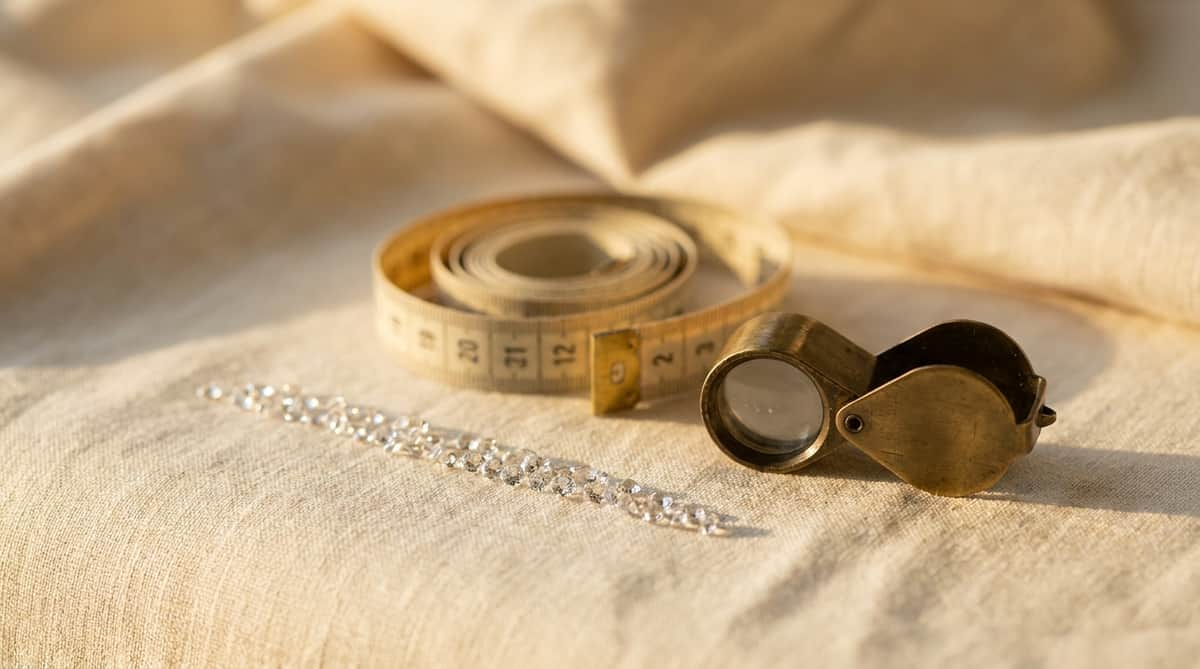
- Wrap a soft tape measure (or a strip of string, then measure the string against a ruler) around your wrist, just below the wrist bone, snug but not pressing into the skin.
- Note that measurement as your base wrist size.
- Add an allowance on top of it, based on how loose you want the fit — this is the step that actually determines comfort, and it's where most first-time buyers guess wrong.
A labeled allowance guide, in inches added to your base wrist measurement:
- Snug, close-to-the-skin fit: add about 0.25 inch
- Standard, slightly loose fit: add about 0.5 inch
- Looser, draped fit: add about 0.75 inch or slightly more
If your measurement lands exactly between two available sizes, size up rather than down — a tennis bracelet that's slightly loose still sits fine on the wrist, while one that's even a little tight will dig in after a few hours of wear and is harder to get on and off one-handed.
Tennis Bracelet vs. a Plain Chain Bracelet
The two get confused at a glance because both sit flat and flexible on the wrist, but they're built differently and read differently once they're on:
- Construction: a tennis bracelet is a continuous line of individually set stones; a chain bracelet is a series of connected metal links with no stones at all.
- Visual weight: a tennis bracelet reads as one solid, sparkling line; a chain bracelet reads as texture and movement, with gaps of visible skin between links.
- Styling role: a tennis bracelet usually anchors a stack as the "statement" line; a chain bracelet is more often the supporting piece layered around it.
- Everyday durability: a chain bracelet generally tolerates bumps and catching better, since there's no stone setting to knock loose; a tennis bracelet's stone settings are the part most likely to need an occasional check.
If you're deciding between the two rather than wearing both, our chain link bracelet trend guide covers the construction side of the chain option in the same amount of detail as this guide covers the tennis bracelet.
How to Wear It as a Daily Piece, Not an Occasion Piece
The fastest way to make a tennis bracelet feel everyday rather than formal is to stop wearing it alone. Pair it with one slim chain-link or bead bracelet in a similar or contrasting metal tone, and let the tennis bracelet be the "line" piece in the stack rather than the whole look — the same logic that makes a stack of rings read as intentional instead of cluttered. For a more personal version of the format, FARUZO's name bracelets collection builds a wearer's name or initials into a slim companion piece that pairs naturally alongside a line-style bracelet without competing with it. If you're building out a full stack, our stacking rings guide covers the same mix-and-layer principles that apply just as directly to bracelets.
Everyday Wear and Care
A tennis bracelet's clasp is its weakest point under daily wear, since it's opened and closed every time the piece goes on or off — a secure box clasp with a safety catch is worth prioritizing over a plain lobster clasp if you're planning to wear it often rather than occasionally. For a plated piece, skip ultrasonic cleaners, which can wear through the plating layer faster than normal wear does; a soft cloth and mild soap and water handles everyday buildup without that risk. FARUZO's bracelet pieces are plated over 316L stainless steel rather than a cheaper base metal, which is what makes a plated piece nickel-safe for all-day wear rather than just affordable — that's a different claim from vermeil (a gold layer over solid sterling silver) or solid gold, worth knowing before you compare prices across retailers.
Frequently Asked Questions
Why is it called a "tennis bracelet" if it has nothing to do with tennis?
The name is tied to a widely repeated story about tennis player Chris Evert's diamond line bracelet coming loose during a match at the 1987 US Open. The style already existed under other names before that, but "tennis bracelet" is the name that stuck.
How do I know what size tennis bracelet to order?
Measure your wrist just below the wrist bone with a soft tape or string, then add an allowance on top: about 0.25 inch for a snug fit, 0.5 inch for standard, or 0.75 inch or more for a looser drape. If you're between two sizes, size up rather than down.
Can you wear a tennis bracelet every day?
Yes — the current trend is built around daily wear rather than special occasions only. Choosing a secure clasp with a safety catch and a nickel-safe plated base (like 316L stainless steel) makes daily wear practical rather than risky for the metal or the clasp.
Does a tennis bracelet have to be diamonds?
No. While the classic version is an all-diamond line bracelet, the current trend includes colored stones, cubic zirconia, and mixed-metal versions — the defining feature is the continuous line-of-stones construction, not the specific gem used.
Can you stack a tennis bracelet with other bracelets?
Yes, and it's the main way the style is being worn right now. Pairing it with one or two slimmer bracelets in a similar or contrasting metal tone reads as an intentional stack rather than wearing the tennis bracelet as a single, isolated piece.