The paperclip chain has been "having a moment" for long enough that calling it a moment barely makes sense anymore. It first broke out of fine-jewelry counters a few years ago and got amplified hard by Instagram and TikTok styling videos.
Instead of fading the way most single-season trends do, it settled into the kind of piece that just sits in regular rotation now — the elongated, flattened oval link that reads unmistakably different from a standard cable or box chain.
At a glance
- The name comes from the shape: each link is a flattened, elongated oval, a dead ringer for an actual office paperclip.
- It reads as graphic and architectural rather than densely textured, unlike a cable or curb chain.
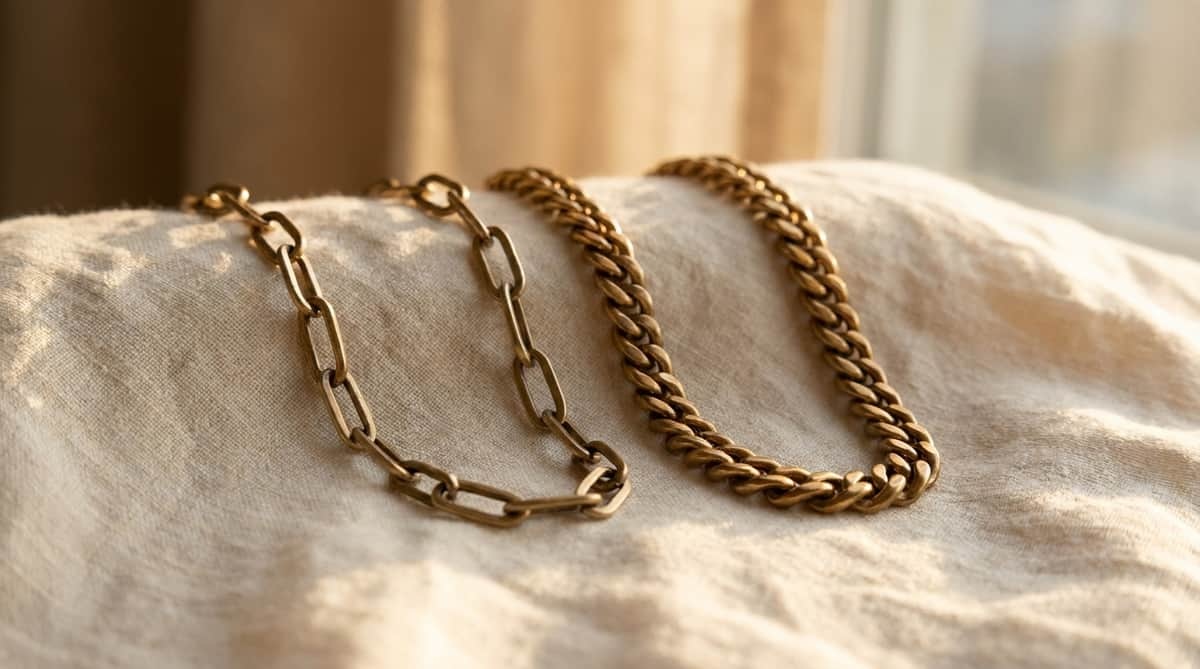
- Of the flat-link trends, paperclip is the open, lighter-looking option; Cuban link is the denser, more armor-like one.
- FARUZO's chains are 316L stainless steel with gold, rose gold, or silver-tone plating — never sterling silver or vermeil.
Here's what actually defines the style, how it compares to the other flat-link chains people confuse it with, and how to pick a weight and length that will hold up to daily wear.
What Makes a Chain "Paperclip" Style
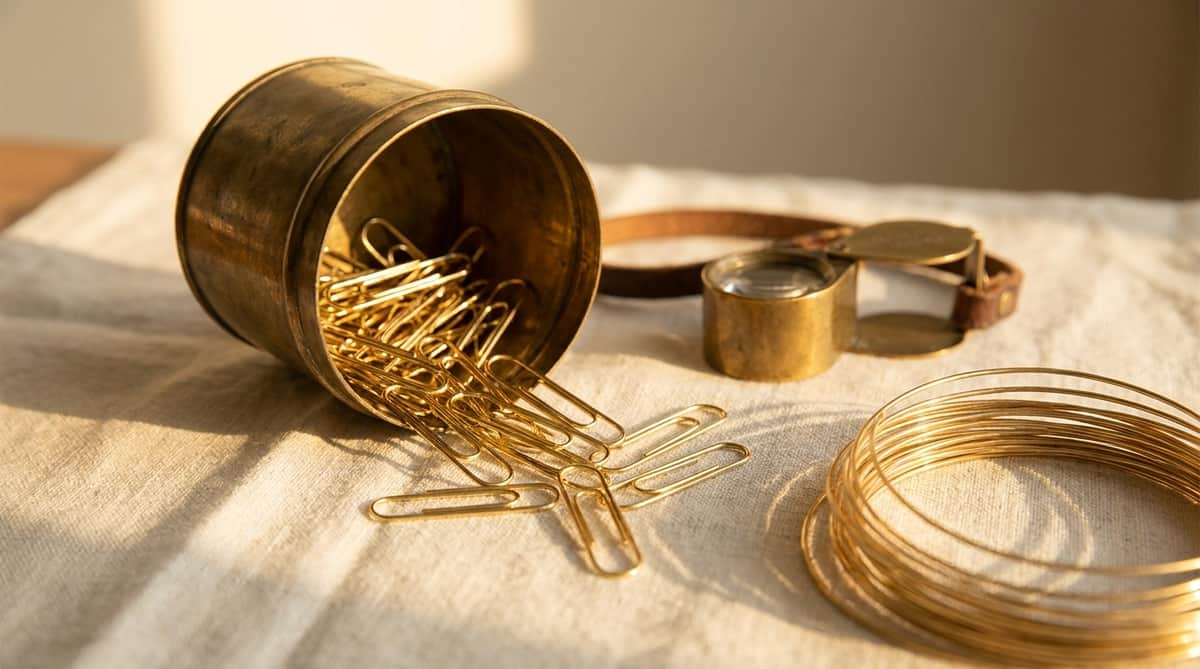
The name comes straight from the shape: each link is a flattened, elongated oval, stretched out and rounded at the ends — a dead ringer for an actual office paperclip, just cast in metal and strung link to link instead of bent from one piece of wire.
That elongated-oval profile is what separates it from a cable chain (small, round, uniform links) or a curb chain (twisted, interlocking links that lie flat against the skin).
A paperclip chain's links are visibly larger and more spaced out, so the chain reads as graphic and architectural rather than densely textured — it's meant to be looked at, not just worn as a backdrop for a pendant.
Why It's Still Everywhere
Two things are keeping it in rotation instead of letting it fade like a typical micro-trend.
First, it's genuinely versatile: the same oversized-link shape works worn solo as a statement piece, layered under a pendant, or stacked with other chains — which means it earns a spot in a jewelry box instead of getting worn twice and forgotten.
Second, it photographs well — the flat, elongated links catch light differently than a round-link chain, which is part of why it kept showing up in styling content long after its initial launch moment. It's also not tied to one single silhouette the way a specific statement earring shape can be, so it hasn't had one obvious expiration point.
Paperclip Chain vs. the Other Flat-Link Trends
It's easy to lump every oversized chain into one category, but the shapes behave differently enough to matter when you're choosing between them:
- Paperclip chain — elongated oval links, rounded ends, the most open and airy-looking of the group; best for a clean, minimal statement piece or for layering a pendant underneath
- Cuban link chain — tightly interlocking, almost woven-looking curb links; reads heavier and more substantial even at the same gauge, and sits flatter against the skin
- Lariat-style chain — not a link shape at all but a construction: one continuous length with no clasp, worn by looping or knotting it, which our lariat chain guide covers in full
- Medallion-style chain pairing — a standard cable or curb chain built specifically to carry a flat coin pendant, prioritizing the pendant over the link shape itself, as in our medallion necklace guide
If the goal is a chain that can be the whole outfit on its own, paperclip and Cuban link are the two real contenders — paperclip for an open, lighter-looking statement, Cuban link for something denser and more armor-like.
For a full rundown of the chain family beyond these four, our complete guide to gold chain types covers the rest, including the classic cable, box, and rope styles.
How to Wear It
A paperclip chain does three jobs well, depending on the link size:
- Solo statement piece — a larger-link paperclip chain worn alone, with no pendant, works because the link shape itself is the visual interest; this is the look most styling guides default to
- Under a pendant — a mid-size link gives a pendant somewhere to actually hang and move, rather than getting swallowed by a too-delicate chain or overwhelmed by one that's too chunky
- Layered with other chains — a thinner paperclip chain mixed with a round cable chain or a curb chain at a different length is the easiest way to build a layered look without everything blending into one indistinct pile of gold
For layering specifically, keeping at least a half-inch of length difference between each chain avoids the tangled, overlapping mess that makes layered jewelry look accidental instead of styled.
Picking the Right Link Size and Weight
Link size is the single biggest decision, and it's purely a matter of what the chain needs to do.
A fine, small-link paperclip chain reads as delicate and everyday — it can go under a collar, sit close to the neck, and not compete with anything else being worn.
A bold, oversized-link version is built to be the focal point, which means it generally wants a simpler neckline and less other jewelry nearby so it doesn't get visually crowded out.
For an engraved or initial pendant specifically, a mid-weight link is usually the safer default: thin enough not to dwarf a small pendant, substantial enough not to disappear underneath it.
Material and Durability
Because the links are flat and wide rather than round, a paperclip chain has more visible surface area than a standard cable chain of the same overall weight — which also means more surface area where a cheap plated finish can show wear first.
FARUZO's chains are 316L stainless steel with a gold, rose gold, or silver-tone plating over it, not sterling silver or vermeil, which matters here specifically: stainless steel is nickel-safe and holds its shape under the kind of daily on-off handling a statement chain gets.
A plated finish over a steel base also resists the dulling and greening that a plated finish over a softer base metal develops much faster.
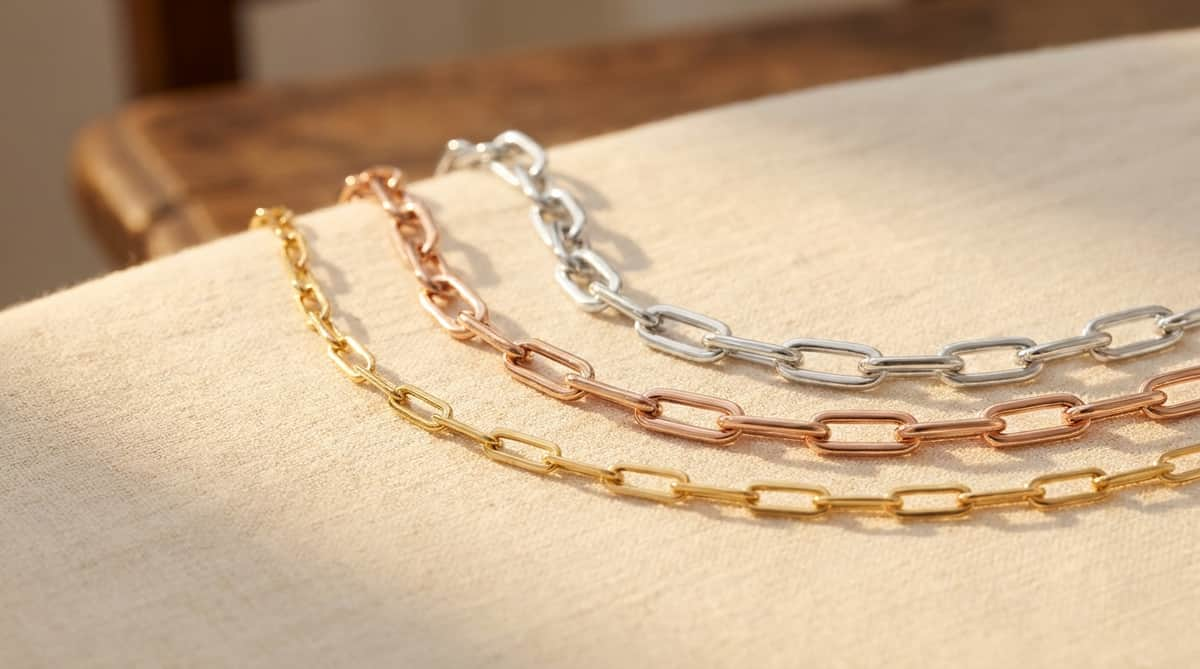
Look at the paperclip-link name necklace or the paperclip initial necklace to see the link scale in person before deciding what size to commit to, or browse the full name necklace lineup if a different chain style ends up being the better fit for the pendant you have in mind.
Caring for a Paperclip Chain
The open, elongated links that make the shape distinctive are also what catch on sweaters, scarves, and hair more than a tightly closed link would — so it's worth taking it off before changing clothes rather than pulling a sweater over a worn chain.
Store it flat or hanging rather than balled up in a drawer, since the larger open links are more prone to tangling into a knot than small cable links are.
A quick rinse and pat-dry after it's been worn against skin or sunscreen keeps a stainless steel chain looking new far longer than it would with no care at all.
Frequently Asked Questions
What's the difference between a paperclip chain and a regular link chain?
A paperclip chain's links are flattened, elongated ovals — visibly larger and more open than the small, round, uniform links of a standard cable chain. The shape is what gives it its graphic, architectural look rather than the denser, more textured look of a cable or curb chain.
Can you wear a paperclip chain every day?
Yes, especially in a finer link size. The main thing to watch is the open link shape catching on fabric, so it's worth removing before pulling on a sweater or scarf. A stainless steel base with a quality plating also holds up to daily wear better than a cheaper plated alloy.
Is paperclip chain still in style?
It's held on longer than most single-season chain trends because it works across several uses — solo, under a pendant, or layered — rather than being tied to one specific look. It reads more like a chain style that's become a lasting option than a trend with an obvious end date.
What length paperclip chain should I get for a pendant?
It depends on where the pendant should sit, but 16–18 inches is the most common range for a pendant meant to sit at or just below the collarbone. A mid-weight link in that length range is the safest default for most pendant sizes.
Does a paperclip chain tangle easily?
More than a tightly closed cable chain, because the open oval links have more room to catch on each other. Storing it flat or hung up rather than balled into a jewelry box pocket is the easiest way to avoid untangling it every time you want to wear it.