The medallion is back — not as a single statement piece but as a whole category of jewelry. Round coin pendants, engraved discs, and antique-style medallions are showing up on layered chains across social feeds and runway styling alike, revived as part of a broader "quiet luxury" and talisman-jewelry moment. But most of what's written about the trend either treats it as pure fashion (chain lengths, outfit pairings) or pure history (Roman coinage), without connecting the two. Here's both: what a medallion or coin necklace actually is, why the symbolism keeps coming back, how it differs from the other round pendants it gets confused with, and how to wear one without it reading costume-y.
What Counts as a Medallion or Coin Necklace
A medallion necklace is a flat, round or coin-shaped pendant — usually raised or embossed rather than flat-printed — hung from a simple chain. "Coin necklace" and "medallion necklace" are used almost interchangeably in stores and search results, though a coin pendant more often mimics an actual currency piece (a profile portrait, a denomination-style border) while a medallion is a broader disc that can carry a monogram, a date, a religious symbol, or an abstract design instead of anything coin-like. Both sit apart from a locket (which opens) and a charm necklace (which usually carries several small, mixed shapes rather than one central disc).
Where the Symbolism Comes From
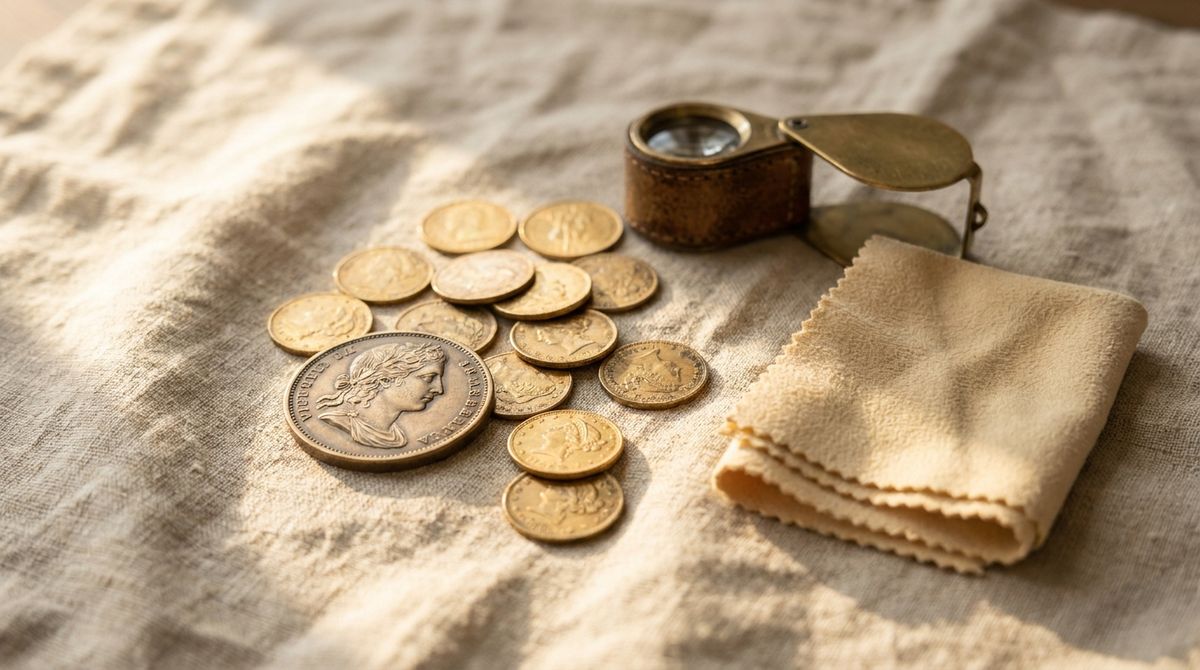
The coin-as-jewelry habit is old, not new. Ancient Roman and Greek coins carried the profile of a ruler or a deity, and wearing one was a way of publicly attaching yourself to whatever that figure represented — protection, authority, civic identity, or wealth. That's a different symbolic job than a pendant shaped like an evil eye or hamsa, which are protective symbols rather than status ones, but the two traditions have folded into each other in how medallions are marketed today: a disc engraved with a protective motif, a saint, or a zodiac symbol reads as "talisman," while a disc engraved with initials or a monogram reads as personal rather than protective. Most current medallion necklaces borrow a bit of both — a coin-like shape with a personal or symbolic engraving rather than a literal currency design.
Medallion Necklace vs. Locket vs. Charm Necklace
The three get lumped together because they're all round-ish pendants worn close to the collarbone, but they work differently:
- Structure: a medallion is a single solid disc; a locket is a disc that hinges open to hold a photo or keepsake inside; a charm necklace carries multiple small charms strung along one chain rather than one central piece.
- How it's personalized: a medallion is personalized by what's engraved or embossed onto its face (a monogram, a date, a symbol); a locket is personalized by what you put inside it; a charm necklace is personalized by which individual charms you choose and add over time.
- Typical price range: a plated medallion or coin pendant on a simple chain generally runs $30-$90; a locket, because it needs a working hinge and often a photo insert, tends to sit $50-$150; a charm necklace's price scales with how many charms are on it, since each one is priced separately.
- Which suits which use: a medallion works best as a single, everyday statement piece or layered under other chains; a locket suits a specific keepsake (a photo, a lock of hair, an inscription only you see); a charm necklace suits someone who wants to keep adding to one piece over months or years rather than choosing one fixed design.
How to Style a Medallion Necklace Right Now
The current styling rule is to treat the medallion as the anchor of a layered stack rather than a solo piece: a shorter chain sits at the collarbone, the medallion hangs at a mid-length below it, and a third, longer chain finishes the look. For the full mechanics of spacing and chain-length pairing, so the layers don't tangle or sit on top of each other, our necklace-layering guide walks through it step by step.
A few style notes specific to medallions: a larger, more ornate disc (30mm or up) reads best worn alone or as the lowest layer, since it competes with anything smaller nearby; a slimmer 15-20mm coin pendant layers more easily and can sit at any position in a stack. Matching the medallion's finish to the rest of the stack (all warm gold-tone or all silver-tone) reads more intentional than mixing tones on a single medallion piece, even though mixed-metal layering is fine elsewhere in a stack.
Choosing Metal, Finish, and Fit
Because a medallion sits flat against skin all day, the plating matters more than it does on a piece you only wear occasionally. FARUZO's medallions and coin-style pendants are plated over 316L stainless steel, which is nickel-safe and holds up to daily wear better than base metal — worth checking for on any medallion, since a heavy, textured disc is exactly the kind of piece that shows plating wear first at the raised edges. If you want the coin/medallion look with your own initials or a monogram engraved on the face rather than a stock design, our monogram necklace collection covers that directly, with the same nickel-safe plating.
Every FARUZO piece carries a 90-day return window, so there's room to actually wear a new medallion for a few weeks, through a shower, a workout, a humid week, before deciding whether the finish and fit are right.
Frequently Asked Questions
Is a medallion necklace the same as a coin necklace?
Not exactly, though the terms overlap in most stores. A coin necklace specifically mimics a currency-style design (a profile portrait, a denomination-style border); a medallion is the broader category and can carry a monogram, symbol, or abstract design instead. Every coin necklace is a kind of medallion necklace, but not every medallion is coin-styled.
What does wearing a medallion necklace mean?
On its own, a plain medallion doesn't carry a fixed meaning the way a specific religious or protective symbol does; it's the engraving that carries the meaning. A medallion stamped with a protective symbol reads as talismanic; one engraved with initials or a monogram reads as personal; a plain, unmarked disc reads as simply decorative.
How many chains should I layer with a medallion necklace?
Two to three chains total, including the one holding the medallion, is the range that reads as an intentional stack rather than clutter. Beyond three, chains start crossing and tangling more than they layer.
Can a medallion necklace be engraved with a name instead of a symbol?
Yes, a monogram, initial, or short name engraved on a medallion face is one of the most common ways the trend is worn now, functioning like a coin-shaped alternative to a name necklace rather than a symbolic talisman.
Will a plated medallion necklace tarnish?
Any plated metal will eventually show wear at high-friction points before a solid metal piece would, but a nickel-safe stainless steel base plated in gold or silver tone holds its finish through normal daily wear, showers included, far longer than base-metal costume jewelry. Wiping the disc dry after it gets wet and storing it flat rather than balled up in a pocket extends the finish further.