Unveiling the Truth Behind Metal Discoloration and How to Prevent It
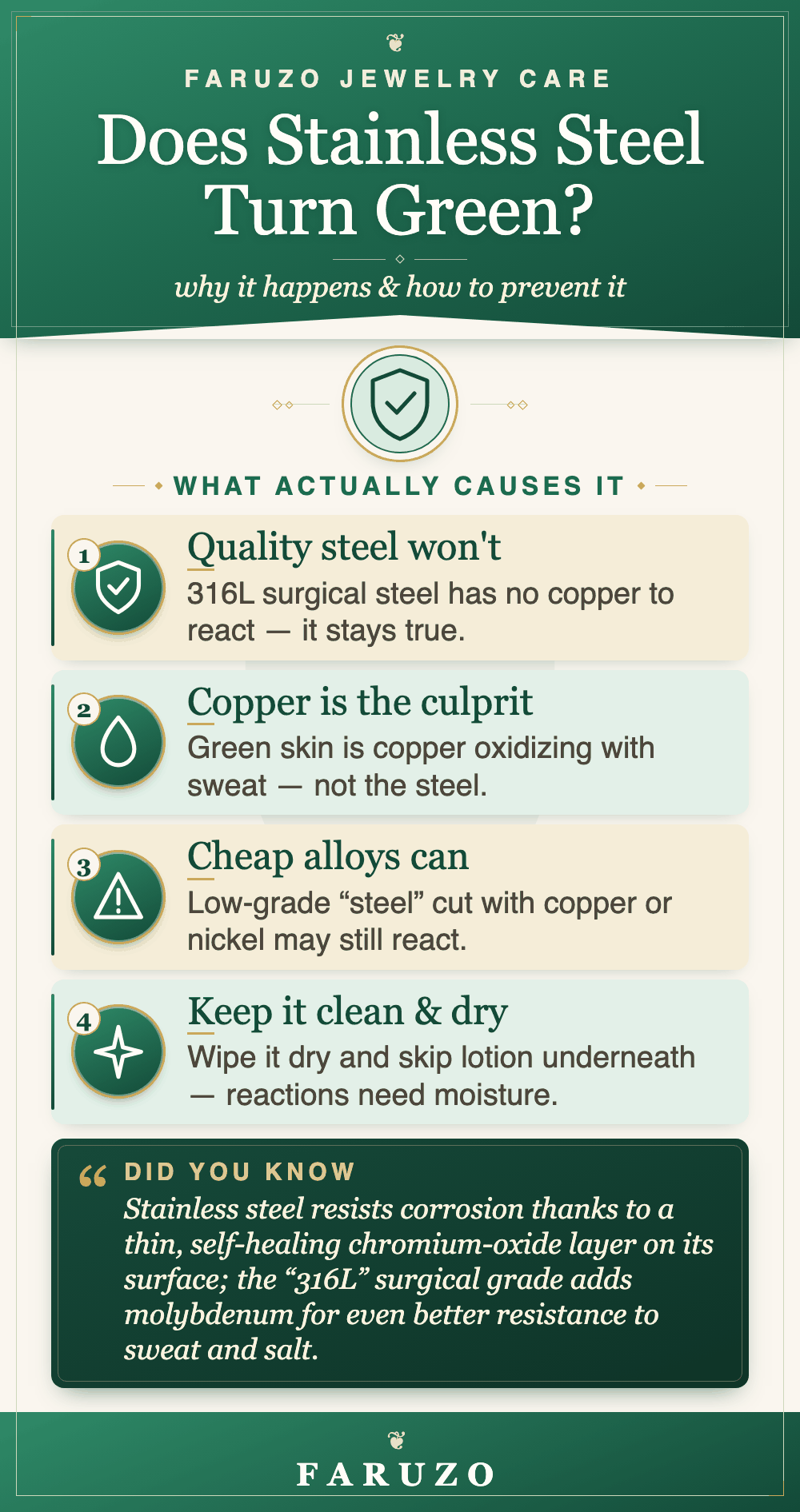
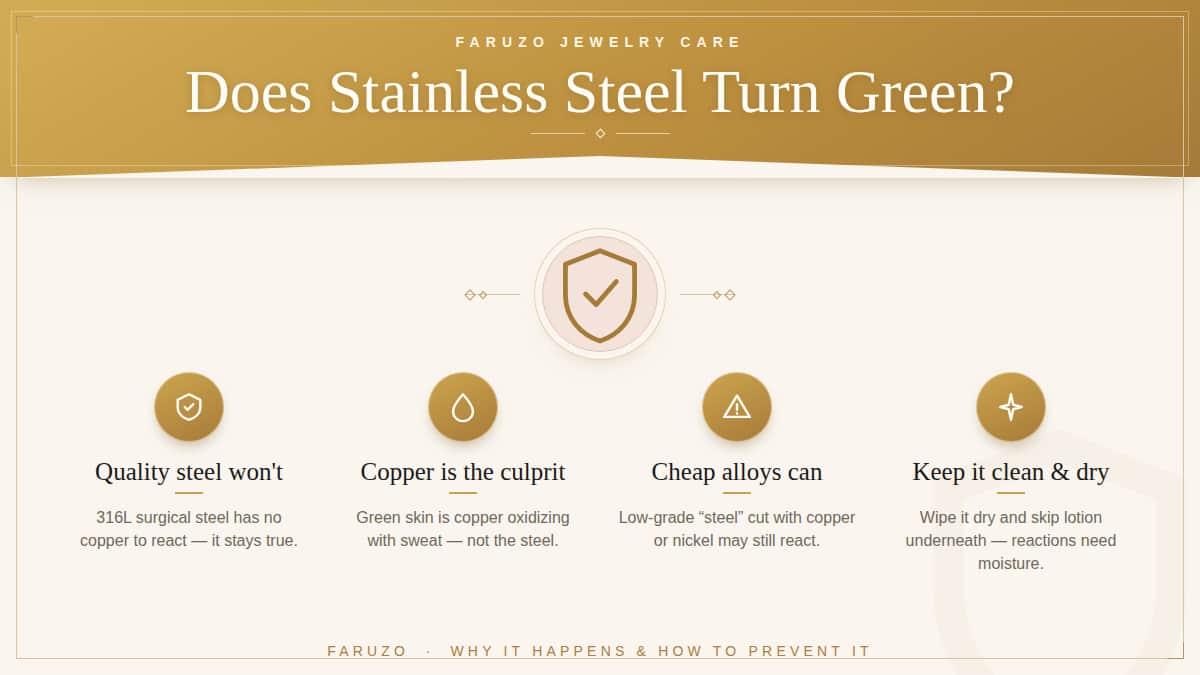
Quick Answer: No, genuine stainless steel does not naturally turn green. However, in rare situations, low-quality alloys or environmental contaminants can cause a greenish hue. Understanding the science and care behind stainless steel helps ensure it stays sleek and spotless.
The Unlikely Mystery of the Green Tint
If you’ve ever glanced at your stainless steel jewelry or noticed an odd green stain on your finger, chances are you’ve wondered — does stainless steel actually turn green? It’s a valid question, especially when this sturdy metal is marketed as tarnish-free, rust-resistant, and virtually indestructible.
Yet, green discoloration still sneaks its way into consumer experiences, particularly with jewelry or items used outdoors. The culprit? Often a misunderstood chemical process, low-grade alloys, or even your own skin chemistry. This article dives deep — and human-first — into the science, myths, and real-world fixes behind the mystery.
What Is Stainless Steel Really Made Of?
Stainless Steel’s Secret Weapon: Chromium
Stainless steel is not a single metal. It’s a family of iron-based alloys that include:
- Chromium (usually ≥10.5%) – The key element that creates a passive film resisting rust and tarnish.
- Nickel – Often added for durability and luster.
- Molybdenum or manganese – Added for specific environments (marine, high temperatures, etc.).
Fun Fact: The “stainless” in stainless steel refers to its resistance to staining and rust, not that it’s completely immune to discoloration or environmental impact.
The surface of stainless steel naturally oxidizes into a microscopically thin, stable film. This is what protects it. As long as this passive layer remains intact, the metal stays clean and bright.
Does Stainless Steel Tarnish?
No — not in the way silver does, and the distinction matters because three different reactions get called by the same name. Tarnish is a chemical film: on sterling silver it is silver sulfide, formed when the copper and silver react with sulfur in the air, which is why an untouched silver chain still darkens in a drawer. Rust is iron oxide, which needs iron exposed to oxygen and moisture. The green stain on skin is a third thing entirely — copper salts, formed when copper in an alloy meets the acids in sweat.
Stainless steel avoids all three for the same reason: the chromium in it (at least 10.5% by definition) reacts with oxygen to form a passive chromium-oxide layer only a few atoms thick. That layer seals the metal underneath, and — unlike paint or plating — it rebuilds itself the moment it is scratched, as long as oxygen can reach it. There is no free copper to go green and no exposed iron to rust.
It is not invincible, and the exceptions are specific. Chlorides are the real enemy: pool water, sea air and salt can pit the passive layer where oxygen cannot reach it to heal, leaving brown speckles that marine engineers call tea staining. Cheaper grades like 430 give up sooner than 304, and 316L — the surgical grade used in jewelry — adds molybdenum specifically to resist chlorides. Heat leaves a different mark, a blue or straw-coloured tint that is the oxide layer thickening rather than corrosion.
So a stainless piece that has dulled is almost always dirty rather than tarnished — skin oil, soap film and lotion. Warm water, a drop of dish soap and a soft cloth restore it, which is not true of silver. If you want the contrast, our guide to whether sterling silver tarnishes covers the metal that genuinely does.
What Causes Metals to Turn Green?
When most people think of green metal, they’re really thinking of copper oxidation — the process that gives us the Statue of Liberty’s greenish-blue patina.
The Science of Green Tarnish
Here’s what’s actually happening:
- Copper, brass, and bronze form a compound called copper carbonate (verdigris) when exposed to air, moisture, or salt.
- This greenish film forms slowly and is often harmless but unsightly.
So what does this have to do with stainless steel?
Stainless steel does not contain copper. But if it's mixed with contaminants or comes in contact with copper particles — such as in a kitchen with shared utensils — discoloration may appear.
Can Stainless Steel Actually Turn Green?
✅ In Most Cases: No, It Won’t
Genuine, high-grade stainless steel is engineered to resist corrosion. If you're using 304 or 316 stainless steel — both considered “austenitic” and highly corrosion-resistant — green staining is extremely rare.
⚠️ But Sometimes: Yes, It Can Appear Green
Here’s when you might spot that greenish tint:
- Using low-grade alloys (e.g., 201 or 430 steel) which lack sufficient chromium or nickel.
- In high-chlorine environments like swimming pools or coastal homes.
- Constant skin contact in humid weather, especially if your skin has high acidity or you sweat heavily.
- Contact with copper-rich materials.
Where It Happens Most: Common Green-Stain Scenarios
1. Jewelry: When Steel Meets Skin
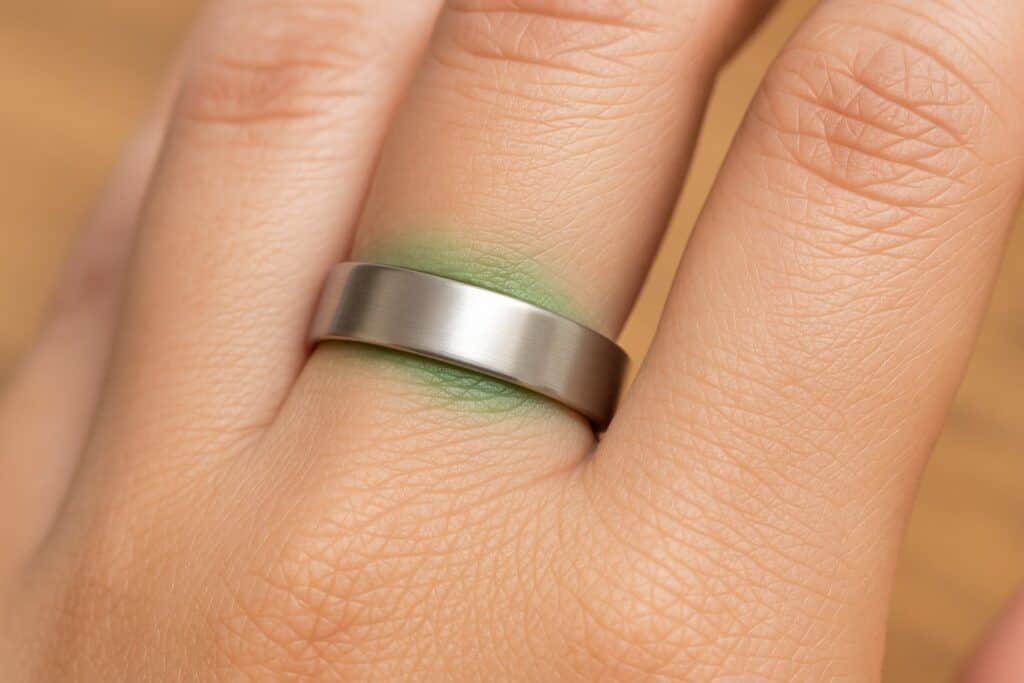
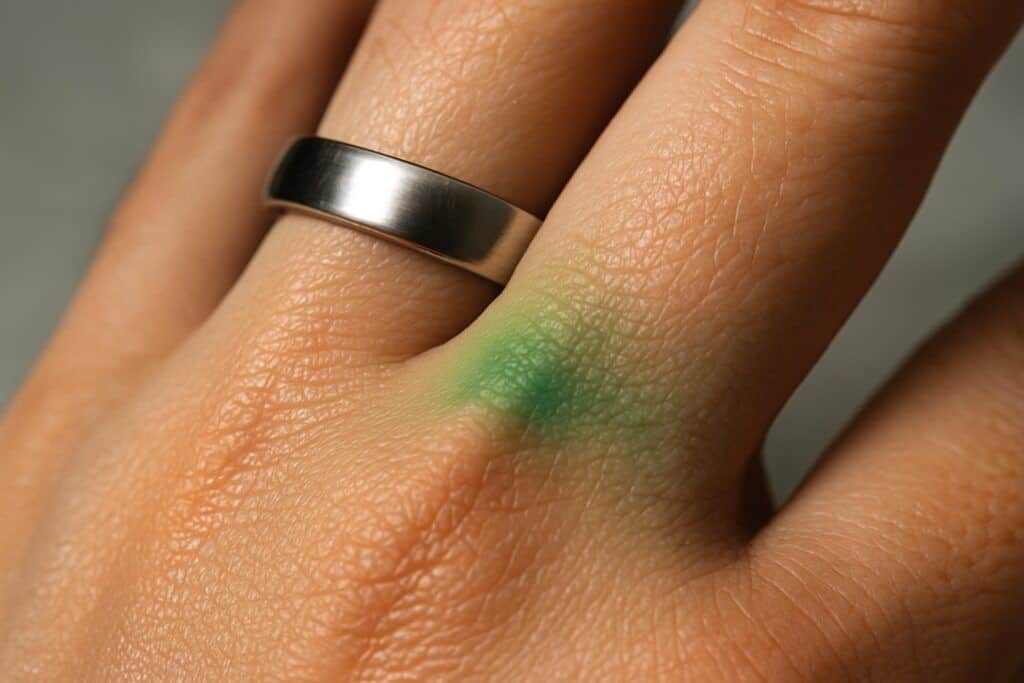
You might wear a “stainless steel” ring or bracelet and notice your skin turning green. Why?
- Low-grade stainless steel (especially 201 or 409) contains high iron and manganese, and may contain trace amounts of copper.
- Sweat, perfume, and lotion create a chemical cocktail that reacts with the metal.
“Stainless steel jewelry can sometimes cause green stains on skin due to sweat and low-grade alloys, especially in humid conditions.”
2. Kitchen Utensils and Sinks
- Green or rainbow discoloration may result from acidic foods or harsh detergents.
- Residue from copper pipes can deposit tiny particles onto steel surfaces, which then oxidize.
3. Outdoor Fixtures
- Rain, salt air, or pollutants might slowly develop surface stains.
- Especially true for 430-grade steel, which lacks the nickel needed for full corrosion resistance.
4. Poolside Equipment
- Even marine-grade 316 steel can corrode over time in chlorinated water.
- It won’t necessarily turn green but may show tea-colored or green-tinted spots.
Preventing Stainless Steel from Turning Green
🧽 Proper Cleaning Routine
- Use mild soap and warm water. Rinse and dry thoroughly.
- Avoid bleach or cleaners with chloride — they degrade the protective chromium oxide layer.
- Polish with a soft microfiber cloth.
🛡️ Use Coatings or Sealants
- Apply stainless steel polish, wax, or specialized coatings to prevent contact with air, moisture, and contaminants.
🌦️ Mind the Environment
- If you live near the ocean or use your items around chlorine, consider 316 stainless steel.
How to Clean and Restore Stainless Steel with Green Spots
Step-by-Step Cleaning Instructions
- Rinse the surface with warm water to remove any loose debris.
- Make a paste using baking soda and water.
- Apply the paste to the affected green area using a soft cloth or sponge.
- Gently scrub in the direction of the steel’s grain — never in circles.
- Rinse again thoroughly with clean water.
- Dry immediately to prevent water spots or further oxidation.
DIY Natural Alternatives
- Lemon juice + baking soda: Brightens and neutralizes green tarnish.
- White vinegar: Great for light oxidation, especially on kitchenware.
Commercial Products That Work
If DIY isn’t enough, consider:
- Bar Keepers Friend
- 3M Stainless Steel Cleaner and Polish
- Weiman Stainless Steel Wipes
Pro Tip: Always test any cleaner on a small, inconspicuous area first — especially on brushed or satin-finish stainless steel.
Understanding Stainless Steel Grades and Their Susceptibility
All stainless steels are not created equal. Different grades offer varying resistance to corrosion, oxidation, and staining.
GradeNickel ContentCommon UsesCorrosion Resistance3048-10.5%Kitchen appliances, sinksGood (standard)31610-14%Marine applications, poolsExcellent2013.5-5.5%Low-cost cookware, cheap jewelryModerate4300%Automobile trim, decorative surfacesLow
For maximum resistance to discoloration or green patina, choose 316 stainless steel — especially in harsh or chemical-laden environments.
Stainless Steel vs Other Metals
Comparing Durability and Corrosion Resistance
- Copper: Highly conductive but turns green easily.
- Brass: A copper-zinc alloy; visually appealing but tarnishes over time.
- Aluminum: Lightweight and corrosion-resistant, but soft and scratch-prone.
- Stainless Steel: Strong, shiny, and highly resistant to rust and tarnish with proper care.
Best Metal for Outdoor Use?
316 stainless steel wins by a mile. It resists chlorides, humidity, salt spray, and acid rain far better than aluminum or copper.
Stainless Steel Myths — Busted
- Myth: Stainless steel never rusts.
Fact: It’s resistant, not immune — poor maintenance or cheap grades can rust. - Myth: All stainless steel is the same.
Fact: Over 150 grades exist, with wildly different properties. - Myth: You don’t need to clean stainless steel.
Fact: It still needs routine care to stay shiny and functional.
Expert Insight: Why Green Discoloration Happens
“Stainless steel won’t turn green under normal conditions. If it does, it’s likely either contaminated with copper or exposed to acidic environments that have degraded its protective chromium layer.”
— Dr. Elisa Grant, Materials Scientist and Metallurgy Specialist
Final Verdict: Should You Be Concerned?
In summary: Stainless steel turning green is a rare exception — not the rule. Most cases involve low-quality alloys, misuse, or extreme environments. By selecting the right grade and maintaining it properly, you can keep your stainless steel bright, clean, and free of any green discoloration for years to come.
Takeaway: Choose high-grade stainless, care for it with the right products, and it’ll serve you reliably — without a hint of green.
Frequently Asked Questions
Does stainless steel turn your finger green?
Quality stainless steel usually does not. Green marks come from copper reacting with the acids in sweat and skin oils, and true surgical (316L) stainless steel contains essentially no copper. If a “stainless” piece turns your skin green, it is almost always a cheap alloy cut with copper or nickel.
Why did my stainless steel ring turn my finger green?
The most common causes are low-grade steel mixed with copper or nickel, or lotions, perfume and hand cream getting trapped between the ring and your skin. Real 316L steel is copper-free and does not oxidize onto skin, so the reaction points to the alloy or to products worn underneath.
Does stainless steel tarnish?
No. Stainless steel resists tarnish thanks to a thin, self-healing chromium-oxide layer on its surface, so it stays bright far longer than silver. For how a softer metal compares, see does sterling silver tarnish.
Is stainless steel jewelry hypoallergenic?
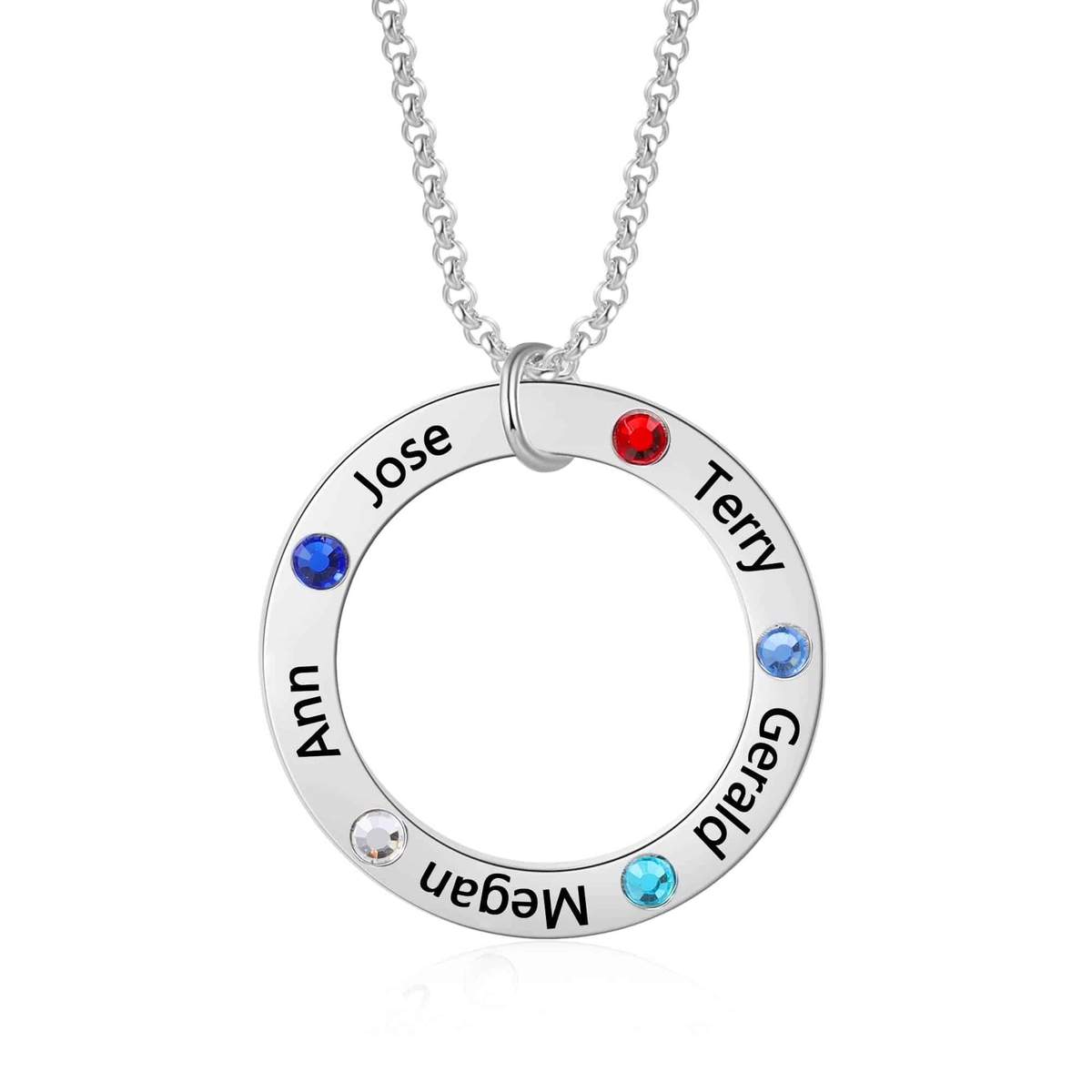
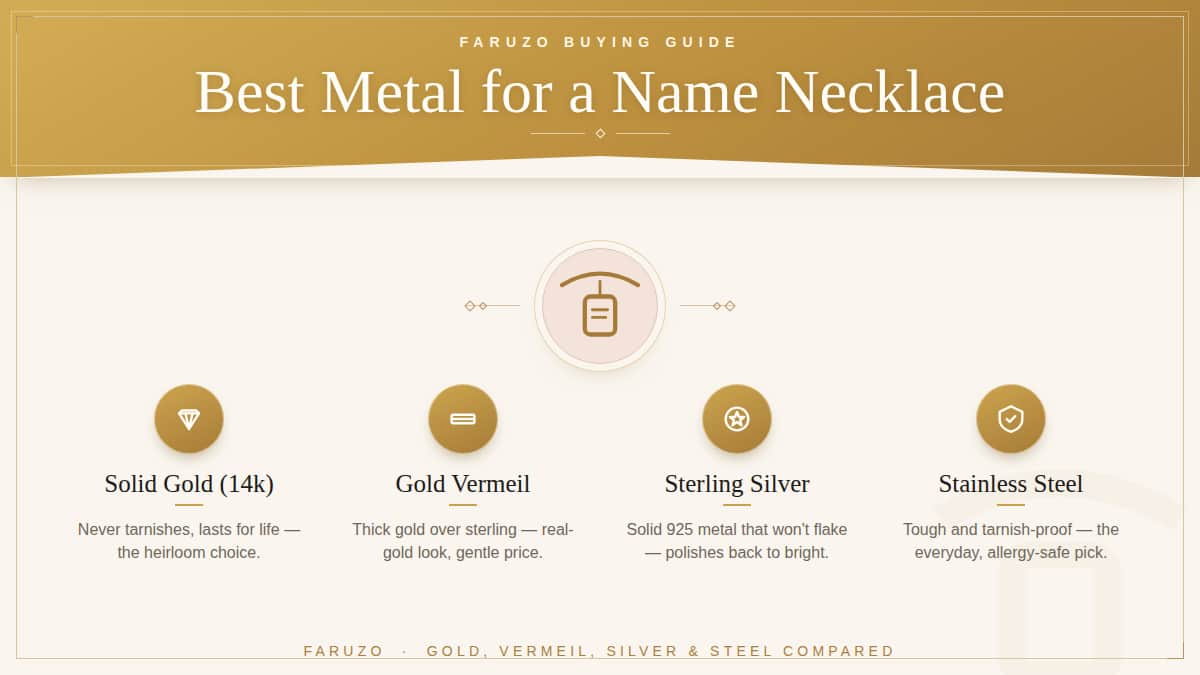
Surgical 316L stainless steel is nickel-safe for most people and one of the better choices for sensitive skin, alongside solid gold and sterling silver. If you are weighing materials for a personalized piece, our guide to the best metal for a name necklace compares them all.
How do you stop stainless steel from turning your skin green?
Choose 316L or surgical-grade steel, keep the piece clean and dry, and let lotion or perfume dry fully before putting jewelry on. Remove it during heavy sweating or swimming, and wipe it down afterwards — reactions need moisture to happen.
Can stainless steel jewelry turn skin green?
Only if it’s made with low-grade steel or if your skin is highly acidic. 304 and 316 grades are typically hypoallergenic.
What causes the green stuff on stainless steel?
Usually a result of surface contamination (like copper), harsh chemicals, or exposure to high humidity and chlorine.
How can I remove green discoloration from stainless steel?
Use a paste of baking soda and water or a commercial cleaner designed for stainless surfaces.
Is stainless steel better than copper for corrosion?
Yes. Stainless steel, especially 316 grade, is far more corrosion-resistant than copper, particularly in outdoor or marine environments.