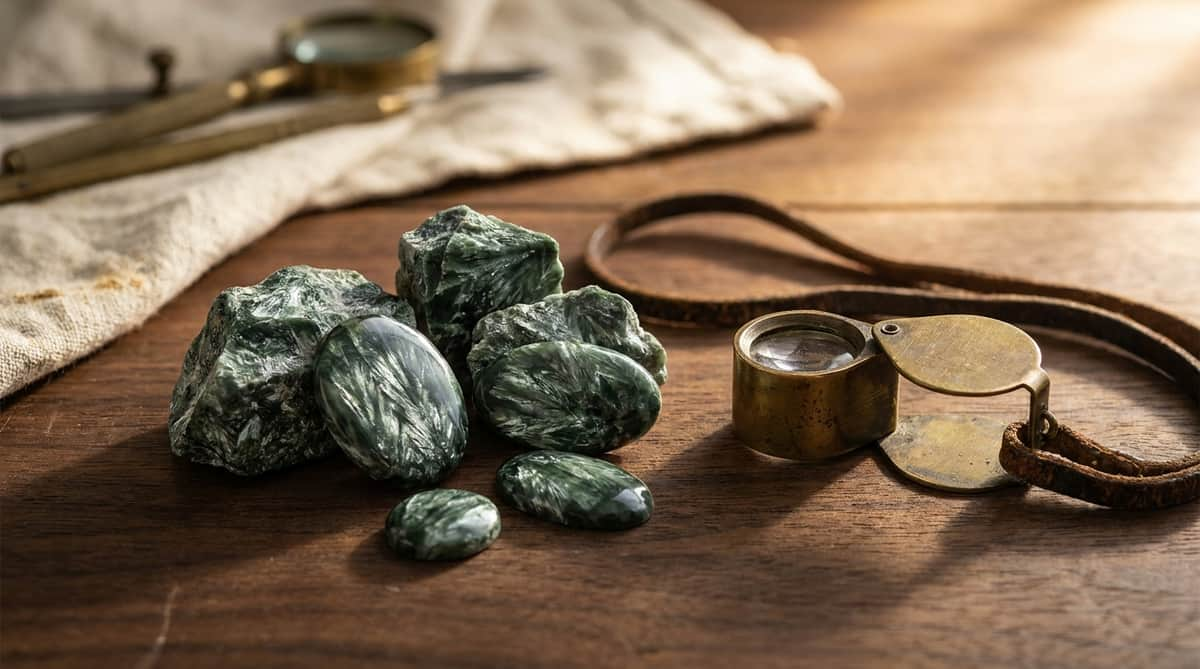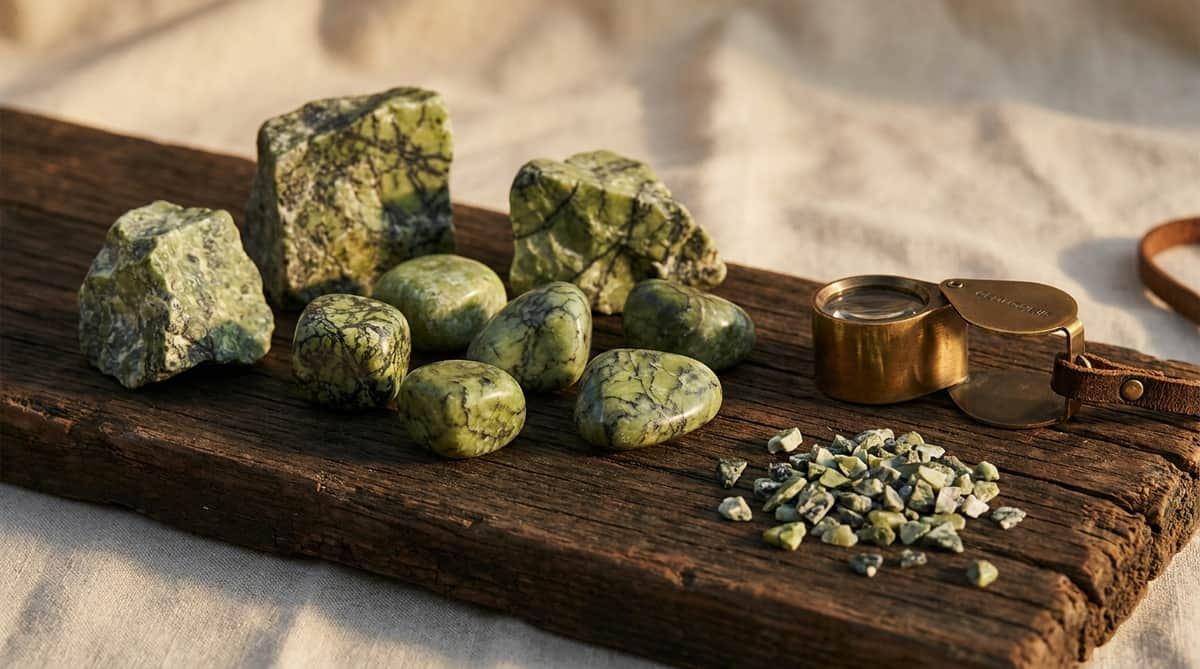
Serpentine looks like it should be a simple stone — a mottled green cabochon, usually, the kind of thing that reads as "generic polished crystal" at first glance. It isn't simple at all. The name actually covers roughly twenty related minerals that form the same way and look similar enough to sell under one umbrella term.
Their physical properties swing more than almost any other stone marketed as a single gem. Here's what serpentine actually is, which named varieties are worth knowing, and a safety distinction that's worth understanding before buying it.
At a glance:
- Not one mineral — a subgroup of roughly 20 related silicates sold under a single trade name
- Hardness swings widely — Mohs 2.5 (lizardite) up to Mohs 5.5 (bowenite, the most wearable)
- Three main polymorphs make up most commercial material: antigorite, lizardite, chrysotile
- No official birthstone status, and the asbestos-adjacent chrysotile variety is safe once polished into jewelry
What Serpentine Actually Is
Serpentine isn't a mineral — it's a mineral subgroup, part of the hydrous phyllosilicate family (sheet silicates) sitting alongside kaolinite in its own mineral group. The general formula is X₃Si₂O₅(OH)₄, where X stands in for magnesium, iron, nickel, manganese, or zinc depending on the specimen.
That's a magnesium-rich hydrous silicate, in plain terms, formed when olivine-rich rock reacts with water deep in the earth's crust in a process geologists call serpentinization.
That process can happen at ocean ridges, in subduction zones, and along fault lines — part of why serpentine turns up on nearly every continent rather than tracing back to one deposit the way some trade-name stones do.
Three polymorphs — minerals with the same chemistry but different crystal structures — make up most of what's sold as serpentine: antigorite, lizardite, and chrysotile. They're often difficult to tell apart without lab testing, which is exactly why the trade treats "serpentine" as one name rather than three.
Where the Snake-Skin Name Comes From
The name traces to the Latin serpentinus, "serpent-like," a direct reference to the mottled, often banded green surface that resembles snakeskin on a polished piece. It's a descriptive name rather than a mythological one.
There's no single founding legend or royal provenance attached to serpentine the way there is for some gemstones, and most of what's written about its deeper symbolism comes from modern crystal culture rather than documented history.
The Named Varieties Worth Knowing
Because "serpentine" covers so many related minerals, a handful of trade names show up often enough to be worth recognizing on their own, and they differ enough in hardness that the name alone doesn't tell you how a piece will hold up:
- Lizardite — the softest and most common form, Mohs 2.5, usually the plain mottled-green material sold as generic "serpentine."
- Chrysotile — Mohs 2.5–3, fibrous in its natural habit; this is the variety also known as white or chrysotile asbestos (see the note below — the fibrous raw mineral and a polished cabochon are not the same exposure risk).
- Antigorite — Mohs 3.5–4, the variety that forms at higher metamorphic temperatures and the one most often cut for jewelry and carving.
- Bowenite — Mohs 5.5, a hard, translucent, apple-green antigorite variety sometimes sold under the nickname "New Jade" for its resemblance to true jade, and the most wearable of the group for a ring.
- Williamsite — an oily, olive-green antigorite variety historically associated with Pennsylvania and Maryland deposits, valued for its clarity.
- Verd antique — not a single mineral but a decorative serpentinite rock (serpentine mixed with calcite or other minerals), used historically as an architectural and ornamental stone rather than jewelry.
That hardness spread — Mohs 2.5 at the soft end to 5.5 at the hard end — is the detail most generic "serpentine meaning" pages skip past, and it matters more than the color does for anyone deciding how to wear the stone.
Color and How It's Usually Cut
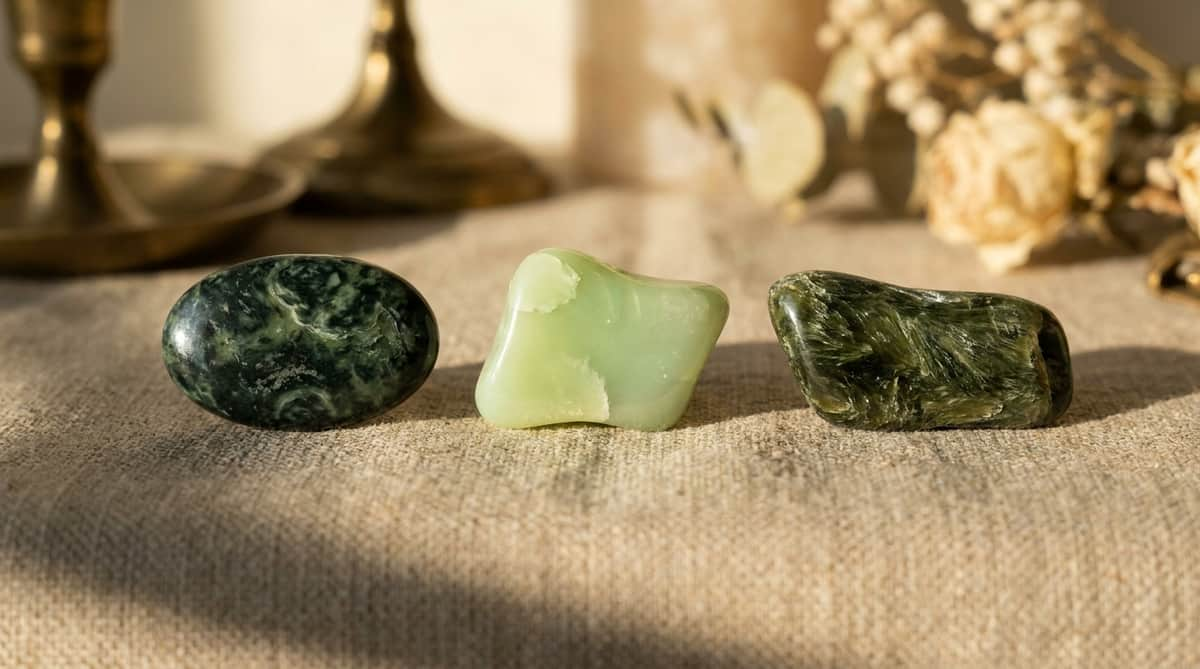
Green is the color people associate with serpentine by default, but the group actually runs from white and yellow through brown, gray, and near-black, frequently mottled or veined rather than solid. The appeal is the surface pattern, not brilliance — serpentine has a soft, often slightly waxy or greasy luster rather than sparkle.
That's why it's almost always cut as cabochons or carvings — smooth, domed, or sculpted shapes that show off the mottling — rather than faceted the way a transparent gem would be.
It turns up in pendants, beads, carved figures, and architectural inlay more often than in rings, which tracks with most varieties sitting on the softer end of the hardness scale.
Where It's Found
Serpentine is mined across a wide spread of countries rather than concentrated in one region — India and the United States are commonly cited as significant sources, alongside China, Pakistan, Afghanistan, Australia, Canada (Quebec), Britain, Greece, and Russia.
That geographic spread is a direct consequence of how it forms: serpentinization happens wherever ultramafic rock meets water under the right conditions, which is a far more common geological setup than the single-deposit scarcity behind stones like charoite or seraphinite.
A Safety Note Worth Knowing
One of the three main serpentine polymorphs, chrysotile, is also the mineral known as white asbestos — the most commonly used form of asbestos industrially, and a recognized health hazard when its fine, airborne fibers are inhaled in quantity over time.
That typically comes from mining, milling, or manufacturing exposure. It's a real fact about the mineral family, not crystal-shop scaremongering, and it's worth stating plainly rather than skipping past.
It does not mean a polished serpentine cabochon or bead is dangerous to wear or own. Jewelry-grade material is a solid, sealed, polished piece, not loose friable fiber, and normal handling or wear doesn't release airborne particles.
The exposure risk documented in occupational health research is specific to chrysotile's fibrous raw form being disturbed in bulk — cutting, grinding, or mining it without protection — not to owning a finished piece of jewelry.
The Meaning People Attach to It
In crystal-healing and wellness traditions, serpentine's green color and snake-derived name combine into a reading built around transformation, renewal, and grounding. Sources commonly describe it as a stone of change, tied to nature and the earth.
Some traditions place it with the heart chakra and loosely associate it with the zodiac sign Gemini. Protective properties against negative energy are also commonly claimed.
None of this is scientifically established; these are cultural and personal beliefs rather than documented properties of the mineral, and serpentine carries no official birthstone status for any month.
Caring for Serpentine Jewelry
Given the hardness range across varieties, care depends on which serpentine a piece actually is. A lizardite cabochon at Mohs 2.5 needs the gentle treatment appropriate to a soft stone — stored apart from harder jewelry, cleaned with only a soft damp cloth, no ultrasonic or steam cleaning, no soaking.
A bowenite piece at Mohs 5.5 tolerates ordinary handling more comfortably, though still not daily-ring-level knocks.
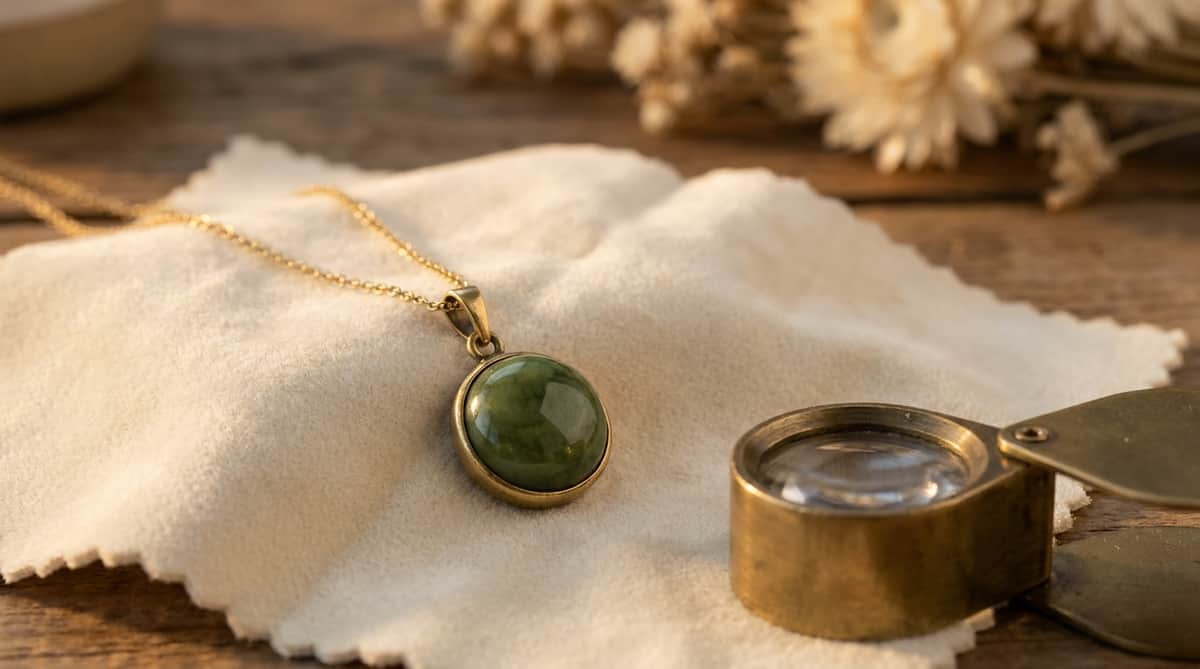
If the goal is green jewelry that can be worn every day without that kind of caution, FARUZO's engraved necklaces are plated over 316L stainless steel — nickel-safe and considerably more scratch-resistant for daily wear than most natural serpentine.
For other green stones worth comparing it to, our green aventurine meaning guide covers a harder, more wearable option in a similar color range, and our jade meaning guide looks at the stone bowenite is often nicknamed after.
Frequently Asked Questions
Is serpentine one mineral or several?
Several — roughly twenty related minerals sold under one trade name, with antigorite, lizardite, and chrysotile making up most of what's commercially available. They're often hard to distinguish without lab testing, which is why the trade treats "serpentine" as a single umbrella term.
Is serpentine jewelry safe to wear?
Yes. While chrysotile, one of serpentine's mineral forms, is also known as white asbestos and carries documented health risks when its loose fibers are inhaled in bulk (typically from industrial mining or processing), a polished, sealed piece of jewelry is solid material, not airborne fiber.
Normal wear doesn't release particles. The exposure risk applies to disturbing the raw fibrous mineral in quantity, not to owning a finished piece.
What is the hardness of serpentine?
It varies by variety: lizardite and chrysotile sit around Mohs 2.5–3, antigorite around 3.5–4, and bowenite, the hardest common variety, reaches about Mohs 5.5. That's a wide enough range that "how durable is serpentine" doesn't have one answer without knowing which type a piece is.
What is bowenite, and is it related to jade?
Bowenite is a hard, translucent, apple-green variety of antigorite serpentine, sometimes nicknamed "New Jade" because its color and translucency resemble true jade. It isn't jade mineralogically — jade refers to jadeite or nephrite, different mineral species entirely — but the resemblance is close enough that the nickname has stuck in the trade.
Is serpentine a birthstone?
No. It has no official birthstone status for any month, and the zodiac association sometimes attached to it (most often Gemini) is an informal crystal-lore pairing rather than a widely recognized system.