Citrine is one of the most misunderstood stones in any jewelry case: most of what's sold as citrine today started life as a different color entirely, and its lemon-to-amber range is really the visible signature of iron impurities responding to heat, not a distinct mineral of its own. It shares that quartz backbone with amethyst, rose quartz, and smoky quartz, and shares a birth month with yellow topaz — which is exactly why the two get confused at the counter. Here's the real geology behind the color, where the ‘merchant's stone’ reputation actually comes from, how to tell a genuine citrine from its look-alikes, and how to keep one wearing well for years.
What Citrine Actually Is
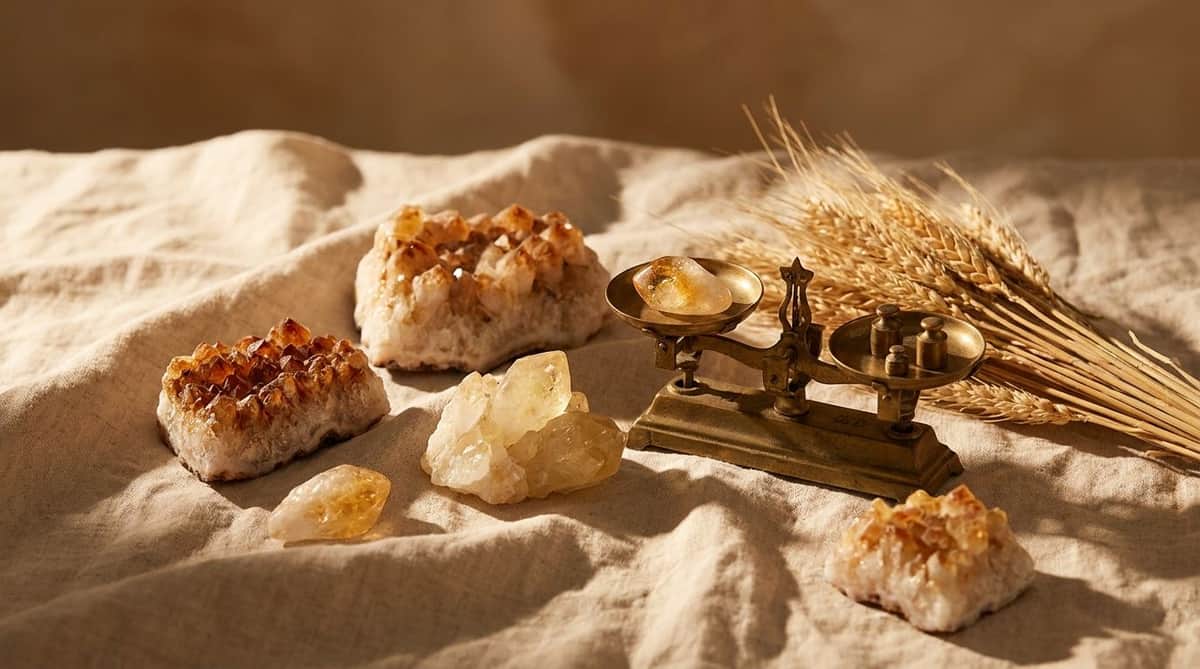
Citrine is a variety of quartz (silicon dioxide), colored yellow through amber, orange, and reddish-brown by trace amounts of iron locked inside the crystal structure — the same base mineral as amethyst, smoky quartz, and clear quartz, distinguished only by which trace element got trapped inside and in what oxidation state. On the Mohs hardness scale it measures 7, the same as every other quartz variety, which is durable enough for rings and bracelets worn daily.
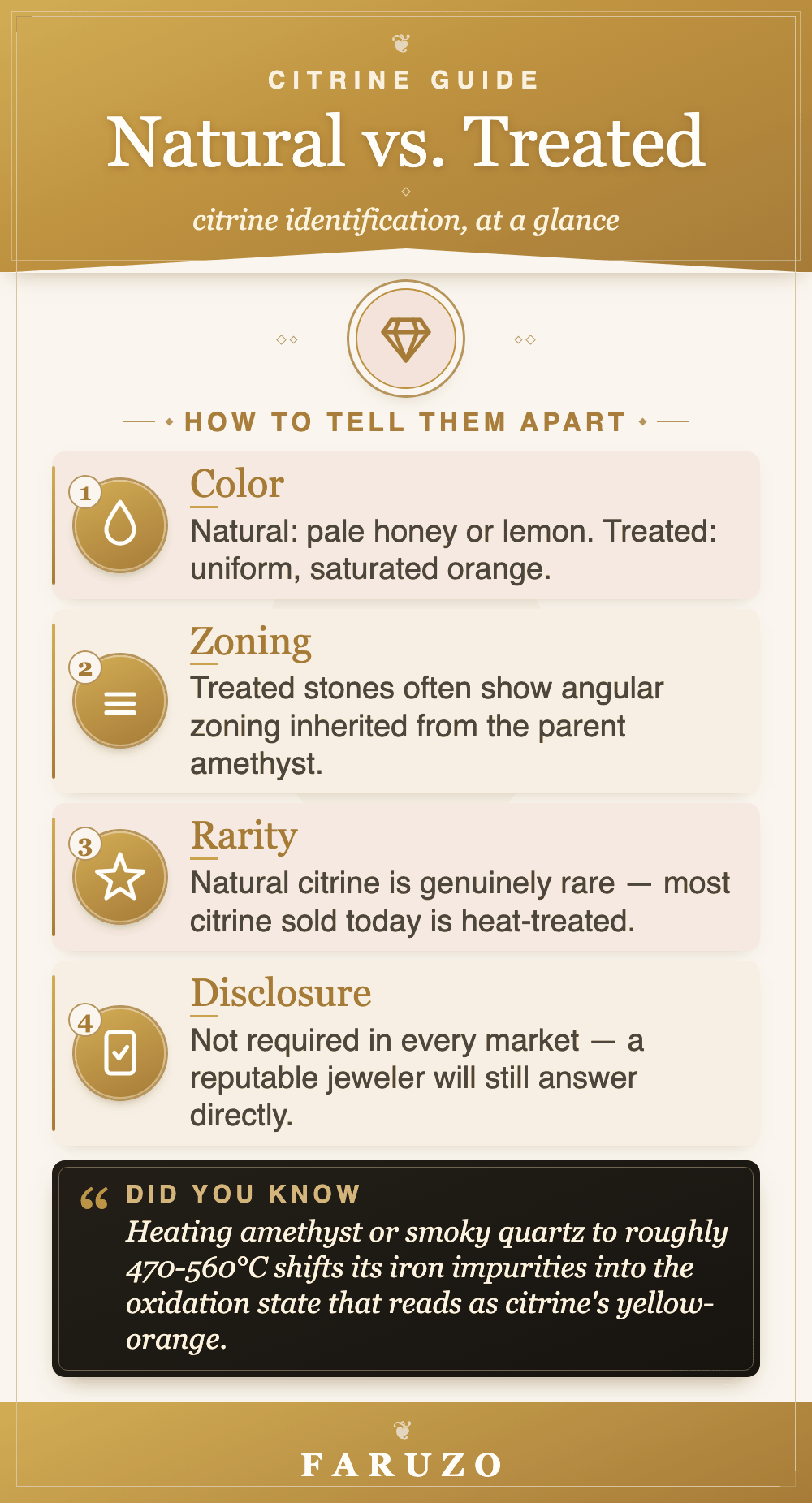
Naturally occurring citrine is genuinely rare — most quartz deposits that could produce it never reach the right combination of iron content and geological heat. What's sold commercially as citrine today is overwhelmingly heat-treated amethyst or smoky quartz: heating either stone to roughly 470–560°C shifts the iron impurities into the oxidation state that reads as yellow-orange, a well-documented gemological treatment the trade has used for over a century. It's a stable, permanent color change rather than a coating or a fill, which is why it's treated as standard practice rather than a deception — but it does mean a lot of ‘citrine’ jewelry never actually started out yellow.
Physical, Mental, and Metaphysical Properties
Physical
At 7 on the Mohs scale, citrine wears well day to day — resistant to scratching from most household contact, though like any gemstone it can still chip or crack from a hard direct knock against something harder, like a countertop edge or another gem. Its clarity ranges from transparent, facet-grade material to more included, opaque pieces used in tumbled or carved form; color typically runs from pale straw-yellow through deep amber to a reddish ‘Madeira’ tone in the rarer, more saturated material — for how that range compares across other stones, see our gemstone color meanings guide.
Mental
In the modern wellness market, citrine is described as a warming, confidence-building stone — associated with optimism, motivation, and mental clarity, often marketed as an antidote to stress or self-doubt. That's a belief carried forward by today's crystal community rather than a measured effect, worth reading the same way we'd frame the meaning behind any stone in our different gemstones guide.
Metaphysical
Citrine's best-known nickname, the ‘merchant's stone,’ comes from a specific and fairly recent commercial custom: shopkeepers in parts of Europe reportedly kept a piece of citrine in the cash register or till, believing it would draw in trade and guard against losses — a practice still referenced in crystal-shop lore today. It's grouped with topaz as a ‘sunstone’ in some traditions, tied to abundance, generosity, and personal power rather than the softer, calming associations given to paler quartz varieties like rose quartz or amethyst.
Where the “Merchant's Stone” Reputation Comes From
Citrine takes its name from the French citron, meaning lemon, a naming convention that had settled into gemological use by the 19th century for the stone's characteristic color. Tracing ancient use of true citrine is harder than it is for stones like amethyst or lapis lazuli, partly because early sources didn't reliably distinguish yellow quartz from topaz or other yellow gems, and partly because so much of what's mined today only becomes citrine-colored after modern heat treatment. Yellow quartz jewelry does appear in Greek and Roman decorative pieces, and citrine saw a documented surge in popularity during the Art Deco period of the 1920s–30s, when its warm tone suited the era's gold settings and geometric cuts.
The ‘merchant's stone’ and ‘success stone’ nicknames appear to be much newer than the gem itself — they're documented in 20th-century crystal-healing and New Age literature rather than in classical antiquity, which is worth stating plainly rather than implying an unbroken ancient tradition the historical record doesn't actually support.
Citrine vs. Yellow Topaz and Smoky Quartz: How to Tell Them Apart
Citrine and yellow topaz sit close enough in color that department-store jewelry has mislabeled one as the other for decades — we cover both stones together as November's shared birthstones in our November birthstone guide, but the two are entirely different minerals. Topaz is harder (8 on the Mohs scale versus citrine's 7) and denser, with a distinct cleavage plane that citrine, as a quartz, doesn't share; topaz also tends to show a slightly more saturated, sometimes faintly pinkish-orange ‘Imperial’ tone at the high end, while citrine's palette stays more strictly yellow-to-amber. Neither test is something a buyer can do with the naked eye — the practical takeaway is to buy from a seller who states the material plainly, since the two are priced very differently, with topaz commanding a real premium over citrine at equivalent size and color.
Citrine is also sometimes confused with smoky quartz, its close cousin — the two share the same iron-based color chemistry and are separated mainly by which oxidation state the iron settles into, with smoky quartz reading grey-brown instead of yellow-orange. A single crystal can even show both zones at once: material with a natural or induced split between purple, yellow, and clear zones is sold separately, under the name ametrine.
Natural vs. Heat-Treated Citrine: What to Look For
Because so much commercial citrine started life as amethyst, a few visual cues point toward treated material without requiring lab equipment. Heat-treated citrine tends toward a more uniform, saturated orange, often with a faint reddish cast, and frequently still shows the angular color zoning inherited from its parent amethyst crystal when examined closely. Natural, untreated citrine is rarer and usually paler — a soft honey or pale lemon yellow — and is more likely to be sold with documentation given how uncommon it is on the open market. Neither version is a ‘fake’ stone: both are genuine citrine mineralogically, and the treatment itself is a heat-only process disclosed industry-wide, not a fill or a coating.
Sellers aren't required in every market to disclose heat treatment on citrine specifically — unlike, say, fracture-filled emeralds — simply because it's such a standard, century-old practice for this particular stone. A reputable jeweler will still answer the question directly if asked, and large or unusually saturated pieces sold as ‘natural citrine’ at a low price are worth a second opinion.
Wearing and Caring for Citrine Jewelry
At 7 on the Mohs scale, citrine holds up well for rings, bracelets, and earrings worn regularly, though — like any gemstone — it's safest kept away from hard knocks and abrasive surfaces that could chip a facet edge. The general steps in our guide to cleaning a gemstone ring apply here too: warm water, a mild soap, a soft brush, and a lint-free cloth to dry, avoiding steam cleaners and prolonged ultrasonic cleaning. Store citrine pieces separately from harder gems like diamond or sapphire, which can scratch its surface if they knock together in a jewelry box, and take rings off before heavy manual work or exercise. If you're building a birthstone piece around November's stone, our birthstone necklaces collection runs from single-stone pendants to stacked designs.
Frequently Asked Questions
Is citrine a real gemstone?
Yes. Citrine is a genuine variety of quartz colored by iron impurities, not glass or a synthetic imitation — though most of what's sold commercially is amethyst or smoky quartz that's been heat-treated to bring out its yellow-orange color, a disclosed, industry-standard process rather than a deception.
Is citrine the same as yellow topaz?
No. They're entirely different minerals that happen to share a similar color range and a November birthstone slot — topaz is harder, at 8 on the Mohs scale versus citrine's 7, and the two are priced very differently, so it's worth confirming which one you're actually buying.
Is most citrine heat-treated?
Yes. The large majority of commercial citrine started out as amethyst or smoky quartz and was heat-treated to develop its yellow-orange color. Naturally occurring citrine exists but is comparatively rare, and both forms are considered genuine citrine mineralogically.
Is citrine durable enough for everyday jewelry?
Yes. At 7 on the Mohs scale it's on par with quartz generally, which makes it a practical choice for a ring or bracelet worn daily, though it should still be kept away from hard knocks and harsher gemstones that could scratch it in storage.
What is citrine's birth month?
Citrine is one of two official birthstones for November, alongside yellow topaz — a pairing covered in full in our November birthstone guide.