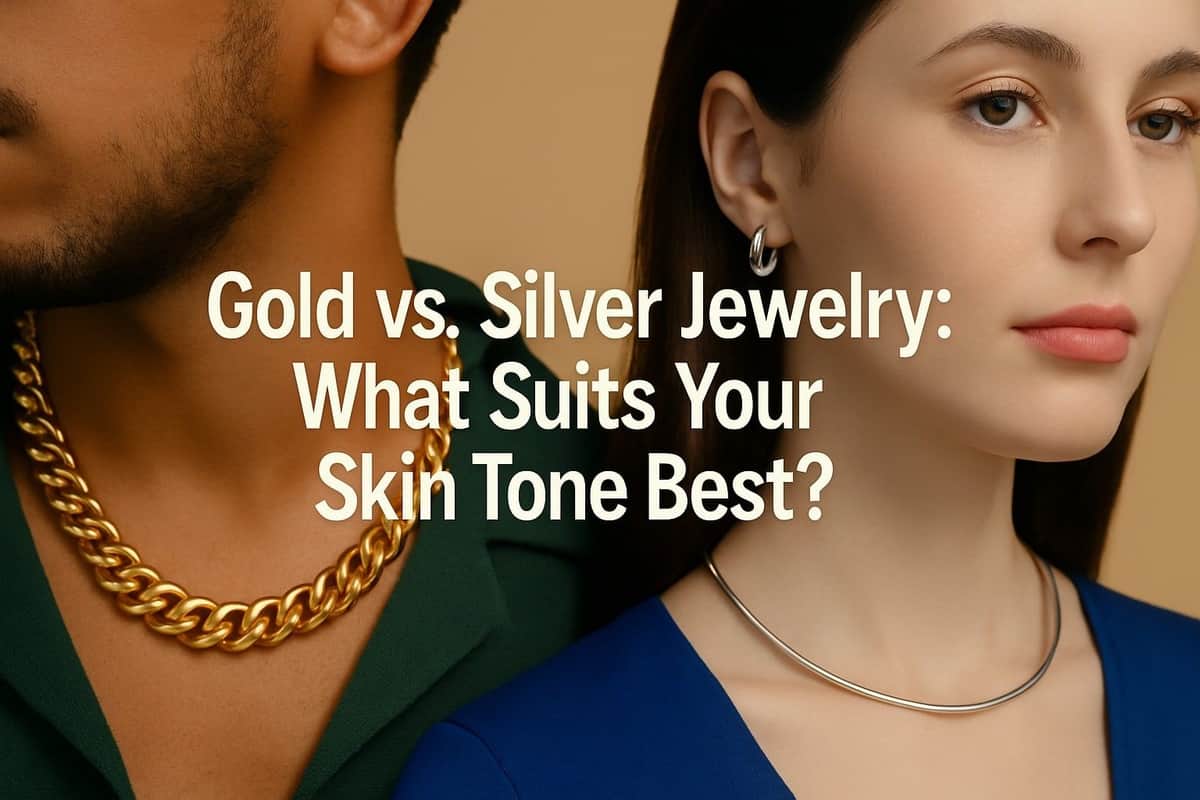
You’re standing in front of a mirror—or scrolling online—and you’ve narrowed it down to two necklaces.
One in gold.
One in silver.
Both stunning. But here’s the question we’ve all asked at some point:
“Which one actually looks better on me?”
It’s not just about the trend or price. The right metal brings out your skin tone, elevates your style, and makes you look like you’ve got a stylist on speed dial—even if you don’t.
So let’s help you figure out once and for all whether you should wear gold or silver—and how to confidently choose every time.
Why It Matters: Gold and Silver Look Very Different on Every Person
If you’ve ever tried on a piece of jewelry and felt like it made your skin look washed out—or oddly yellow—it’s probably because the metal didn’t match your undertone.
And no, that’s not about how light or dark your skin is.
It’s about the subtle tone underneath the surface—cool, warm, neutral, or olive.
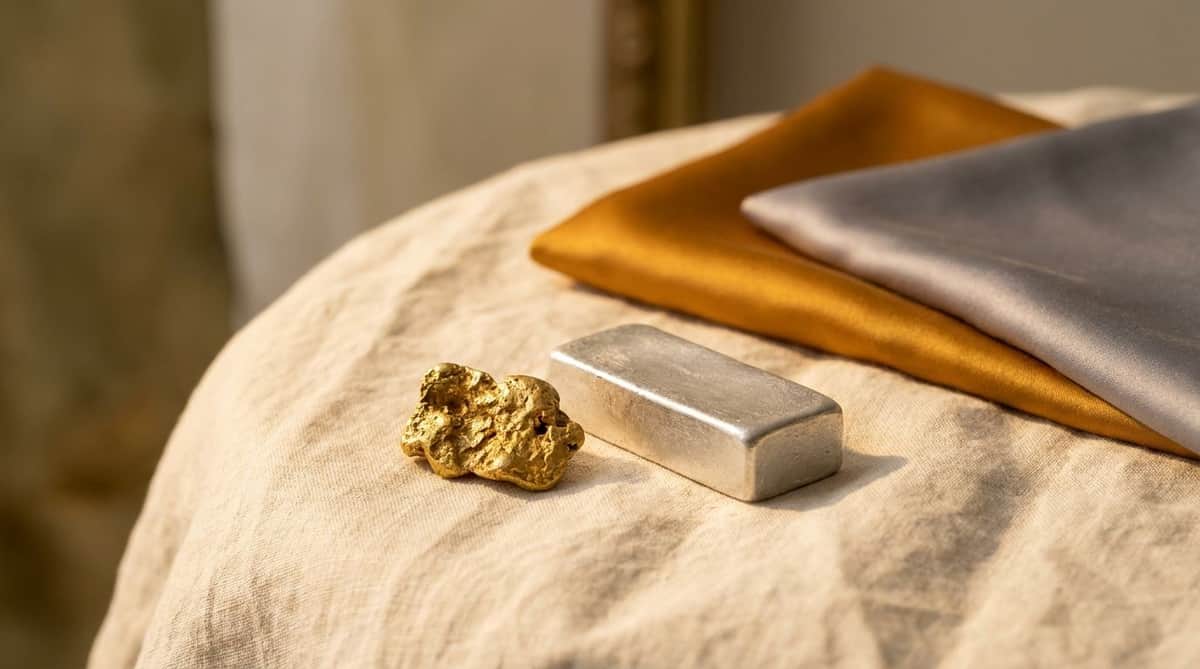
Quick answer: gold reads as a warm-toned metal and silver reads as a cool-toned metal — which is exactly why matching the metal to your undertone (not your skin color) is what actually makes jewelry look "right" on you.
🔍 How to Find Your Undertone (The Key to Choosing the Right Metal)
Most people fall into one of these categories:
- Cool undertones: You have pink, red, or bluish hues under the skin
- Warm undertones: You lean golden, peachy, or yellow
- Neutral undertones: A balance of warm and cool—you look good in almost anything
- Olive undertones: A mix of green and golden, often seen in Mediterranean, South Asian, and Latin skin
✋ Not sure what yours is?
Try this quick self-quiz — four easy tests, no guesswork:
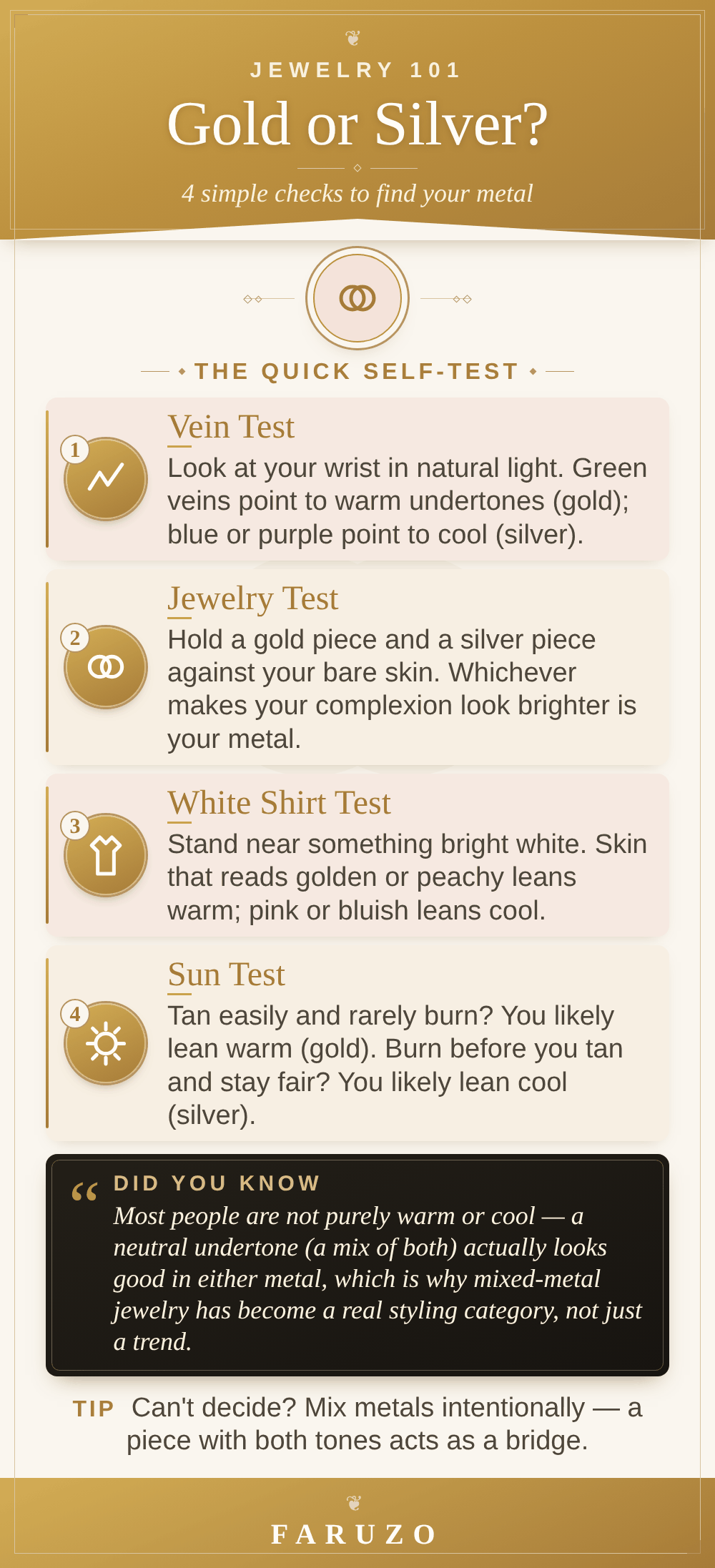
✅ 1. The Vein Test
Look at the veins on your wrist:
- Blue or purple? Cool undertone
- Greenish? Warm undertone
- Both or hard to tell? Neutral or olive
✅ 2. The Jewelry Test
Put on silver and gold jewelry (even costume pieces work):
- Silver looks better? → Cool
- Gold looks better? → Warm
- Both look good? → Neutral
✅ 3. The White Shirt Test
Wear a pure white top, then an off-white/cream one:
- Pure white flatters you more? → Cool
- Cream makes you glow? → Warm
✅ 4. The Sun Test
Think about how your skin responds to the sun: tan easily and rarely burn? You likely lean warm (gold). Burn before you tan and stay fair or pale? You likely lean cool (silver). Hair color can offer a loose extra clue — warm blondes and golden-highlighted brunettes often read warm-toned, while ash blondes, cool brunettes, and true black hair often read cool-toned — but treat that as a hint, not a rule, and lean on the four tests above to confirm it.
Need a deeper guide to skin tone? Check our full breakdown on skin tone names.
🌟 Gold vs Silver: What Each Metal Does for Your Look
Let’s talk about what these metals actually do for you—beyond just color.
🟡 Gold Jewelry
Gold adds warmth, richness, and glow. It can feel vintage, bold, luxurious—or bohemian and earthy, depending on how you style it.
Works best for… ✔ Warm undertones ✔ Olive skin tones (especially yellow gold or rose gold) ✔ Earthy tones, neutrals, and warm colors in your wardrobe ✔ Vintage, glam, boho, or classic aesthetics
📝 Gold doesn’t always mean “yellow.” Rose gold (with a pink tint) is amazing on warm and neutral skin tones—and is a great alternative if yellow gold feels too traditional.
⚪ Silver Jewelry
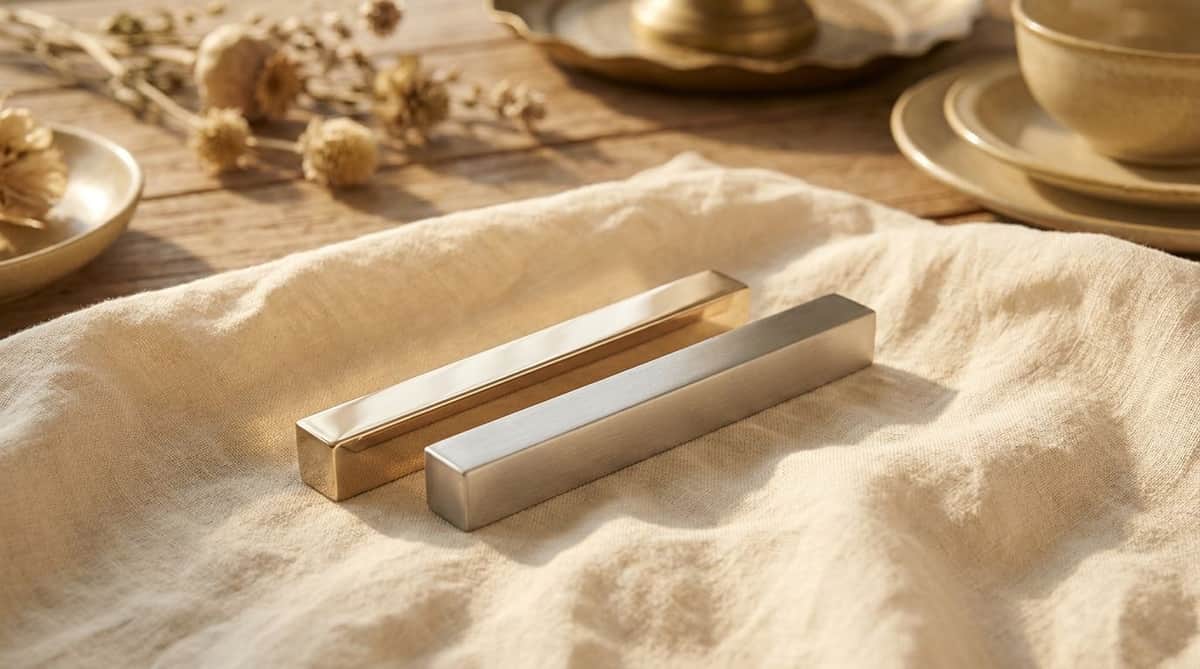
Silver brings cool contrast, modern sharpness, and understated elegance. It’s sleek, minimalist, and often feels a bit more contemporary.
Works best for… ✔ Cool undertones ✔ Neutral skin tones ✔ Jewel tones, monochromes, icy colors ✔ Minimalist, edgy, or modern style vibes
Pro tip: White gold and platinum fall under the silver “look,” so if silver suits you, these are great upscale choices for special pieces.
🎨 What Jewelry Color Says About Your Style
Jewelry does more than flatter your skin—it says something about your vibe.
Gold — warm, bold, luxurious. Best for daytime glam, boho looks, and formal events.
Silver — cool, sleek, modern. Best for evening wear, minimal looks, and workwear.
Rose Gold — romantic, soft, feminine. Best for date nights and casual elegance.
Mixed Metals — confident, bold, trend-savvy. Best for daily wear and fashion-forward layering.
🧡 Example:
Let’s say you wear a lot of earthy tones (camel, rust, olive, cream), have warm undertones, and love layering—gold is likely your best match.
If your wardrobe leans toward black, grey, and jewel tones, and silver makes your skin look fresher—then go for silver or platinum pieces.
And if you love both? Keep reading. You can mix them (yes, stylishly).
Can You Mix Gold and Silver Jewelry? (Yes—Here’s How to Do It Right)
Let’s clear this up: You can absolutely wear gold and silver together.
In fact, mixed metals are not only okay—they’re stylish, modern, and incredibly wearable when done intentionally.
But here's the key: Intentionality. When it looks like a “happy accident,” it works. When it feels like you threw on random jewelry from your nightstand... not so much.
Want the full playbook? Our newer guide on mixing gold and silver jewelry the right way walks through pairing rules piece by piece.
💡 Tips for Mixing Gold and Silver Jewelry Like a Pro
1. Use a “Bridge Piece”
Look for a piece that combines both metals—like a chain with gold and silver links or a pendant with both tones. It acts as a unifier and makes the rest of your look feel cohesive.
2. Balance Is Everything
Don’t overload one hand or side with gold and the other with silver. Try:
- A gold necklace layered with a silver choker
- A silver ring stacked with a gold one
- A pair of hoops: one gold, one silver (yes, that’s a look now)
3. Stick to a Style Family
Keep the style of the pieces consistent:
- Chunky with chunky
- Dainty with dainty
- Boho with boho
Mixing metals works best when the overall vibe and shape of the jewelry are in harmony.
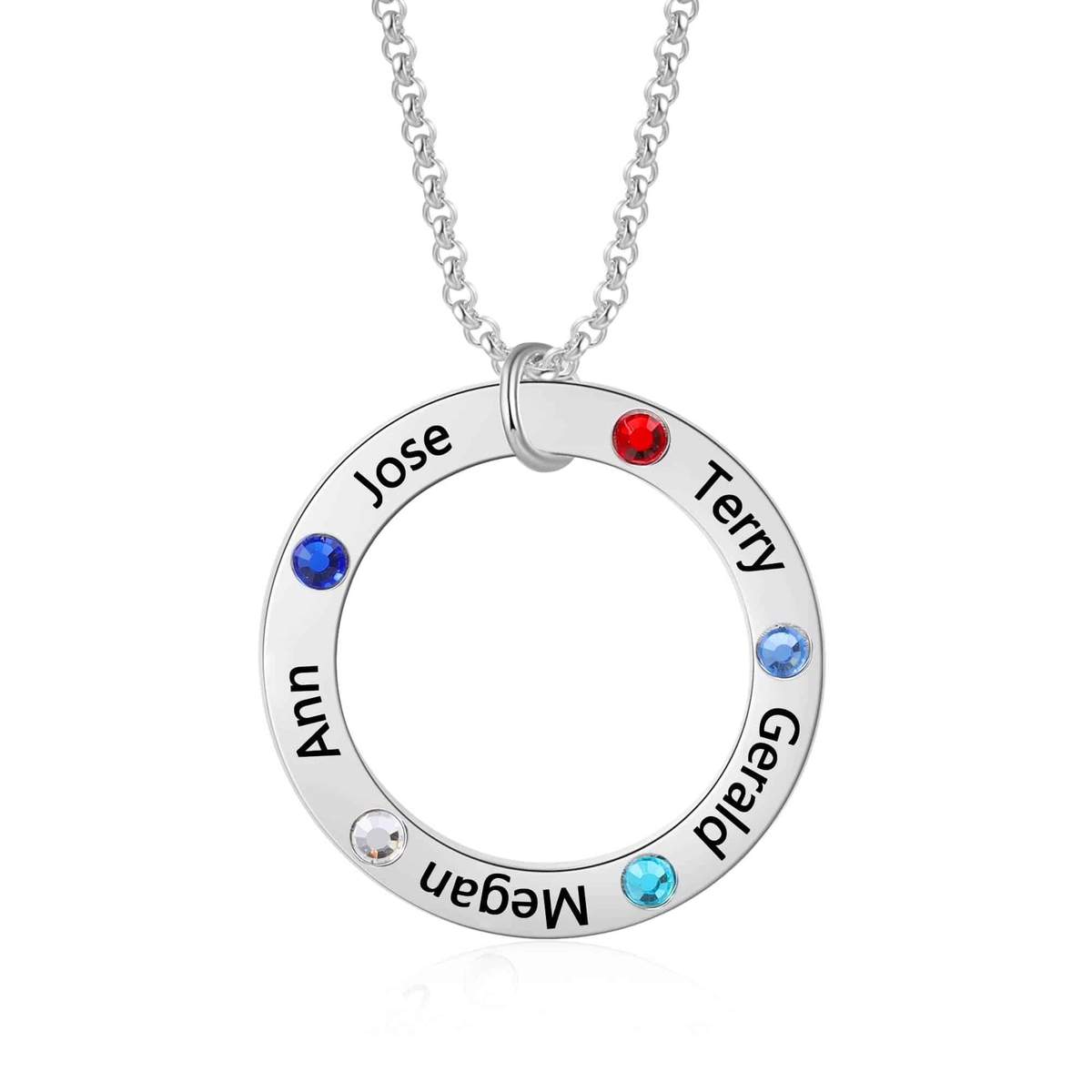
🎯 Want to dip a toe in? Try a stack of personalized bracelets—one in gold, one in silver. Add a nameplate or engraved charm to tie them together.
🧍♀️ Real-Life Scenarios: Which One Should *You* Wear?
Let’s make it easy. Here are some everyday situations and how to decide what metal to reach for.
💼 For Work or Everyday Office Style
- Silver is sleek, neutral, and matches with business tones (navy, black, white).
- Choose small studs, minimalist chains, and clean lines.
🕯️ For a Romantic Dinner or Night Out
- Gold or rose gold warms up your skin in low light.
- Think statement earrings, layered gold necklaces, or a bold cuff.
🏖️ For Casual Weekends or Daywear
- Gold has a relaxed, earthy elegance—perfect with denim, linen, neutrals.
- Silver is cool and easy, especially with bright colors or white.
🎤 For Parties or Events
- Don’t be afraid to mix metals—stacked rings, dual-tone chokers, or a curated ear look.
- This is the time to be bold and expressive.
💍 Jewelry Type Matters, Too
Some jewelry pieces react differently depending on the metal—and your features.
Necklaces — gold shines on warmer skin tones and deep necklines; silver shines on cool skin tones and darker outfits.
Earrings — gold warms up darker hair and warm-toned skin; silver pops against cool-toned complexions.
Rings — gold pairs well with warmer nail polish (peach, nude, red); silver works with blues, greys, and jewel tones.
Bracelets — gold goes with tans, gold watches, and warm neutrals; silver is sleek with cool leather and dark clothes.
📊 Gold vs Silver: Side-by-Side Comparison
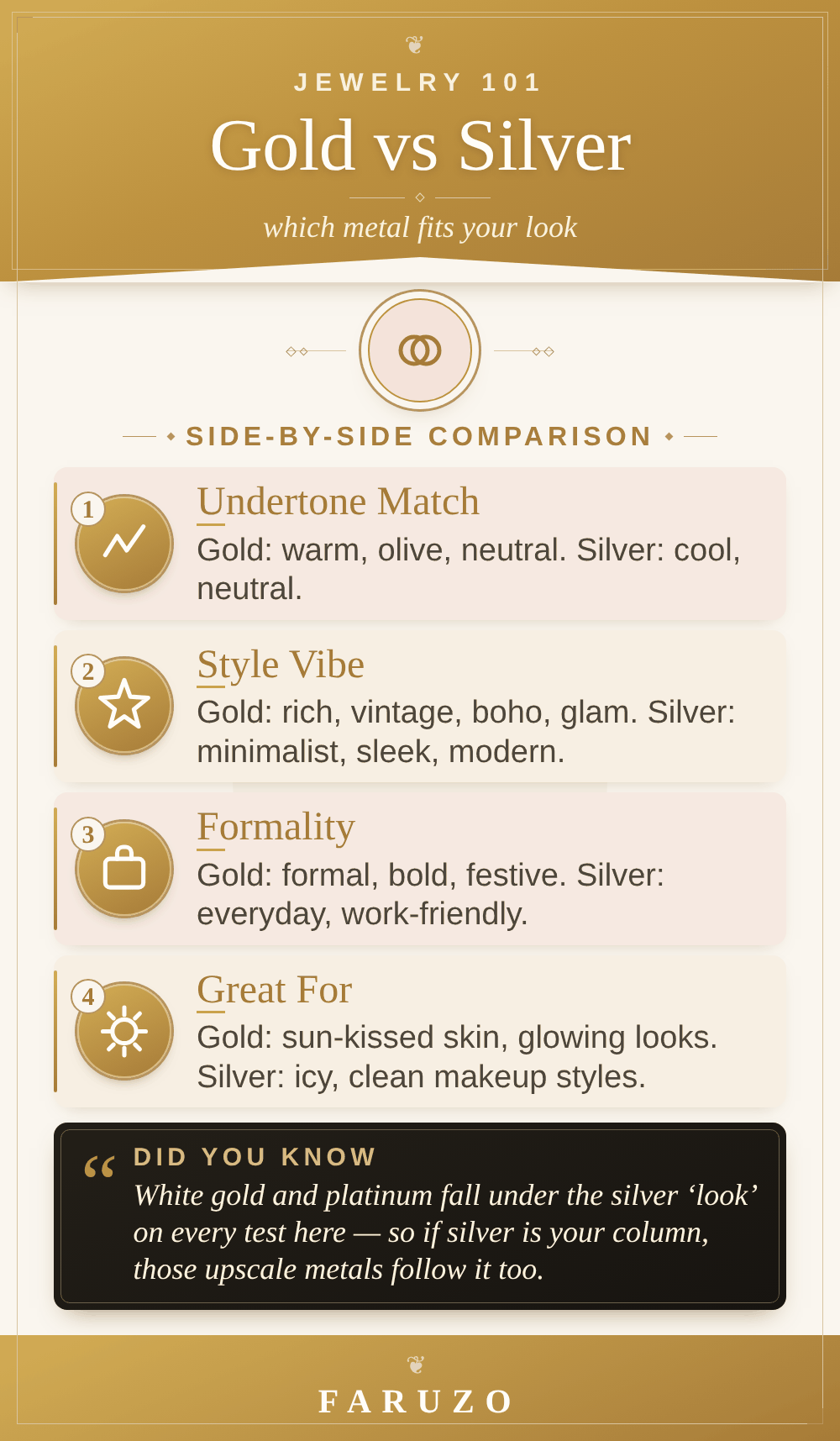
Undertone match — Gold: warm, olive, neutral. Silver: cool, neutral.
Best with colors — Gold: creams, browns, rusts, warm tones. Silver: black, white, jewel tones, cool greys.
Style vibe — Gold: rich, vintage, boho, glam. Silver: minimalist, sleek, modern, edgy.
Formality — Gold: formal, bold, festive. Silver: everyday, work-friendly, understated.
Pairs with — Gold: gold watches, warm-toned accessories. Silver: silver watches, cool-toned accents.
Great for — Gold: sun-kissed skin, glowing makeup looks. Silver: cool-toned makeup, icy or clean styles.
🧠 Final Takeaways: So… Should You Wear Gold or Silver?
Here’s the real answer:
👉 Wear what makes you feel most like you.
For more practical, no-fluff basics like this, browse the rest of our Jewelry 101 guides.
But if you want a cheat sheet:
- Cool-toned skin = Silver
- Warm-toned skin = Gold
- Neutral or olive? Lucky you—both will look stunning
- Can't choose? Layer and mix your metals with intention
The right metal doesn’t just match your skin—it matches your energy, your outfit, your moment.
So whether you’re layering necklaces, stacking rings, choosing personalized bracelets, or curating a minimalist daily look—go with the metal that makes you feel confident, comfortable, and ✨you✨.
Frequently Asked Questions
How do I know if I'm a gold or silver person?
Start with the vein test — it's the fastest of the four: look at your wrist in natural light. Greenish veins point to a warm undertone (gold); blue or purple veins point to a cool undertone (silver). If that alone doesn't feel conclusive, run it alongside the jewelry, white shirt, and sun tests above — agreement across two or three of them is a strong signal. If they still split evenly, you likely have a neutral or olive undertone, which means both metals (and mixing them) will look good on you.
Does gold or silver tarnish faster?
Sterling silver tends to tarnish over time as it reacts with air and moisture, so it needs occasional polishing to keep its bright, cool shine. Solid gold resists tarnish far better, especially at higher karats. If low-maintenance shine is your priority, gold is the easier metal to live with day to day. FARUZO pieces skip that tradeoff entirely: every piece is 316L stainless steel with a gold, rose gold, or silver-tone plated finish, so it resists tarnish and is nickel-safe — no polishing routine required to keep the shine.
Is silver the same as white gold?
They share the same cool, silvery look but they are different metals. Silver (usually sterling) is its own metal, while white gold is yellow gold alloyed with white metals and often finished with rhodium plating for extra brightness. As the article notes, white gold and platinum fall under the silver "look," so if silver flatters you, they make great upscale alternatives.
Which metal looks best with a tan or sun-kissed skin?
Gold is the natural match for sun-kissed, glowing skin because it echoes and enhances that warmth. Yellow and rose gold in particular make tanned skin look radiant rather than washed out. Silver can still work, but it reads coolest and cleanest against fair or cool-toned complexions.
What if I genuinely can't tell my undertone?
Run the three quick checks from the article together rather than relying on just one: the vein test, trying on both metals, and comparing pure white against cream. If the results are mixed or hard to call, you likely have a neutral or olive undertone, which means both gold and silver will suit you. In that case, choose by outfit and mood, or mix the two with intention.
Is gold jewelry more expensive than silver?
Generally yes. Solid gold costs more than sterling silver, and the price climbs with karat and weight, while silver is a more budget-friendly way to get a bright, cool look. If gold suits you but the price feels steep, rose gold or gold-toned personalized pieces let you get the warmth without committing to a heavy solid-gold investment.
Is gold considered a warm or cool metal tone?
Yes — gold is a warm-toned metal, which is why it flatters warm and olive undertones most, while silver (a cool-toned metal) tends to flatter cool undertones. Neutral undertones can usually wear either.
Does gold or silver look better on deeper or olive skin tones?
It comes down to undertone, not depth of skin color. Olive and deeper warm skin tones tend to glow more in gold (especially yellow or rose gold), while deeper cool undertones look sharper in silver or white gold — the vein and white-shirt tests above work the same way regardless of how light or dark your skin is.
Does gold or silver look better on pale or fair skin?
Both can work — it's still about undertone, not how light the skin is. Fair skin with cool, pinkish undertones tends to look sharpest in silver or white gold, while fair skin with warm, peachy undertones glows more in gold or rose gold. The vein test is the fastest way to tell on pale skin, since the blue-vs-green contrast shows up clearly against lighter skin.
Does gold or silver look better on black or deep skin tones?
Deep skin carries undertone just like any other skin tone, so the same tests apply: warm undertones (common in deep skin) tend to pop against gold, especially yellow and rose gold, while cooler undertones look crisp in silver or white gold. Many people with deep, warm skin find gold's richness reads as the more flattering default, but the jewelry test — trying both metals against your actual skin — settles it faster than any rule of thumb.
Is gold or silver better for brunettes?
Hair color is a secondary clue, not the deciding factor — undertone still wins. That said, warm or golden-brown brunette hair tends to pair with warm undertones and gold, while ash or cool-toned brunette hair often goes with cooler undertones and silver. If your hair color and your vein-test result point the same way, that's a strong signal; if they disagree, trust the vein and jewelry tests over hair color.