A platinum ring is built to last, but even the most durable metal needs care. Over time, daily wear leaves behind fingerprints, lotion, dirt, and natural oils, which dull its shine. While platinum doesn’t tarnish like silver or fade like white gold, it can develop a soft patina—a slightly matte finish that some love and others prefer to polish away.
The good news? Restoring a platinum ring’s brilliance is easy. Whether you’re doing a simple at-home cleaning or looking for deeper maintenance, here’s everything you need to know about keeping your ring looking as flawless as the day you got it.
These same steps work for any platinum jewelry — earrings, necklaces, and bracelets — not just rings.
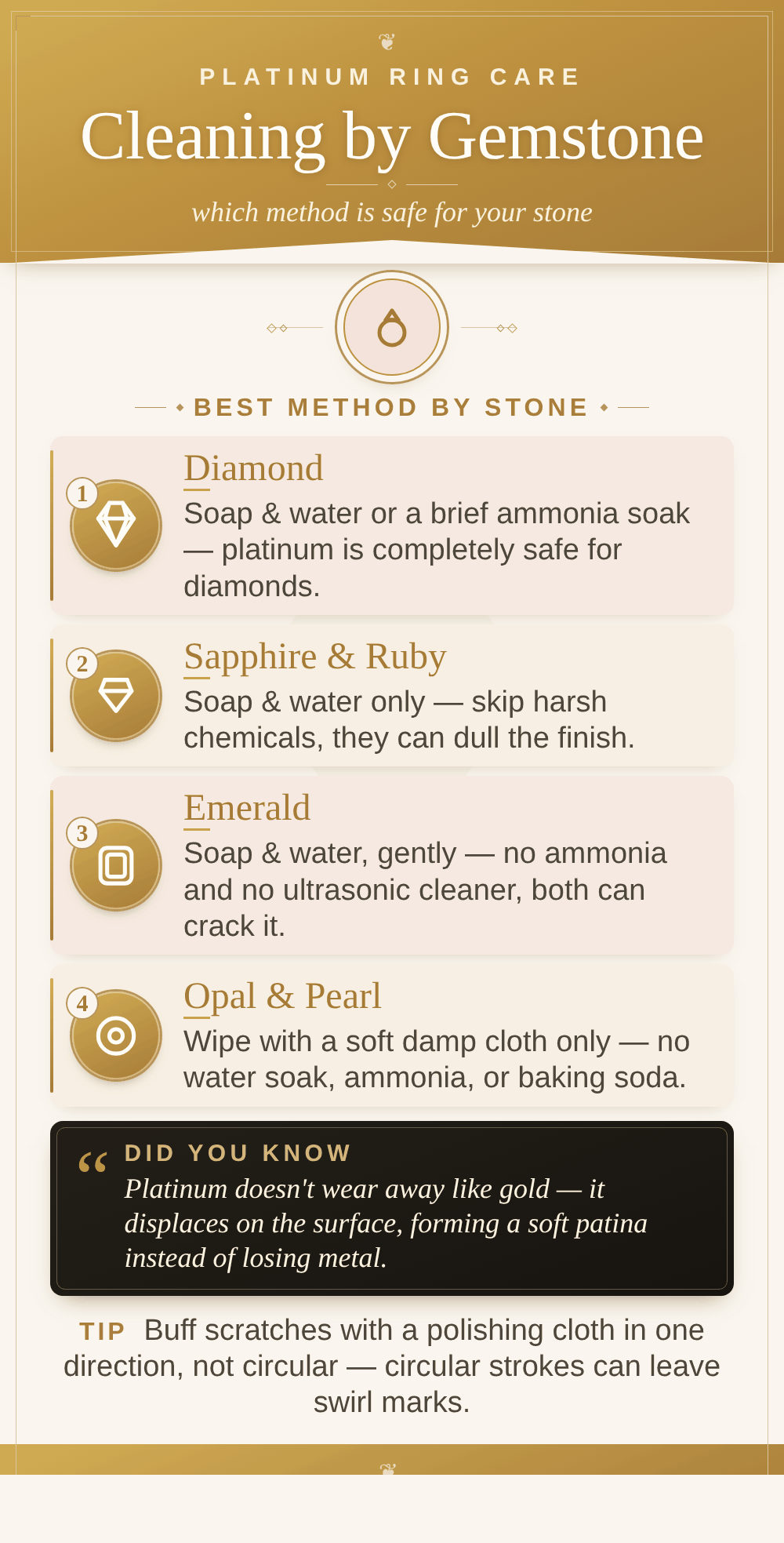
Table of Contents
How Often Should You Clean a Platinum Ring?
Weekly: A quick at-home clean to remove daily dirt and buildup.
Monthly: A deeper clean to restore extra shine.
Every 6-12 months: A professional cleaning and polishing for a like-new finish.
Platinum is low-maintenance, but regular cleaning keeps it bright and reflective.
The Best Ways to Clean a Platinum Ring at Home
1. Soap & Warm Water Method (Safe & Easy)
This method works for all platinum rings, including those with diamonds or gemstones.
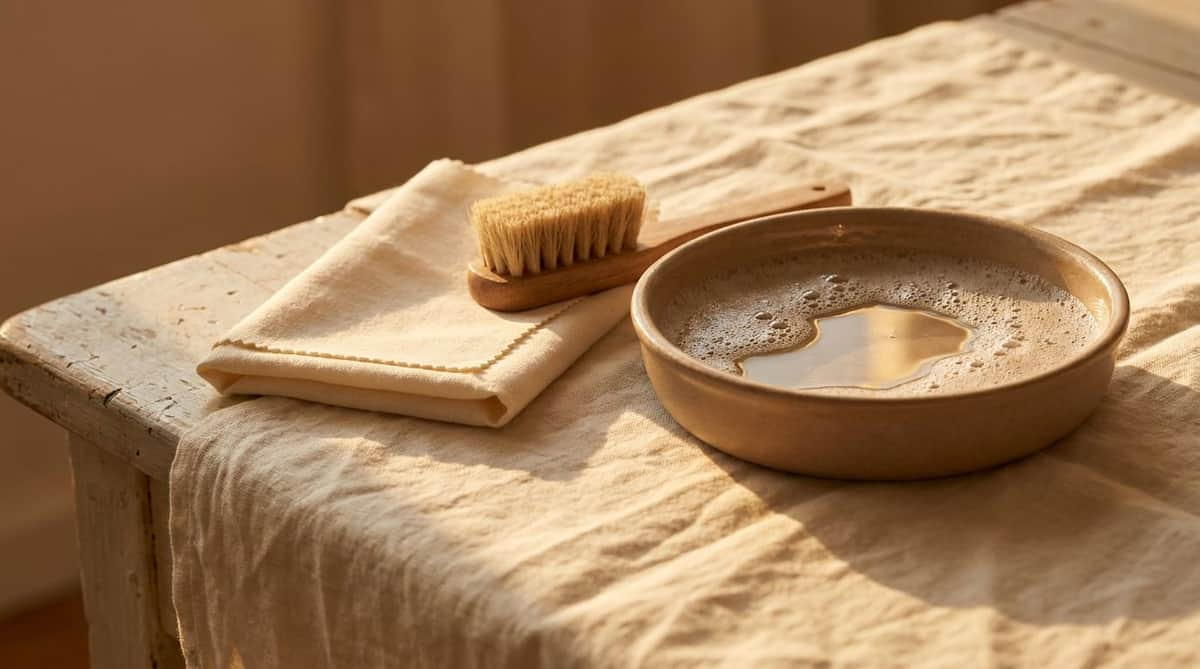
Step 1: Fill a small bowl with warm water and add a few drops of mild dish soap (avoid anything with harsh chemicals or moisturizers).
Step 2: Let the ring soak for 20-30 minutes to loosen dirt and oils.
Step 3: Use a soft-bristled toothbrush to gently scrub the ring, especially around the setting.
Step 4: Rinse under lukewarm running water (always over a bowl or with the drain closed—just in case).
Step 5: Dry with a lint-free microfiber cloth—paper towels can leave scratches.
Tip: This method is safe for all platinum rings, including those with diamonds, sapphires, or rubies.
2. Baking Soda & Ammonia for Extra Shine
If your ring still looks dull after regular cleaning, try this deep-cleaning method.
Step 1: Mix 1 part ammonia with 6 parts warm water.
Step 2: Soak the ring for 5-10 minutes (no longer).
Step 3: Make a paste with 1 tablespoon baking soda and a few drops of water.
Step 4: Use a soft toothbrush to scrub gently.
Step 5: Rinse thoroughly and dry with a soft cloth.
Important: Ammonia is safe for plain platinum rings and diamonds, but don’t use it on pearls, opals, or soft gemstones—it can damage them.
3. Commercial Jewelry Cleaners
If you prefer a store-bought solution, a commercial jewelry cleaner is a fast, effective way to remove buildup.
Step 1: Check the label to ensure it’s safe for platinum and free of harsh acids or bleach.
Step 2: Follow the instructions—most require dipping the ring into the solution for a few minutes.
Step 3: Rinse under lukewarm water and dry with a microfiber cloth.
Tip: Choose an ammonia-free cleaner if your ring has soft gemstones like emeralds or pearls.
4. Professional Polishing: Restoring Full Shine at Home or at the Jeweler
Platinum naturally develops a patina—a soft, matte finish that happens as tiny scratches form over time. Some people love the vintage look, while others prefer the original high-gloss shine.
If you like the patina, simply clean your ring at home and let it develop its natural beauty.
If you prefer a polished finish, take your ring to a jeweler every 6-12 months for professional buffing and polishing.
Bonus Tip: You can do minor touch-ups at home using a jewelry polishing cloth.
For everyday dullness, a two-sided platinum polishing cloth (not tissue or a paper towel) restores shine in under a minute: buff in straight lines, following the direction of the ring's finish, then buff again with the cloth's clean side.
For heavier buildup, the baking soda paste from Method 2 above works as a light interim restore between professional visits — it evens out the surface shine, though it won't remove the patina from an actual scratch.
How to Clean a Platinum Ring with Diamonds or Gemstones
Different gemstones require different care. Here’s a quick guide:
- Diamond — soap & water, or a brief ammonia soak. Avoid: nothing, platinum is safe for diamonds.
- Sapphire & Ruby — soap & water. Avoid: harsh chemicals.
- Emerald — soap & water only. Avoid: ammonia, ultrasonic cleaners.
- Opal & Pearl — soft damp cloth only. Avoid: water soaks, ammonia, baking soda.
If your ring has soft gemstones, avoid ammonia and baking soda—stick to the soap and water method.
For a deeper dive on cleaning specific gemstones safely, see our full guide to cleaning a gemstone ring.
Does Platinum Scratch? How to Remove Scratches from a Platinum Ring
Unlike gold, platinum doesn’t wear down—instead, it moves on the surface, forming a patina.
That displaced metal is still there on the surface, which is why a scratched platinum ring can be restored close to its original weight — unlike gold, which is genuinely worn away and lost for good.
If you love the patina: Let it be! Some people prefer the slightly matte, antique look.
If you want it shiny: A jeweler can buff out scratches and restore the original polish.
For light surface scratches, you can buff them out yourself: use a jeweler's polishing cloth (the same one from the Professional Polishing method above) in straight, one-direction strokes — never circular, which can leave swirl marks. A deeper scratch or an uneven, hazy finish is worth a professional buff.
Tip: A jewelry polishing cloth works for minor touch-ups at home.
Restoring an Older or Inherited Platinum Ring
The cleaning and polishing methods above keep a ring that's maintained regularly looking its best. A full restoration is a different job — for a ring that's gone years without professional care, or an heirloom piece you've inherited with a heavily patinated, uneven surface that a cloth alone won't fix.
A jeweler's restoration is mechanical, not chemical: they buff the surface back to an even finish and check the prongs and setting while the ring is off your hand — a loose stone is far easier to catch and re-tighten during a restoration than to discover later. One advantage platinum has here over white gold: it never needs rhodium replating, since the metal itself is naturally white and doesn't need a plated-on finish to stay that color.
It's worth a professional restoration whenever you have the ring resized, before passing it down to someone else, or any time you genuinely can't remember the last time it was serviced. Platinum is also the traditional 20th-anniversary metal — if you're restoring a piece to mark a milestone, see our guide to 20th-anniversary platinum gift ideas for more ways to mark the occasion. Curious what platinum itself is worth right now? Our 2026 platinum price guide breaks down current trends.
What NOT to Use on a Platinum Ring
🚫 Toothpaste – Too abrasive, can scratch the metal.
🚫 Bleach or chlorine – Weakens platinum over time.
🚫 Rough brushes or sponges – Stick to soft-bristled brushes only.
🚫 Ultrasonic cleaners (for soft gemstones) – Safe for diamonds but risky for opals, pearls, and emeralds.
Gentle cleaning is always better.
How to Keep a Platinum Ring Looking New
✔ Take it off before using lotion, cleaning, or swimming – Prevents buildup.
✔ Store it in a soft jewelry pouch or box – Keeps it scratch-free.
✔ Get it professionally cleaned every 6-12 months – A jeweler can check for loose stones and polish away scratches.
Tip: If your ring gets scratched often, consider a matte finish—it hides small marks better than a high-polish surface.
FAQs About Cleaning Platinum Rings
How often should I clean my platinum ring?
At home, clean it weekly for maintenance and monthly for a deep clean.
Does platinum lose its shine?
Not exactly—it develops a patina. A jeweler can restore its mirror-like shine if you prefer.
What’s the safest way to clean a platinum ring?
The soap and warm water method is the safest, easiest, and most effective option.
How do I remove scratches from a platinum ring?
Buff gently with a jeweler's polishing cloth in straight strokes — this smooths most surface scratches. Deeper scratches or an uneven finish are best handled by a professional jeweler, who can restore the ring close to its original weight.
How do I restore a platinum ring to look new again?
For everyday dullness, the soap-and-water clean plus a polishing cloth restores most of the shine in a few minutes. For a scratched or heavily worn ring, a jeweler can buff and re-polish it — because platinum only displaces rather than wearing away, this restores the ring close to its original weight and finish, something gold jewelry can't do once the metal is actually worn off.
Does this cleaning method work for palladium jewelry too?
Yes. Palladium is platinum's sister metal in the platinum group and responds the same way — mild soap and water is safe, and the same harsh chemicals and abrasive polishing should be avoided.
With a little care, your platinum ring will stay just as stunning as the day you put it on.
Looking for more practical guides? Browse everything in our Jewelry 101 hub — or if you're shopping for something new, explore FARUZO's personalized rings, each designed to look this good with minimal upkeep.