Jewelry can be overwhelming with all of the gold to choose from on the market. You may have heard of yellow gold and rose gold but have you ever heard of white gold? Is it gold? Is it like other metals? And more than anything, is it worth investing in?
This guide covers its composition, price, care, and how it stacks up against other metals used in jewelry.
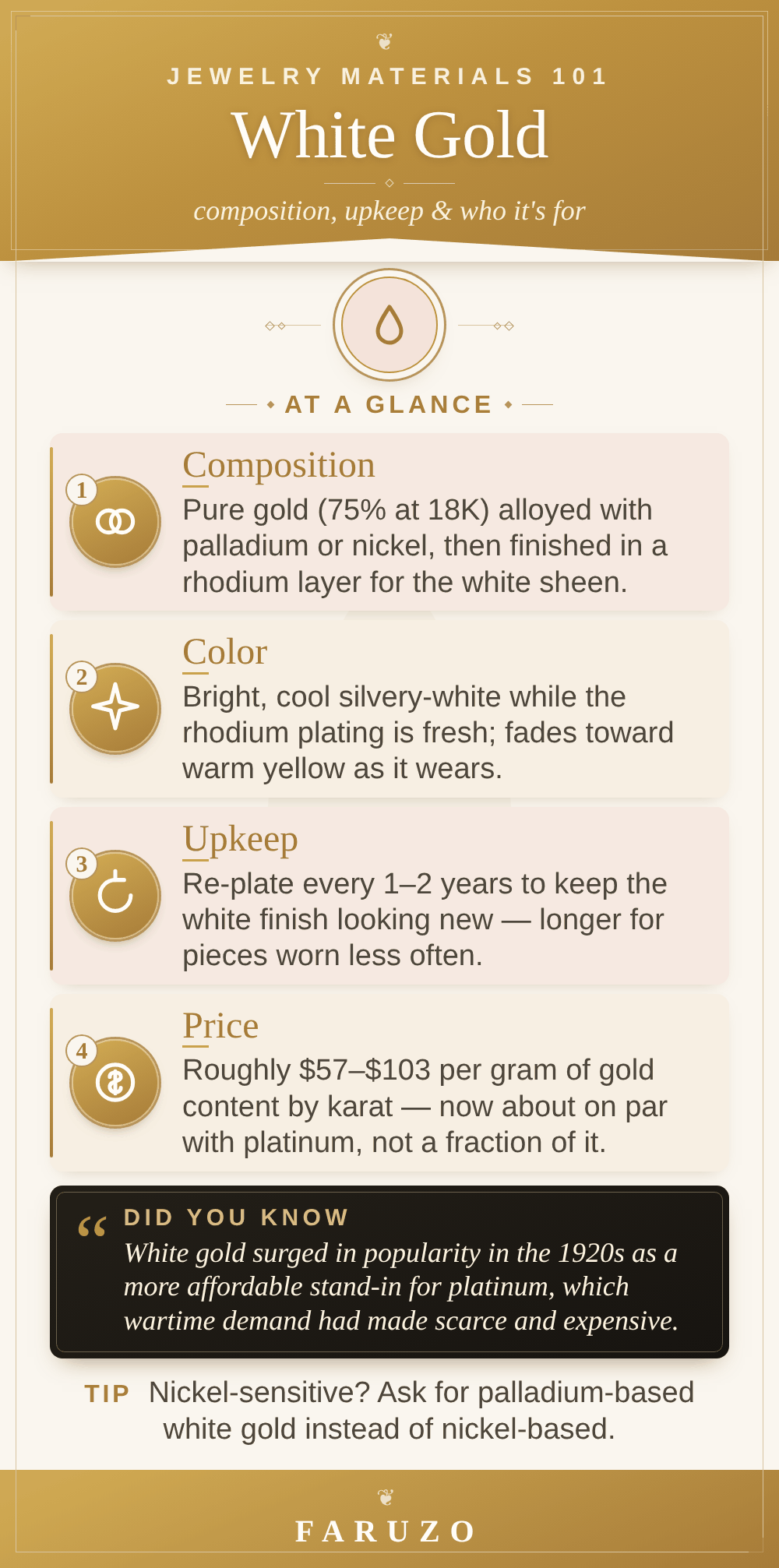
What Is White Gold?
Unlike yellow gold found naturally in earth, white gold is artificially synthesized. It’s synthesized by mixing pure gold with stronger, white-colored metals such as palladium, nickel, or silver. All these make gold stronger while giving it that lovely, silvery-white hue.
However, what gives that characteristic sheen to white gold is rhodium plating—a precious metal family member of platinum. White gold is brighter than it would normally be due to rhodium, which gives it that classy, high-end appearance.
Fun Fact: White gold became widely popular in the 1920s as an alternative to platinum, which was scarce and expensive at the time.
What Is White Gold Made Up of?
Composition of White Gold
White gold is typically produced from an alloy of pure gold and white metals. Pure gold to white metal proportion changes based on gold's karat: For the full purity breakdown across every color of gold, see our gold purity guide.
- 18K White Gold → 75% pure gold, 25% metal alloys
- 14K White Gold → 58.3% pure gold, 41.7% metal alloys
- 10K White Gold → 41.7% pure gold, 58.3% metal alloys
The higher the karat mark, the more gold in the jewelry but at the price of it being more susceptible to scratching. Karat also nudges the underlying tone: since 18K white gold is three-quarters pure gold, it reads slightly warmer before plating, while 14K — with over 40% of the mix made up of non-gold metals — looks cooler and whiter underneath the rhodium.
Why White Gold Uses Metal Alloys
Pure gold or gold of 24K purity is naturally weak and pliant so that it cannot serve for daily decorations. Goldsmiths harden and make it more durable by mixing it with hard metals so that gold decorations survive for decades.
Why Is White Gold Rhodium Coated?
Even after alloying with white metals, white gold has a faint yellow colour. To obtain its shiny silvery-white appearance, white gold is plated with rhodium, which has several benefits:
- ✔️ Enhances shine and radiance
- ✔️ Adds strength and protects from scratching
- ✔️ Provides nickel allergy protection for people with nickel allergies
However, rhodium plating is not permanent. Over time, it erases to display the yellowish foundation that is present underneath. Because of that, white gold jewelry has to get re-plated every 1–2 years periodically, sometimes stretching to 3 years for pieces that see less daily wear.
How Is White Gold Actually Made?
Two steps, in order. First, a goldsmith melts pure gold together with white metals (nickel, palladium, or silver) at the ratio its karat mark requires, producing a solid alloy that is naturally pale gold rather than bright white. Second, the finished piece is electroplated with a thin layer of rhodium, which is what actually gives white gold its bright, silvery-white finish. Skip the second step and you get a dull, faintly yellow-white metal — which is why re-plating restores color after rhodium wears off.
Is White Gold Real Gold?
Yes! White gold is gold because it has pure gold in it. All that alters is that other metals get incorporated to make it have a varying colour and strength.
How to Tell White Gold Is Real? Look for a hallmark stamp that assures its authenticity. Hallmarks that typically found include:
- 750 (18K White Gold)
- 585 (14K White Gold)
- 417 (10K White Gold)
Hallmarking laws vary by country — many set a minimum weight above which a stamp is required, but the exact threshold and rules differ, so check local regulations to confirm what a piece's markings mean.
What White Gold Looks Like
White gold has a dazzling, silvery-white colour due to rhodium plating. It might have slightly varying tones depending on metal alloys used:
- Palladium-based white gold → Pours darker with grayish cooler color
- Nickel-based white gold → Sharper, whiter appearance
Over time, as rhodium plating wears off, white gold may start to take on a warm yellowish color. This completely natural phenomenon can be restored by having your pieces re-plated at a jeweler.
White Gold vs. Other Metals: Is White Gold Better?
White Gold vs. Yellow Gold
- Color: White gold possesses a silvery sheen while yellow gold possesses a rich golden hue.
- Durability: White gold is more durable since it has an alloy combination.
- Maintenance: Yellow gold has lesser upkeep since it does not require rhodium re-plating.
- Price: They are around the same price for the same karat weight but may cost more for white gold due to rhodium plating.
White Gold vs. Platinum
- Color: They possess a silvery-white hue but whereas platinum naturally occurs in that hue, white gold requires rhodium plating.
- Durability: Platinum is more durable but does not discolor though it’s softer and more prone to scratching.
- Weight & Price: Platinum is still the heavier metal — density backs that up: it runs about 21.4 g/cm³ versus roughly 14–16 g/cm³ for 14K–18K white gold, so a platinum ring still feels noticeably heavier than a white gold one in the same size. Price is a different story now: gold's 2025–2026 rally pushed its spot price past $4,289/oz, while platinum sat closer to $1,786/oz over the same stretch — so gram-for-gram, 14K–18K white gold's gold content can now cost as much as or more than platinum, a reversal of the old assumption that platinum always costs more.
Prefer platinum’s lower upkeep? See our full guide to caring for a platinum ring for what that trade-off actually looks like day to day.
White Gold vs. Silver
- Color: They have similar appearance but silver tends to develop darker patina over time.
- Durability: White gold is more durable and does not get tarnished like silver.
- Price: Silver is much more affordable but requires more frequent polishing.
Weighing silver on its own merits? Our guide to sterling silver breaks down its real composition and how to keep it from tarnishing.
How Expensive Is White Gold?
The price of white gold is based on its karat purity level and the live gold price — and that live price has moved a lot. At the $4,289/oz gold spot price Kitco recorded in late September 2026 (see our gold price breakdown for the full climb since 2022), the gold content alone works out to roughly:
- 10K White Gold: ~$57 per gram (gold content only)
- 14K White Gold: ~$80 per gram
- 18K White Gold: ~$103 per gram
Those are melt values, before labor, rhodium plating, or retail markup — finished jewelry runs higher. They're also roughly double what the gold content cost per gram back in 2022–2023, simply because gold itself has more than doubled in that time.
Example: A white gold ring set with a 0.9-carat round-cut diamond no longer costs a fraction of the platinum equivalent the way it did a few years back — gold's 2025–2026 rally has closed most of that gap, so budget similarly for either metal rather than assuming white gold is the clearly cheaper choice.
White gold's per-gram price tracks the live gold market, not a fixed retail number — see what's actually driving gold prices in 2026 for the trend behind those per-gram figures.
Want the White-Gold Look Without the Real-Gold Upkeep?
A lot of the demand behind “white gold” searches isn’t actually about karat purity — it’s about the color: that bright, cool, silvery-white finish. You don’t need solid gold or ongoing rhodium re-plating to get it. FARUZO’s pieces are 316L stainless steel with a silver-tone plated finish — no karat, no rhodium touch-ups every 1–2 years, and steel is nickel-safe rather than relying on a plating layer to shield you from the alloy underneath.
The steel also holds an engraving crisper and resists everyday scratching better than a soft precious-metal alloy. Browse personalized rings or personalized necklaces in the silver tone, and every order ships with 90-day returns if the color or fit isn’t right.
Caring for White Gold Jewelry
To maintain the shine of your white gold jewelry, follow these rules:
- ✅ Avoid chemical hardening agents like chlorine or general-purpose cleaners as these might damage rhodium plating.
- ✅ Store in seclusion to avoid scratching—place in a soft cloth purse or jewelry box.
- ✅ Clean gently in warm soapy water with a soft-bristled brush. Do not scrub with abrasive cleaners.
- ✅ Get re-plated every 1 to 2 years to preserve its shiny white sheen (up to 3 years for pieces worn less often).
Tip: Rings, bracelets and necklaces are the three pieces most commonly made in white gold — its bright, neutral tone holds an engraving cleanly since the pale surface doesn’t compete with cut lettering the way a warmer gold tone can.
Is White Gold Worth It?
If you’re after a durable, classy platinum-look alternative, white gold still fits the bill — just don't assume it's automatically the cheaper pick anymore. Gold's 2025–2026 price rally has closed most of the gap that used to make white gold the clear budget option next to platinum.
- ✔️ Elegant yet ageless
- ✔️ Stronger than yellow gold
- ✔️ Pairs well with gems and diamonds
However, be on the lookout for upkeep fees like rhodium re-plating. If you would like to own a metal that requires no upkeep, look to platinum.
Final Thoughts
White gold is a timeless and versatile option for anyone who loves jewelry. If spending on an engagement ring, bracelet, or personalized necklaces is on your to-do-list, its shine and durability make it a stunning option. Just take proper care of it so that it shines for decades to come. For more metal-buying breakdowns like this one, browse our Jewelry 101 guides before you buy.
Whichever metal you choose, knowing exactly what's in your jewelry helps you buy — and care for it — with confidence.
Frequently Asked Questions
Does white gold turn your skin green?
White gold rarely turns skin green the way some cheaper metals do, because the rhodium plating creates a barrier between your skin and the alloy underneath. Any discoloration is usually a reaction to the alloy metals once the plating wears thin, not the gold itself. Keeping the piece clean and re-plated every 1 to 2 years generally prevents it.
Is white gold safe for sensitive skin or nickel allergies?
The rhodium plating on white gold shields your skin from the alloy metals, which offers real protection if you have a nickel allergy. The catch is that plating wears off over time, and once it does, nickel-based white gold can start to irritate sensitive skin. If you know you react to nickel, ask for palladium-based white gold or stay on top of re-plating.
Can I wear white gold in the shower or swimming pool?
It's best to take white gold off first. Chlorine and harsh cleaning chemicals break down the rhodium plating, which dulls that bright silvery-white finish faster than normal wear. Everyday soap and water won't ruin it, but repeated pool and hot-tub exposure will send you back to the jeweler sooner.
White gold or platinum for an engagement ring?
Both give you that cool silvery-white look, but they differ in upkeep and weight — and, now, less in cost than they used to. Platinum is naturally white, more durable, never needs re-plating, and is still the heavier metal. But gold's 2025–2026 price rally means white gold is no longer reliably the cheaper option: 14K–18K white gold's gold content can now cost as much as platinum per gram, so check current prices rather than assuming white gold wins on cost. Pick platinum for zero upkeep, or white gold if you're fine re-plating it every year or two.
Does white gold cost more to maintain than yellow gold?
Yes, a little. Yellow gold keeps its color on its own, while white gold needs periodic rhodium re-plating, typically every 1 to 2 years, to stay bright and white. That plating is an ongoing maintenance cost yellow gold simply doesn't have, so factor it in if you prefer low-upkeep jewelry.
Is there such a thing as 24K white gold?
Not really. 24K gold is 99.9% pure, and pure gold is naturally soft and yellow — the white color only comes from alloying gold with other metals, which by definition drops it below 24K. So "24K white gold" isn't something jewelers actually make; the highest-purity white gold sold is typically 18K.
Does white gold rust or oxidize?
No. Gold itself is a noble metal and doesn’t rust or oxidize, even in the alloy form used for white gold — that’s part of why it has stayed prized for centuries. White gold also isn’t something found in nature; it’s made by melting gold with white metals like nickel, palladium, or silver, so there’s no such thing as a naturally occurring white gold. Any change you see over time comes from the rhodium plating wearing thin, not the gold underneath reacting with air or moisture.