Draw two curves and let them meet in a point, and something remarkable happens: everyone understands. There is no shape in the human vocabulary more instantly legible than the heart. It needs no caption, crosses every border, and asks nothing of the viewer but that they have loved someone. Which is to say, it asks nothing at all.
The Universal Shorthand for Love
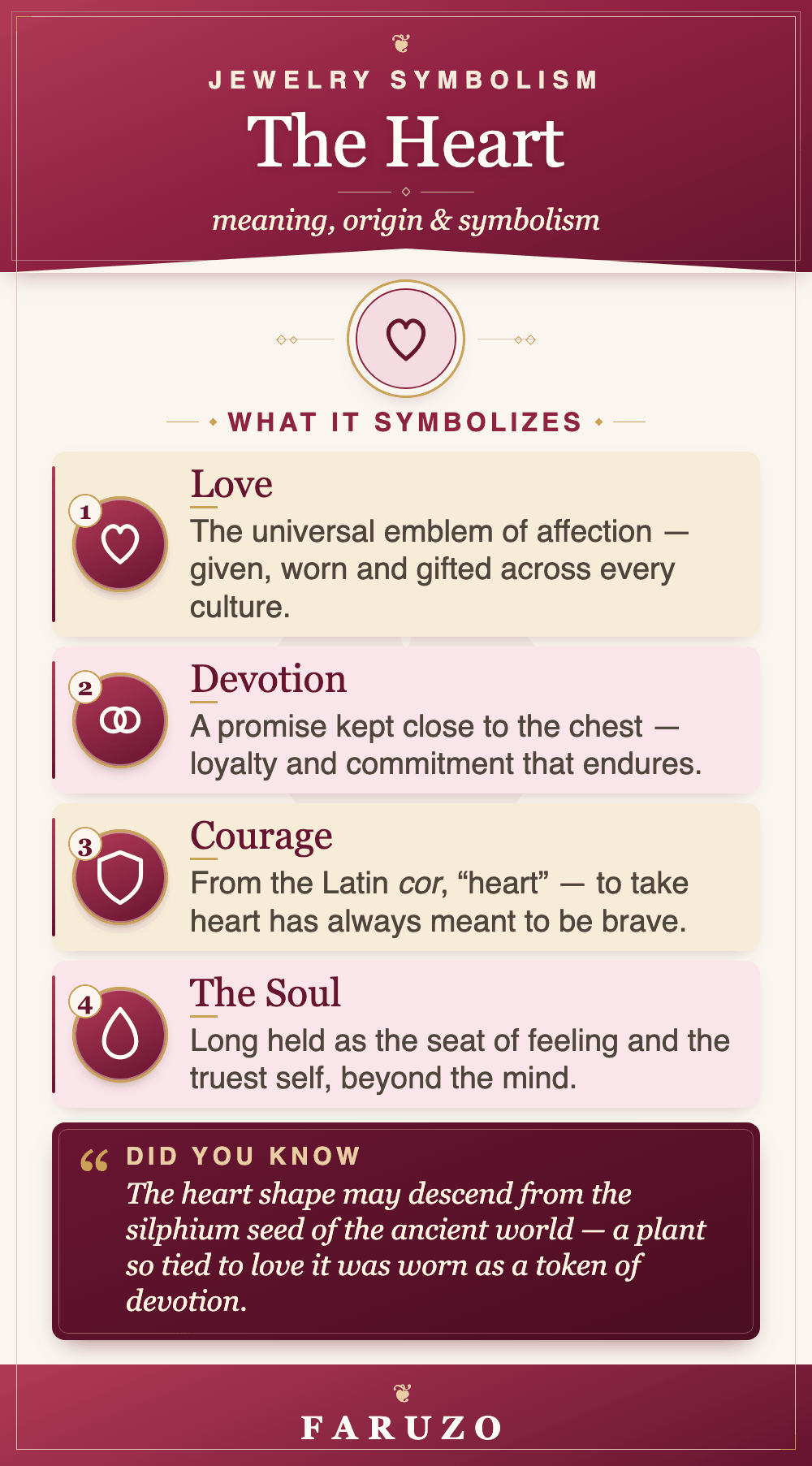
The heart is our most compressed emotion. A single silhouette carries romance, tenderness, devotion, grief, gratitude and desire, and somehow the meaning never blurs. We speak of learning things by heart, of hearts that break and hearts that soar, of giving our heart away as though it were a physical object that could be handed across a table. For thousands of years the heart, the organ, was believed to be the seat of feeling, thought and the soul itself. The Egyptians weighed it against a feather to judge a life. Aristotle placed intelligence there. Long before we understood the heart as a pump, we understood it as the place where we most truly are, and that older, tenderer idea has outlived the anatomy lesson entirely.
The Shape That Isn't a Heart
Here is the quiet surprise: the symbol we all recognize looks almost nothing like the human heart. The organ is a lopsided, fist-sized muscle; the icon is a serene, symmetrical valentine. Where did the familiar shape come from? Historians genuinely disagree, and honesty demands we hold several theories at once. One favorite traces it to silphium, a now-extinct plant harvested near the ancient Greek colony of Cyrene in North Africa, so valuable as seasoning and, reportedly, contraceptive that the city stamped its seedpod on its coins, a seedpod shaped uncannily like our heart. It is a lovely story, though the link to romance is more suggestive than proven.
Other explanations look to nature and to the medieval imagination. The shape echoes ivy and fig leaves, both ancient emblems of fidelity and enduring love. And medieval and Renaissance artists, working from garbled classical descriptions of the organ, may simply have drawn a stylized, two-lobed heart that pleased the eye and then hardened into convention. By the fourteenth century the scalloped, symmetrical heart we know was appearing in European manuscripts and paintings, offered from one lover to another. The truth is probably a braid of all these threads, and the shape's real genius is that it stopped resembling biology and became pure feeling instead.
How the Heart Became the Emblem of Love
The heart's promotion from organ to icon of romance happened in the courts and songbooks of the Middle Ages. The twelfth and thirteenth centuries gave Europe courtly love, an elaborate literary code in which knights pledged themselves to unattainable ladies and poets described love as a wound taken straight to the heart. Illuminated romances began to show suitors literally handing over their hearts. In one celebrated fourteenth-century French tapestry cycle, the Offering of the Heart, a nobleman presents his small red heart to his beloved as though it were a jewel. Over the following centuries the motif spread through playing cards, love tokens and eventually engagement rings, until the heart and romantic devotion became inseparable.
Valentines and the Sacred Heart
Two traditions cemented the heart in the Western imagination. The first is Valentine's Day, which grew from the feast of an early Christian martyr into a full ritual of romantic exchange; by the eighteenth and nineteenth centuries, hand-decorated and then mass-printed valentines had made the red heart the season's undisputed emblem. The second is religious. In Catholic devotion the Sacred Heart of Jesus, often shown crowned with thorns and radiating light, represents divine, self-giving love, while the Immaculate Heart of Mary mirrors it in maternal tenderness. Here the heart means something broader than romance: compassion, sacrifice, a love that pours itself out. That double inheritance, earthly passion and sacred devotion, is exactly why a heart worn at the throat can feel at once intimate and almost holy.
The Heart Across Cultures
Though the icon feels universal, its emphasis shifts around the world. In Western tradition the heart leans romantic. In Christian iconography it speaks of charity and divine love. In many East Asian languages the same character can mean both heart and mind, so the heart becomes the seat of intention and conscience as much as affection. Ancient cultures from Egypt to Mesoamerica treated the heart as the vessel of the soul and life force. What unites them all is the instinct to locate our deepest self somewhere behind the ribs, and to make that place visible. The heart symbol is less a picture of an organ than a map of where we keep what matters most. It's one of dozens of symbols people wear for exactly that reason — FARUZO's guide to jewelry meanings and symbols rounds up the rest.
What a Heart Necklace Says
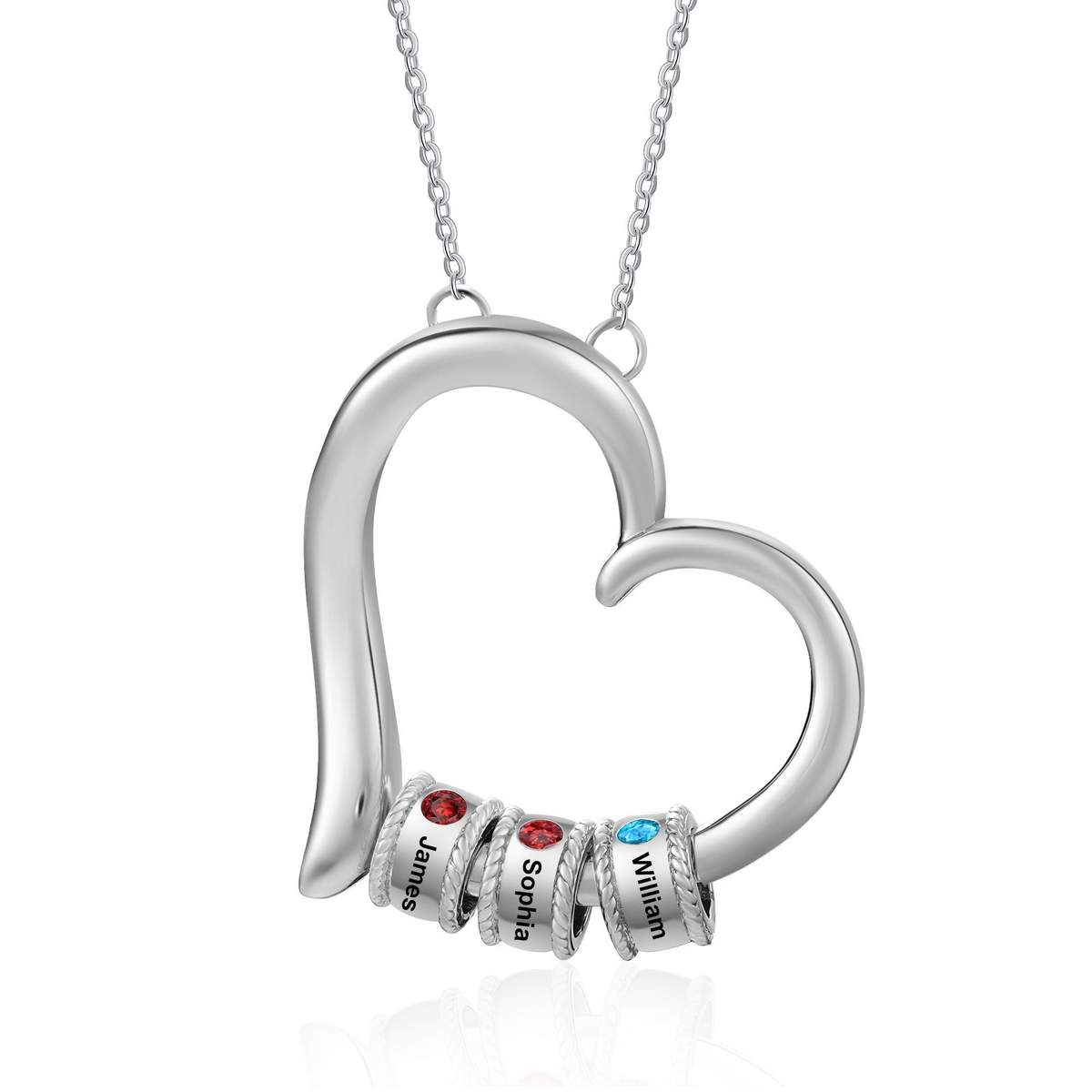
Worn close to the collarbone, a heart is rarely just decoration; it is a small, deliberate message. A solid heart reads as wholeness and steadfast affection. An open heart, its center left as negative space, has come to suggest a love freely given and unpossessive, a heart with room to receive. A locket heart keeps something hidden and near, a photograph or a whisper of the past pressed against the skin. Two entwined or interlocking hearts speak plainly of a couple, two lives joined. And when a heart is engraved with a name or set with a birthstone, it stops being a symbol of love in general and becomes a symbol of this love, these people, in particular.
Wearing the Story: Names, Birthstones and a Heart of Your Own
That specificity is where a heart becomes an heirloom. Add a mother's children, a couple's initials, a family gathered as a cluster of colored stones, and the shape holds not an idea but a household. This is the thinking behind a FARUZO Custom Heart Necklace, engraved with the names you carry and set with the birthstones of the people who made you a family, so the oldest symbol of love is inscribed with your own particular version of it. It is one of the rare gifts that means more the longer it is worn, gaining weight not in gold but in memory. There is no need to explain it; the wearer already knows whose names rest against her, and so, quietly, does everyone who notices.
Why the Heart Endures
Symbols come and go, but the heart has never gone out of fashion, and that is worth pausing over. It endures because it is generous. It does not insist on one meaning; it lends itself to romance and motherhood, faith and friendship, longing and gratitude, and lets the wearer decide. It shares that staying power with only a handful of other symbols — the feather's promise of freedom among them — each carrying its own history but the same instinct to wear meaning where it can be seen. Two curves, a point, and the whole grammar of the heart is available to anyone who has loved and been loved. To wear one is to keep that feeling where the old philosophers always said it lived, close to the source, warm against the skin, saying everything without saying a word.
Frequently Asked Questions
What does a heart necklace symbolize?
A heart necklace symbolizes love, affection and emotional closeness in all its forms, from romance to family devotion. The exact meaning shifts with the design: a solid heart suggests steadfast love, an open heart a love freely given, and a locket a cherished memory kept near. Personalized with names or birthstones, it comes to represent one specific relationship rather than love in the abstract.
Why doesn't the heart symbol look like a real heart?
Because it was never meant to be an anatomical drawing. The familiar shape likely evolved from a mix of sources, including the silphium seedpod of ancient Cyrene, ivy and fig leaves associated with fidelity, and stylized medieval attempts to depict the organ. Over time it drifted from biology into pure symbol, which is exactly why it reads so clearly as feeling rather than physiology.
What does an open heart necklace mean?
An open heart, with its center left as empty space, is usually read as a symbol of love given freely and without possession, a heart that stays open to give and receive. Many people also see it as a reminder to keep one's heart open to new connection and to those already loved. It is a popular choice for gifts between partners, parents and close friends.
What does an upside-down heart mean?
An upside-down heart doesn't have one settled meaning the way the upright shape does. In recent internet and social-media culture, it's most often used as a knowing, ironic gesture — signaling warmth or affection with a wink of humor rather than earnest sentiment, similar to how an upside-down smiley face softens a serious message. In some older folk and card traditions, an inverted heart has also been read as heartbreak or a love that's been turned over or tested. As jewelry rather than a typed icon it's uncommon, and it doesn't carry an established symbolic tradition the way the upright heart does.
What do two hearts joined together symbolize?
Two entwined or interlocking hearts represent a bond between two people, most often a couple or a deep partnership. The linked design speaks to two separate lives joined without either losing itself. Adding two names or birthstones turns the motif into a portrait of a specific pair rather than a general symbol of togetherness. Key-and-heart pendant sets work as the mirror image of that idea — one person keeps the heart, the other holds the key.
Is the heart symbol considered good luck?
The heart is not traditionally a luck charm in the way a four-leaf clover or horseshoe is; its power is emotional rather than superstitious. That said, it has long been worn as a token of protection for the people we love and as a keepsake that carries affection with the wearer. Its enduring meaning is devotion and connection, which many feel is a fortune of its own.