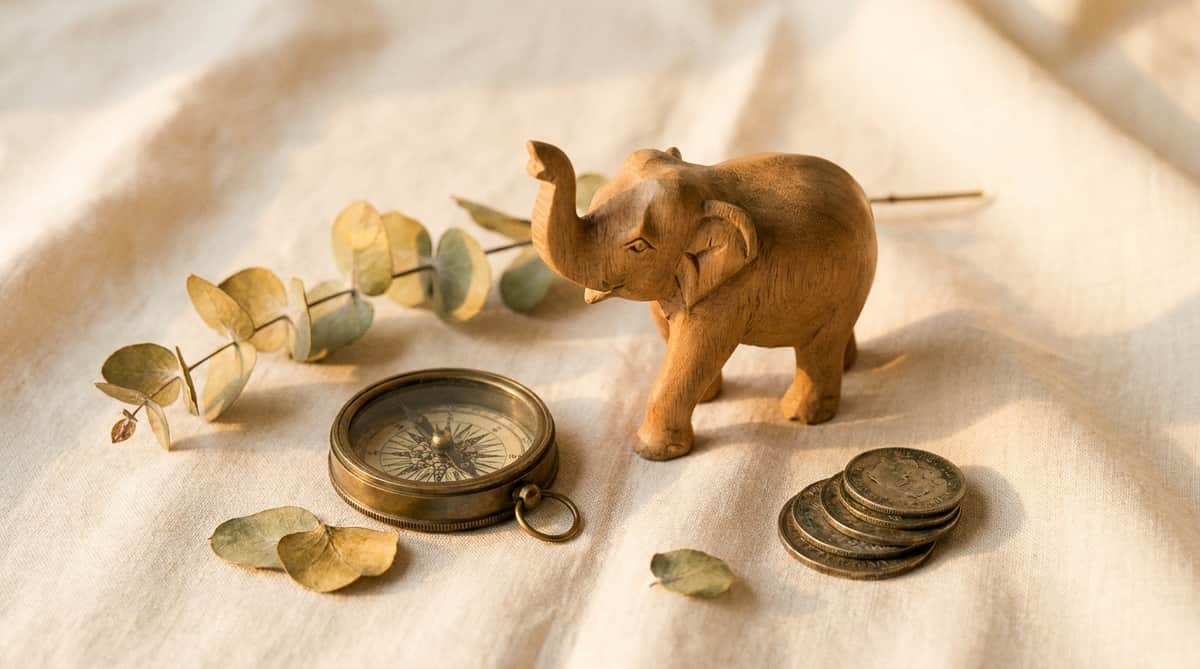
An elephant pendant shows up in jewelry more often than almost any other animal that isn't a bird or a heart. The reasons people give for wearing one vary a lot depending on who's selling it — strength, luck, wisdom, motherhood, and protection, often all claimed for the same piece at once.
Some of that reading has real cultural roots; a lot of it is jewelry-trade folklore repeated often enough to sound settled. Here's what's actually documented, what's genuinely circulating as popular belief, and what the trunk-up-versus-trunk-down question is really about.
At a glance
- The strength/wisdom/family reading tracks real elephant biology — size, memory, matriarchal family groups.
- The two documented cultural roots are Ganesha in Hinduism and the Thai sacred white elephant tradition.
- Trunk-up vs. trunk-down is popular belief, not documented tradition — sellers describe it inconsistently.
- The "fertility" or "motherhood" claim is a modern marketing extension, not inherited symbolism.
Where the Symbolism Comes From
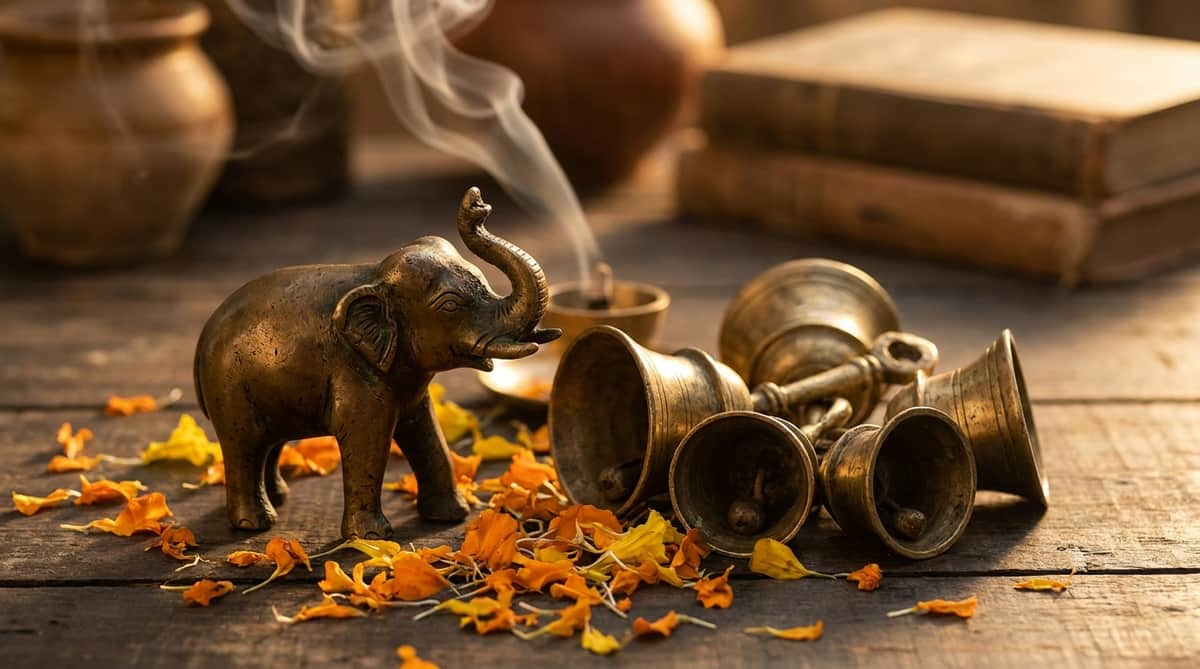
The elephant's reputation as a symbol of strength, memory, and loyalty tracks the real animal. Elephants are among the largest living land mammals, live in close matriarchal family groups, and are widely documented to have strong long-term memory and social bonds.
That part isn't folklore — it's just elephant biology and behavior, almost certainly why the strength/wisdom/family associations attached to the animal in the first place, long before anyone put one on a chain.
The deeper cultural layer comes mostly from South and Southeast Asia. In Hinduism, Ganesha — one of the most widely worshipped deities in the pantheon, instantly recognizable by his elephant head — is honored as the remover of obstacles. He's invoked at the start of ceremonies, new ventures, and writing, linked to wisdom, learning, and prosperity.
Puranic texts give several different accounts of how he came to have an elephant's head rather than being born with one, and the details vary by text and tradition. But the core association — elephant head, obstacle-remover, patron of beginnings and wisdom — is consistent and well documented.
In parts of Southeast Asia, particularly Thailand, a rare "white" (albino) elephant has traditionally been treated as a sacred, auspicious animal connected to royal power and good fortune. It's a separate tradition from Ganesha, but one that feeds the same general "elephant = luck" shorthand that jewelry marketing leans on today.
What jewelry retailers add on top of that — specific claims about trunk direction, which metal means what, or elephants as a fertility symbol — doesn't trace to Ganesha worship or any documented Thai royal tradition. It's a newer, commercial layer, and it's worth being clear about which claims are which before buying into one as "the real meaning."
Trunk Up or Trunk Down: What the Belief Actually Is
This is the single most-asked question about elephant jewelry, and it has no scriptural or zoological basis — it's a piece of popular decorating and gifting lore (originally attached more to elephant figurines in home décor than to jewelry specifically) that jewelry sellers picked up and now repeat as though it were tradition:
- Trunk raised (up): Said to "shower" good luck and positive energy outward and upward — the more common choice for jewelry meant to represent general good fortune, new beginnings, or a congratulatory gift.
- Trunk lowered (down): Said to represent grounding, drawing luck inward, or stability and protection rather than outward celebration — some sellers also tie it to a calmer, more contemplative reading.
Treat both readings as popular belief, not settled symbolism — different jewelry sellers describe the two directions inconsistently, and some skip the distinction entirely and just pick whichever pose looks best on the pendant. If the direction matters to the person you're buying for, it's worth asking them which reading they already believe rather than assuming one is "correct."
Metal and Stone: What Else Gets Read Into an Elephant Piece
The same caveat applies here — these are retail conventions, not documented traditions, but they're common enough in how elephant jewelry gets marketed that it's useful to know them:
- Gold elephant: Commonly marketed around prosperity, success, and material abundance.
- Silver or stainless elephant: More often framed around resilience, strength, and quiet confidence rather than wealth.
- Paired with a birthstone: Sellers frequently add a gemstone accent and fold that stone's own meaning in on top — a sapphire-eyed elephant marketed for wisdom, a ruby accent for vitality, and so on; see our birthstones by month guide for how those individual stone meanings are typically framed.
- "Fertility" or "motherhood" elephant: A claim that shows up often in gift copy for new or expecting mothers, generally without any cited source — it isn't part of the Ganesha tradition or the Thai white-elephant tradition, and it reads as a modern marketing extension rather than inherited symbolism.
Elephant Jewelry vs. Other Protective Animal and Charm Symbols
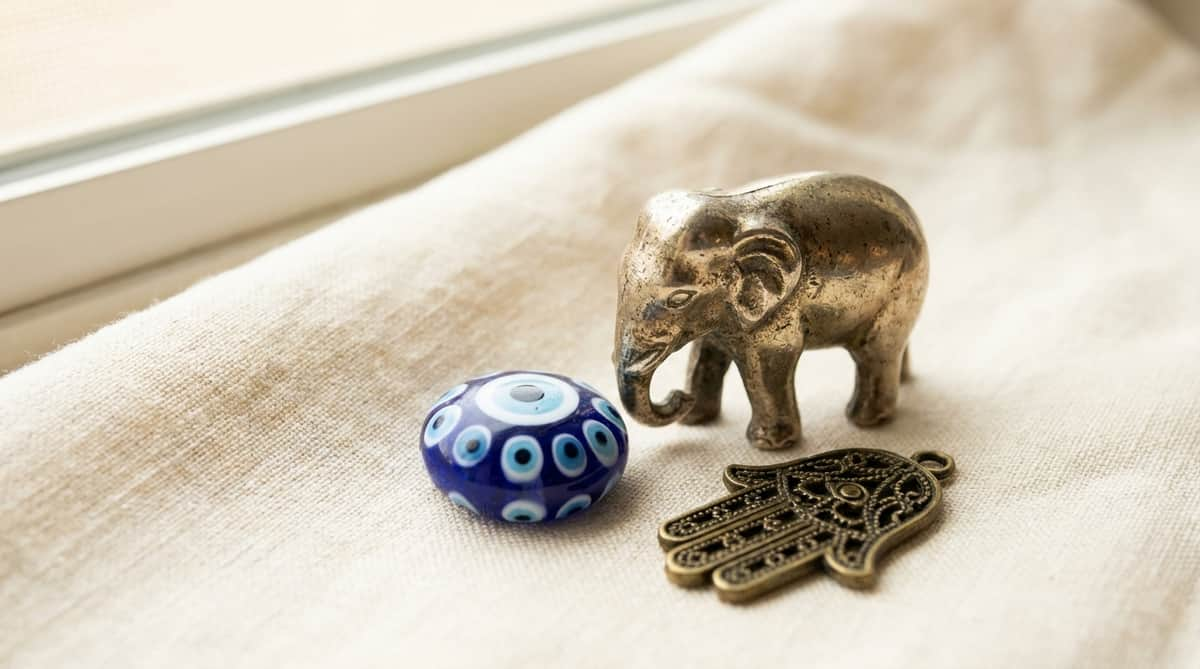
People shopping for an elephant piece are often also considering a hamsa hand or an evil eye charm, and the three get grouped together in gift copy even though they come from different traditions and mean different things.
Our hamsa hand meaning guide covers a specifically protective, palm-shaped amulet rooted in Middle Eastern and North African tradition. Our evil eye meaning guide covers a symbol built specifically to deflect a malicious glance, with a documented history going back thousands of years.
An elephant, by contrast, isn't a protective amulet in the same narrow sense — its symbolism leans toward strength, wisdom, and good fortune rather than deflecting harm.
That's why "evil eye elephant" combination pieces (pairing an elephant silhouette with an evil-eye bead set into its body) have become their own small category: two different symbolic jobs stacked on one piece, rather than one symbol doing double duty.
Choosing an Elephant Piece
A few practical points once the symbolism question is settled:
- Pendant size and detail: a small elephant silhouette reads cleanly at necklace scale; very detailed carved trunks and ears can lose definition below about 15mm.
- Trunk orientation in product photos: if the direction matters to you or the recipient, check the listing photo closely — many elephant pendants are sold in only one orientation, not both.
- Layering: a simple elephant silhouette pairs well with a personalized name necklace on a second chain, rather than competing with another figural piece.
- Gifting context: elephant jewelry shows up often in Mother's Day gift shopping specifically because of the strength-and-family reading, even though the "motherhood" claim itself isn't part of any documented tradition — know that before presenting it as historical fact to the recipient.
- Finish durability: fine carved detail (ears, trunk curve, tusks) wears fastest at its thinnest points. FARUZO plates over 316L stainless steel rather than a soft silver-plated base — nickel-safe, and noticeably more resistant to the everyday knocks that round off fine detail over time.
Frequently Asked Questions
What does an elephant necklace symbolize?
Most commonly strength, wisdom, good luck, and family loyalty — a reading that tracks the real animal's documented size, memory, and social behavior, reinforced culturally by Ganesha in Hinduism (obstacle-remover, patron of wisdom and beginnings) and by the Thai tradition of the sacred white elephant (royal power, good fortune).
Does it matter if the trunk is up or down?
Only as popular belief, not documented tradition. Trunk-up is more often marketed as luck flowing outward; trunk-down as grounding or luck drawn inward. Sellers describe this inconsistently, so there's no single "correct" meaning — pick based on which reading resonates with you or the person you're buying for.
Is the elephant a symbol of motherhood or fertility?
That claim shows up often in gift marketing, especially around Mother's Day, but it doesn't trace to the Ganesha tradition or the Thai white-elephant tradition — treat it as a modern commercial extension rather than inherited cultural symbolism.
What's the difference between an elephant pendant and a Ganesha pendant?
A Ganesha pendant depicts the specific Hindu deity — elephant head, human body, often four arms — and carries that deity's documented religious meaning directly. A plain elephant pendant borrows general associations (strength, wisdom, luck) without depicting the deity itself, and is worn across many cultures with no single religious tradition attached.
Is elephant jewelry considered good luck in every culture?
No single culture "owns" the belief, which is part of why the meanings vary so much between sellers. The two most-cited roots are Hindu reverence for Ganesha and the Thai tradition around sacred white elephants — both real, both documented.
They're distinct from each other, and from the newer trunk-direction and metal-meaning claims that jewelry retailers have layered on top more recently.