Someone compliments your new job a little too warmly. A stranger's gaze lingers a beat too long on your child. In dozens of cultures, across five thousand years, that moment has a name — and a defense. The evil eye is both the oldest curse in the human imagination and the small blue charm invented to stare it down.
What is the evil eye, exactly?
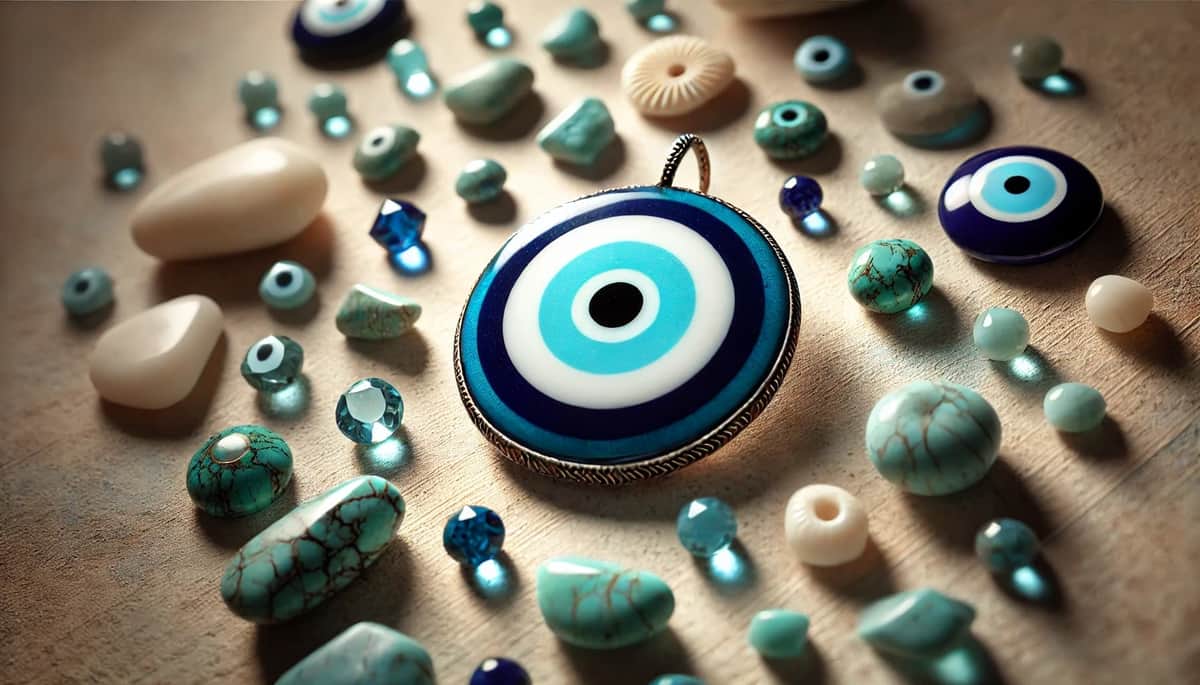
The phrase does double duty, which confuses everyone at first. The evil eye is, first, a belief: that a look loaded with envy — sometimes even unintentional envy — can carry real harm to the person it lands on. Illness, bad luck, a streak of misfortune: folk tradition across the Mediterranean, Middle East and South Asia has long blamed the envious glance. And second, the evil eye is the remedy: an eye-shaped amulet that stares back, absorbing or deflecting the harmful gaze before it reaches you. The charm most people picture — concentric circles of deep blue, white and black glass — is the Turkish nazar boncuğu, but nearly every culture in the region keeps its own version.
Five thousand years of staring back
This is not a modern superstition with an Instagram revival — it is one of the oldest continuous beliefs on record. Eye amulets meant to ward off harmful gazes appear across the ancient Near East roughly five thousand years ago; excavations at Tell Brak in Syria have produced thousands of small 'eye idols' older still. The Greeks and Romans wrote about the malevolent glare in earnest — Plutarch treated it as a genuine physical phenomenon — and the belief runs through the great religions of the region: the ayin hara of Jewish tradition, the nazar of Islamic cultures, the drishti of Hindu practice, each with its own rituals of protection. Few symbols can claim an unbroken five-millennium résumé.
Why is the evil eye blue?
Partly chemistry, partly geography. The classic nazar was born in Mediterranean glassmaking, where cobalt and copper compounds produced that saturated, hard-to-miss blue. But blue also carried its own protective logic: in the lands where the belief runs deepest, light-colored eyes were rare, and rare eyes were suspected of carrying the strongest gaze — so a blue eye of glass became the natural counter-charm. Blue also meant good karma and positive energy in many of these traditions, sealing its place as the color of protection.
Evil eye colors and their meanings
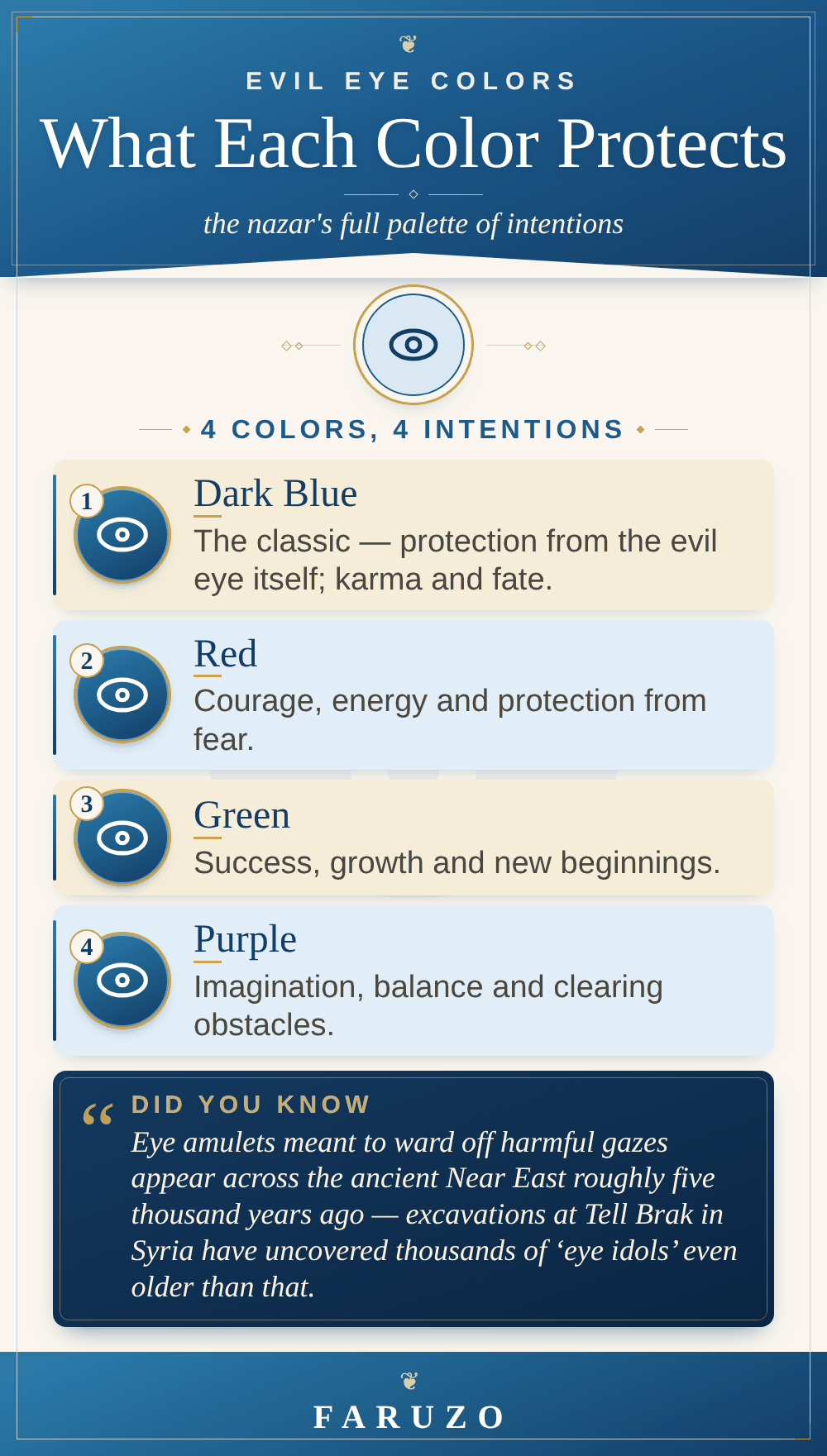
The deep blue eye remains the classic all-purpose protector, but modern evil eye jewelry comes in a full palette, and folk tradition has assigned each color its own intention. Light blue leans toward peace and open protection; red toward courage; green toward growth and success; yellow and gold toward health; pink toward love and friendship; purple toward imagination and balance; white toward purity and fresh starts. None of this is scripture — it is living folklore — but it turns choosing an evil eye into a small act of intention-setting.
How to wear it: wrist, neck, doorway
Tradition offers rules of thumb rather than laws. Bracelets are most often worn on the left wrist — the side folk belief associates with the heart, emotions and the inner life — while wearing one on the right is said to guard your work and dealings with the outer world. An evil eye necklace keeps the charm close to the heart and visible, which many traditions consider part of the point: the amulet should meet the gaze. At home, the eye is hung near entrances — over the front door, in the hallway — to screen what comes in.
What does it mean when your evil eye breaks?
Across nearly every tradition that wears it, a cracked or broken evil eye is read the same way: the charm did its job. It absorbed a hit of negativity meant for you and gave itself up in the process. The custom is not to mourn it but to thank it — and replace it. Practically, of course, glass breaks and cords fray; but the folklore's instinct is generous, turning a small loss into evidence of protection.
Do you have to be given one — and who may wear it?
Receiving an evil eye as a gift is considered especially meaningful — the giver's care is said to charge the charm — but buying your own is perfectly accepted in every tradition that uses it. As for who may wear one: the evil eye belongs to no single religion. It predates them all, and Jewish, Muslim, Christian, Hindu and entirely secular wearers share it comfortably today. Worn with knowledge of what it means, it sits in the same family as the hamsa hand — the two are often combined, an eye set into an open palm — and the wider company of protective symbols in our jewelry symbolism guide.
From amulet to icon
The evil eye has survived every fashion cycle since antiquity because it does two jobs at once: it is a striking piece of design and a statement that you take care of yourself. That is the same instinct behind all meaningful jewelry — from a blue glass eye to a necklace carrying a name you never want far from you. The best charms are the ones that mean something every time you notice them.
Frequently Asked Questions
What does the evil eye protect against?
The evil eye amulet protects against the harm believed to come from envious or ill-wishing gazes — misfortune, illness or bad luck directed at you, knowingly or not. The eye-shaped charm is designed to meet that gaze and absorb or reflect it before it reaches the wearer.
What does it mean when your evil eye bracelet breaks?
A broken evil eye is traditionally a good sign: the charm is believed to have absorbed a significant dose of negativity meant for you and completed its purpose. Custom says to thank it for its service and replace it with a new one.
Which wrist should you wear an evil eye bracelet on?
Most traditions favor the left wrist, associated with the heart and your inner, emotional life. Wearing it on the right wrist is said to protect your actions in the outer world — career and dealings with others. There is no wrong choice; pick the side that matches what you want guarded.
Can I buy an evil eye for myself, or must it be a gift?
You can absolutely buy your own. A gifted evil eye is considered extra meaningful because it carries the giver's protective intent, which is why the charm is such a popular present — but self-purchase is fully accepted in every culture that wears it.
Is the evil eye religious?
The belief is older than any living religion and belongs to none exclusively. Versions of it appear in Jewish (ayin hara), Islamic (nazar) and Hindu (drishti) traditions alike, and today the symbol is worn by people of every faith and of none. Wearing it respectfully mostly means knowing what it stands for.
What is the difference between the evil eye and the nazar?
They are two names for linked ideas: 'evil eye' refers both to the harmful gaze and to the protective amulet, while 'nazar' — from the Arabic for 'sight' — is the common name for the blue-and-white glass eye charm, especially in Turkey (nazar boncuğu). In everyday use the words are interchangeable.
Five thousand years, one job: the evil eye watches so you don't have to. Choose the classic blue or a color that names your intention, wear it where it can meet the world's gaze — and if it ever breaks, smile, thank it, and hang a new one.