You’re shopping for an engagement ring. Or maybe a custom necklace. You finally find one that catches your eye—sparkling, perfect, within budget.
The jeweler says: “That’s a one-carat stone in 14-karat gold.”
You nod like it makes sense. But truthfully? You’re wondering:
“Wait, carat and karat… is that the same thing? Or did they say ‘carrot’? Am I buying jewelry or lunch?”
Don’t worry. Whether you searched “carat vs karat” or “karat vs carat,” you’re far from alone—and the confusion is totally normal. Let’s finally clear up the difference in a way that’s simple, relatable, and way more useful than most jewelry blogs make it.
✨ Carat vs Karat: The Short Version
Here’s the quick and dirty answer:
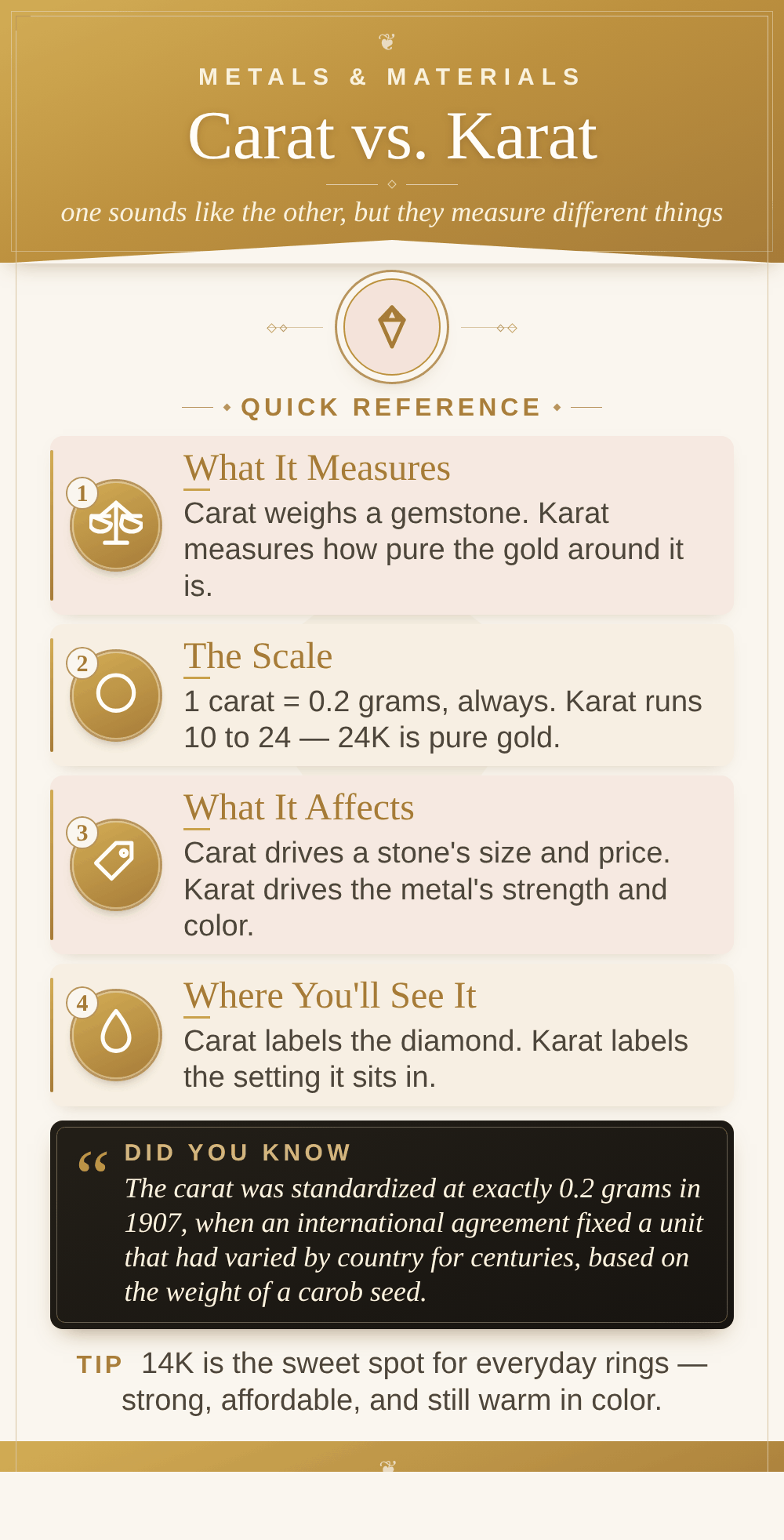
Carat (with a C) = how much a gemstone weighs.
Karat (with a K) = how pure gold is.
So, a 1-carat diamond in a 14-karat gold setting means:
The stone weighs 0.2 grams.
The gold is 58.3% pure (that’s what 14K means).
Still with me? Great. Now let’s take it one step deeper.
💎 What Is a Carat?
A carat is the standard unit of weight for diamonds and other gemstones.
- 1 carat = 0.2 grams
That’s about the weight of a small paperclip.
But here's the key thing: carat is about weight, not necessarily size.
Some gemstones are denser than others, so two stones with the same carat weight might look totally different in size.
Example:
A 1-carat diamond looks smaller than a 1-carat opal.
Why? Because opal is less dense, so it spreads out more.
💡 Memory trick:
Carat = Weight of the Crystal. (And yes, it applies to all gemstones—diamonds, sapphires, emeralds, you name it.)
📏 Carats Are Also Measured in “Points”
If someone says a diamond is “75 points,” they mean it weighs 0.75 carats.
100 points = 1 carat
50 points = 0.50 carats (half a carat)
So, a 0.99-carat diamond might be hundreds of dollars cheaper than a 1.00-carat stone—even though your eyes wouldn’t know the difference.
💸 What Does Carat Mean for Price?
Carat weight is one of the biggest factors in pricing gemstones—but not the only one.
A poorly cut 1-carat diamond can look smaller and duller than a perfectly cut 0.85-carat stone.
And clarity (how many internal flaws it has) affects brilliance, too.
So don’t get tunnel vision on carats alone. Cut, clarity, and color matter just as much—if not more.
🛍️ Smart tip: Want size without the price spike?
Look for stones just below the big number milestones.
- 0.95 ct instead of 1.00
- 1.45 ct instead of 1.50
Now that carat is clear, let's break down karat—what it means for the gold itself, why you'll sometimes hear “carats in gold” instead of “karats,” and why some pieces say 14K while others say 18K or 24K.
🥇 What Is a Karat? (Yes, With a "K")
While carat measures gemstone weight, karat refers to how pure gold is—and it’s measured on a scale of 24.
24 karat = pure gold
18 karat = 75% gold
14 karat = 58.3% gold
10 karat = 41.7% gold
The rest? That’s made up of other metals (called alloys) like copper, zinc, silver, or nickel to make the gold stronger and more durable.
Why? Because pure gold is surprisingly soft. If you made a ring out of 24K gold and wore it daily, it would bend and scratch easily.
Quick analogy:
Pure gold is like soft butter. Beautiful, rich, but not something you wear on your hand every day unless you're okay with dents.
💛 So Which Karat Is Best?
It depends on what you're buying—and what you're prioritizing.
- 24K (99.9% gold) — deepest color and purity, but soft and prone to scratches.
- 22K (91.6% gold) — rich color, common in cultural jewelry; better for pendants than daily rings.
- 18K (75% gold) — elegant tone with real durability, at a higher price than 14K.
- 14K (58.3% gold) — the sweet spot for everyday rings and bands: strong, affordable, still warm in color.
- 10K (41.7% gold) — the most durable and affordable option, but paler in color and more likely to irritate sensitive skin.
🛠 Everyday jewelry like personalized rings or wedding bands?
14K is the sweet spot: it’s strong enough for daily wear and still looks beautiful.
For a deeper breakdown of what each karat percentage means—and which one is right for sensitive skin—see our gold purity guide.
❓ Why Do So Many People Confuse Carat and Karat?
Let’s be honest—it’s not your fault.
They sound identical, both show up in jewelry stores, and sometimes you see them used incorrectly online (or even by undertrained staff).
Here’s how people mix them up:
They think a “2-carat ring” is referring to gold—not the stone
They assume “karat” affects diamond quality
They’ve seen “carat” used for gold in other countries (e.g., UK and Australia)
😅 And yes, some people confuse both with “carrot” and make it a whole meme.
One more look-alike worth clearing up: a caret (the ^ symbol from a keyboard or spreadsheet formula) isn’t a jewelry term at all — it just sounds like “carat” to autocomplete and voice search. If you’re shopping, you want carat (gem weight) or karat (gold purity); caret belongs on a keyboard, not a ring.
🧠 How to Never Confuse Them Again
Here’s a super simple way to lock this in your brain forever:
- Carat → gemstone weight. Memory aid: “C” for Crystals.
- Karat → gold purity. Memory aid: “K” for Karat Gold.
- Carrot → vegetables 🥕. Memory aid: only good in a salad, not a ring 💍.
🔍 Real-World Jewelry Shopping Advice
Let’s say you’re choosing between two rings:
Ring A: 1-carat diamond, 14K gold
Ring B: 0.75-carat diamond, 18K gold
Which one is better?
It depends on what matters more to you:
Size of the stone (go with Ring A)
Richness of the gold tone (go with Ring B)
Daily wear durability (14K is tougher)
No wrong answer—just make sure you know what you’re comparing.
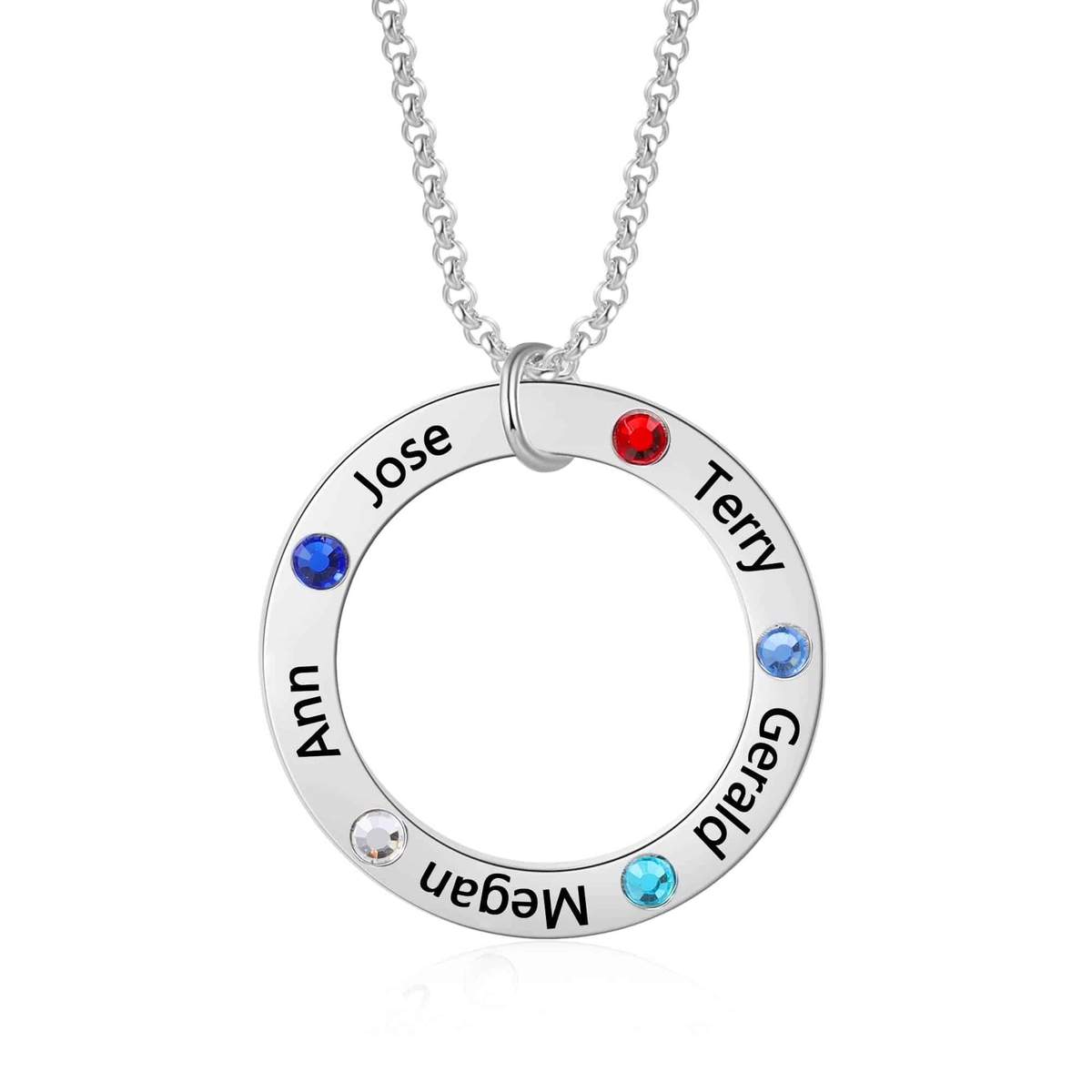
And if you’re designing a custom necklace or picking out a family heirloom, these small details matter a lot over time.
📊 Side-by-Side Comparison: Carat vs. Karat
- What it measures: Carat = a gemstone's weight. Karat = gold's purity.
- Applies to: Carat = diamonds, sapphires, rubies and other gemstones. Karat = gold jewelry only.
- Scale: Carat = metric (1 carat = 0.2 grams). Karat = out of 24 (24K = pure gold).
- Affects: Carat = the size and price of the gemstone. Karat = the strength, color and cost of the metal.
- Used in: Carat = rings, necklaces, earrings (the stones). Karat = settings, bands, chains (the metal).
❌ Common Jewelry Buying Mistakes (And How to Avoid Them)
Mistake #1: Thinking a bigger carat = bigger stone
A poorly cut 1-carat stone might look smaller than a well-cut 0.8-carat one.
Mistake #2: Thinking 24K gold is “better”
Sure, it’s purer—but 14K and 18K are far more practical, especially for rings.
Mistake #3: Asking for a “2-karat diamond ring”
Technically incorrect. That’s carat with a “C.” The karat relates to the metal.
✅ Jewelry Buyer’s Checklist
Before you buy:
✔ Do you know the carat weight of the gemstone?
✔ Are you clear on what karat of gold you’re getting?
✔ Does the gold suit your lifestyle (e.g. daily wear = 14K)?
✔ Are you comparing more than just stone size—like cut and clarity?
✔ Is the piece certified or third-party appraised?
💬 Final Thoughts: Know the Difference, Buy With Confidence
The difference between carat and karat may seem small—but it plays a huge role in what you’re buying, how much you pay, and how long your jewelry lasts.
Now, when someone says:
“It’s a half-carat sapphire in 18-karat gold…”
You’ll know exactly what that means. And you’ll shop smarter—whether you’re choosing a diamond solitaire, picking out personalized rings, or investing in a custom necklace you want to wear for years.
Because jewelry isn’t just about sparkle—it’s about knowledge, intention, and lasting beauty. And now, you've got all three.
Want more guides like this? Browse our full Jewelry 101 collection for straightforward explainers on metals, gemstones, and everything in between.
Frequently Asked Questions
Is it "carat" or "karat"?
Both are correct—they're just different words for different things. Carat (with a C) always refers to a gemstone's weight; karat (with a K) always refers to gold's purity. Talking about a diamond's size? That's carat. Talking about how much of a ring is actual gold? That's karat. The confusion comes from how similar they sound, not from the words meaning the same thing.
How many grams are in a carat?
One carat equals exactly 0.2 grams, roughly the weight of a small paperclip. That means it takes five carats to make a single gram. Keep in mind this is a measure of weight, not size, so two stones of the same carat weight can look quite different depending on how dense the gemstone is.
Why is gold spelled 'carat' in some countries?
In the UK, Australia, and several other countries, 'carat' with a C is commonly used to describe gold purity, while the US spells it 'karat' with a K to keep the two terms distinct. It's the same 24-point purity scale either way, so a UK '18 carat gold' ring is identical to an American '18 karat' one. The spelling difference is just regional, not a difference in the gold itself.
Which gold karat is best for sensitive skin?
Higher-karat gold like 18K or 22K tends to be gentler on sensitive skin because it contains more pure gold and fewer alloy metals. Lower karats such as 10K have more added metals like nickel, which is a common trigger for skin irritation. If reactions are a concern, choosing a higher karat or nickel-free alloy is the safest route.
Does a higher carat weight always mean a bigger-looking diamond?
Not necessarily. Carat measures weight, and a poorly cut one-carat diamond can actually look smaller and duller than a well-cut 0.85-carat stone. Cut, along with clarity and color, plays a huge role in how large and brilliant a diamond appears, so it's worth looking beyond carat weight alone.
Can one piece of jewelry have both a carat and a karat?
Absolutely, and most gemstone jewelry does. A ring might feature a one-carat diamond (the stone's weight) set in 14-karat gold (the metal's purity). The carat describes the gem and the karat describes the gold, so both terms often appear together to fully describe a single piece.