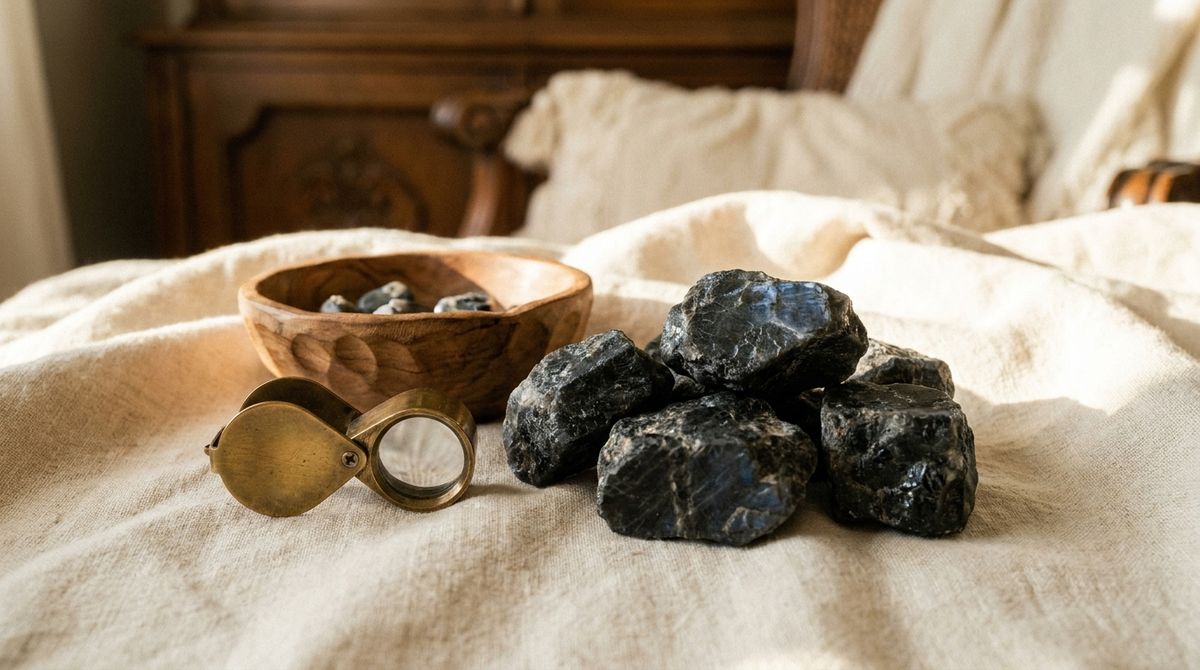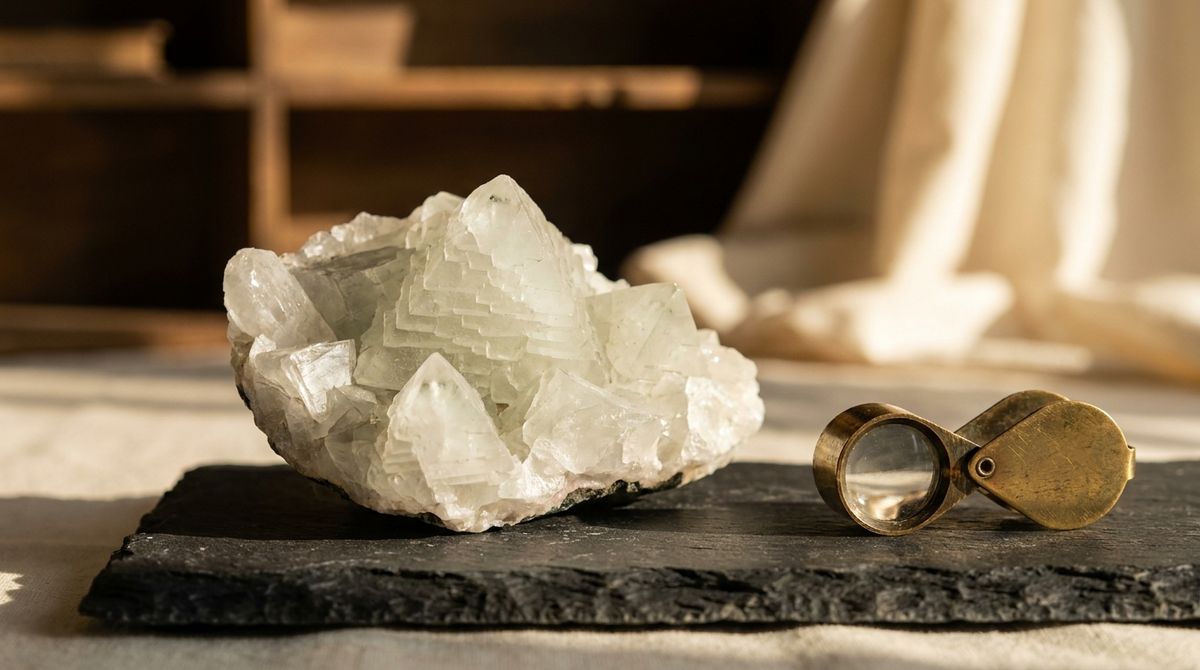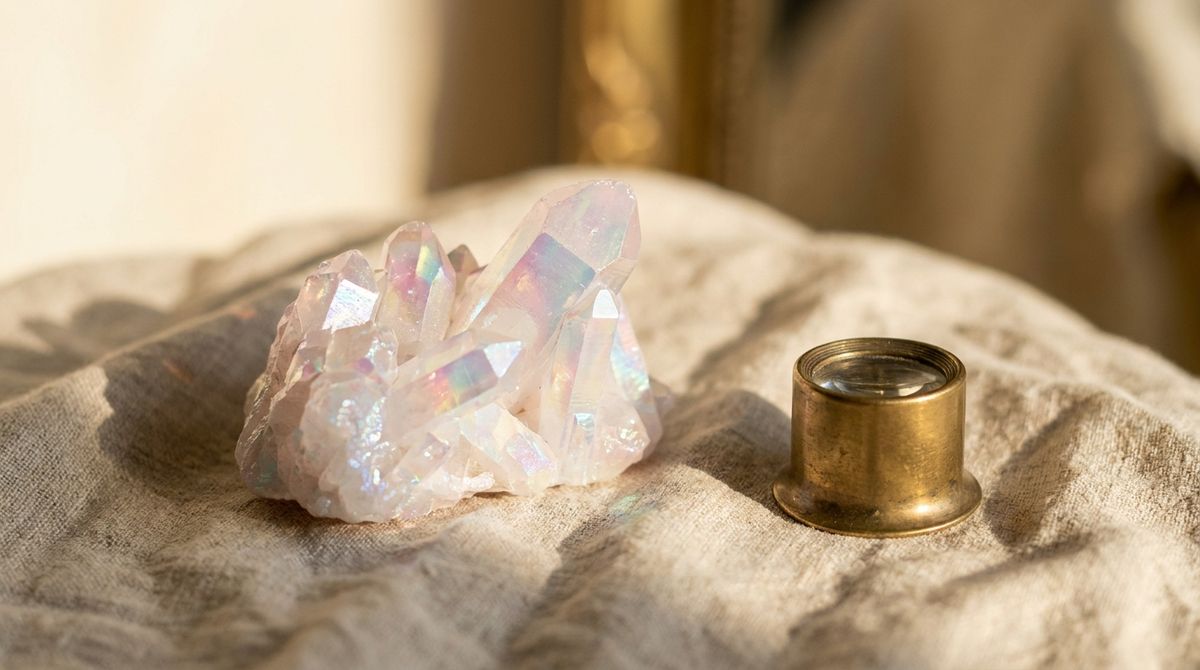
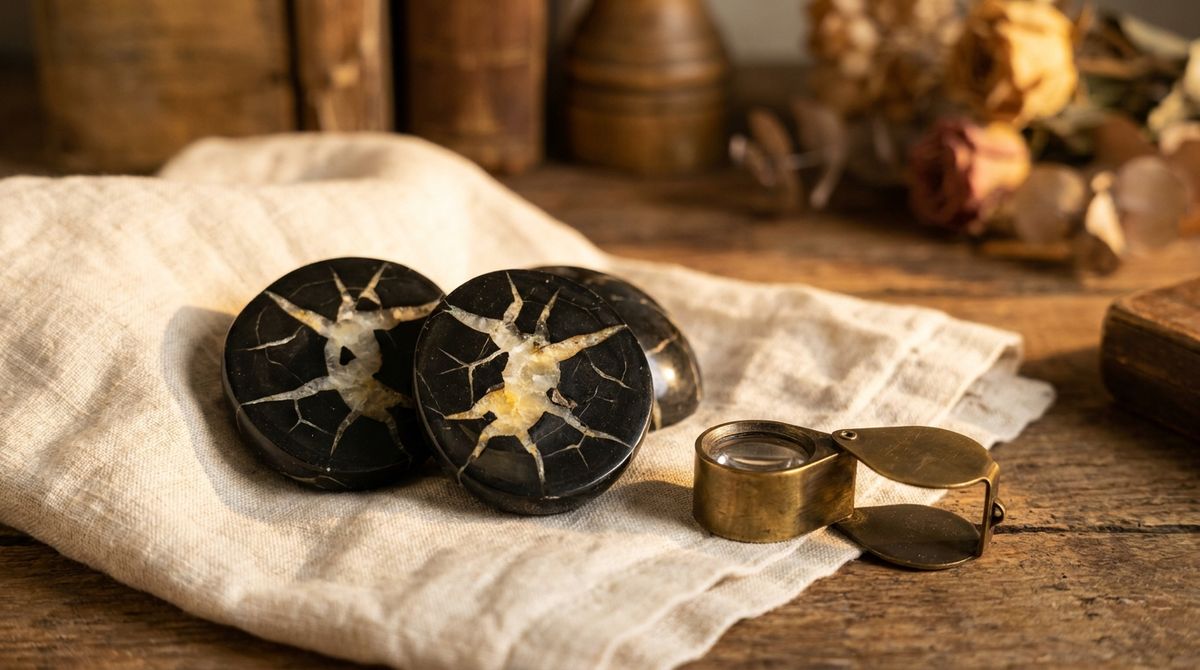
Crystal shops sell "black septarian" as a dramatic, deep-black stone, often cut into spheres or hearts and marketed as a "dragon egg" or "dragon stone." The name is theatrical, but the object underneath it isn't a crystal at all in the strict mineralogical sense — it's a concretion, a hardened lump that grew inside ancient seafloor mud long before anything resembling a dragon existed. The real geology is stranger and more interesting than the marketing.
What Black Septarian Actually Is
Septarian nodules (also called septaria) are carbonate-rich concretions — rounded masses that formed when minerals cemented together inside soft sediment — defined by a network of angular cracks running through their interior. Those internal cracks are called septaria, from the Latin septum, meaning "partition" or "dividing wall," which is also the origin of the word "septarian" itself. Where a true crystal grows atom by atom in a single, continuous lattice, a septarian nodule is really two things stacked together: a cracked carbonate matrix, and a later generation of mineral that filled the cracks. "Black septarian" simply describes nodules where that combination comes out dark instead of the more common tan, brown, or gray.
How a Septarian Nodule Forms
Septarian nodules form in carbonate-rich mudrock, typically a clay-heavy matrix such as clay ironstone, and most often in marine mud on the seafloor. According to Wikipedia's geology coverage of concretions, the cracks themselves form at shallow burial depths — possibly as little as 10 to 50 meters below the original seabed — and the exact mechanism is still debated among geologists. Several explanations have been proposed: the interior shrinking and cracking as it dehydrates and hardens; a still-wet core losing water as its particles bind more tightly (called syneresis); or trapped pore fluids building up pressure as early cementation seals the nodule off from the surrounding sediment. Whatever the exact trigger, the cracking happened while the material was already partly hardened — that's why the cracks are angular rather than smoothly curved. Later, mineral-rich groundwater moved through those cracks and deposited a second mineral generation inside them, most often calcite, sometimes iron-rich (ferroan) calcite, occasionally alongside pyrite or clay. That infill is what gives a cut-open septarian nodule its signature look: pale, crystalline veins running through a darker, duller matrix.
The dark color specific to "black" material isn't fully pinned down in the available geological literature — color in septarian nodules generally comes down to trace minerals and organic content in the original mudstone, and darker calcite set against lighter veining is a pattern reported across several septarian deposits. Trade and mineral-collector sources describe black septarian as a distinct color variety rather than a separate mineral, but a peer-reviewed explanation of exactly why some deposits run dark and others tan wasn't available in the sources checked for this piece — worth flagging rather than guessing at.
Where Septarian Nodules Are Found
Madagascar is the source most consistently cited by mineral dealers for the dark, polished "dragon stone" material sold in crystal shops today, though it isn't the only place septarian nodules occur — they're also recorded in the Kimmeridge Clay of England, the Mancos Group of North America, and Scotland's Staffin Shale, among other carbonate-rich mudstone deposits worldwide. One of the better-documented named examples outside the gem trade is New Zealand's Moeraki Boulders — large, spherical septarian concretions that erode out of Paleocene-age mudstone on the Otago coast and are studied as a textbook example of how these nodules form. That's a useful reality check on the "ancient dragon egg" framing: septarian nodules are a genuinely global, scientifically documented geological feature, not a single exotic deposit.
Septarian vs. Geode vs. Agate vs. Druzy
These four get lumped together in crystal shops because they're all "cut open to reveal something inside," but the formation process behind each is different:
- Septarian — a cracked carbonate concretion. The cracks (septaria) are an internal structural feature of the original nodule, later filled with a second mineral, usually calcite.
- Geode — a hollow cavity (often originally a gas bubble in volcanic rock) lined with crystals growing inward from the walls toward open space in the center. Unlike a septarian nodule, a geode is hollow, not solid, at its core.
- Agate — a banded form of chalcedony (microcrystalline quartz) that fills a cavity in concentric layers, producing the smooth, wavy color bands agate is known for. No carbonate matrix and no angular cracks — just banded silica.
- Druzy — a surface, not a whole stone: a crust of tiny, sparkling crystal points coating the surface of another mineral, often the inside wall of a geode or agate cavity.
A septarian nodule can be cut and polished to show both its cracked carbonate matrix and, inside the cracks themselves, small calcite crystal pockets — which is part of why it sometimes gets confused with a small geode showing druzy. The key difference is structural: a geode's crystals grow into empty space, while a septarian nodule's veining fills pre-existing cracks in an already-solid mass.
Properties: Physical, Mental, and Metaphysical
Physical
Because a septarian nodule is a composite — a carbonate matrix plus calcite-filled cracks — its hardness varies within the same piece. Calcite sits at 3 on the Mohs hardness scale, soft enough to scratch with a steel blade, while the surrounding matrix is typically somewhat harder. That softness is the main practical thing to know before buying: a septarian piece scratches more easily than a true quartz-family stone and should be treated more like limestone than like agate.
Mental
In crystal-healing literature, black septarian is described as a grounding stone associated with patience and steady decision-making — language that leans on its heavy, dense feel and dark color rather than any tested psychological property. As with any stone's mental or emotional associations, this is tradition and modern wellness framing, not a measured effect.
Metaphysical
The "dragon stone" and "dragon egg" names come from the trade, not from a documented ancient legend — some sellers describe a Malagasy folklore origin, but more careful dealers attribute the name simply to the stone's scaled, reptilian-looking surface pattern. In popular crystal lore, septarian nodules are tied to protection, transformation, and connecting with the earth — themes that map loosely onto the "egg" shape many pieces are cut into. These are traditional and commercial claims, not documented properties of the mineral itself.
Buying and Caring for Black Septarian
A few things are worth knowing before buying one: because the calcite infill sits at only 3 on the Mohs hardness scale, avoid cleaning a septarian piece with vinegar or other acidic solutions — calcite reacts with acid and can etch or dull the polished surface. A soft, dry cloth is the safer choice for routine cleaning. Color and vein pattern vary enormously piece to piece, since each nodule cracked and filled differently, so buying from a seller who shows the actual specimen (not a stock photo) matters more here than with most stones. Because the matrix is relatively soft and can be brittle along old crack lines, septarian pieces are best displayed rather than carried loose in a bag with harder stones that could chip the edges.
A raw or polished septarian nodule is a display piece rather than something you wear, which puts it in the same category as our amethyst geode guide — another "cut open to reveal the inside" specimen stone. If you'd rather wear a gemstone with real banding and pattern than set one on a shelf, our agate guide covers a stone with a more jewelry-friendly hardness, and FARUZO's personalized necklaces are plated over 316L stainless steel rather than set with soft display-grade stones like septarian.
Frequently Asked Questions
Is black septarian a crystal?
Not in the strict sense. It's a concretion — a carbonate mass that hardened inside ancient seafloor mud, then cracked and had a second mineral (usually calcite) fill the cracks. The visible calcite inside those cracks is genuinely crystalline, but the stone as a whole isn't a single crystal the way quartz or amethyst is.
Why is some septarian black and some brown or tan?
Color varies by deposit and comes down to trace minerals and organic content in the original mudstone. Dark material, often marketed as "black septarian" or "dragon stone," is most consistently associated with Madagascar supply in the gem trade, though a precise scientific explanation for the color difference wasn't confirmed in the sources used for this piece.
What's the difference between septarian and a geode?
A geode is hollow, with crystals growing inward from the cavity walls toward open space at the center. A septarian nodule is solid, with cracks (septaria) running through an already-solid carbonate mass, later filled with a second mineral. They can look superficially similar when cut and polished, but the internal structure that produced each one is different.
Is "dragon stone" a real geological term?
No — "dragon stone" and "dragon egg" are trade and marketing names, not mineralogical terms. The actual geological name is septarian nodule or septarian concretion, referring to the septaria (internal cracks) that define the structure.
How should I clean a black septarian piece?
Use a soft, dry cloth rather than vinegar or other acidic cleaners — the calcite filling the cracks reacts with acid and can dull or etch the surface. Because the matrix sits around 3 on the Mohs hardness scale, store it separately from harder stones that could scratch or chip it.