Ruby and garnet are both sold as deep red gemstones, and the two get confused constantly — partly because garnet was historically called “precious garnet” and traded alongside ruby, and partly because a fine dark-red garnet and a lower-grade ruby can genuinely look alike at a glance. They aren't the same mineral family, they don't share a hardness, and one is dramatically rarer and more expensive than the other. Here's how to actually tell them apart.
Two Unrelated Mineral Families
Ruby is a variety of corundum — aluminum oxide (Al₂O₃) — colored red by trace chromium; it's the same mineral species as sapphire, and by definition any red corundum is called ruby rather than sapphire. Garnet isn't a single mineral at all — it's a group of closely related silicate species, including almandine, pyrope, spessartine and rhodolite, each with a slightly different chemical formula and color range. That's why “garnet” covers far more than deep red: demantoid garnet is green, spessartine runs orange, and rhodolite leans purplish-red, even though the wine-red almandine and pyrope varieties are what most people picture.
Hardness and Everyday Durability
This is the most practical difference for jewelry worn daily. Ruby measures 9 on the Mohs hardness scale — second only to diamond among natural gems — which is part of why it's a classic choice for a ring worn every day. Garnet sits lower and varies by species, generally 6.5 to 7.5, making it durable enough for regular wear but meaningfully more prone to scratching over years than ruby, which is why garnet suits earrings and pendants — pieces that see less daily contact — slightly better than a ring that gets knocked against things constantly.
Color: How to Tell Them Apart by Eye
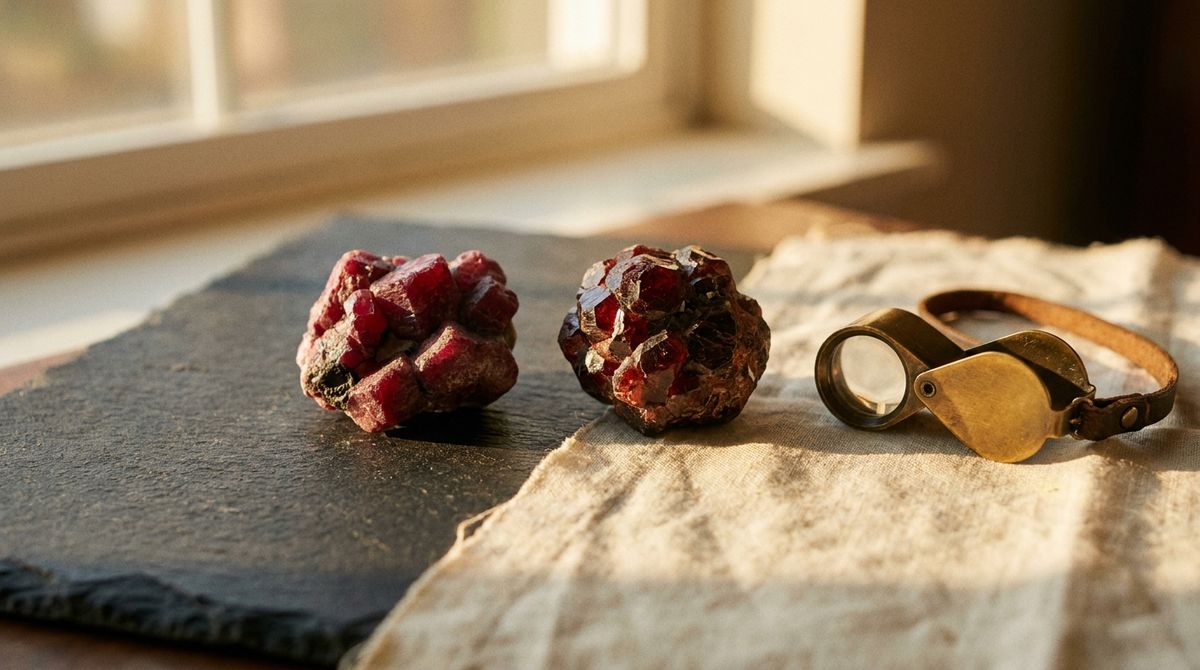
Fine ruby shows a vivid, saturated red often described in the trade as “pigeon blood” — bright, slightly bluish-red with strong fluorescence under UV light. Red garnet (almandine and pyrope) tends toward a darker, more brownish or wine-toned red without ruby's fluorescent glow, and it doesn't have ruby's characteristic color-zoning patterns. Under a loupe, garnet is also typically more included than fine ruby, though heavily included ruby exists too — clarity alone isn't a reliable identifier without also checking hardness and specific gravity.
Price and Rarity
Fine natural ruby is one of the rarest and most expensive colored gemstones in the world; a top-quality stone can run into the thousands of dollars per carat, and exceptional pigeon-blood Burmese rubies have sold at auction for some of the highest per-carat prices ever recorded for a colored gem. Garnet, by contrast, is abundant — it's mined on nearly every continent — which keeps it accessible even at larger carat sizes. That price gap, not visual difference, is the biggest reason the two get deliberately confused: garnet has long served as ruby's budget-friendly stand-in.
Birthstone and Meaning: Physical, Mental, and Metaphysical
Physical Properties
Garnet is January's birthstone; ruby is July's. Beyond hardness, the two also differ in how they form: ruby crystallizes in metamorphic and some igneous rock under conditions that fuse aluminum oxide with trace chromium, a relatively rare combination, while garnet forms across a much wider range of metamorphic and some igneous settings, which is part of why it's so much more common.
Mental & Emotional Associations
In traditional gemstone lore, red garnet is associated with vitality, confidence and protection in travel, while ruby is tied to passion, courage and leadership — both readings track their real history as stones warriors and rulers wore into battle or kept close for protection.
Metaphysical Traditions
In ancient Greece and Rome, garnet was believed to carry protective properties, and it was sometimes set into shields and weapons for that reason; by the Middle Ages it had become a token of loyalty and true love, often exchanged between nobility. Ruby's traditional associations run in a similar direction — many cultures linked it to vitality and protection — but its far greater rarity also made it a historical marker of status and royalty in a way garnet, being common, never quite was. None of this is a scientifically established property of either stone; it's folklore some buyers value and others simply enjoy as history.
Ruby vs. Garnet at a Glance
- Mineral family — Ruby is corundum (aluminum oxide); garnet is a group of related silicate species, not one mineral.
- Hardness — Ruby: 9 Mohs. Garnet: roughly 6.5–7.5 Mohs depending on species.
- Color — Ruby: vivid, often fluorescent “pigeon blood” red. Garnet: darker, more brownish or wine-toned red, no fluorescent glow.
- Rarity and price — Fine ruby is among the rarest, most expensive colored gems; garnet is abundant and far more affordable at comparable size.
- Birthstone — Garnet: January. Ruby: July.
- Best use — Ruby's hardness suits daily-wear rings; garnet's lower hardness suits earrings and pendants slightly better than a ring worn constantly.
Buying Tips for Each Stone
For garnet, ask which species you're actually buying — almandine, pyrope, rhodolite and demantoid all carry the name “garnet” but differ in hardness, color and price, and a reputable seller should be able to say which one is in the piece. For ruby, ask about treatment: the overwhelming majority of ruby on the market is heat-treated to improve color and clarity, which is standard and disclosed, while untreated stones carry a real premium and should come with a lab report if the price reflects that. If you want to check either stone's hardness claim against other gems before buying, our Mohs hardness scale guide breaks down where common stones rank.
Which One Should You Choose?
If you want a stone that can take daily-wear knocks in a ring without special handling and you're willing to pay for real rarity, ruby is the stronger pick — our ruby meaning guide goes deeper on its history as July's birthstone. If you want a rich red stone at an accessible price, especially for earrings or a pendant that won't take daily knocks, garnet is a genuinely good stone in its own right rather than a compromise — see our full garnet meaning guide for its history and lore. Either stone works well in FARUZO's personalized rings, made to order with your choice of setting.
Frequently Asked Questions
Is garnet a cheaper version of ruby?
Not exactly — they're unrelated minerals, not the same stone at different quality grades. Garnet has historically served as an affordable substitute for ruby's look because both can appear as a deep red stone, but garnet is its own gemstone with its own species, hardness and history, not a lesser ruby.
How can I tell ruby and garnet apart at home?
The most reliable at-home clue is fluorescence and hue: fine ruby often shows a vivid, slightly bluish red that can fluoresce under UV light, while red garnet tends toward a darker, more brownish or wine-toned red without that glow. A jeweler can confirm with a hardness test or refractometer, since visual comparison alone isn't fully reliable, especially with lower-grade ruby.
Which is more durable for an everyday ring, ruby or garnet?
Ruby, by a meaningful margin. At 9 on the Mohs scale it resists scratching almost as well as diamond, while garnet's 6.5–7.5 range makes it more prone to surface wear over years of daily contact, which is why garnet is often recommended for earrings or pendants over a ring worn constantly.
Are all garnets red?
No. Garnet is a group of related mineral species, not one stone, and the group's color range runs from the familiar wine-red almandine and pyrope through orange spessartine to green demantoid. “Garnet” on its own usually implies red only because that's the most common and historically best-known variety.
Is ruby always treated?
The large majority of ruby sold today is heat-treated to improve color and clarity, a standard, disclosed industry practice that isn't considered a defect. Untreated ruby exists and commands a real price premium, particularly from historically significant sources, but it's the exception rather than the norm at retail.