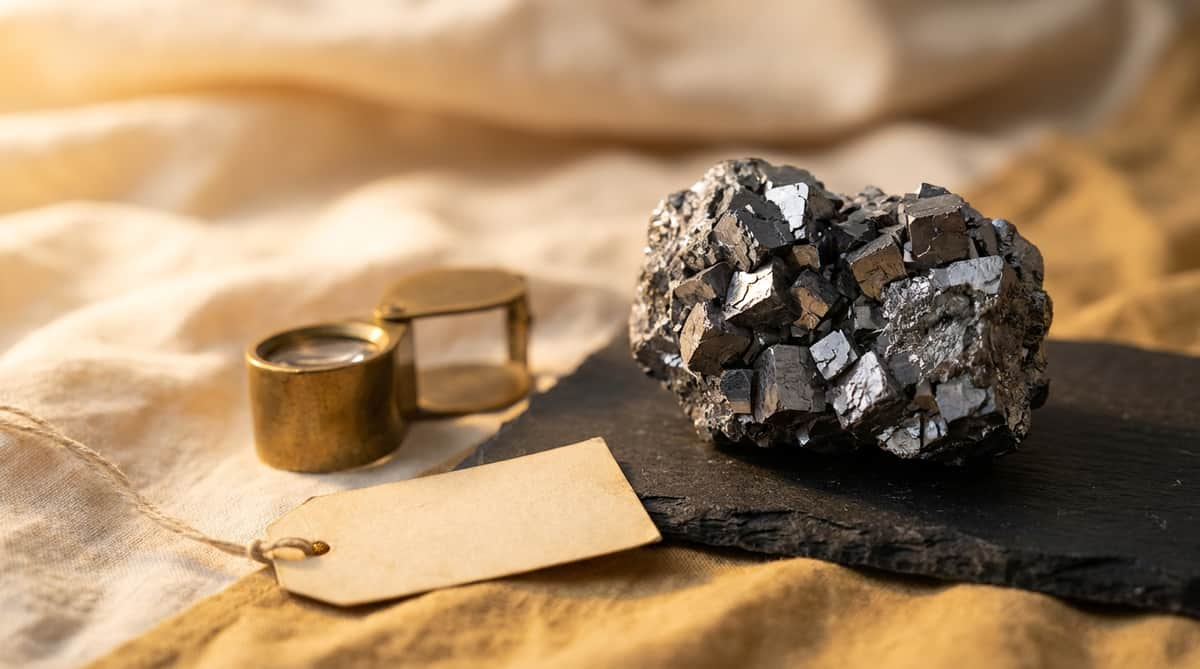
Galena is one of the few stones in the crystal-shop world that looks exactly as dramatic as its reputation suggests — near-perfect metallic cubes with a mirror-like gray shine, heavy enough in the hand to feel unmistakably different from an ordinary rock. It's also one of the only stones in this series that comes with a genuine, non-folklore safety warning.
Galena is lead sulfide, the primary ore of lead, and it isn't something to wear, ingest, or handle the way you would quartz or rose quartz. Here's what the mineral actually is, what crystal-healing traditions claim about it, and — more importantly — the safety facts that actually matter.
At a glance
- It's lead sulfide (PbS) — the world's primary ore of lead, and genuinely toxic if ingested or inhaled as dust.
- Mohs hardness 2.5–2.75, specific gravity 7.2–7.6 — soft but among the densest common minerals, roughly 3x heavier than an equal-sized piece of quartz.
- Never worn as jewelry — it isn't cut or set for wear anywhere in the legitimate gem trade; display or collector specimen only.
- A genuine dual history: ground into ancient Egyptian kohl eye cosmetic, and used as the detecting crystal in early "cat's whisker" radio receivers.
What Galena Actually Is
Galena is the natural mineral form of lead(II) sulfide, PbS. It crystallizes in the cubic system, most often as near-perfect cubes or cube-octahedron combinations, with a structure similar to table salt (halite) at the atomic level — part of why it cleaves so cleanly along flat planes.
Mohs hardness runs 2.5 to 2.75, making it noticeably softer than most gemstones, and its specific gravity is 7.2 to 7.6 — among the densest common minerals, roughly three times heavier than an equal-sized piece of quartz.
It has a metallic, lead-gray luster and streak, and it's brittle with perfect cubic cleavage, meaning a sharp knock can split a crystal clean along a flat face rather than chip it.
Galena is also commonly silver-bearing. Historically it's been mined as much for its silver content as for lead, with some ore bodies yielding specimens containing meaningful amounts of silver alongside the lead sulfide.
Where It's Found
Galena is mined worldwide, and it's genuinely common as mineral specimens go:
- United States — the Lead Belt of southeastern Missouri is the largest known U.S. deposit; the historic Tri-State district around Joplin (Missouri), Treece and Galena (Kansas), and Picher (Oklahoma) produced it for over a century; the Coeur d'Alene district in Idaho and several Colorado silver-mining areas (Leadville, Central City, Georgetown) are also notable sources.
- United Kingdom — Alston Moor and Weardale in England have long mining histories tied to galena.
- Mexico — Naica, Chihuahua (also famous for its giant selenite crystal caves).
- Australia — Broken Hill and Mount Isa, two of the world's major lead-zinc-silver mining districts.
A Genuinely Unusual History
Galena's track record predates crystal shops by thousands of years, and two uses stand out as worth knowing on their own merits, independent of any metaphysical claim:
- Ancient cosmetics. Ground galena was a primary ingredient in kohl, the dark eye cosmetic used in ancient Egypt and across the Middle East, applied partly for its look and partly in the belief it reduced glare from the desert sun and helped repel flies. It's a well-documented historical use — not a recommendation; see the safety section below for why this isn't something to replicate today.
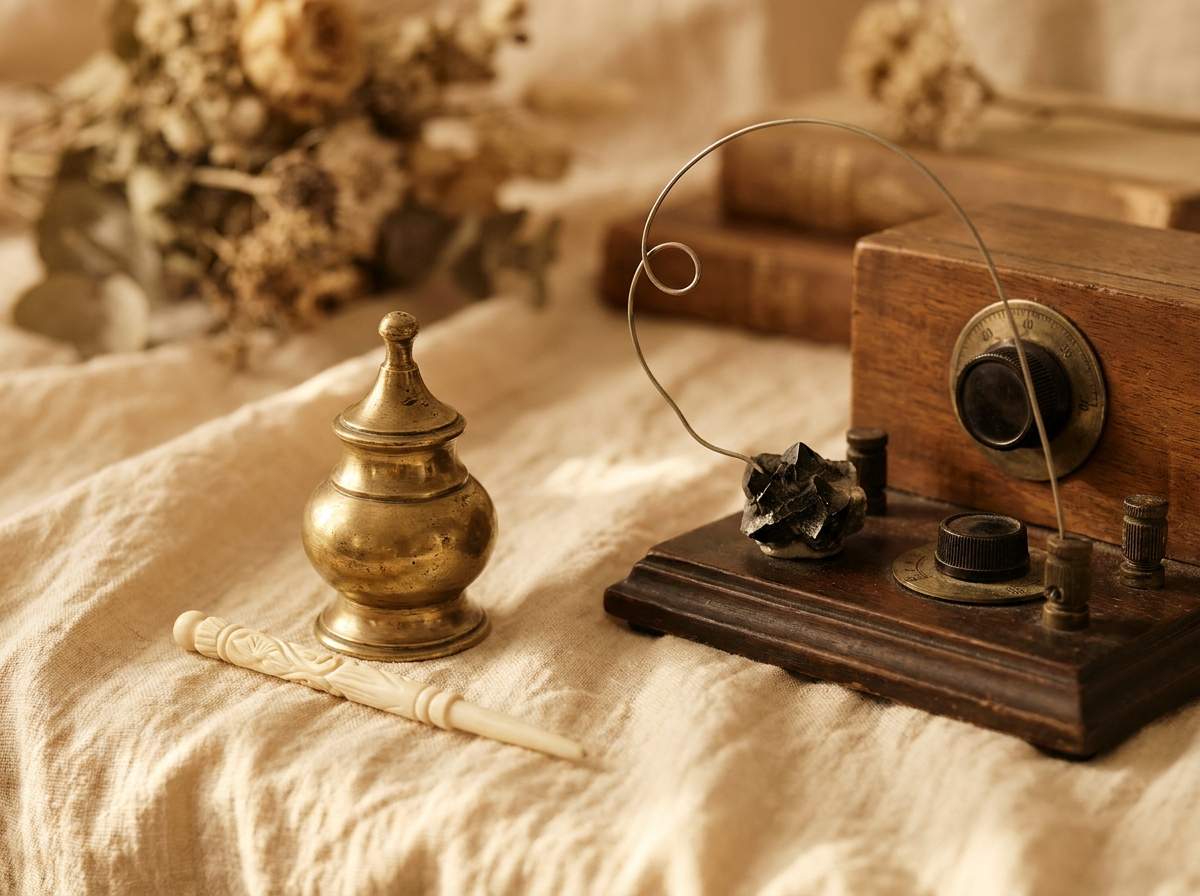
- Early radio technology. Before the transistor, galena crystals were used as the detecting element in early "crystal radio" receivers. A thin wire called a "cat's whisker" touched the crystal's surface and exploited a natural point-contact diode effect in the mineral to rectify radio signals — a genuinely clever piece of early-20th-century electronics built on an ordinary lead ore.
Industrially, galena remains, as one mineralogy reference puts it, by far the world's greatest ore of lead, and a major source of mined silver as well.
The Meaning People Attach to It
In crystal-healing traditions, galena is most often described as a grounding stone, associated with the root chakra and linked to stability, protection, and a sense of being anchored. Some sources also describe it as a stone of transformation, tied to its historical role turning raw ore into something useful.
These are belief-system claims from crystal-marketing and astrology sources, not documented mineralogical properties, and — as with every stone in this series — they shouldn't be mistaken for medical or scientific claims.
Safety: Why Galena Is Different From the Rest of This Series
This is the section that matters most for galena specifically, because it's not interchangeable with the other stones covered here. Galena is lead sulfide, and lead is a well-documented toxin.
According to mineralogical references, pure galena is relatively inert and poses minimal risk under normal handling conditions — the kind of casual contact you'd get picking up a museum or classroom specimen.
The real risk comes from lead sulfide's reactivity in certain environments, which can make it highly toxic if swallowed or inhaled, particularly with repeated or prolonged exposure (for example, from dust created by grinding, sanding, or polishing a specimen).
Practical rules that follow from that:
- Never wear galena as jewelry. It isn't cut or set for wear anywhere in the legitimate gem trade, and prolonged skin contact plus the abrasion of daily wear is exactly the wrong way to handle a lead mineral.
- Never use it in a crystal "elixir" — the practice of soaking stones in drinking water to supposedly infuse their properties. This is a genuinely dangerous idea for galena specifically, since it risks leaching lead into water that gets consumed.
- Don't grind, sand, or polish it yourself, and avoid breathing dust from a broken specimen — inhalation is the higher-risk exposure route.
- Wash your hands after handling a specimen, and don't let children or pets handle or mouth one.
- Keep it as a display or collector specimen only, stored somewhere it won't be chewed, licked, or ground into dust.
None of this means a galena specimen is dangerous sitting on a shelf — it isn't, under normal display conditions. It just means galena belongs in the "look, don't wear or ingest" category that most other stones in this series don't require.
Galena vs. Other Metallic-Luster "Grounding" Stones
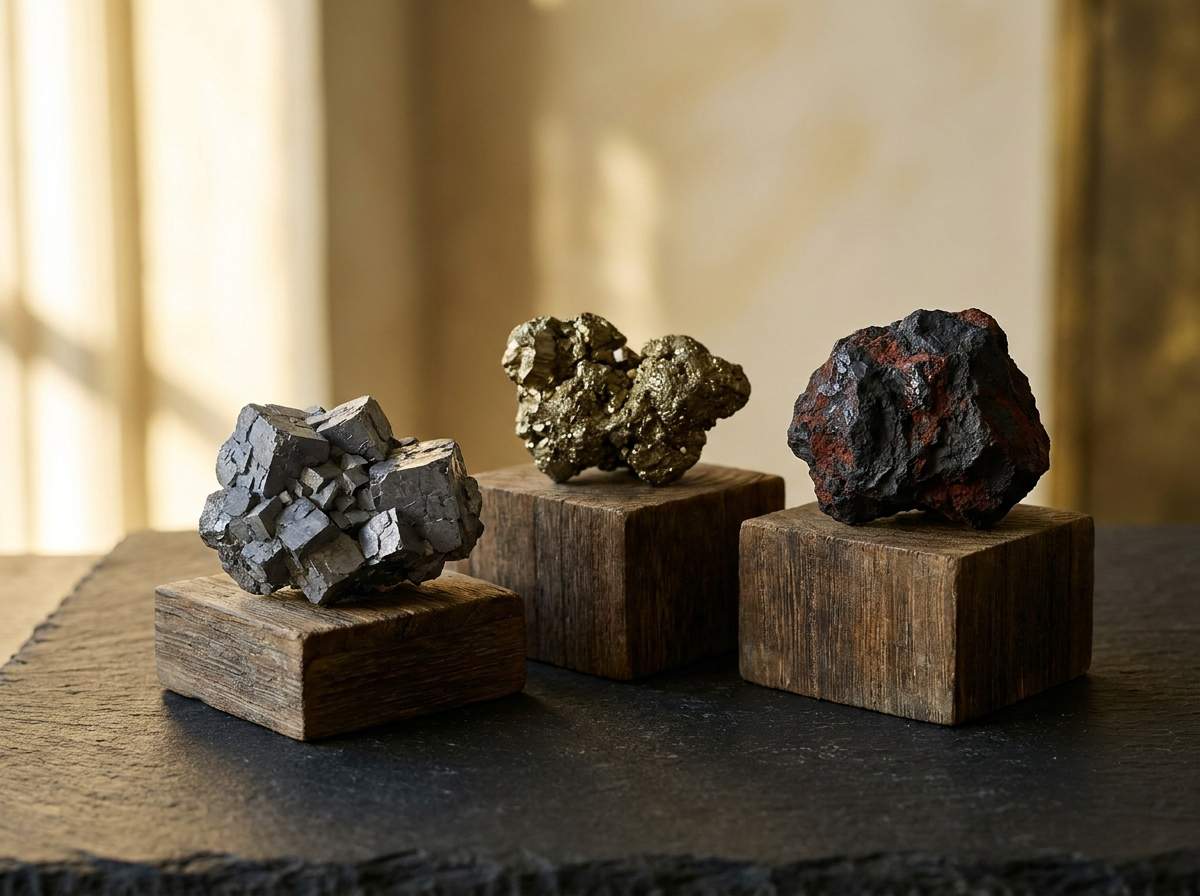
Galena is often grouped with other metallic-luster minerals popular in the crystal-healing world, but the three differ enormously in hardness, density, and — critically — wearability:
- Galena — Mohs 2.5–2.75, specific gravity 7.2–7.6, dull lead-gray metallic luster, soft and extremely dense, genuinely toxic (lead sulfide) — display specimen only, never worn or ingested.
- Pyrite ("fool's gold") — Mohs 6–6.5, specific gravity ~5.0, brassy gold metallic luster, noticeably harder than galena and generally safe to handle under normal conditions, though it can release minor sulfur compounds as it oxidizes over time. Full guide.
- Hematite — Mohs 5.5–6.5, specific gravity ~5.3, metallic gray-black to earthy red-brown, safe and genuinely common in jewelry — though most "magnetic hematite" sold today is actually a synthetic ferrite, not the real mineral. Full guide.
Of the three, galena is both the softest and by far the densest — pick up a same-sized piece of each and the weight difference is immediately obvious — and it's the only one of the three with a genuine handling warning attached.
If the Look Is the Draw
If what appeals about galena is the dark, metallic, grounded aesthetic rather than the specific mineral, that look is easy to get safely in actual jewelry. FARUZO's engraved bracelets plate over 316L stainless steel — nickel-safe, genuinely wearable every day, and closer in spirit to galena's cool metallic tone than any stone you'd actually want set in a ring.
Frequently Asked Questions
Is galena safe to touch?
Under normal handling — picking up a specimen the way you would at a museum or rock shop — pure galena poses minimal risk. The real danger comes from ingestion or inhaling dust (for example, from grinding or sanding a piece), which can be genuinely toxic given lead sulfide's reactivity.
Wash your hands after handling, and never let children or pets mouth a specimen.
Can you wear galena jewelry?
No — and you won't find it cut or set for wear anywhere in the legitimate gem trade. Its lead content, combined with prolonged skin contact and the wear and abrasion of daily use, makes it unsuitable for jewelry. It's a display and collector mineral only.
What is galena mainly used for?
Industrially, galena is the world's primary ore of lead and a significant source of mined silver, since many deposits contain meaningful silver alongside the lead sulfide. Historically it was also ground into kohl eye cosmetic in ancient Egypt and used as the active crystal in early "cat's whisker" radio receivers.
Is galena the same thing as lead?
Not exactly — galena is lead sulfide (PbS), a mineral compound, not pure metallic lead. But it's the ore that lead is extracted from, and it shares lead's toxicity profile, which is why the same safety precautions apply.
What's the difference between galena, pyrite, and hematite?
All three have a metallic luster and show up in "grounding stone" crystal collections, but they're mineralogically unrelated and differ sharply in hardness and safety. Galena (Mohs 2.5–2.75) is soft, extremely dense, and toxic if ingested or inhaled as dust.
Pyrite (Mohs 6–6.5) and hematite (Mohs 5.5–6.5) are both significantly harder and generally safe to handle, with hematite in particular being common in actual jewelry.