Most proposal "advice" is folklore: pick a season, surprise her, get down on one knee. The real numbers tell a more specific story about who actually chooses the ring, when proposals happen, and what couples are buying when they do.
These come from The Knot's 2026 Real Weddings Study, a survey of 10,474 U.S. couples married between January 1 and December 31, 2025. One proposal-season figure the newer report didn't restate comes from its 2025 edition.
This is one entry in our research & data series. For what the ring itself costs, see our engagement ring cost breakdown.
At a glance
- 79% of recipients helped choose their own ring.
- 63% of proposers bought the ring within two months of proposing.
- Round diamonds lead at 26% of rings, with oval close behind at 25%.
- Couples were engaged for 14 months on average.
The Recipient Is Rarely Surprised by the Ring Itself
The "secret ring, surprise proposal" script is mostly myth. In 79% of 2025 engagements, the recipient was personally involved in choosing the ring. Only 21% were selected with zero input from the person who'd wear it.
A quarter of couples went further and shopped together at a retailer before the proposal happened. The surprise, when there is one, is usually about timing and setting, not the ring itself.
Nearly 9 in 10 proposers still had a ring in hand at the moment they asked, and 96% of couples exchanged rings to mark the engagement.
79%
helped choose their own ring
The Knot 2026 Real Weddings Study, n=10,474 couples
Shopping for that ring is not a quick errand. 57% of proposers started looking more than six months ahead of the proposal, though the actual purchase tends to land much closer to the date: 63% bought within two months of popping the question.
On average, proposers visited two retailers and looked at about 10 rings before deciding. More than half said shopping in person mattered to them, and the channel split reflects that: 64% bought in-store against roughly a third who completed the purchase online.
When Proposals Actually Happen
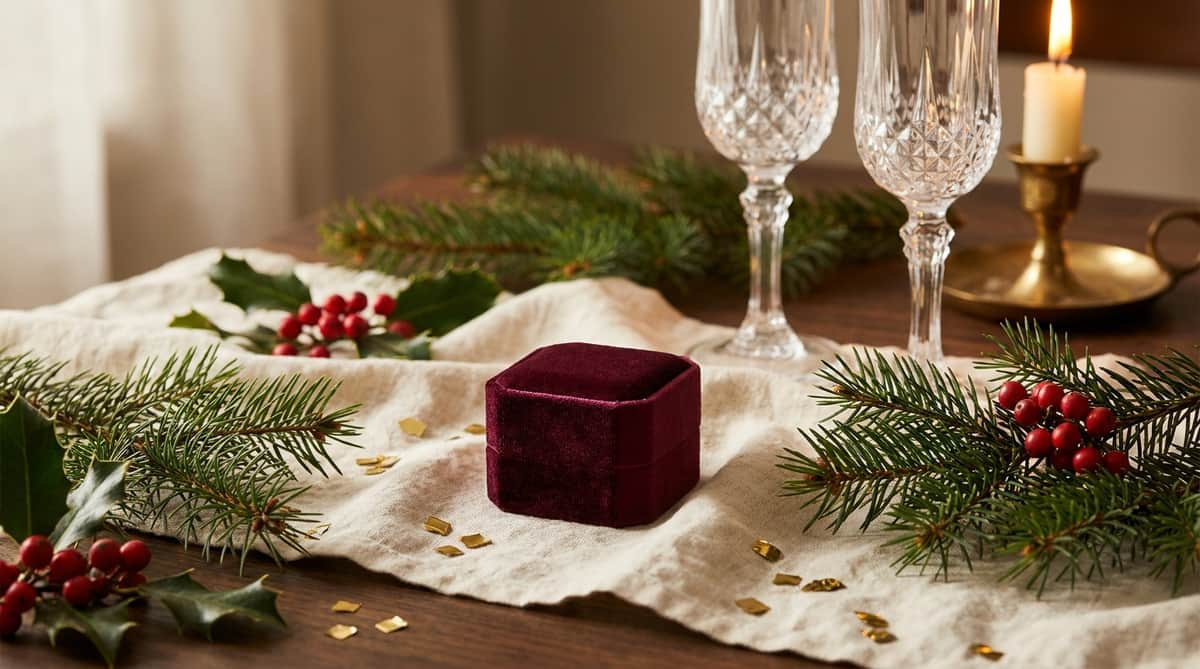
December is, by a wide margin, the most popular month to get engaged, and Christmas Day is the single most popular day, followed by Christmas Eve and Valentine's Day, according to the 2026 study. The 2026 report names that ranking but doesn't attach a percentage to it.
The prior year's edition, The Knot's 2025 Real Weddings Study, did: about 47% of couples that year got engaged somewhere in the stretch between Thanksgiving and Valentine's Day. Christmas Day, Christmas Eve, New Year's Eve, New Year's Day and Valentine's Day were the top five individual days, also without a per-day breakdown.
Treat the 47% figure as one specific year's measurement rather than an exact ongoing rate. The two studies agree on which days matter but were not both quantified the same way.
- Christmas Day — the single most popular proposal day two years running
- Christmas Eve — consistently #2
- New Year's Eve — in the top five in the 2025 study
- New Year's Day — also top five in 2025
- Valentine's Day — top five both years, despite being over a month after the holiday cluster
What the Ring Actually Looks Like
Round remains the default, but not by an overwhelming margin: round diamonds accounted for 26% of 2025 engagement rings and oval was close behind at 25%. Emerald, princess, pear and marquise each took 8% — the remaining share is split across shapes the study didn't break out individually.
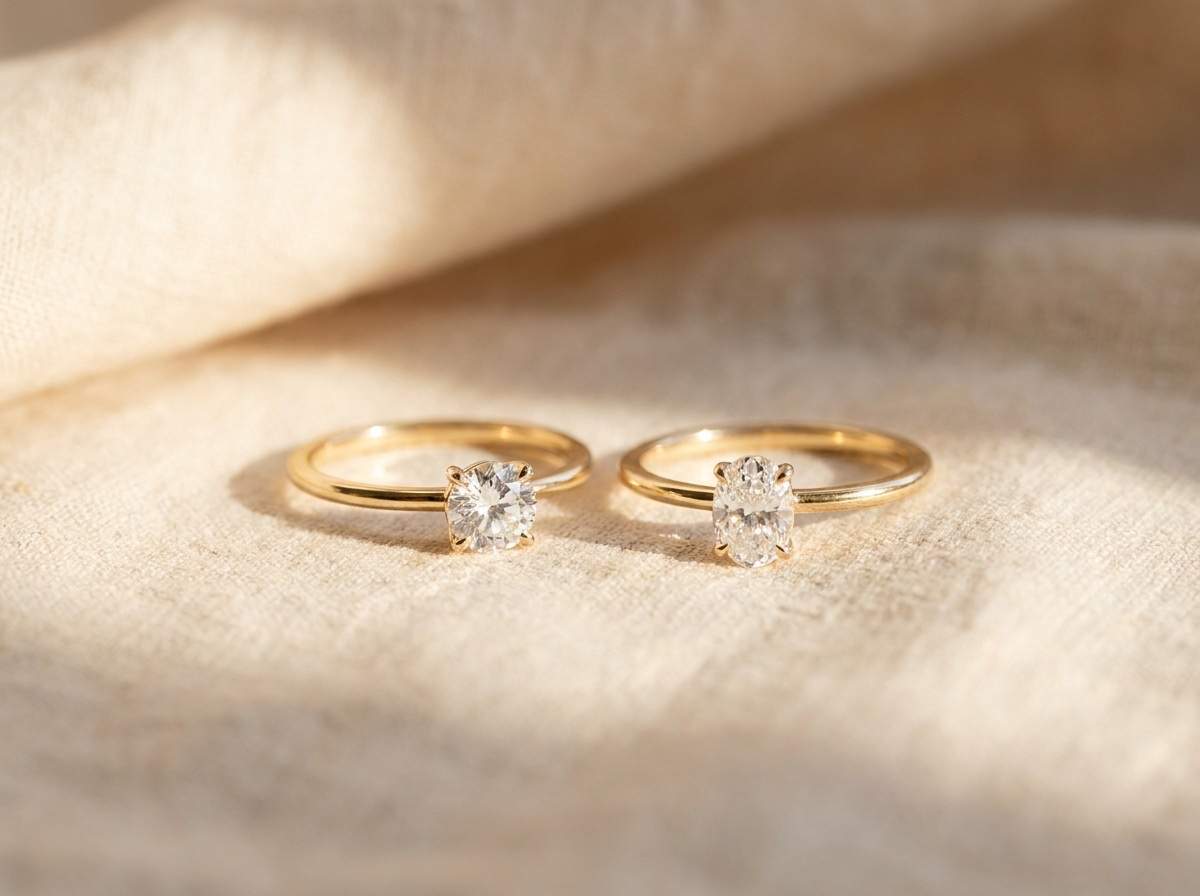
Metal choice is more decisive: yellow gold leads at 39% of settings, and the study notes white gold continuing a gradual, multi-year decline in share.
When it comes to design priorities, proposers ranked cut and shape first, the overall style or setting second, and metal choice third. That is the opposite order from how much separation the data actually shows between shapes versus metals.
Stone type still drives both price and size in opposite directions. The average natural-diamond ring ran $7,000 with a 1.6-carat center stone in 2025. The average lab-grown ring ran $4,300 with a 2.0-carat center stone.
That is cheaper and bigger at the same time, which is most of why the lab-grown share of purchases keeps climbing.
For more on that price and purity split, our lab-grown vs. natural diamonds guide covers the trade-offs beyond just cost and size.
How Long Couples Actually Wait
The 2025 engaged couples in the study had dated for an average of three years before getting engaged, a long runway compared to the popular image of a whirlwind romance.
Once engaged, about 40% stayed in that stage for 11 to 18 months, and the average engagement length across all respondents was 14 months. Wedding planning starts fast once the ring is on: nearly 60% of couples began planning within a month of the proposal, well before most would have set a date.
How They Actually Met
A third of 2025 couples met online, the leading way couples meet for the fourth consecutive year in the study, ahead of meeting through friends (14%) and meeting at school (12%).
That is a notable shift from the "met through friends" default that dating-app skeptics still assume is typical. By this data, it hasn't been the most common path for several years running.
What This Means If You're Proposing (or Being Proposed To)
A few things the data actually supports, as opposed to the usual proposal advice:
- Involving your partner in choosing the ring is the norm, not a buzzkill — nearly 4 in 5 recipients already helped pick theirs.
- If you're aiming for a holiday-season proposal, you're not being unoriginal — you're in the majority. Christmas Day alone has been the single most popular day two years running.
- A lab-grown stone isn't a smaller stone — the data shows the opposite, with lab-grown averaging a larger carat weight than natural at a lower average price.
- Budget the search time, not just the ring cost — more than half of proposers started shopping six-plus months ahead, even though most finished the purchase within two months of actually proposing.
If you're weighing a smaller, more personal piece to go with, or ahead of, a traditional diamond ring, FARUZO's personalized rings collection covers everything from engravable bands to name rings that work well as a promise-ring step before the main event.
Frequently Asked Questions
What percentage of couples choose the engagement ring together?
79% of recipients in The Knot's 2026 Real Weddings Study were personally involved in selecting their ring, and a quarter of couples shopped together at a retailer before the proposal. Only 21% of rings were chosen with no input at all from the person who'd wear it.
What is the most popular day to get engaged?
Christmas Day, for the second year running in The Knot's Real Weddings Study. Christmas Eve is consistently the runner-up, with Valentine's Day, New Year's Eve and New Year's Day also ranking among the top five most popular proposal days.
What percentage of proposals happen during the holidays?
In The Knot's 2025 Real Weddings Study, about 47% of couples got engaged between Thanksgiving and Valentine's Day. The 2026 edition confirmed the same top days but didn't restate that specific percentage, so treat 47% as one year's measurement rather than a fixed yearly rate.
What's the most popular diamond shape for engagement rings?
Round, at 26% of 2025 engagement rings, with oval close behind at 25%. Emerald, princess, pear and marquise each accounted for 8%, per The Knot's 2026 Real Weddings Study.
How long do couples date before getting engaged, on average?
About three years, according to the 2026 study's respondents, with the engagement itself lasting an average of 14 months before the wedding — though roughly 40% of couples kept that stage to 11-18 months specifically.
How do most couples meet their partner now?
Online — about a third of 2025 engaged couples met that way, the leading method for the fourth consecutive year in The Knot's data, ahead of meeting through friends (14%) or at school (12%).