Blog posts about ear piercings love a round, unsourced number. "Over 80% of Americans have pierced ears" shows up on enough sites that it reads as settled fact. It isn't sourced to anything checkable: the one blog found repeating it during research for this piece names no survey, no date and no sample size.
A real, named survey exists and gives a lower, more specific figure. YouGov polled 1,115 U.S. adult citizens between March 31 and April 2, 2025, with a margin of error of ±4.1%. It asked directly whether people currently have an ear piercing, used to have one, or never have.
The figures below come from reading that survey's own published crosstabs, not a secondhand summary of them. That is also how the gender and age breakdowns further down were pulled out, since those don't appear in most write-ups of this poll.
At a glance
- 42% of U.S. adults currently have an ear piercing; 58% have had one at some point.
- 71% of women have one now, against 11% of men.
- Ear piercings are nearly twice as common as tattoos (42% vs. 24%).
- Rates stay between 39% and 45% across every age group.
How Many Americans Currently Have an Ear Piercing
42% of U.S. adults said they currently have an ear piercing. Another 16% said they used to have one but don't now, and 42% said they've never had one.
Add the first two groups together and 58% of American adults have had an ear piercing at some point in their life. But less than half have one right now.
42%
of U.S. adults have an ear piercing right now
YouGov, March-April 2025, n=1,115
The Gender Gap Is Enormous
The overall 42% figure hides the single biggest split in the whole dataset: only 11% of men currently have an ear piercing, against 71% of women. That is a 60-point gap.
Women are also somewhat more likely to have had one in the past and stopped (17% of women vs. 15% of men). Men are nearly six times more likely to say they've never had an ear piercing at all: 74% of men versus just 12% of women.
Age Barely Moves the Number — Until 65+
Unlike tattoos, where younger adults report having one far more often than older adults, current ear piercing rates are nearly flat across working-age adults: 41% among 18-29 year-olds, 40% among 30-44, and actually highest at 45% among 45-64 year-olds, before dropping to 39% among adults 65 and older.
That flat line across age groups is itself the finding. Ear piercings aren't a generational trend the way tattoos or unconventional hair color are in the same survey.
They're closer to a constant across adult life. The modest 45-64 peak is more likely sampling noise than a real generational effect, given the margin of error on subgroups this size.
The same survey's tattoo question shows the contrast isn't just a coincidence of how the piercing question happened to land. Current tattoo rates in the identical sample swing from 25% among 18-29 year-olds up to 34% among 30-44, then drop sharply to just 11% among adults 65 and older.
That is a 23-point spread between the highest and lowest age group, versus a 6-point spread for ear piercings over the same four brackets.
Tattoos look like what people usually picture when they say a body modification is "generational": rarer among the oldest respondents, more common among adults now in their 30s and 40s who got theirs over the last two decades.
Ear piercings don't follow that pattern at all in this data, which is the more interesting finding.
It suggests ear piercing crossed into being a basic, age-independent norm for American women specifically (recall the 71%-vs-11% gender gap above) well before this survey was fielded. It doesn't look like something still spreading generation by generation, the way tattoos appear to be.
How Ear Piercings Compare to Other Body Modifications
The same YouGov release asked about six other modifications in one question, which makes a direct comparison possible for the first time without stitching together separate polls:
- Ear piercing: 42% currently have one — the most common modification asked about, by a wide margin.
- Tattoo: 24% currently have one, roughly half as common as an ear piercing.
- Hair dyed a natural color: 22% currently.
- Body piercing (not ear or face): 7% currently.
- Facial piercing: 5% currently.
- Hair dyed an unconventional color: 4% currently.
Ear piercings outrank every other modification in the survey, including tattoos, by nearly double.
What This Means If You're Piercing (or Re-Piercing)
With 58% of U.S. adults having had at least one ear piercing, it's the most mainstream body modification measured in this survey by a wide margin. That is nearly double the current-tattoo rate and far ahead of body or facial piercings.
The 16% who used to have one but don't anymore is worth taking seriously too. An ear piercing isn't permanent the way a tattoo usually is, and it closes up gradually once you stop wearing earrings in it, faster in a piercing that's only a few months old than in one worn for years.
That makes the "used to, not now" group less a statement about regret and more a reminder that an unused piercing is an actively decaying one, not a dormant asset you can pick back up anytime.
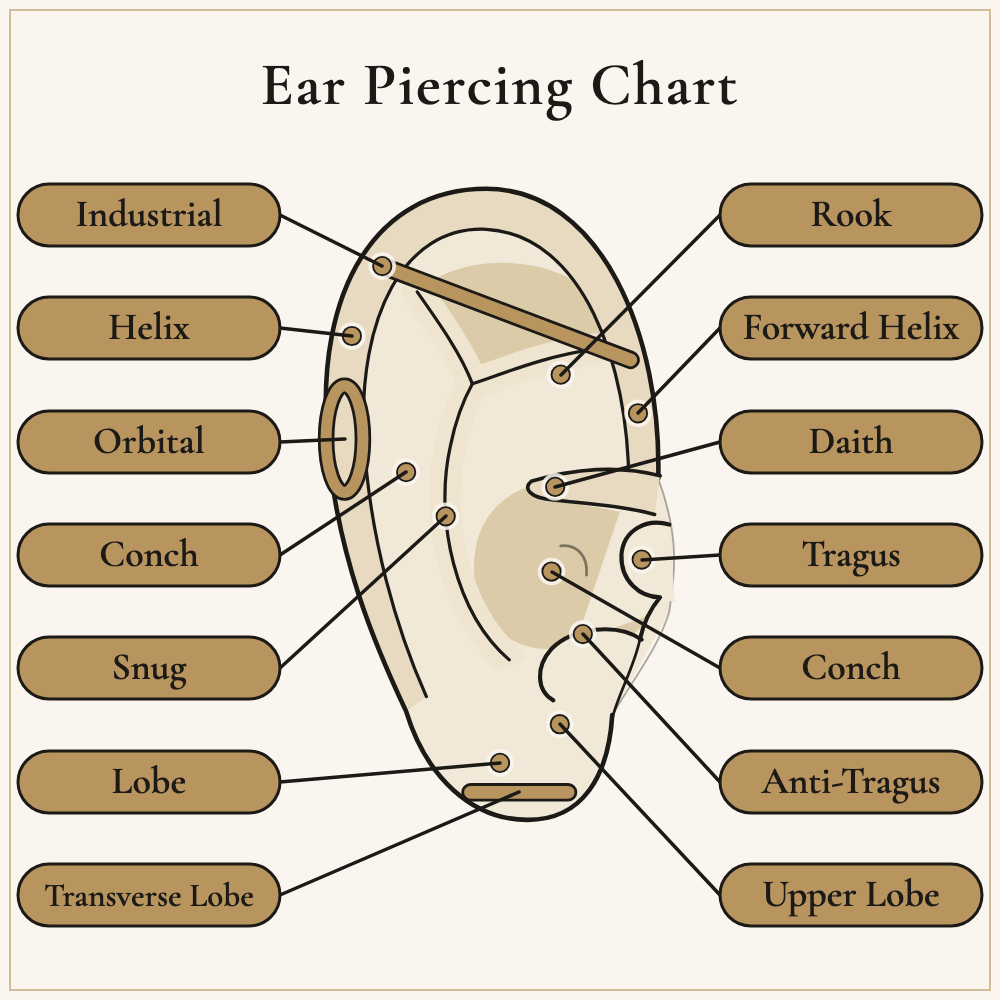
For what to actually put in a piercing you're keeping, our guide to the different types of ear piercings breaks down lobe versus cartilage placements and what each one tends to cost and heal like. Different types of earrings covers studs, hoops and drops if you're choosing a first pair or restarting a piercing that's partly closed.
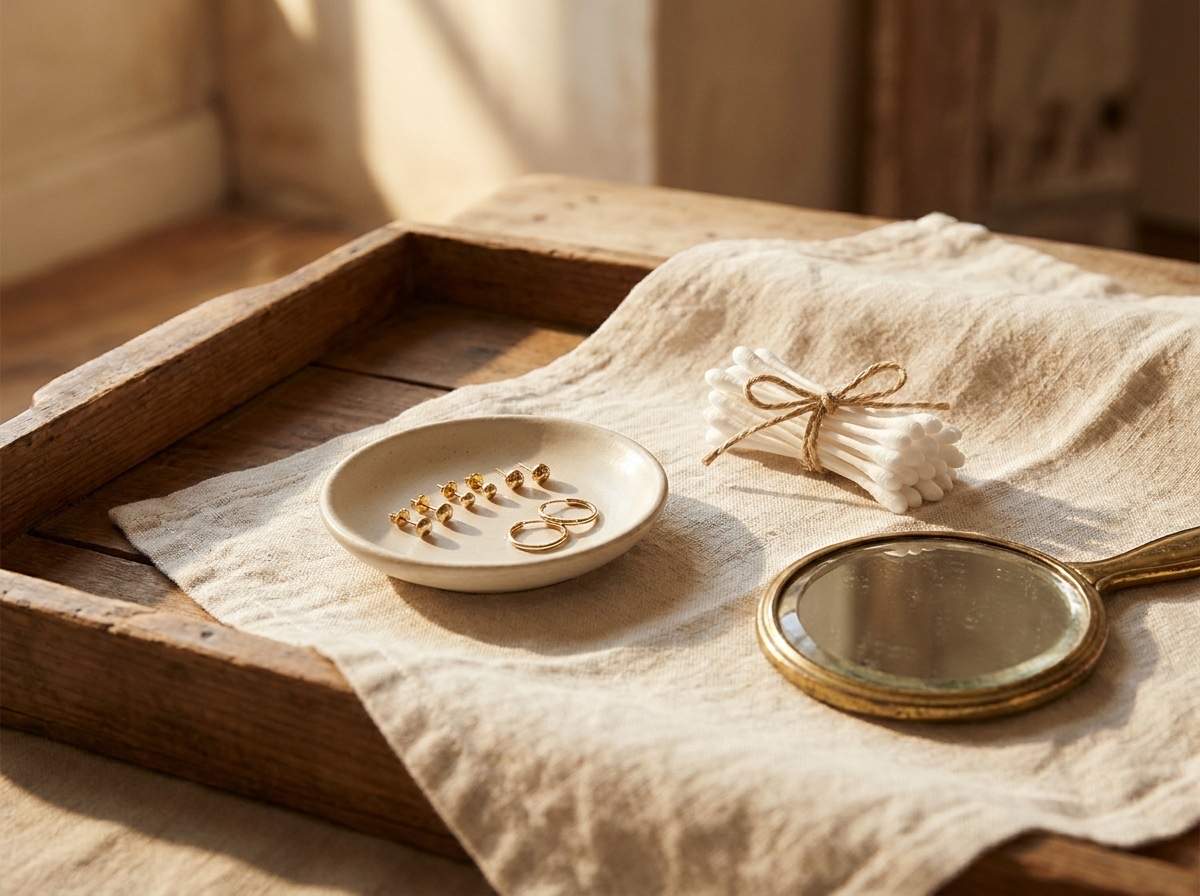
Material matters more than most people realize while a piercing is healing or reopening. FARUZO's personalized earrings collection plates over 316L stainless steel underneath, which is nickel-safe. That is a real factor given how common nickel sensitivity is in exactly the kind of daily-wear earring most of the 71% of women in this survey are putting in a healed piercing every day.
Frequently Asked Questions
What percentage of Americans have their ears pierced?
58% of U.S. adults have had an ear piercing at some point (42% currently have one, 16% used to but don't now), per a YouGov survey of 1,115 U.S. adults conducted March 31-April 2, 2025.
Do more women or men have ear piercings?
Women, by a large margin: 71% of women currently have an ear piercing versus 11% of men, according to the same YouGov survey.
What age group is most likely to have an ear piercing right now?
Rates are close across adult age groups — 41% at 18-29, 40% at 30-44, 45% at 45-64, and 39% at 65+ — unlike tattoos, which show a much clearer generational drop-off in the same survey.
Are ear piercings more common than tattoos?
Yes. 42% of U.S. adults currently have an ear piercing versus 24% who currently have a tattoo, nearly double, per YouGov's 2025 data.
How accurate is the "over 80% of people have pierced ears" claim seen online?
It doesn't match any named, dated survey found in researching this piece. The most recent sourced figure, YouGov's 2025 poll, puts current ear piercing at 42% of U.S. adults (58% including people who used to have one), well below that commonly repeated number.
Is ear piercing declining among younger generations?
Not according to this data. Current ear piercing rates are nearly identical across every adult age group under 65 (40-41%), unlike tattoos in the same survey, which drop sharply from 34% among 30-44 year-olds to just 11% among adults 65 and older.
Ear piercing looks like a stable, age-independent norm rather than a generational trend that's rising or fading.