"Initial necklace meaning" gets searched by two different people: someone who was just given one and wants to know what wearing a single letter is actually supposed to say, and someone choosing between a single initial, a monogram, and a full name necklace and trying to work out which one fits what they're trying to communicate. The short answer is that a single initial is the most minimal, most open-ended piece in that whole category — and that openness is exactly what gives it meaning. Here's where the practice comes from, what it signals today, and how the meaning shifts depending on whose letter you're wearing.
What an Initial Necklace Actually Is
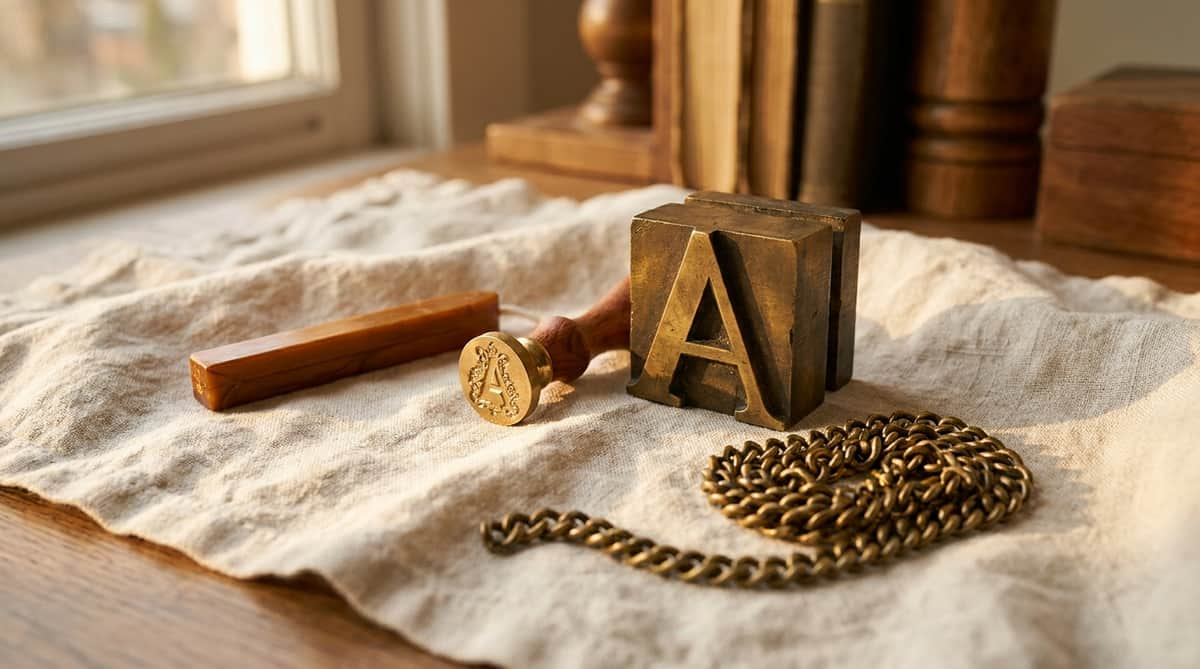
An initial necklace carries one letter — almost always a capital, in block or script — hung as a small pendant on its own chain. It's narrower than a monogram, which groups two or three letters into a single interlocking or stacked design, and it's a different object from a full name necklace, which spells a whole name out in script or block letters. The single-letter format is deliberately the stripped-down version of personalized jewelry: one mark, standing in for a whole identity, rather than the identity spelled out in full. For sizing, chain length, and how to choose block versus script, see the full initial necklace guide — this piece is about what the letter itself communicates.
Where the Practice Comes From
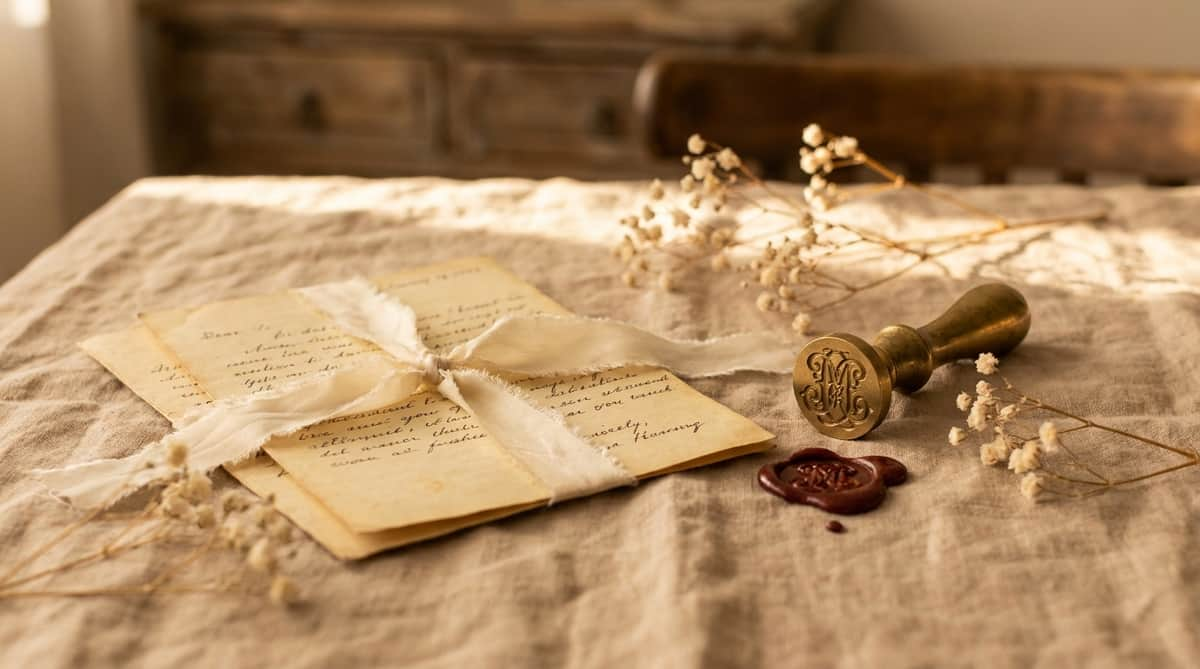
Marking something with a single initial rather than a full name or image is an old habit, not a modern one. Signet rings — engraved with a single letter or a small device, pressed into wax to seal a letter or document — go back to antiquity, used across ancient Egypt, Mesopotamia, Greece, and Rome to stand in for a person's identity on anything they needed to authenticate. A single engraved letter carried the same weight as a signature long before most people could read or write one. That same shorthand logic carried into later centuries in smaller, more personal objects: Georgian and Victorian mourning jewelry frequently carried a single initial, engraved or worked in hair, to represent someone who had died; handkerchiefs, linens, and love tokens carried a single embroidered or engraved letter as a mark of ownership or affection, long before "personalized jewelry" was a retail category. A modern initial necklace is a direct descendant of that habit — a single letter still does the job a full name would, just with less said out loud.
What Wearing One Signals Today
A single initial reads as understated rather than announced. Where a nameplate or full-name piece states a name plainly and completely, one letter leaves more room for interpretation — a stranger can clock that it's personal without necessarily being able to guess whose name it represents. That's part of why it tends to read as a quieter, more private version of the same impulse behind a nameplate: both are about carrying a name close, but the initial version keeps more of the specifics to the wearer. It also sits comfortably across very different occasions — a first piece of personalized jewelry, a subtle self-purchase, or a gift given early in a relationship, before a full name on a chain would feel like more commitment than the moment calls for.
Whose Initial, and What It Signals
The letter itself doesn't change meaning — whose initial it is does. The same single-letter format reads differently depending on who it represents:
- Your own initial — the most self-contained reading: a personal signature rather than a reference to anyone else, closest in spirit to a monogrammed handkerchief or a signet ring engraved for its own wearer.
- A partner's initial — reads as a relationship marker, the single-letter equivalent of a promise ring without the ring; common early in a relationship or alongside an anniversary, when a full name piece can feel premature.
- A child's initial (or several, layered) — the most common gifting reason for the format; parents often wear one child's letter alone or layer several on one chain, with each letter standing in for a specific person rather than the family as a whole the way a family monogram would.
- A surname initial — shifts the read from "a person" to "a family," closer to how a monogram is traditionally used, though a single surname letter stays more minimal than a full interlocking monogram.
- A letter for someone no longer living — carries the same function Victorian mourning jewelry served: a small, private marker rather than a public memorial, worn specifically because it doesn't require explanation to anyone who doesn't already know the story.
Single Initial vs. Monogram vs. Full Name: A Quick Comparison
These three sit on the same shelf but say different amounts:
- Single initial — one letter, the most open-ended and private reading; works for yourself, a partner, a child, or someone you've lost.
- Monogram — two or three letters composed as one design, historically tied to households and gift registries; reads more formal and more "finished" than one letter alone.
- Full name necklace — the whole name spelled out, the most legible and least ambiguous of the three; best when the point is that a stranger can read exactly whose name it is.
None of the three is more "real" than the others — they're different amounts of information, chosen for different reasons.
Placement and Case Change the Read Too
Beyond whose letter it is, how the letter is set changes what it communicates. A centered pendant reads classic and symmetrical; an off-center letter, sitting slightly to one side of the chain, has become a more requested styling choice in recent years, largely because it leaves room to layer a second necklace without the two pendants colliding. Case matters as well: an uppercase letter reads bolder and more declarative, while a lowercase letter softens the same mark into something closer to handwriting than a monogram stamp. Neither is more correct — the choice changes the tone of the same underlying gesture, not its meaning.
Gifting an Initial Necklace
Because it doesn't require getting a full name's spelling or styling exactly right, a single initial is one of the lower-risk personalized gifts — a first anniversary, a new friendship, a "just because" gift where a full name would read as more commitment than the moment calls for. For a partner's or family member's letter specifically, it works as a quieter alternative to the nameplate or monogram when the point is a private, personal gesture rather than a visible statement.
Material Note
FARUZO's initial pieces plate over 316L stainless steel, which is nickel-safe and holds up to daily wear far better than thin costume plating — it is not vermeil and not solid gold, so it's worth knowing which you're buying rather than treating the terms as interchangeable. Browse the current letter, metal, and placement options in the initial necklace collection.
Frequently Asked Questions
What does an initial necklace actually mean?
It's a minimal, open-ended way to carry a name close — your own, a partner's, a child's, or someone you've lost — without spelling the whole name out the way a nameplate or full name necklace does. The specific meaning comes from whose letter it is, not from the format itself.
Is an initial necklace the same as a monogram necklace?
No. An initial necklace carries one letter; a monogram composes two or three letters into a single interlocking or stacked design. A monogram reads more formal and historically ties back to household marks on silver and linens, while a single initial stays more personal and private.
Whose initial should I wear — mine, or someone else's?
Either is common, and the meaning shifts with the choice: your own initial reads as a personal signature, while a partner's, child's, or family surname initial reads as a connection to someone else. Neither is more "correct" — it depends on what you want the piece to say.
Where does the idea of wearing a single letter come from?
It traces back to signet rings in antiquity, used to seal documents with a single engraved letter or mark standing in for a person's identity, and later to Georgian and Victorian mourning jewelry and embroidered love tokens, which used a single initial the same way long before personalized jewelry became a retail category.
Does an uppercase or lowercase letter change the meaning?
It changes the tone more than the meaning — an uppercase letter reads bolder and more graphic, a lowercase letter reads softer and closer to handwriting. Both represent the same underlying gesture; it's a style choice, not a rule.
Is plated stainless steel durable enough for an everyday piece?
Yes — FARUZO's initial necklaces plate over nickel-safe 316L stainless steel, which holds up to daily wear better than thin costume plating, though like any plated piece it lasts longest kept away from chlorine, perfume, and abrasive cleaning. Returns are accepted within 90 days if something isn't right once it arrives.