"Monogram necklace meaning" gets typed by two different people: someone who just inherited a monogrammed signet ring or wax seal and wants to know what the letters actually stand for, and someone shopping for a personalized gift who has seen the word "monogram" used almost interchangeably with "initial" and wants to know if there's a real difference before they order one. There is — a monogram is not just a fancy way of saying "initials." It's a specific, centuries-old format with its own rules for letter order, size, and arrangement, and those rules are exactly what give a monogram necklace its formality and its meaning.
What Makes a Monogram Different From a Single Initial
A single initial necklace carries one letter — usually the wearer's first name — and reads as a light, personal accessory more than a formal symbol. A monogram is a composed arrangement of two or three letters, almost always initials drawn from a full name, styled so the letters interlock or sit together as a single unit rather than as separate charms strung in a row. That distinction matters because a monogram was historically a mark of identity and ownership — on silver, linens, and letters — while a single initial is a modern, casual borrowing of that idea scaled down to one letter. A monogram necklace inherits the weightier, more deliberate feeling of the original object even when it's worn every day.
A Short History: From Roman Coins to Royal Cyphers to Your Collarbone
Monograms as a mark of identity go back to Greek and Roman rulers, who combined letters on coins to identify the city or ruler behind the currency. The practice resurfaces in medieval Europe, where royal and noble houses used a combined-letter mark, or cypher, to seal documents and stamp personal property — a habit historians commonly trace to Charlemagne's court. English monarchs from the Tudor period onward each adopted a royal cypher built from their own initials, a tradition the British monarchy still uses today. Monograms stayed mostly a royal and aristocratic marker until the 18th and 19th centuries, when a growing merchant and professional class had both the money and the social motivation to put their own initials on silverware, stationery, and linens the same way. Jewelry came last: monograms moved from cloth and metalware onto rings, lockets, and eventually pendants only as 20th-century jewelry design shifted toward wearable personal statements rather than household marks.
Three Monogram Styles, and What Each One Signals
"Monogram" isn't one fixed look — the arrangement of the letters changes what the piece communicates, and jewelers generally group monogram styles into three families:
- Interlocking or circular monogram — letters overlap or curve around a shared center, in the traditional order first initial, last initial (largest, centered), middle initial. This is the most formal version, associated with wedding gifts, heirloom silver, and Southern American monogram etiquette.
- Block or stacked monogram — letters are the same size and set side by side or stacked in straight lines, usually left to right in plain first-middle-last order. This version reads as modern and minimal, and it's the one most personalized jewelry brands default to because it stays legible at pendant scale.
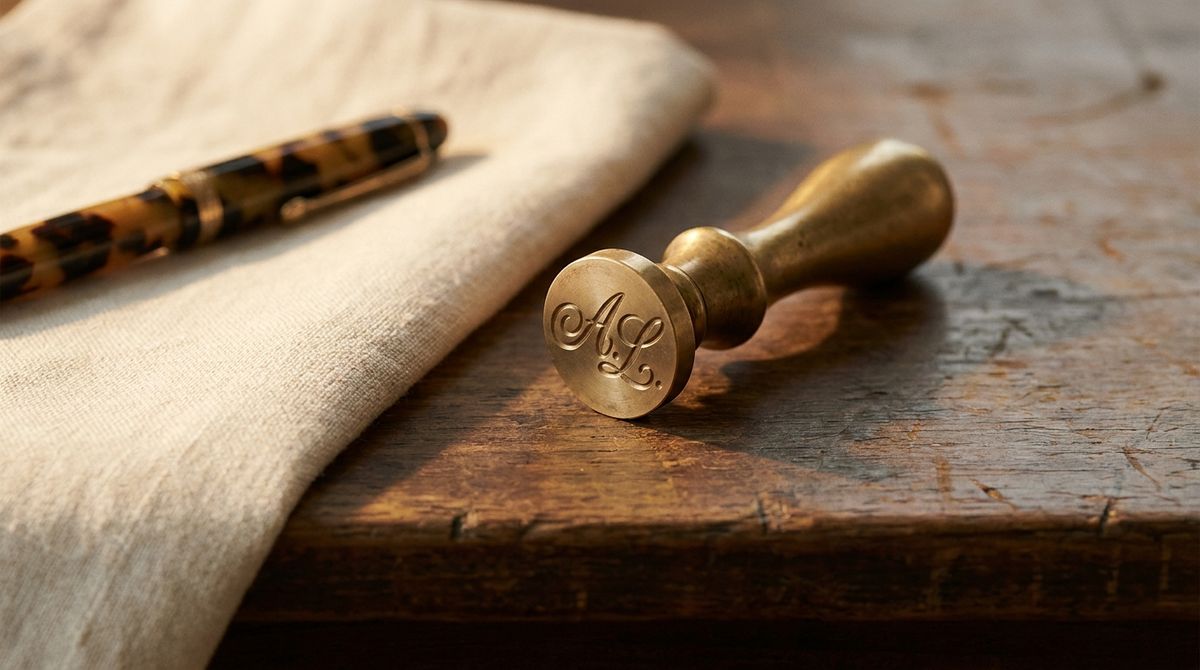
- Script or vine monogram — two or three letters rendered in a single flowing cursive line rather than a locked geometric arrangement. It reads closer to a signature than a seal, which makes it the most casual of the three and the most common choice for an everyday necklace rather than a formal gift.
Monogram vs. Initial Necklace: How to Choose
Both sit in the same drawer of personalized jewelry, but they answer different questions about the wearer. A useful way to weigh them:
- Letter count: a monogram uses two or three initials from a full name; an initial necklace almost always uses one.
- Formality: the interlocking monogram format still carries its heirloom-silver associations, making it a more natural fit for weddings, anniversaries, and milestone gifts than a single initial.
- Legibility to a stranger: a single initial usually reads as the wearer's first name at a glance; a three-letter monogram often needs to be recognized rather than read, which is part of why it feels more personal and less like a name tag.
- Who it can represent: an initial necklace is built around one person's name; a monogram — first, last, and sometimes a shared middle or married-surname initial — can represent a whole household or a couple in a single pendant.
When a Monogram Necklace Fits the Occasion
The traditional, gift-registry version of a monogram — interlocking letters, surname initial centered and enlarged — grew out of household silver and linens meant to last decades, which is why it still shows up most at weddings, milestone anniversaries, and housewarmings: occasions where the gift is meant to mark a new, shared identity rather than an individual one. A monogram necklace picks up that same association. Giving one for a wedding or engagement, especially with the couple's shared future surname initial in the center, echoes exactly what a monogrammed set of towels or flatware used to signal, just worn instead of stored in a cabinet. For a birthday, graduation, or "just because" gift, the block or script versions read less like an heirloom pledge and more like a personalized accessory — closer in spirit to an initial necklace than to a wedding monogram, even though the letterform is the same.
Choosing Metal and Placement for a Monogram Necklace
Because a monogram packs two or three letters into one pendant, it needs slightly more surface area than a single initial to stay legible — most monogram pendants run larger than a single-letter charm, which is worth accounting for on delicate chains. The same metal considerations that apply to any name necklace apply here too: FARUZO pieces are plated over 316L stainless steel, which is nickel-safe for sensitive skin and holds an engraved monogram's fine detail well without the upkeep sterling silver needs. An interlocking or block monogram tends to hold up better at small pendant sizes than a script monogram, simply because the letters don't rely on thin connecting strokes to stay legible once they're scaled down to jewelry size.
For a piece meant to be worn daily rather than saved for a wedding registry, a block or script monogram in a smaller size is the more practical starting point; save the traditional interlocking, last-initial-centered format for a gift meant to read as an heirloom from the start. FARUZO's monogram necklace collection lets you set the letter order and style directly before ordering.
Frequently Asked Questions
What is the correct letter order for a monogram?
The traditional order, most associated with American wedding and gift etiquette, is first initial, last initial, middle initial — with the last-name initial set larger and centered between the other two. This convention exists specifically because a monogram was meant to identify a household by surname first; a first-middle-last order, read left to right like a name, is a more modern and more common substitute, especially outside the US.
Is a monogram necklace more formal than a name necklace?
It carries more formal history, but the style you pick controls how it actually reads. An interlocking or block monogram leans toward the traditional, gift-appropriate end — similar in spirit to a nickname necklace's opposite, more casual end of the same name-jewelry spectrum — while a script monogram in a small size wears about as casually as any other everyday name necklace.
Can a monogram necklace have just two letters?
Yes. A two-letter monogram — typically first and last initial — is common, especially for a couple's shared piece or for anyone without a middle name they want represented. It keeps the pendant more compact and closer in scale to a single initial necklace.
Does a monogram necklace suit men as well as women?
Yes — monograms started as a masculine, household-identity mark on signet rings, cufflinks, and wax seals well before they became a mainstream women's jewelry trend, so a block or interlocking monogram in a plain metal reads neutral rather than gendered. The Initial Necklace Guide covers sizing and metal choice for single-letter pieces if a monogram turns out to be more than what someone wants.