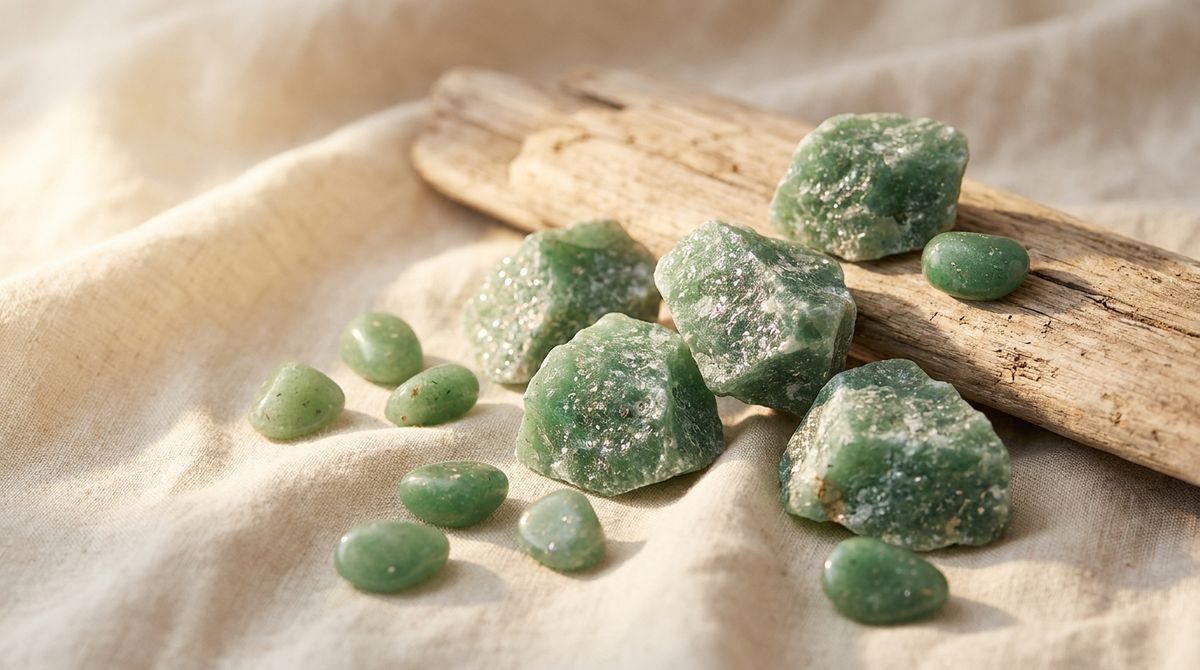
Aventurine is a variety of quartz, not a distinct mineral in its own right, and its signature sparkle — a soft, glittery shimmer that seems to move under the surface as the stone turns — comes from microscopic mineral flecks trapped inside it, not from the quartz itself. Its reputation as a stone of luck and opportunity is centuries younger than the stone's use as a decorative material, and its origin is more specific than most gemstone folklore. This guide covers what aventurine actually is, where the ‘luck stone’ name comes from, how to tell it apart from the jade it's often confused with, and what to know before wearing or caring for it.
What Aventurine Actually Is
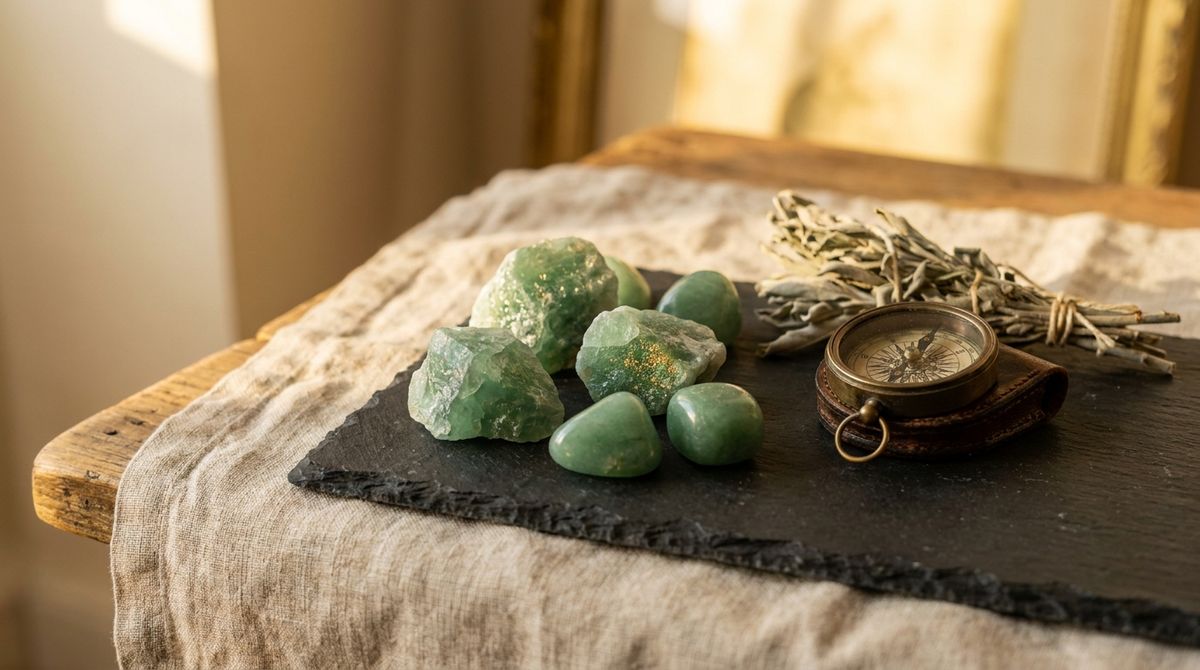
Aventurine is a translucent variety of quartz containing small, flat, platy mineral inclusions — usually a chromium-rich mica called fuchsite — that catch and reflect light as the stone turns. That glittery, metallic-looking flash is called aventurescence, and it's the defining trait of the stone: without it, what you're holding is simply quartz.
On the Mohs hardness scale, aventurine typically measures 6.5 to 7 — durable enough for regular jewelry wear, in line with quartz generally. Because it's technically an aggregate of many small interlocking quartz grains rather than a single crystal, gemologists classify it under the GIA's Type II clarity grade, meaning a few visible inclusions — the same flecks responsible for its sparkle — are normal and expected, not a flaw. India is by far the largest commercial source, with Brazil a distant second and smaller amounts coming from Russia, Spain, Austria, and Tanzania.
Physical, Mental, and Metaphysical Properties
Physical
As a quartz variety, aventurine holds up well to daily wear — resistant to scratching from most everyday contact, though like any gemstone it can still chip or crack from a hard direct knock. Its main physical quirk is the aventurescence itself: the effect is strongest in a smooth cabochon cut, which is why aventurine beads and cabochons are far more common in jewelry than faceted aventurine, where cutting flat facets breaks up the light-scattering surface that makes the effect visible.
Mental
In the modern wellness market, aventurine is described as a calming stone — associated with easing stress and encouraging a level-headed, optimistic outlook. That's a belief carried forward by today's crystal community rather than a measured effect, worth reading the same way we'd frame the meaning behind any stone in our different gemstones guide.
Metaphysical
Aventurine's best-known reputation is as a ‘stone of opportunity’ — linked to luck, prosperity, and fresh chances, and used in feng shui practice as a wealth stone, often kept near a cash register or home entryway. This meaning is folklore, not a documented effect, but it's the belief most responsible for the stone's popularity today.
Where the “Luck Stone” Reputation Comes From
Aventurine takes its name from aventurine glass, not the other way around. In 18th-century Murano, Italian glassmakers accidentally produced a glittery, copper-flecked glass and reportedly named the happy accident ‘a ventura’ — Italian for ‘by chance.’ When the mineral was later found to show a similar shimmer, it inherited the glass's name. The ‘luck’ meaning attached to the stone follows that same idea of chance and fortunate accident, later absorbed into the feng shui and crystal-healing traditions that spread its reputation as a stone of opportunity, rather than one tied to a single ancient culture the way turquoise or amethyst are.
The stone's decorative use is older than its name, though the record here is thinner and less consistently dated across sources. Green quartz resembling aventurine was carved into figures, vases, and small ornaments in ancient China, and some accounts tie it to statuary in Tibet, including as an inlay for eyes on religious figures. Treat those historical claims as plausible but loosely sourced — nothing close to the well-documented, dated origin of the ‘aventurine’ name itself.
Aventurine Colors and What They Mean
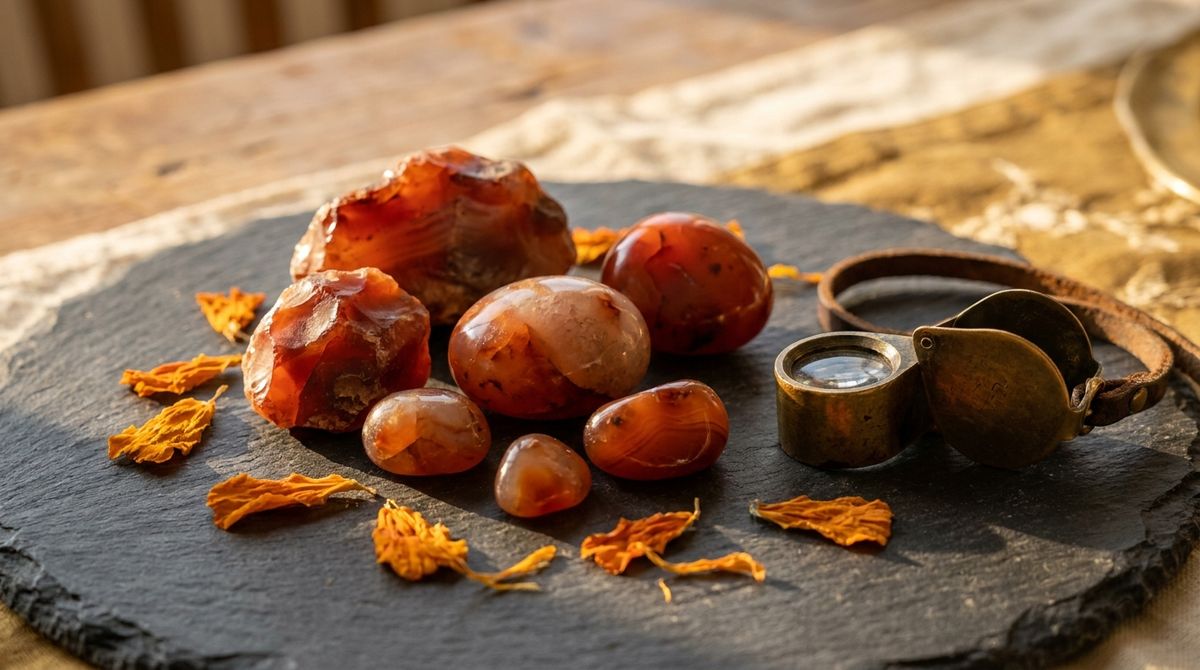
Green is the most common and best-known color, caused by chromium-bearing fuchsite mica, and it's this variety that carries the bulk of the ‘luck and prosperity’ meaning. The same stone also occurs in blue or gray tones from similar micas, and in orange, brown, red, or yellow caused by hematite or goethite inclusions instead of mica — see our gemstone color meanings guide for how each hue's folklore differs. Peach and white aventurine also exist, generally valued more for the sparkle itself than for a distinct color meaning.
Aventurine vs. Jade: How to Tell Them Apart
Green aventurine is sometimes sold as ‘Indian jade’ or ‘new jade’ — a trade name, not an accurate one. True jade is either jadeite or nephrite, entirely different mineral families from quartz, and genuine jade commands a far higher price; sellers use the word ‘jade’ because it sounds more valuable, not because the stones are related. The giveaway is the sparkle: aventurine's aventurescence gives it a glittery, almost metallic flash under light that jade doesn't have; jade instead has a smoother, waxier, more uniform luster. If a green stone glitters when you tilt it, it's aventurine, not jade.
Wearing and Caring for Aventurine Jewelry
At 6.5 to 7 on the Mohs scale, aventurine is durable enough for rings, bracelets, and everyday wear, though — like any gemstone — it's still safest kept away from hard knocks and abrasive surfaces. Clean it with warm water, a drop of mild dish soap, and a soft cloth, the same gentle approach we'd recommend for cleaning a gemstone ring that isn't diamond-hard. Ultrasonic cleaners are usually considered safe for aventurine on its own, but if a piece combines it with a softer stone or shows visible fractures, hand-cleaning is the safer default. Many shoppers pair a gemstone bead like aventurine with an engraved piece — browse our personalized necklaces for ideas.
Frequently Asked Questions
Is aventurine a real gemstone?
Yes. Aventurine is a genuine variety of quartz, not colored glass or a synthetic imitation — though its name is borrowed from aventurine glass, a man-made material that predates the mineral's popular use in jewelry and happens to share the same sparkling effect.
Is aventurine the same as green aventurine?
‘Aventurine’ is the umbrella term for the quartz variety in any color; ‘green aventurine’ specifically refers to the most common form, colored by chromium-bearing mica. When someone says ‘aventurine’ without specifying a color, they usually mean the green variety.
Is aventurine the same stone as jade?
No. They're unrelated minerals that happen to share a green color in some forms — aventurine is a quartz variety, jade is jadeite or nephrite. Aventurine's telltale sparkle, aventurescence, is the easiest way to tell them apart; genuine jade doesn't glitter the same way.
What zodiac sign is aventurine associated with?
Green aventurine is most commonly paired with Virgo in modern crystal traditions, tied to its association with the planet Mercury — though some sources pair it with Libra instead. Neither pairing is an astronomical fact, just a belief-system convention, the same as any other zodiac stone.
Is aventurine durable enough for everyday jewelry?
Yes. At 6.5 to 7 on the Mohs scale it's on par with quartz generally and holds up well to daily wear, making it one of the more practical colored gemstones for a ring or bracelet worn regularly.