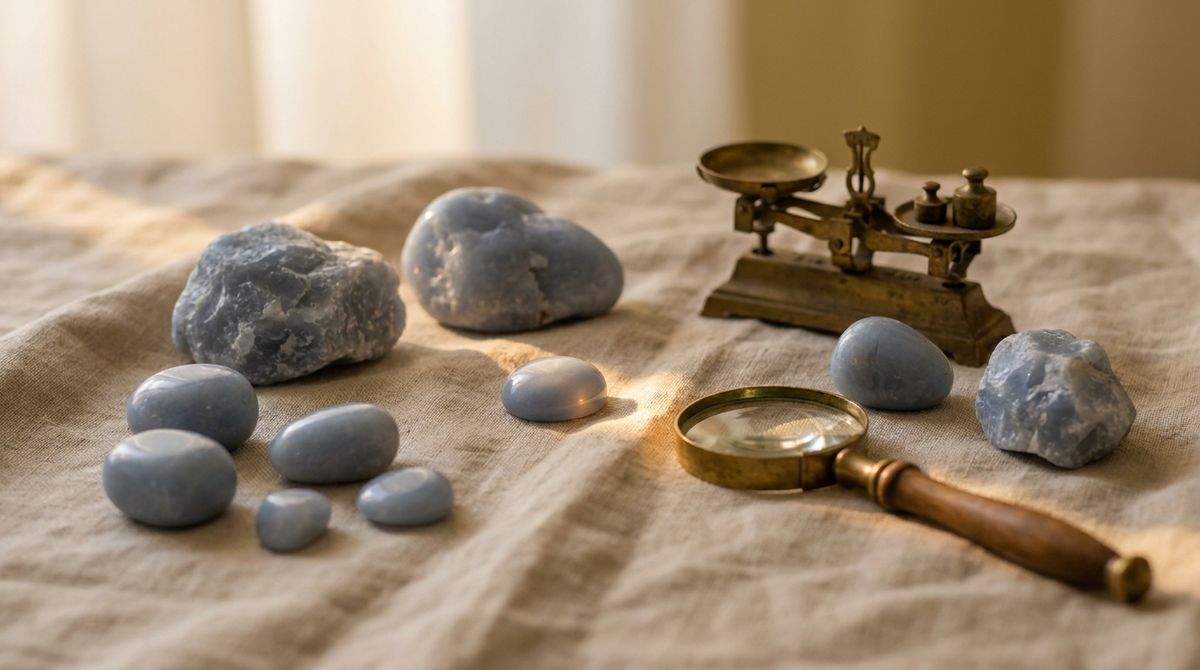
Angelite is a soft, sky-blue stone sold widely in the crystal-healing market under a name that never appears in a mineralogy textbook — the mineral itself is anhydrite, and “angelite” is a trade name attached to its compact blue form. This guide covers what angelite actually is geologically, its physical, mental, and metaphysical properties, where the “angel” reputation comes from, how to tell it apart from its two closest lookalikes, and how to wear and care for it without damaging it — which matters more for this stone than for almost any other in a jewelry box.
What Angelite Actually Is
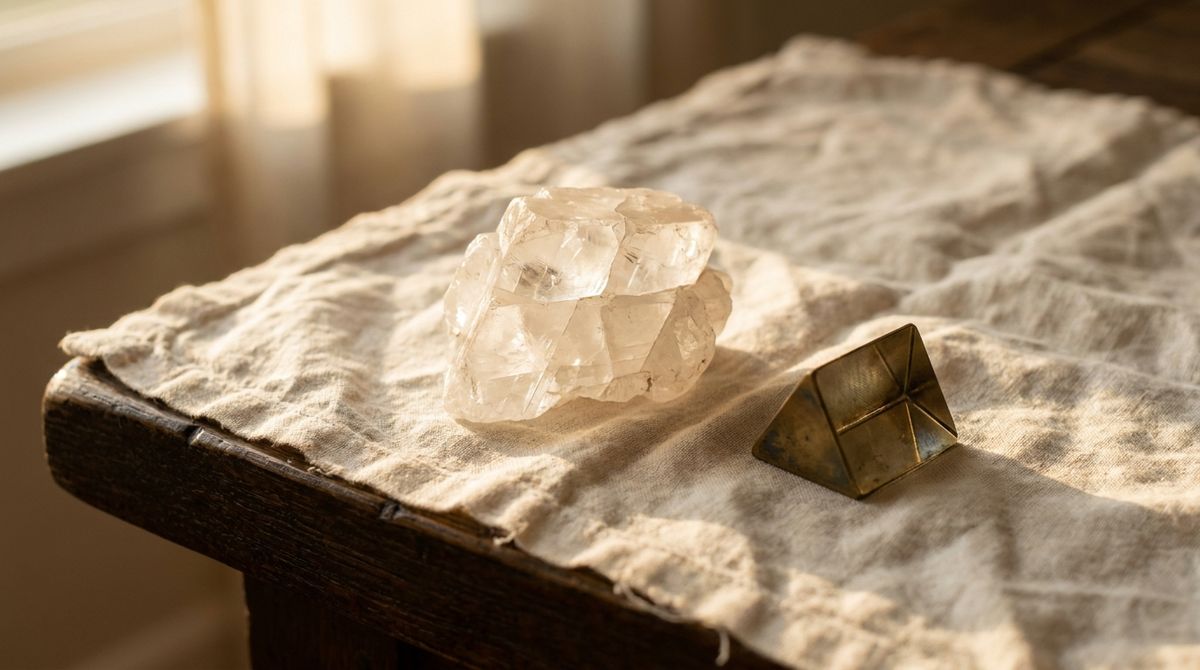
Angelite is the trade name for a compact, massive form of anhydrite — calcium sulfate (CaSO₄), a mineral in the same sulfate family as gypsum and selenite, but without the water molecules bound into gypsum's crystal structure. Its pale blue to lavender-blue color is generally attributed to trace mineral impurities, though the exact cause is less thoroughly documented than it is for more heavily studied gemstones. Commercial angelite comes almost entirely from a single source: the Ica region of Peru, though anhydrite deposits also occur in Germany, Poland, the UK, and Egypt in forms rarely fine or blue enough to cut or bead.
Anhydrite forms in evaporite deposits, where mineral-rich water evaporates in stages and leaves sulfate minerals behind — the same general process that produces gypsum and rock salt. Given enough groundwater exposure over time, anhydrite can actually absorb water and slowly convert into gypsum, which is part of why angelite is treated as a more fragile, moisture-sensitive stone than most of what else sits in a jewelry case.
Because it's opaque and soft, angelite is almost always cut as cabochons, beads, or tumbled stones rather than faceted the way a transparent gem like citrine or amethyst would be — faceting relies on hard, clean surfaces holding a sharp edge, which a 3.5-hardness stone can't do for long.
Physical, Mental, and Metaphysical Properties
Physical
Angelite sits at 3.5 on the Mohs hardness scale — soft enough that a fingernail (2.5) won't scratch it, but a steel blade or another gemstone easily will. That puts it well below most stones worn daily:
- Talc: 1 (softest common mineral)
- Selenite: 2
- Angelite (anhydrite): 3.5
- Calcite: 3
- Moonstone (feldspar): 6–6.5
- Quartz-family stones (citrine, amethyst): 7
- Diamond: 10 (hardest natural material)
In practice, that means angelite scratches more easily than almost anything else it might sit next to in a drawer, and it should be stored separately, wrapped in soft cloth, rather than loose in a jewelry box.
Mental
In the modern wellness market, angelite is described as a calming, anxiety-reducing stone — associated with mental clarity and stress relief, often marketed for meditation and sleep aids. As with any stone's mental-health claims, none of this is clinically established; it's a wellness-market association, not a medical one.
Metaphysical
Angelite's best-known nickname, the “Stone of Awareness,” comes from the crystal-healing tradition that named it in the first place: practitioners describe it as a stone that opens communication with angels and spirit guides, tied to the throat, third eye, and crown chakras. None of this has a basis outside that tradition — it's presented here as the belief attached to the stone, not as fact.
Where the “Angel” Name and Reputation Come From
Unlike birthstones with roots in centuries-old gem lore, “angelite” is a modern trade name, not a term with any deep historical record — the mineral anhydrite has been known to geologists for far longer than the blue, bead-grade material has been marketed as a metaphysical crystal. The name is generally attributed to the New Age crystal trade, chosen for the stone's pale, sky-like color and used to sell it alongside older, more historically documented stones like moonstone and selenite.
That makes angelite a useful reminder that not every stone's “meaning” is ancient: some, like angelite, are recent marketing built on a real mineral, while others carry documented meaning going back thousands of years — a distinction worth knowing before assuming a nickname is folklore. For the geology and lore behind stones with a longer paper trail, see our roundup of different gemstones and what they really mean.
Angelite vs. Celestite and Blue Calcite: How to Tell Them Apart
Angelite is most often confused with celestite and blue calcite, since all three form as pale, soft, light-blue minerals and get sold side by side in crystal shops. Celestite (strontium sulfate) typically grows in larger, glassy, often geode-like clusters and can show a faint orange fluorescent glow under UV light that angelite does not. Blue calcite is chemically unrelated — calcium carbonate rather than a sulfate — and is noticeably softer at 3 on the Mohs scale versus angelite's 3.5, though the difference is too small to feel by hand and really only shows up under lab testing.
The most reliable visual cue is color consistency: angelite tends toward a more uniform, opaque, almost powdery blue, while celestite often shows more transparency and crystal faces. If you already have a piece and want to compare it against a stone with well-documented, centuries-old symbolism instead of a modern trade name, our selenite meaning guide covers its closest chemical cousin in the same sulfate-adjacent family.
Wearing and Caring for Angelite Jewelry
At 3.5 on the Mohs scale and prone to slowly absorbing moisture, angelite is one of the few stones where the usual jewelry-care advice needs an exception: avoid water entirely, including showering, swimming, and ultrasonic or steam cleaners, since prolonged exposure can dull the surface or start the conversion toward gypsum. Keep it out of direct, prolonged sunlight too, which can fade its color over time. For the general rules that still apply — what's safe for the metal setting, and what isn't — see our guide to cleaning a gemstone ring safely.
Because of that fragility, angelite tends to work best set in earrings or a pendant that isn't handled constantly, rather than an everyday ring. If you'd rather build a piece around a birthstone that's actually rated for daily wear, our birthstone necklaces are made in harder, more durable stones suited to that kind of everyday use.
Frequently Asked Questions
Is angelite a real mineral?
Yes, but not under that name. “Angelite” is a trade name for the compact blue form of anhydrite, a genuine sulfate mineral — it isn't a marketing term for glass or a synthetic, but it also isn't a name mineralogists use.
Is angelite the same as celestite?
No. They're closely related pale-blue sulfate-family minerals often sold side by side, but celestite is strontium sulfate and typically shows more transparent, glassy crystal faces, while angelite (anhydrite) is calcium sulfate and tends to look more uniformly opaque.
Can angelite get wet?
It shouldn't, at least not for long. Angelite is a hydrous-adjacent sulfate that can slowly absorb water and begin converting toward gypsum, and prolonged water exposure can dull its surface — avoid showering, swimming, or ultrasonic cleaning while wearing it.
How durable is angelite for everyday jewelry?
Not very. At 3.5 on the Mohs scale, it's softer than calcite and far softer than quartz-family stones like citrine or amethyst, so it scratches easily and is better suited to earrings or an occasional-wear pendant than a ring worn daily.
What is angelite's birthstone month?
None. Angelite isn't one of the officially recognized calendar birthstones for any month — its association with angels and awareness comes entirely from the modern crystal-healing market, not from birthstone tradition.