A ring can say a lot without a single stone. Cut a name into a band of metal — your own, someone else's, a child's — and the ring stops being decoration and starts being a signature you can wear. The name ring has quietly become one of the most searched pieces in personalized jewelry, and for a style that feels thoroughly modern, its roots go back nearly four thousand years.
A Ring Built to Carry a Name
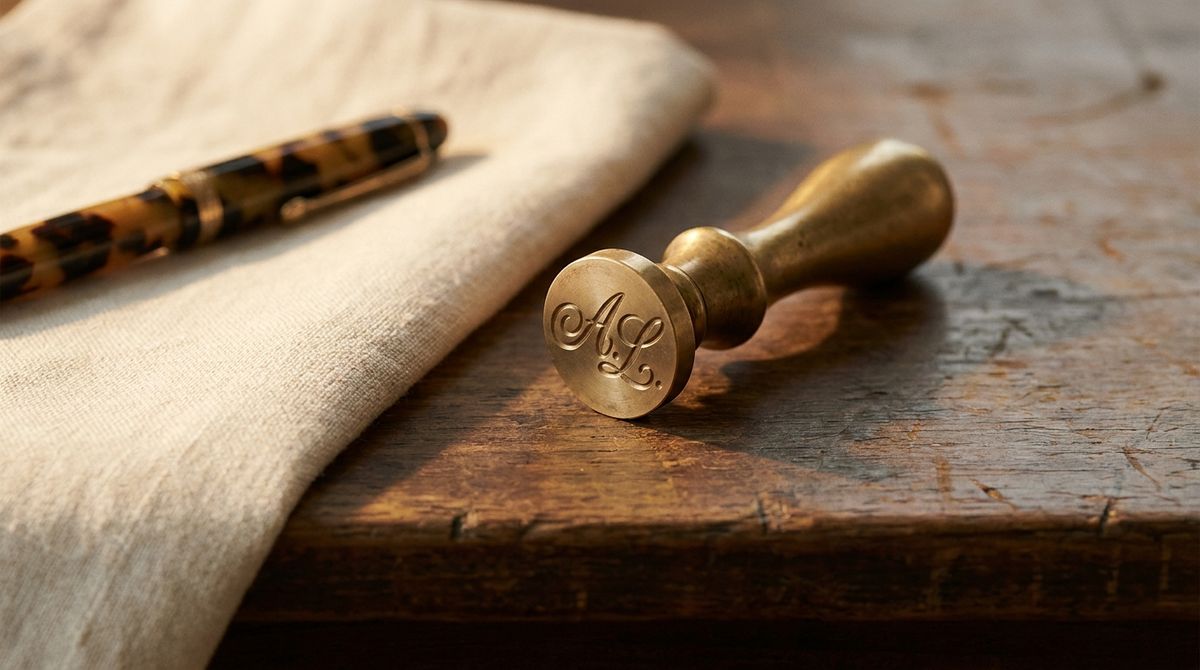
Ancient Egyptian officials wore signet rings engraved with their own mark as far back as roughly 1800 BC, using the ring itself to press a name into wax and authenticate a document. The Greeks, Etruscans and Romans carried the idea forward with carved gemstone seals set into rings. By the turn of the twentieth century, Hawaiian heirloom jewelers were engraving names directly into gold bangles and bracelets, a namesake tradition that outlasted the wax seal by decades. Nameplate jewelry went fully mainstream in the 1970s disco era, and today's name ring is really that same four-thousand-year idea, stripped of the seal and the ceremony, worn purely as a personal signature.
What a Name Ring Actually Signals
A signet ring told strangers who you were before you spoke. A modern name ring does something gentler — it tells the people close to you what you carry. Some people wear their own name as a quiet form of self-possession, others choose a partner's, child's or parent's name as a small constant reminder, and plenty pick a nickname that only a handful of people have ever used. Unlike a signet's crest or single initial, a full name ring is unambiguous: there's no code to decipher and no family history required to read it.
Name Ring Styles, Compared
Most name rings fall into one of four letterform styles, and the differences matter more than they look like they would — they change how readable the ring is, how it photographs, and how well it survives daily wear.
- Script or Cursive — the letters connect in a flowing, handwritten line. It reads as the most personal and intimate of the four styles, and because the letters slightly overlap, it needs less metal than a block style to look substantial.
- Block or Capital Letters — each letter stands separate and upright. Easiest to read at a glance or in a photo, and the style that holds up best on a very narrow band, though it tends to look more graphic and less personal than script.
- Cutout (Negative-Space) — the name is cut all the way through the metal instead of sitting on top of it, so the ring reads as an open, lace-like shape. Striking in photographs and noticeably lightweight, but the open letterforms are the most fragile part of any name ring style and the first thing to catch on fabric or bend out of shape.
- Nameplate-with-Symbol — the name sits on a small plate or bar, often finished with a heart, a tail or a diamond-cut flourish at one end. This is the closest of the four to a traditional nameplate necklace shrunk down to ring size, and the extra detail gives a plain name a bit more visual weight.
Who Actually Buys a Name Ring
The buying pattern splits fairly cleanly into three groups. The first is self-purchase — someone buying their own name or a word that matters to them, the same instinct behind a monogram or an initial necklace, just moved to the hand. The second is a couple's or family gift: a partner's name, a child's name, or a parent gifting their own name to an adult child as a keepsake. The third is the milestone gift — a graduation, a new baby, a first apartment — where a name ring works as a personal-but-not-precious gift that doesn't require guessing at someone's taste in stones or settings, only their spelling.
Choosing a Metal (and Keeping It Nickel-Safe)
A name ring gets more daily contact than almost any other piece of jewelry — hands wash, work, type and touch surfaces constantly — so the metal underneath the finish matters more here than it does on a necklace worn against a shirt. FARUZO plates its name rings over 316L stainless steel specifically because that base metal is nickel-safe, not just because it resists tarnish; a plated finish naturally wears thinner at the edges over years of daily contact, and it's the base metal underneath that ends up touching skin the longest.
The same reasoning applies across FARUZO's personalized pieces — see the full breakdown in what actually makes a name necklace nickel-safe, and browse the current name ring styles to compare finishes in gold, silver and rose-gold tones.
Getting the Size Right
A name ring can sit differently on the finger than a plain band, since script or nameplate lettering sometimes extends slightly wider than the metal underneath it, so it helps to size a touch more generously than you would for a plain ring.
The simplest way to check a ring size without visiting a jeweler is with a strip of paper or string and a ruler — the full step-by-step is in FARUZO's guide to measuring your ring size at home. If you're buying as a surprise, borrowing a ring the person already wears well and matching its inner diameter is far more reliable than guessing from glove size or hand shape.
Living With a Name Ring
Because it's engraved rather than symbolic, a name ring reads well stacked with plain bands or worn completely alone — there's rarely a need to build an outfit around it the way a statement piece demands. Day to day, the main enemy is chemicals more than knocks: it's worth sliding it off before swimming, cleaning or heavy manual work, and wiping it dry with a soft cloth after it's been sweated in.
Reactions to cheap costume jewelry are common enough that nickel allergy is one of the more-searched jewelry health questions online — exactly why the base metal, not just the finish, is worth checking before you buy a piece meant to be worn every day.
Frequently Asked Questions
Does a name ring have to be your own name?
No. Many people wear a partner's, child's or parent's name instead of their own, or a nickname used only within the family. There's no rule attached to a name ring the way there once was to a family signet — the only name it needs to carry is whichever one matters to the wearer.
What metal is safest for sensitive skin?
Look for a base metal, not just a plating, that's nickel-free. 316L stainless steel is a common nickel-safe choice, since even a nickel-safe plated finish will eventually wear thin from years of daily contact with water and skin.
How do I find my ring size at home?
Wrap a strip of paper or string snugly around the base of the finger, mark where it overlaps, measure the length in millimeters, and match it to a ring-size chart — full instructions are in FARUZO's ring-sizing guide linked above.
Can a name ring be resized later?
It depends on the style. A block-letter or nameplate ring on a plain band can often be resized within a narrow range, the same as most plain rings. Cutout and script styles are harder to resize without distorting the open letterforms, so it's worth ordering as close to the right size as possible from the start.
What's the difference between a name ring and a signet ring?
A signet ring traditionally carries a crest, initial or symbol meant to be pressed into wax as a seal, often passed down through a family. A name ring spells out a full name or word purely to be read, with no sealing function — the modern version of the same instinct to wear your identity on your hand.
For more on what people choose to wear and why, browse FARUZO's Names & Meanings guides.