There is a particular gesture you see at gravesides and in hospital corridors and on the morning of something frightening: a hand rising to the collarbone, fingers closing around a small pendant. Often that pendant is a pair of wings. An angel wing necklace tends to arrive in a person's life at the moments that matter most — a loss, a birth, a leap into the unknown — which is exactly why its meaning runs so much deeper than its size. Two small wings can hold protection, guidance, grief and hope all at once. Here is what they say, where they truly came from, and how to choose one worth keeping.
Four meanings folded into two wings
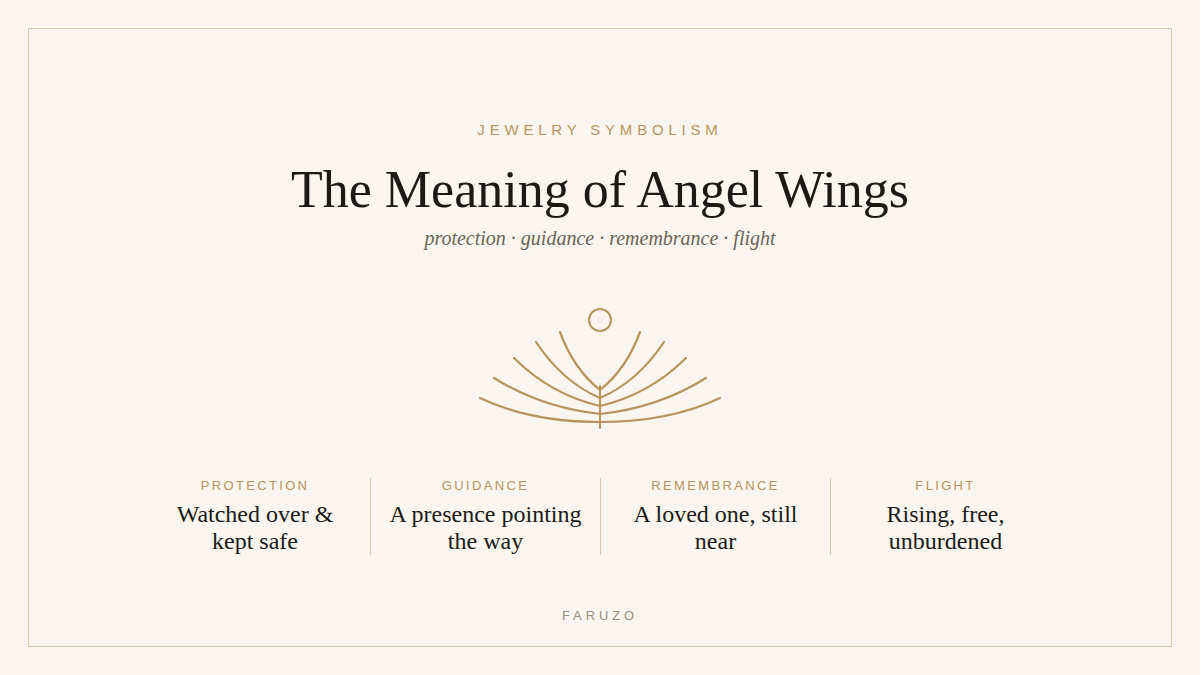
Ask ten people what their angel wings mean and you may get ten answers, all of them right. The symbol is generous that way. Four readings come up again and again. Protection is the oldest — wings as a shield, a sign that someone or something is watching over you and keeping you from harm. Guidance is its quieter cousin: not a guard but a presence, a nudge in the right direction when the way is unclear. Remembrance is the meaning that has grown most in recent years — wings worn for a person who has died, a way to keep them close and present. And flight is the most personal of all: wings as freedom, as rising above a burden or a fear, as the first day of a new chapter. Most wearers carry more than one of these at once. That layering isn't confusion — it's the whole point.
Where angel wings actually came from
Here is the surprise almost no one hears: the Bible never describes angels with wings. Its messengers arrive on foot, climb ladders, or appear in fire — but the feathered wings we now take for granted are simply not in the text. For the first few centuries of Christian art, angels were painted as ordinary robed figures. The angel in the third-century catacombs of Priscilla in Rome has no wings at all.
Wings arrived later, in the fourth century, and from an unexpected place. As Christian artists searched for a way to show that angels were heavenly and swift, they borrowed the visual language of the Greco-Roman world around them — Nike, the winged goddess of victory, and messenger figures like Hermes and Iris. One of the earliest winged angels appears on the so-called Prince's Sarcophagus, dated to the reign of Theodosius I (379–395). What began as borrowed artistic shorthand became, over sixteen centuries, one of the most recognized symbols on earth. Wear wings today and you are wearing an idea that outlived the empire that first drew it.
“Earned their wings”: the memorial meaning
Of all the reasons people reach for a wing pendant, remembrance has become the most common — and the most tender. The phrase “earned their wings” has quietly entered the language of grief, and some families now mark an “angelversary,” the anniversary of the day a loved one passed, as gently as they would a birthday. A wing worn against the heart becomes a small daily act: they are gone, and they are here.
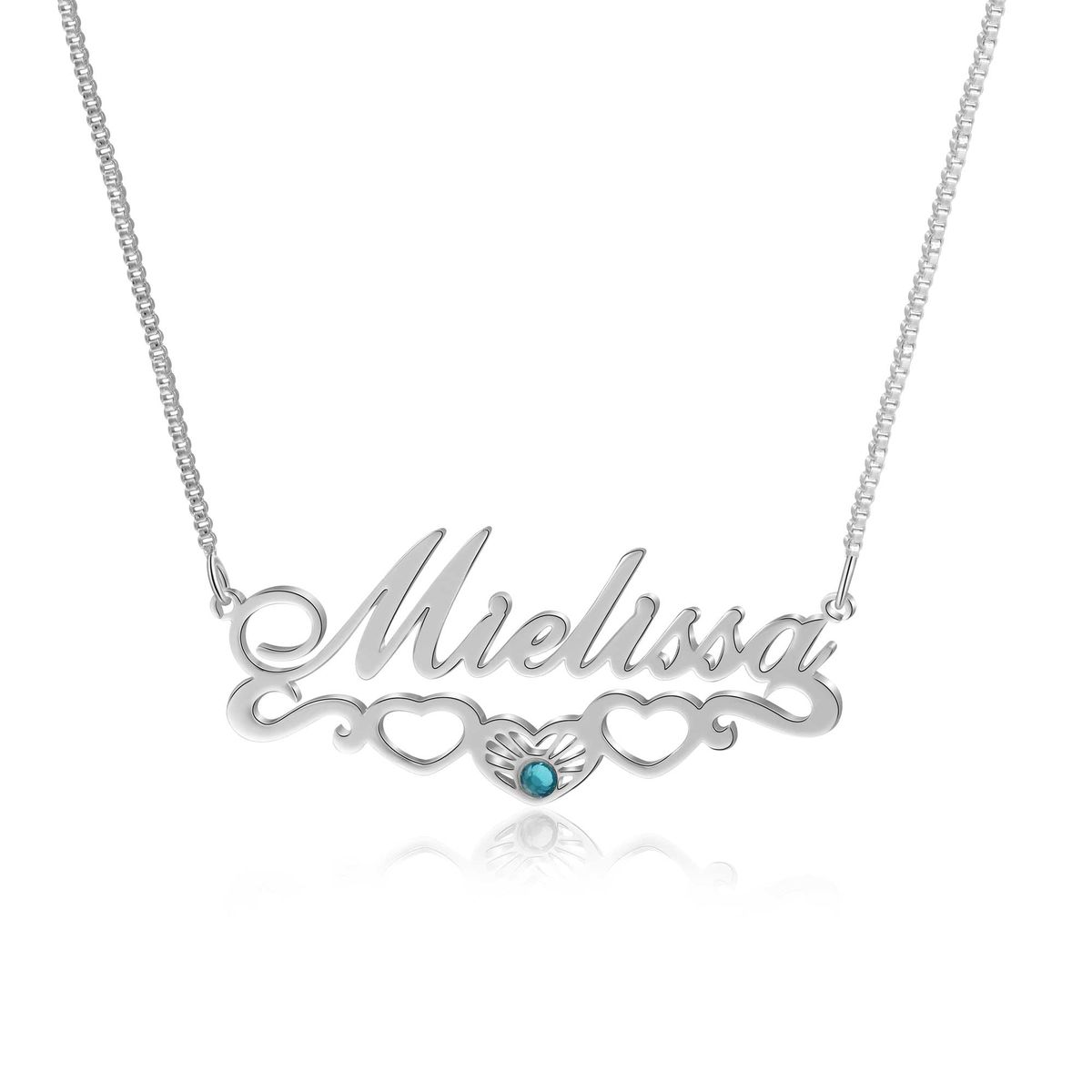
This is where the details matter most. A plain wing says “someone”; an engraved one says their name. Adding a birth month's stone, an initial or a date turns a general symbol into one specific person — a birthstone name piece paired with a wing lets you carry their color and their name together. The butterfly offers a kindred comfort — the soul in transformation — and the infinity loop speaks to a bond that loss does not end; many people layer the three. If a wing is going to stand in for a person, the details are what make it truly theirs.
One wing or two, and which way they face
A practical question comes up constantly: does a single wing mean something different from a pair? Traditionally, a pair reads as wholeness and protection — the full embrace of being watched over. A single wing often carries a more specific note: one half of a pair, a partner or loved one who is elsewhere, with the wearer holding the other. Couples and grieving families sometimes split a design on purpose, one wing each. As for direction, there is no fixed rule — but many wearers like the wings to sweep upward, toward flight and hope, rather than down. In the end a symbol answers to the person wearing it more than to any rulebook.
Choosing an angel wings necklace that lasts
A wing is only as good as the metal it's cut from, especially one meant to be worn every day for years. Solid gold and gold vermeil — a thick layer of gold over sterling silver — both survive daily wear far better than thin plating, which rubs away at the edges first. Sterling silver suits cooler skin tones and a quieter, more classic look. Keep the chain length where the pendant rests comfortably near the heart; 18 inches is the reliable middle. And if the piece is personalized, look for a live preview so you see the exact name or date before anything is engraved. For the wider family of symbols people wear and why, our jewelry symbolism guide gathers them in one place.
Two small wings, sixteen centuries of meaning, and a message that shifts with whoever wears them: I am protected. I am guided. I carry you. I am free. That is a great deal to fold into a pendant the size of a thumbnail — which is exactly why the angel wing necklace endures.
Frequently Asked Questions
What does an angel wings necklace symbolize?
Most often protection, spiritual guidance, remembrance of a loved one who has passed, and personal freedom or a fresh start. Many wearers hold several of these meanings at once. Because the symbol is so open, its exact significance ends up being deeply personal to the person wearing it.
Is an angel wings necklace religious?
It can be, but it doesn't have to be. Angel wings have deep roots in Christian art and carry clear spiritual meaning for many people, yet plenty of wearers choose them in a purely personal or secular way — as a memorial, a symbol of freedom, or simply a design they love. The meaning you give it is the one that counts.
Is an angel wing necklace a good memorial or sympathy gift?
Yes — it's one of the most given remembrance pieces, precisely because it offers comfort without needing words. Personalizing it with the person's name, an initial, a meaningful date or their birthstone makes it far more powerful than a plain wing, turning a general symbol into a tribute to one specific life.
What does “earned their wings” mean?
It's a gentle way of saying that someone has died and, in the speaker's belief, found peace or become a guardian angel. Some families mark the “angelversary,” the anniversary of that day. The phrase is closely tied to angel wing jewelry, which lets the bereaved keep that person symbolically close.
Which way should angel wings face on a necklace?
There's no official rule. A full pair traditionally signals protection and wholeness, while a single wing can stand for a loved one who is elsewhere. Many people prefer wings that sweep upward, toward flight and hope. Wear it whichever way feels right to you — the symbol bends to the wearer.