Alexandrite is the gemstone world's party trick made real: the same stone can look emerald green under daylight and raspberry red under a lamp, a shift dramatic enough that early mineralogists assumed they were looking at two different minerals. That color-change property is the whole reason it's valuable and the whole reason it's confusing to shop for — genuine natural alexandrite is rare and expensive, while most "alexandrite" jewelry sold today is a lab-grown or simulated substitute. Here's what the stone actually is, why it changes color, the meaning people attach to it, and how to tell what you're actually buying.
What Alexandrite Actually Is
Alexandrite is a color-change variety of chrysoberyl, a mineral distinct from true beryl (the family that includes emerald and aquamarine) despite the similar name. It was first identified in the Ural Mountains of Russia in the 1830s and named after the future Tsar Alexander II — the story that it was discovered on his birthday is popular but unverified; what is documented is that the stone's green-and-red color combination happened to match Imperial Russia's military colors, which fueled its early popularity at the Russian court. Gem-quality natural alexandrite is now scarce enough that fine specimens routinely sell for more per carat than a comparable diamond, and most commercial "alexandrite" jewelry today is lab-grown or a simulant rather than mined stone.
Why It Changes Color
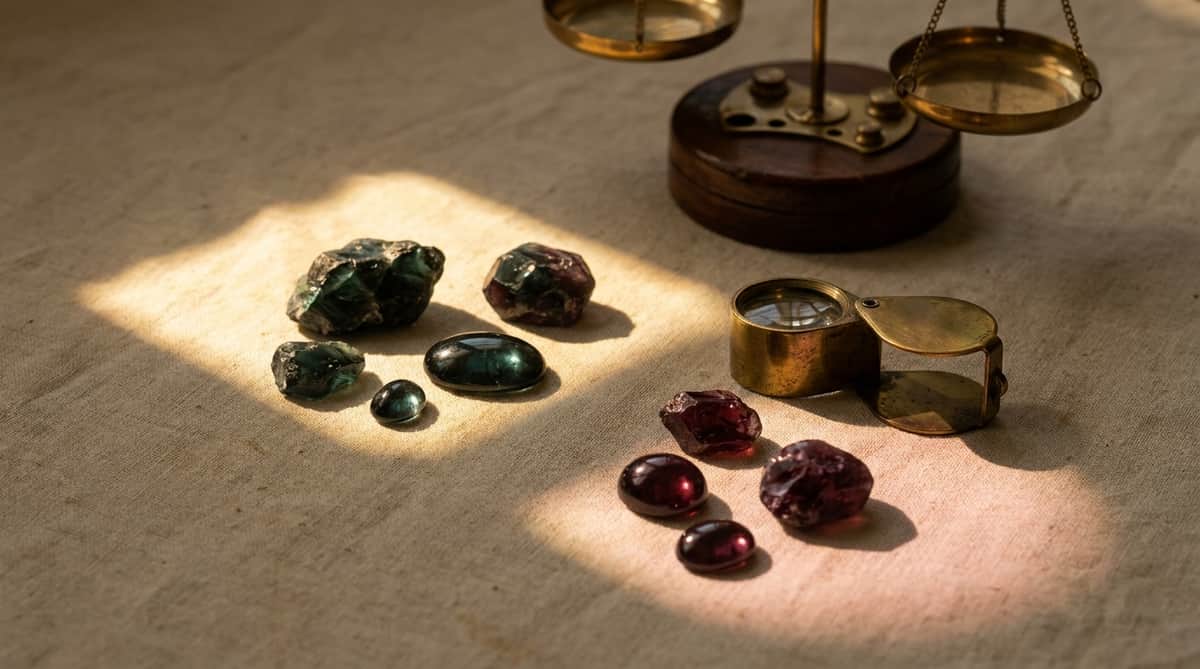
The color change comes from how alexandrite's crystal structure absorbs light: trace chromium in the chrysoberyl lattice absorbs light unevenly across the visible spectrum, leaving a narrow band of green and a narrow band of red for the eye to pick up. Daylight is rich in the blue-green wavelengths, so the stone reads green to bluish-green in sunlight; incandescent and candlelight are richer in red-yellow wavelengths, so the same stone shifts to purplish-red or raspberry indoors. This is the same chromium-driven mechanism that colors ruby and emerald, which is part of why early mineralogists found the stone so puzzling — it behaves like two different colored gems depending only on the light source, not on the stone itself changing.
Natural vs. Lab-Grown vs. Simulated
Because natural gem-quality alexandrite is so rare, almost everything sold under the name falls into one of three categories, and they are not interchangeable:
- Natural alexandrite: mined chrysoberyl with genuine color-change, extremely rare in sizes over one carat and priced accordingly — fine natural stones can run into five figures per carat.
- Lab-grown (synthetic) alexandrite: chemically and optically identical to natural alexandrite, grown in a lab rather than mined, and far more affordable. A reputable seller will disclose this clearly; it's a real alexandrite crystal, just not a geological one.
- Simulated alexandrite: usually color-change sapphire or color-change glass, which mimics the color shift but is an entirely different material with different hardness and value. This is what most budget "alexandrite" jewelry actually contains, and it's worth asking directly which of the three a piece is before buying it as a gift.
The Meaning People Attach to It
Alexandrite's folklore leans heavily on its color-changing nature: it's commonly described as a stone of balance and transformation, said to help the wearer navigate change or see a situation from more than one angle — meanings that map fairly directly onto the literal fact that the stone itself looks like two different things depending on the light. It's also tied to the number of years in a wedding anniversary: alexandrite is the traditional gift for a 55th anniversary, a milestone far enough out that most people never personally shop for it, which partly explains why the stone stays more of a specialist's gem than a mainstream one.
Alexandrite and the June Birthstones
Alexandrite is one of three stones officially recognized for a June birthday, alongside pearl and moonstone — our birthstones by month guide covers all three together with the rest of the calendar, and our broader gemstone meanings guide covers how alexandrite's symbolism compares to other stones. What sets alexandrite apart from the other two is that it's the rarest and most valuable of the three by a wide margin; pearl and moonstone are both widely affordable, while natural alexandrite is one of the costlier gems in any birthstone list. For a June birthday gift on a normal budget, that usually means choosing a piece from FARUZO's birthstone rings set with pearl or moonstone, or a lab-grown alexandrite if the color-change effect itself is the point.
How to Identify a Real Color-Change Stone
A few checks separate genuine color-change alexandrite (natural or lab-grown) from a simulant:
- Check the light sources. Compare the stone under direct sunlight and then under a warm incandescent bulb or candle — genuine color-change happens gradually and convincingly between green and red/purple. A weak or purely artificial-looking shift suggests a simulant.
- Ask for a lab report on anything expensive. A grading report from a recognized gem lab will state whether a stone is natural, lab-grown, or a simulant — essential for any purchase priced as if it were natural.
- Compare the price to the rarity. A large, cheap "alexandrite" is almost certainly synthetic sapphire or glass; genuine natural alexandrite in sizes over a carat is priced like a fine colored gemstone, not a costume piece.
- Look at the specific colors. True alexandrite shifts toward bluish-green and purplish-red; color-change sapphire often shifts toward blue and violet instead — a subtle difference, but one a jeweler's loupe and some patience can usually catch.
Frequently Asked Questions
Is alexandrite a real gemstone or a lab-created one?
Both exist under the same name. Natural alexandrite is a genuinely rare mined chrysoberyl variety; lab-grown alexandrite is chemically identical material grown in a laboratory rather than found in the ground. Both are "real" alexandrite in the mineralogical sense — the difference is origin and price, not authenticity, as long as a seller discloses which one you're buying.
Why does alexandrite look different colors in different photos?
Because the color genuinely depends on the light source the photo was taken under, not on inconsistent photography. A stone photographed under daylight-balanced light will look green to bluish-green, and the same stone under warm indoor lighting will look red to purple — both photos can be accurate representations of the same gem.
Is alexandrite a durable stone for everyday jewelry?
Yes — chrysoberyl, the mineral family alexandrite belongs to, is quite hard (8 on the Mohs hardness scale, just below sapphire and ruby), which makes it reasonably resistant to scratching in daily wear. The bigger practical concern with natural alexandrite is usually cost and size availability rather than durability.
What's the difference between alexandrite and other color-change gems?
Several other minerals show color-change effects — including some sapphires and garnets — but alexandrite was the first color-change stone widely documented and remains the benchmark the others get compared against. The specific green-to-red shift, driven by chromium in a chrysoberyl structure, is what distinguishes true alexandrite from a color-change sapphire or garnet showing a different pair of colors.