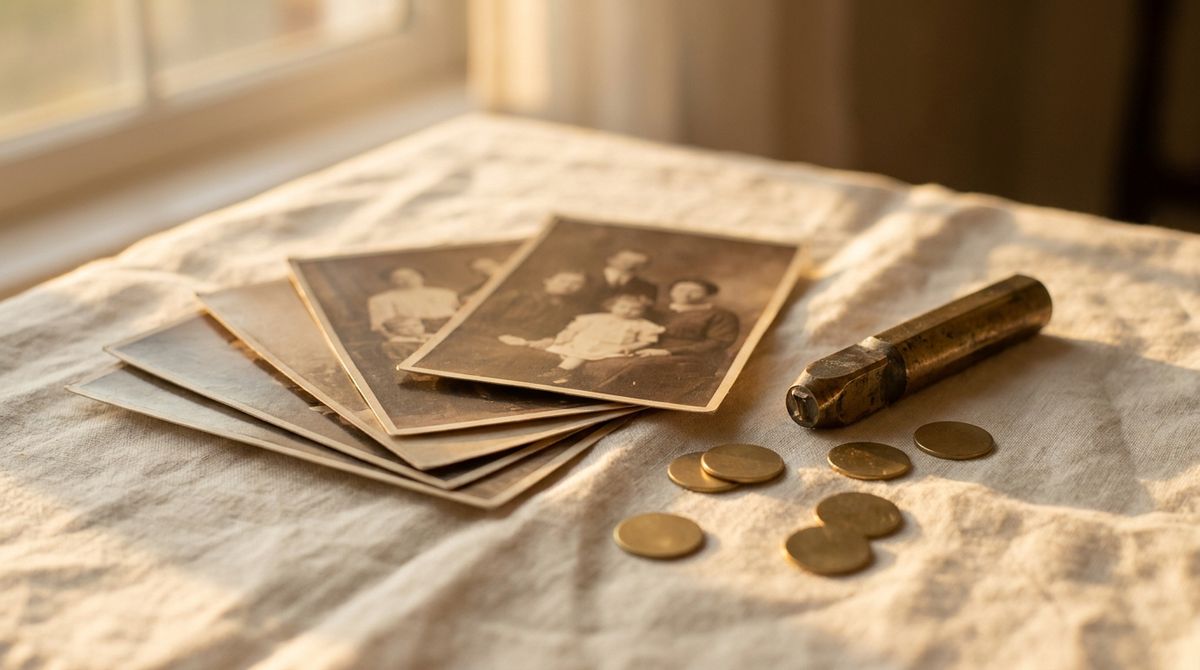
“Namesake necklace” gets searched mostly by people who already know the practical side — engraving, chain length, how many letters fit — but the search is really asking something older: what does it actually mean to be named after someone, and does wearing that name change anything about it? The word “namesake” is more specific than it sounds, the traditions behind it are older than most jewelry trends by centuries, and they explain why turning a name into something worn — not just spoken — became such a durable idea in the first place.
What “Namesake” Actually Means
The word dates to the 1640s and reads, unpacked, as “for the name’s sake.” A namesake isn’t just someone who happens to share your name — it’s someone named because of you, or for someone specific, on purpose. That distinction is the whole point: it’s the difference between a coincidence and a decision. A necklace that marks a namesake is marking that decision, not just a label. Two people can share a first name their whole lives and never once be namesakes of each other; the word only applies once someone chose the name specifically to invoke the other person.
Four Real Traditions Behind Naming Someone After You
“Named after someone” covers several genuinely different traditions, each with its own logic for who gets named, when, and why:
- Patronymic and matronymic names — built directly from a parent’s first name. Historically grammatical, not just sentimental: Icelandic, other Scandinavian, and many Slavic naming systems still construct a child’s legal name this way (a suffix added to the parent’s given name) rather than treating it as a tribute at all.
- Religious or sponsor names — a name chosen at baptism, a bris, or a christening, often after a saint, a biblical figure, or the godparent doing the naming. The tie here is spiritual sponsorship, not bloodline, and in many traditions the sponsor takes on real ongoing responsibility for the child, not just the honor.
- Memorial names — naming a child after someone who has died: a grandparent, a sibling lost young, a family founder. Long-standing in Ashkenazi Jewish custom, which specifically avoids naming after someone living, in Irish naming patterns that once ran through a fixed birth-order sequence of ancestors’ names, and in many other cultures as a way of keeping a name — and a person — in active use rather than retired with them.
- Honor names — naming a child after someone living who isn’t a parent: a mentor, a matriarch, a teacher, a friend who mattered. The newest and least rule-bound of the four, and the most common shape “namesake” takes in contemporary Western naming, where the choice is personal rather than governed by custom.
How Far Back the Idea Actually Goes
None of this is a modern habit dressed up in old language. Roman naming conventions built an entire third name, the cognomen, around distinguishing which branch of a family — and which ancestor — a person descended from. Biblical naming passages repeatedly make a point of naming a child “after his father” as a notable event worth recording, which only makes sense if the practice already carried real weight. What changed over the centuries isn’t the impulse to name someone deliberately after another person — it’s how publicly that choice gets marked. A name on a legal document is private. A name worn on the body, where someone else can ask about it, turns a private family decision into a story that gets told out loud.
Why Naming Traditions Became Jewelry
Wearing a name is older than any pendant that spells one out in script. Signet rings carried a family’s initials into every wax seal a person pressed, making the name functional as well as symbolic. Lockets held a name, or a lock of hair, against the skin of someone who missed the person it belonged to. The format keeps changing — ring, locket, engraved disc, script chain — but the job stays the same: take a bond that otherwise only lives in a family story, and give it a shape you can actually hold onto, and put back on every morning without having to explain it from scratch each time.
Giving a Namesake Necklace: What to Actually Decide
Once the occasion is a real namesake — not just a first-name pendant chosen for how it looks — a few decisions change:
- Whose name goes on it. For a memorial namesake, the honoree’s name is usually meant for the person doing the honoring to wear — a grandmother wearing her late husband’s name, for example. For a living namesake, the piece more often runs the other way: a grandmother receives a necklace carrying the grandchild who was named for her.
- One name or two. A namesake piece can pair the honoree’s name with the name of the person who now carries it, making the connection explicit instead of leaving it as backstory only the family already knows.
Chain length and letter count, together. A namesake piece is usually worn constantly rather than for one occasion, so both matter more than they do for an event-only gift — our necklace length guide and our guide to choosing metal for a name necklace are both worth checking before ordering.
Font and case. A family name set in a signature-style script reads as more personal than the same name in printed capitals — we’ve covered the difference in more depth in what your name necklace says about you.
Who a Namesake Piece Is Actually For
The relationship usually decides the format before the name does. When the namesake is a grandparent being honored by several grandchildren’s names at once, our guide to grandma necklaces with grandkids’ names covers how many names actually fit and how to lay them out. When the question is really about whether a name necklace reads as sentimental or overdone for the relationship you have in mind, we’ve answered that directly in are name necklaces tacky? And if you’re starting from the name itself rather than the occasion, browsing our own name necklace styles is the fastest way to see which format — pendant, bar, script chain — actually fits the name and the story behind it.
Frequently Asked Questions
What’s the actual difference between a namesake and someone who just shares a name?
A namesake is named on purpose, for a specific person — the name is chosen because of that person, not coincidentally similar to it. Two strangers named James don’t make either one a namesake of the other; a child named James specifically after a grandfather James does.
Do you need permission to make a namesake necklace for someone living?
No formal permission is required, but it’s worth telling the person before the piece arrives, especially for an honor name — most people find out they were the reason behind a name well after the fact, and a necklace is often how they learn it.
Can a namesake necklace include more than one name?
Yes — pairing the honoree’s name with the name of the person now carrying it is common, and it’s the version that makes the connection legible to anyone who asks about the piece, not just to the family who already knows the story.
Is naming a child after a living parent different from other namesake traditions?
Yes — that specific case is the patronymic or matronymic tradition, and in the naming systems that use it formally, such as Icelandic naming law, it isn’t treated as a tribute at all; it’s simply how a legal name gets built, generation after generation.
Why do some traditions avoid naming a baby after a living relative?
In Ashkenazi Jewish custom, naming after someone living is specifically avoided — the reasoning passed down is that it can seem to invite an early transfer of that person’s life force to the child. Memorial names in that tradition are reserved for relatives who have already died, which is the opposite convention from an honor name naming a living mentor.
What metal holds up best for a namesake necklace worn every day?
Since a namesake piece is rarely taken off, the same durability questions apply as any daily name necklace — our metal guide walks through the real trade-offs rather than which one sounds nicer.