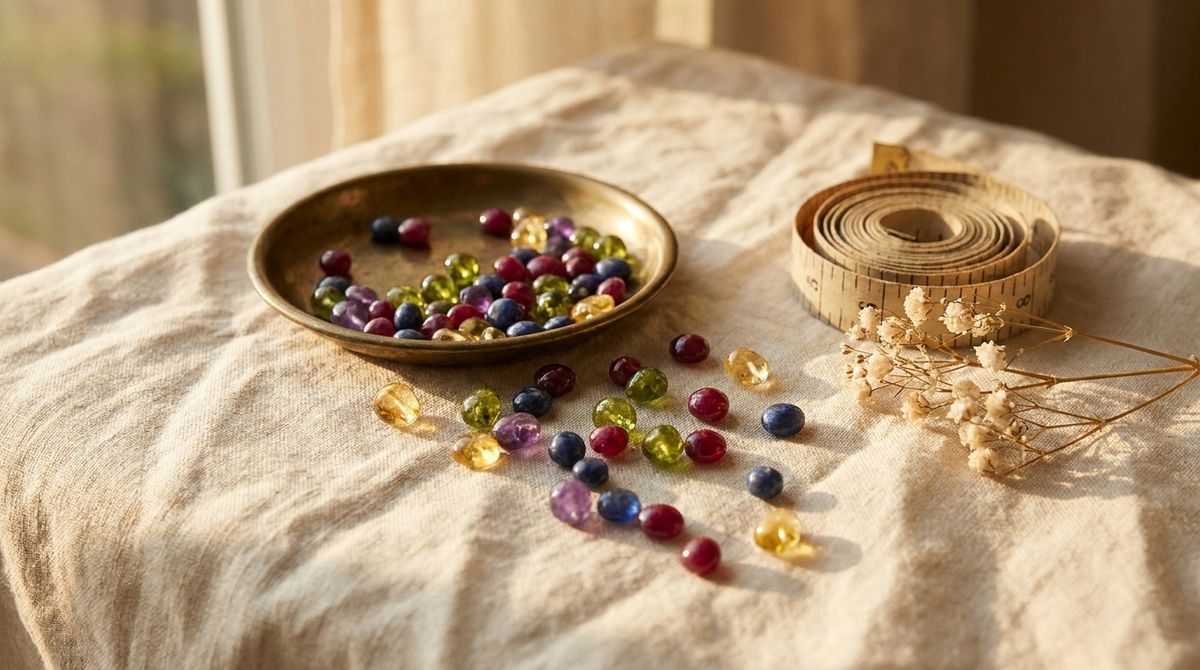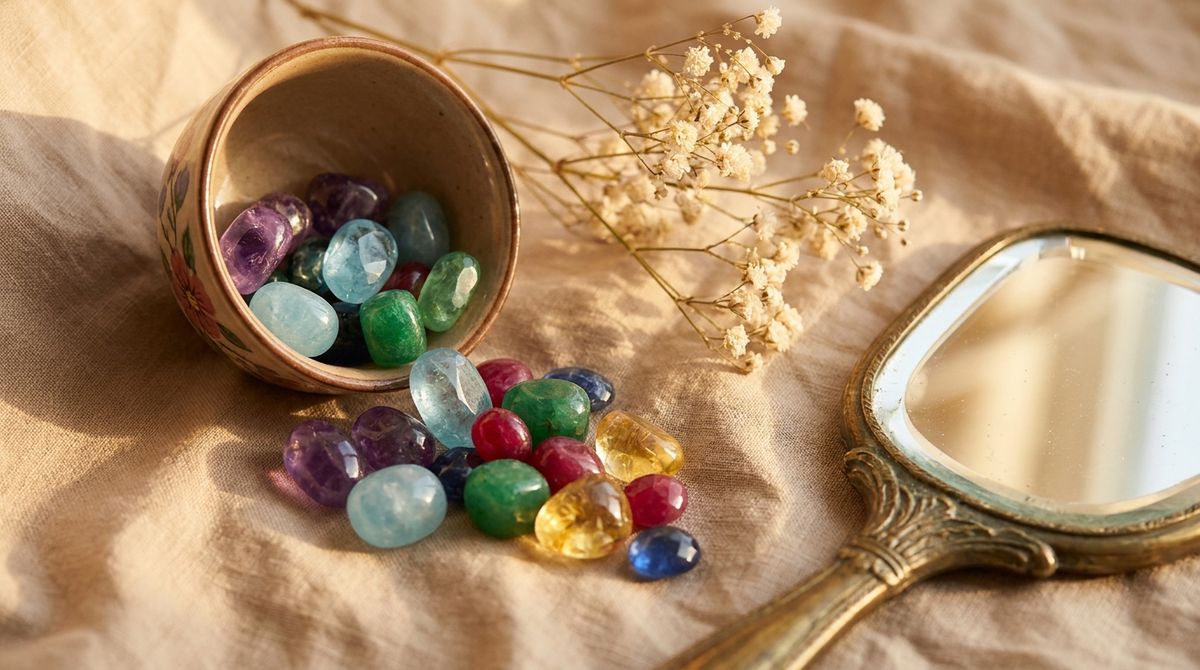
There is a small, quiet moment when someone opens a necklace and sees not just their name, but their color — the exact blue of a September birthday, the deep red of July. That is the whole appeal of a birthstone name necklace: it says who you are twice over, in letters and in light. The only hard part is choosing the right stone. Here is how a jeweler thinks it through, plus the full modern birthstone list so you get it right the first time.
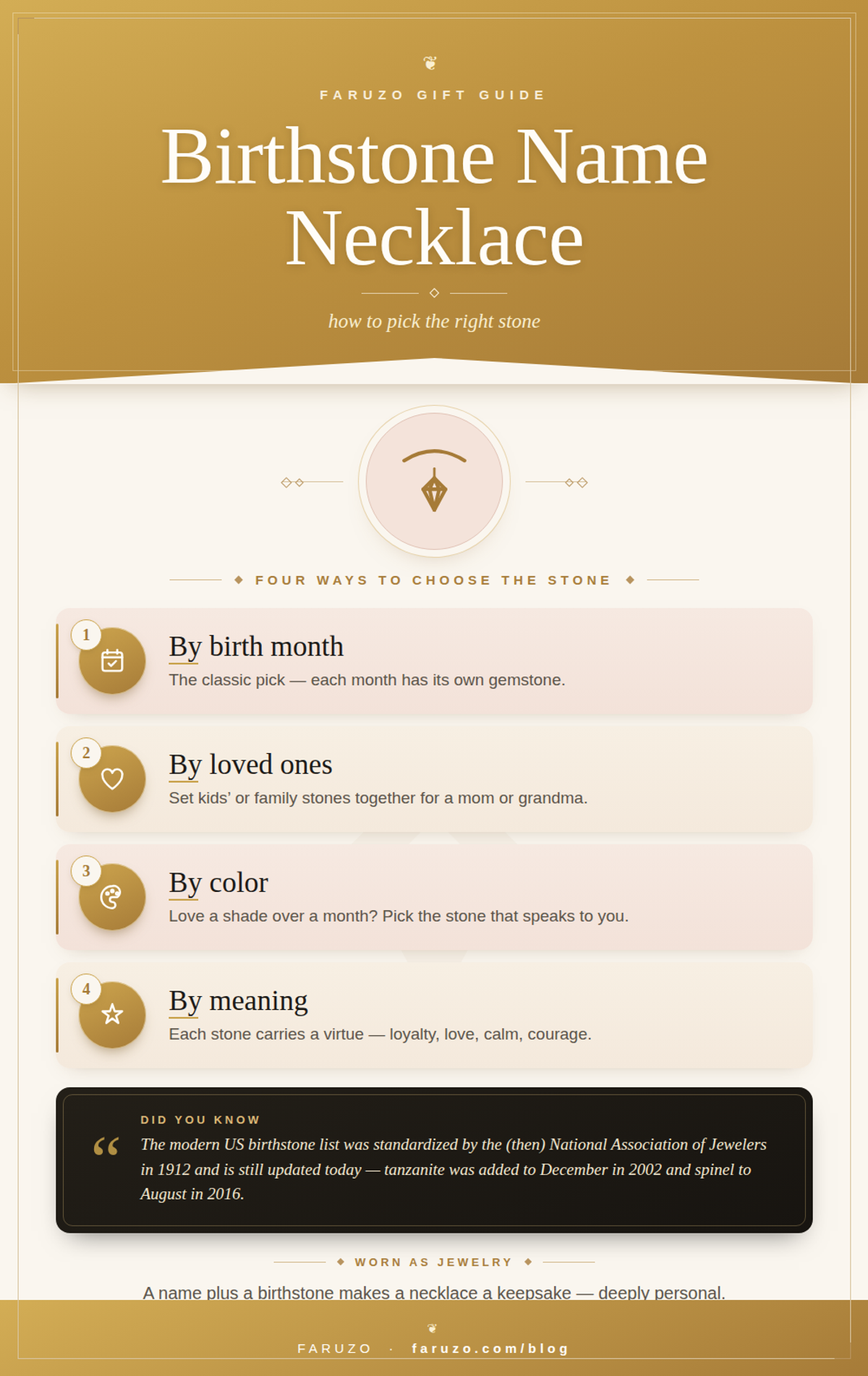
Four ways to choose the stone
Most people assume there is one correct birthstone. There is a default — your birth month — but it is not the only meaningful choice. Any of these four approaches makes a necklace feel intentional:
By birth month. The classic route: match the stone to the month the person was born. It is instantly readable and the safest choice for a gift.
By loved ones. Instead of the wearer's own stone, set the birthstones of their children, grandchildren or partner — the reason mother's and grandmother's necklaces are such enduring gifts.
By color. If someone simply loves emerald green or sapphire blue, choose the stone for the shade. Birthstones aren't a rule — a color they actually wear beats a month they don't.
By meaning. Each stone carries a traditional virtue — sapphire for loyalty, garnet for protection, amethyst for calm. Choosing for meaning turns the piece into a small talisman.
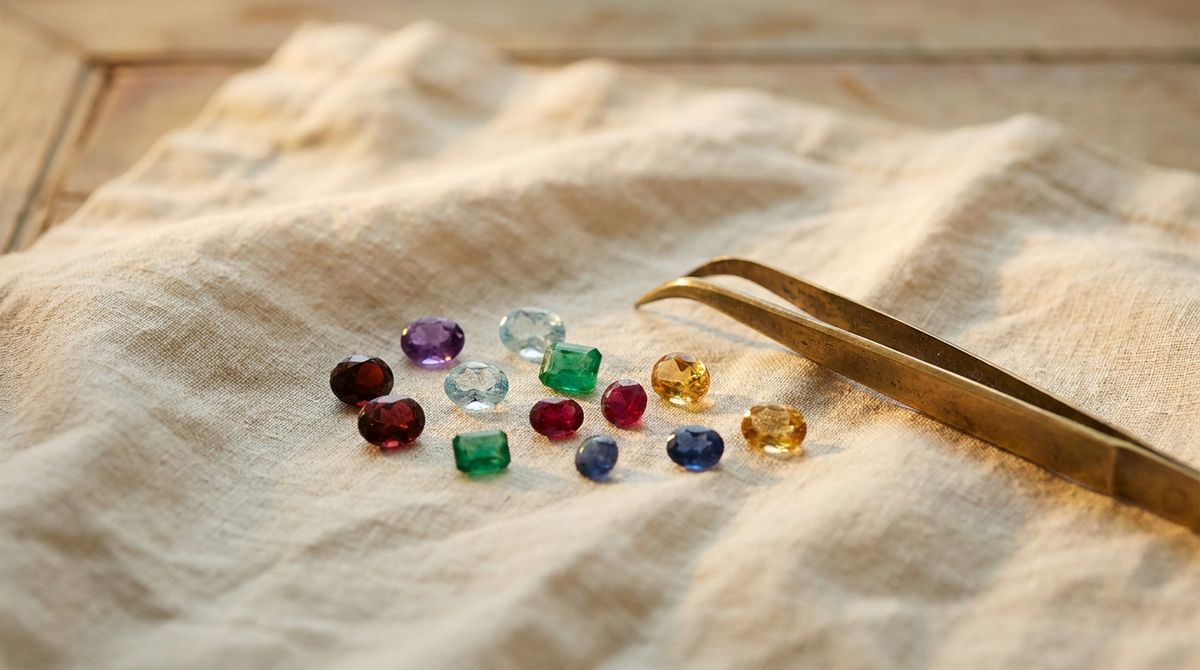
The birthstones by month (modern US list)
This is where competitors get sloppy — you will see lists online that still say “April: crystal” or “October: rose quartz.” Those are older or substitute lists. The standard modern US birthstones, set by the American jewelry trade and updated over the years, are below. For a deeper look at any single month, our full birthstones-by-month guide covers each one:
January — Garnet. Deep red; protection and steadfast friendship.
February — Amethyst. Purple; calm, clarity and balance.
March — Aquamarine. Pale sea-blue; courage and tranquility.
April — Diamond. Clear and brilliant; enduring love and strength.
May — Emerald. Rich green; growth, renewal and devotion.
June — Pearl, Alexandrite or Moonstone. The only month with a soft, luminous trio.
July — Ruby. Vivid red; passion and vitality.
August — Peridot (and spinel). Lime green; light-heartedness and good fortune.
September — Sapphire. Royal blue; wisdom and loyalty.
October — Opal and Tourmaline. Iridescent or pink; hope and creativity.
November — Topaz and Citrine. Golden warmth; joy and abundance.
December — Turquoise, Tanzanite or Zircon. Blue tones; success and calm.
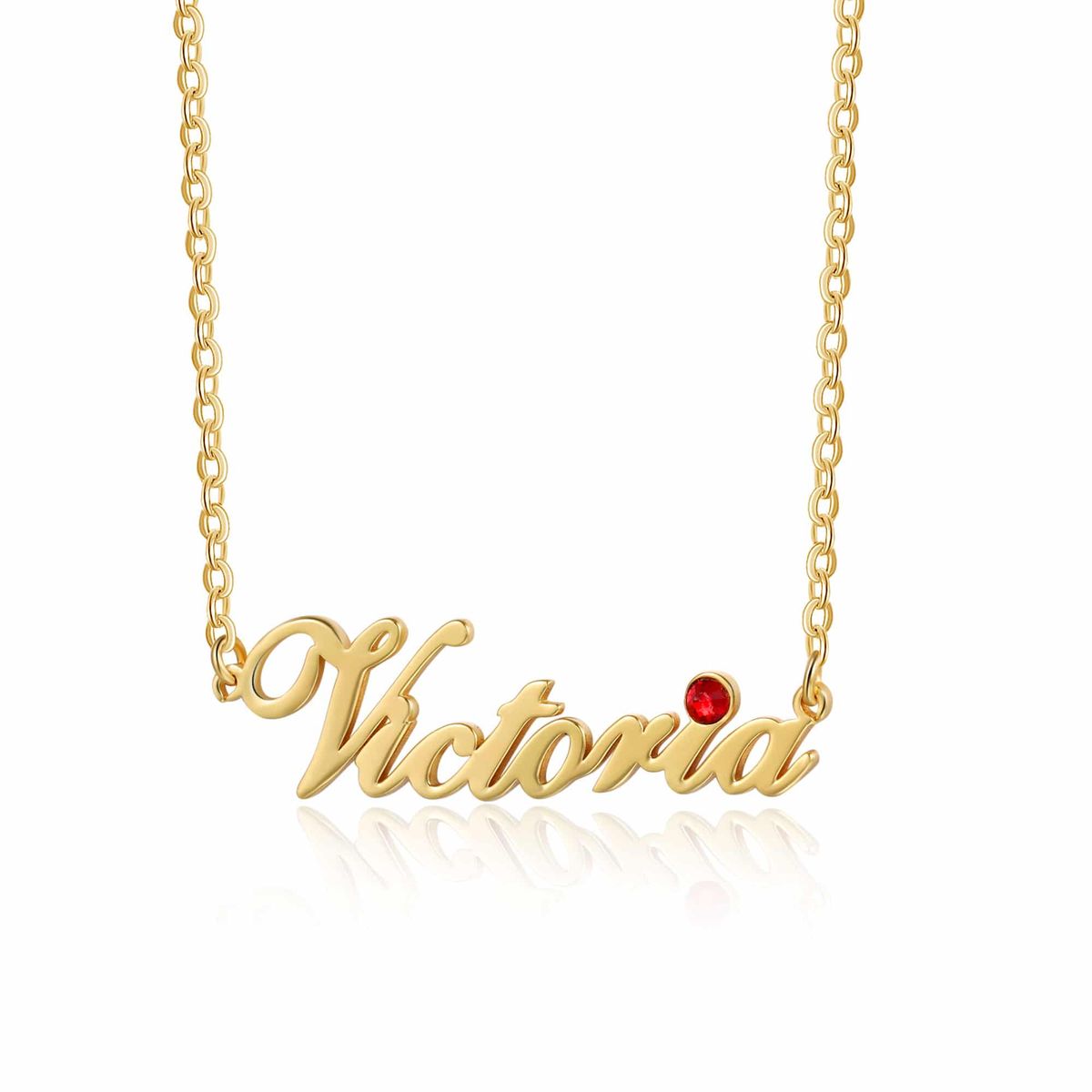
The most popular way to wear it is the simplest: one name, one stone. Our birthstone name necklace sets the gem right beside the script name — small enough to stay elegant, bright enough to catch the eye.
Can you mix multiple birthstones?
Yes — and this is where the necklace becomes an heirloom. Setting several birthstones together tells a family story in color: a mother wearing each child's stone, a grandmother carrying all her grandchildren, a couple combining their two months. There is no clash to worry about; mixed birthstones are meant to look like a gathered family, not a matched set.
A few placement ideas that work well: line the stones up in birth order along a bar or curve; cluster them around a single engraved name; or pair each stone with the initial of the person it represents. For a mother or grandmother piece, keeping the stones small and evenly spaced stops a busy design from looking cluttered.
This multi-stone approach is why a family birthstone necklace has become such a classic Mother's Day, birthday and new-baby gift — one piece that holds the whole family.
Which metal shows a birthstone best?
The metal is the frame around the color, so it matters. Warm gold flatters red, orange and green stones (garnet, ruby, peridot, emerald); cool sterling silver and white gold make blues and purples (sapphire, aquamarine, amethyst) look crisp and icy. If you are choosing between finishes and want it to last, our guide to the best metal for a name necklace compares gold, vermeil, silver and steel in plain terms.
Frequently Asked Questions
How do I choose a birthstone for a name necklace?
Start with the wearer's birth month using the modern list (for example, September is sapphire, July is ruby). If you would rather personalize it further, choose by a color they love, by a stone's traditional meaning, or set the birthstones of their loved ones instead of their own.
Can a birthstone name necklace have more than one stone?
Yes. Multiple birthstones are one of the most popular choices, especially for mothers and grandmothers who want each child's or grandchild's stone together. Mixed birthstones are meant to be worn together and don't clash — they read as a family.
What if I don't like my birth month's stone?
Then choose a different one. Birthstones are a tradition, not a rule. Many months also have more than one option — June (pearl, alexandrite or moonstone) and December (turquoise, tanzanite or zircon) give you a built-in choice — and picking a stone by color or meaning is just as valid.
Are birthstone necklaces a good gift for mom?
They are one of the most-loved personalized gifts, because they combine her name or her children's names with meaningful color. A family birthstone necklace with each child's stone is a classic Mother's Day, birthday or new-baby gift.
What is the modern birthstone list based on?
The modern US list was standardized by the American national jewelers' association in 1912 and has been updated a few times since — tanzanite was added to December in 2002 and spinel to August in 2016. It is the list most US jewelers use today.