Yin and Yang are concepts in Chinese philosophy used to describe contrasting but connected qualities, such as light and shade or activity and rest. They are important in Daoist thought and other Chinese philosophical traditions.
Yin and Yang mean more than the concept of duality; they are the natural order, the cycle of being, and the interrelation of all that exists. This philosophy influenced not only ancient thought but still carries an insight into our modern times about how to live in harmony and balance.
While in this article, we delve a bit deeper into what Yin and Yang really are, their origin, symbolism, and how this philosophy can be applied in practice—from spirituality through personal development to fashion.
Overview to Understanding the Philosophy of Yin and Yang
The philosophy of Yin and Yang is based on the idea of duality: two forces, opposite yet in harmonious relationship. In Chinese, "Yang" means "height, brightness, and the sunny side of a mountain," while "Yin" means "shade, darkness, and the shadowed side of a mountain." Originally, these words described contrasting yet connected qualities observed in nature within ancient China.
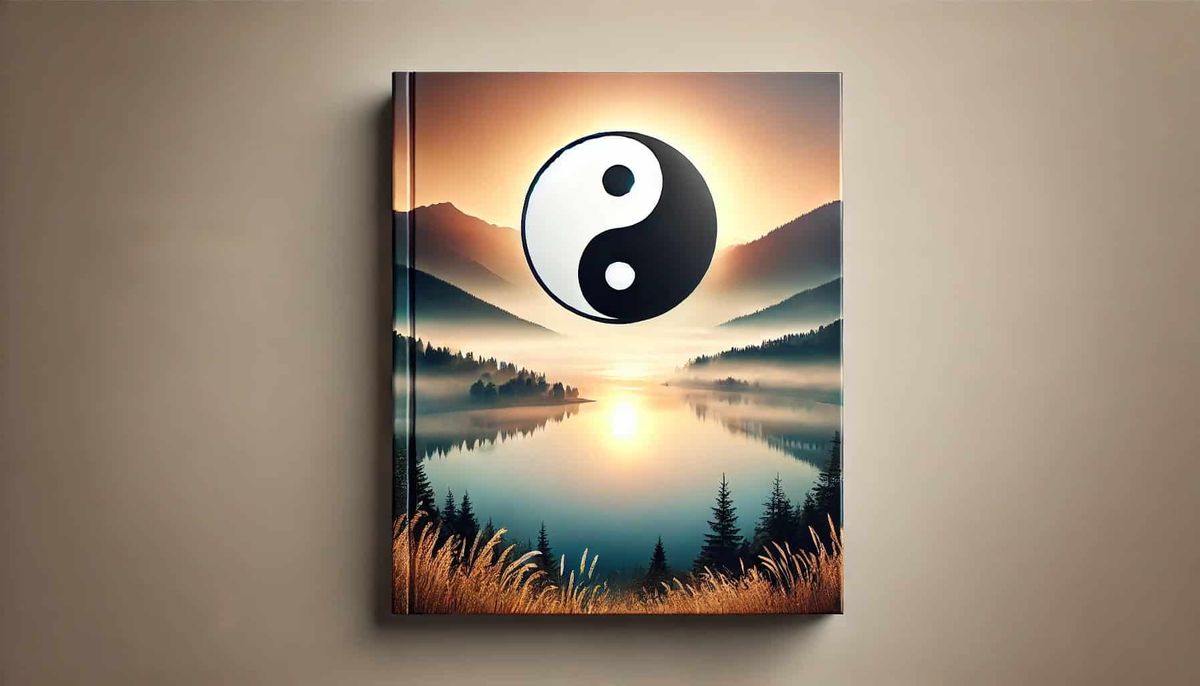
In Chinese cosmology, Yin and Yang describe patterns of interaction and change. The familiar symbol, Taijitu, is a circle divided into black and white curved halves, each containing a dot of the opposite color. Its design illustrates how contrasting qualities can coexist and change in relation to one another.
Key Concepts of Yin and Yang
- Interdependence: Yin and Yang do not exist independently. Like day and night, they are different yet inseparable.
- Constant Motion: Yin and Yang are dynamic; changes are invariably happening to maintain balance. One expands, the other contracts, creating a cycle of change.
- Harmony/Balance: Neither force is superior to the other; both are equally important. Excess or deficiency in either can disrupt harmony, leading to chaos or stagnation.
In essence, Yin and Yang teach us that life’s opposites are natural and part of wholeness. Embracing both aspects moves our lives toward greater balance and harmony.
What Does Yin Yang Mean? The Symbolism of Balance and Unity
The meaning of Yin and Yang surpasses mere oppositions; it represents the unity and interdependence of everything that exists. Here’s a closer look at the symbolic meanings of each force.
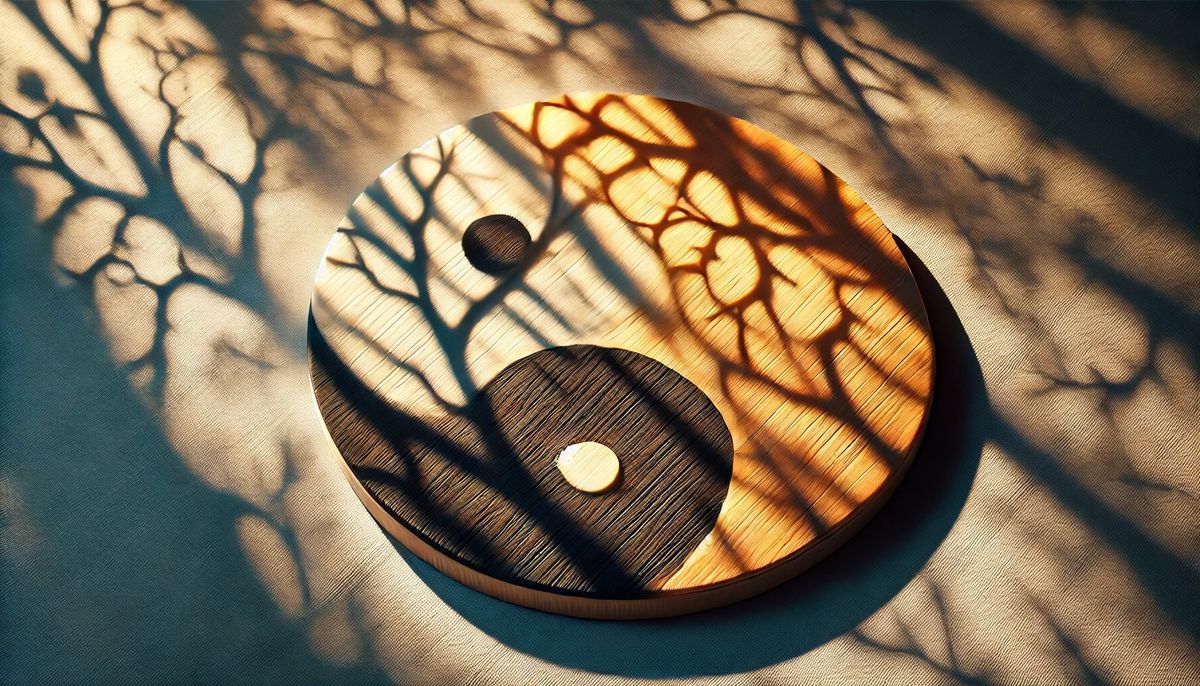
Yin Meaning: Shade, Rest, and Receptivity
Traditional Chinese cosmology associates Yin with darkness, coolness, and rest. Some historical texts also associate it with the feminine. These are symbolic associations, not fixed traits of women or a division of people into two types.
Qualities of Yin:
- Dark/Night: Represents rest, quiet, and introspection.
- Soft and Gentle: Symbolizes calmness, gentleness, and sensitivity.
- Slow and Passive: Reflects patience, receptivity, and observation.
- Rest and Stillness: Yin is associated with rest in contrast to Yang's activity.
As an everyday analogy, Yin can suggest making room for quiet and rest alongside activity.
Yang Meaning: Light, Warmth, and Activity
Yang is traditionally associated with brightness, warmth, and activity. Some historical texts associate it with the masculine, but that does not make action or strength exclusively male qualities. Yin and Yang describe relationships that depend on context.
Qualities of Yang:
- Light/Day: Represents energy, visibility, and vitality.
- Hard and Strong: Reflects strength, resilience, and vigor.
- Fast and Active: Yang energy is dynamic, promoting action and progress.
- Movement and Activity: Yang is associated with movement in contrast to Yin's rest.
As an everyday analogy, Yang can suggest taking action while still allowing time to rest.
The Taijitu: A Circle of Balance
The Taijitu—commonly recognized as the Yin-Yang symbol—represents the relationship between Yin and Yang. This design—a circle split into two swirling halves with dots of opposing colors—expresses how these forces interlink:
- Mutual Inclusion: Each half contains a dot of the other color, indicating that within Yin, there is Yang, and within Yang, there is Yin. This reminds us that nothing in life is entirely one-sided.
- Fluid Boundary: The swirling line suggests that Yin and Yang are in motion, constantly shifting to maintain balance.
- Union within Duality: The circle as a whole represents unity. Yin and Yang are not two separate entities but two aspects of the same reality, existing in harmony.
The symbol offers a way to think about contrasts such as action and rest or light and shade. Each makes sense in relation to the other; neither has to be treated as superior.
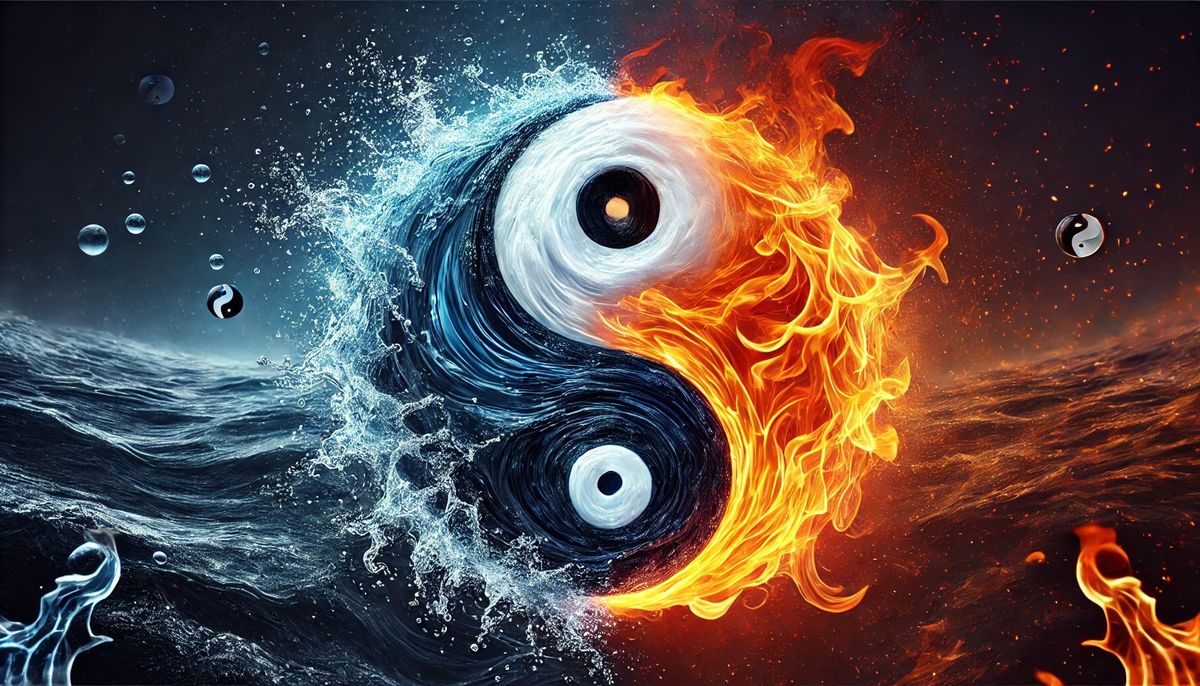
The Concept of Yin and Yang: From Ancient China to Modern Understanding
The written characters for Yin and Yang occur in ancient Chinese oracle-bone inscriptions associated with divination as early as the 14th century B.C.E. These early characters described natural phenomena, including sunlight and its absence. They should not be confused with the familiar black-and-white Taijitu symbol, whose visual history developed much later. Its exact origin is uncertain.
Over time, descriptions of sunlight and shade became part of broader philosophical ideas. The Yin-Yang school was associated with the Spring and Autumn and Warring States periods, and studied seasonal patterns and divination.
By the 2nd century B.C.E., during the Han Dynasty, Yin and Yang had become integral to Chinese cosmology. Philosophers used these concepts to explain the forces driving the universe's transformation and to understand the cycles of nature—from seasonal changes to the rhythms of life and death. During this period, Yin and Yang also became intertwined with other Chinese philosophies, including Taoism and Confucianism, extending their use into daily life, ethics, and medicine.
The Main Applications of Yin and Yang in Chinese Culture:
- Qi (Vital Energy): In traditional Chinese thought and medicine, qi is understood as vital energy, and Yin and Yang are used to explain its patterns and balance. This describes a historical framework, not evidence that a symbol or piece of jewelry improves health.
- Five Elements Theory: Yin and Yang became associated with the Five Phases, or wuxing: wood, fire, earth, metal, and water. This traditional framework was used to describe patterns of change.
- Martial Arts: Many traditional Chinese martial arts, like Tai Chi, embody Yin-Yang principles, balancing hard and soft, offensive and defensive movements.
Over centuries, Yin and Yang have transcended Chinese culture, influencing a wide range of practices and philosophies worldwide, including Western psychology, wellness, and spirituality.
The Color Symbolism of Yin and Yang: Black and White in Balance
The contrasting colors in the Yin-Yang symbol—black and white—carry deep symbolic meaning. Black represents Yin, embodying darkness, calmness, and introspection, while white represents Yang, symbolizing light, energy, and outward expression. The small dots within each half remind us that nothing is absolute; even in light, there is darkness, and even in darkness, there is light.
Symbolic Meanings of the Colors in Yin and Yang:
- Black (Yin): Represents mystery, the unknown, potential, and the nurturing aspects of the universe.
- White (Yang): Represents clarity, openness, activity, and the generative forces of life.
The interplay of these colors reflects life’s constant cycle of transformation: day flows into night, energy fades into rest, and action gives way to reflection. The Taijitu symbol visually reinforces that all things are interconnected, and change is inevitable.
Different Cultures' Ideas on Yin and Yang: Hinduism's Ardhanarishvara and More
The dualism represented by Yin and Yang finds echoes in other cultures and philosophies. For instance, in Hinduism, the deity Ardhanarishvara embodies a similar balance of opposites. Ardhanarishvara is a composite form of the gods Shiva (male) and Parvati (female), representing the unity of masculine and feminine energies. This unity symbolizes the inseparability of these forces and their essential role in creating harmony in the cosmos.
Another example is the Yoni and Lingam in Hindu tradition. The Yoni (feminine) and Lingam (masculine) together symbolize the cosmic union that gives rise to all creation. Like Yin and Yang, these symbols reflect the interplay of opposing forces as a source of balance and the origin of life.
Applying Yin and Yang in Daily Life: Seeking Balance
The principles of Yin and Yang can be applied to everyday life, helping individuals find balance in both personal and professional realms. Here are some practical ways to incorporate this philosophy:
- Balance Work and Rest: Just as Yin represents rest and Yang represents activity, it’s essential to find a balance between work and relaxation. Overemphasis on one leads to burnout or stagnation.
- Make Room for Different Ways of Thinking: You can use the symbol as a reminder to consider both reasoning and intuition. Assigning logic only to Yang and intuition only to Yin is an oversimplification.
- Mindful Relationships: Relationships benefit from a balance of Yin (listening, empathy) and Yang (assertiveness, expression). Practicing both helps maintain harmony and understanding.
- Physical Activity: As an everyday analogy, you can think about making room for movement and rest in your routine.
The Harmony of Yin and Yang in Jewelry: A Concept of Universal Balance
The Yin-Yang symbol is used in jewelry as a personal reminder of balance and connection. People of different genders and beliefs may choose to wear it, while recognizing its roots in Chinese philosophy. Here are some ways it appears in accessories:
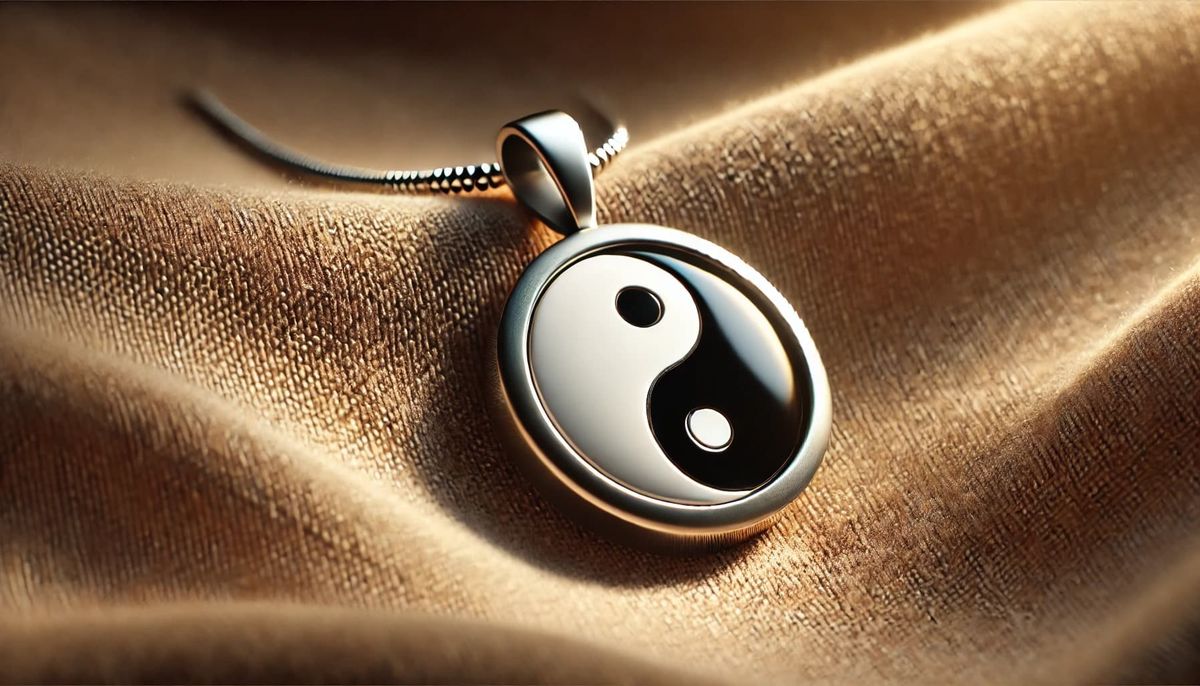
- Necklaces: Yin-Yang pendants add a powerful, eye-catching symbol to any outfit.
- Earrings: These provide a subtle yet meaningful accent, embodying duality and harmony.
- Bracelets: Charm bracelets featuring the Yin-Yang symbol are stylish and can serve as a personal reminder of balance.
A Yin-Yang pendant or bracelet can be a personal reminder to make room for both activity and rest. The jewelry carries symbolic meaning rather than a promise of health benefits.
Embracing the Wisdom of Yin and Yang: Conclusion
The philosophy of Yin-Yang offers timeless insights into living a balanced, harmonious life. By understanding and embracing both Yin and Yang qualities, we can find equilibrium in our personal lives, relationships, and interactions with the world around us. This ancient concept reminds us that all things are interconnected, change is inevitable, and balance is essential.
Whether you incorporate this wisdom into your lifestyle, mindset, or fashion choices, Yin and Yang provide a profound reminder that life’s opposites are not enemies but partners in an eternal dance. Embrace both the light and the shadow, and find peace within the flow of change.
Frequently Asked Questions
Which side of the yin yang is which?
The dark, black half is Yin, standing for shade, night, rest, and receptive energy, while the light, white half is Yang, standing for the sun, day, activity, and outward energy. Each half also carries a small dot of the opposite color, a reminder that a bit of Yin lives inside Yang and vice versa. The name Taijitu refers to this classic swirling circle symbol.
Is it okay for anyone to wear a yin yang necklace?
Whether to wear it depends on the wearer's preferences and beliefs. The symbol has roots in Chinese philosophy, so learning about that background is a respectful starting point. A wearer may choose it as a personal reminder of balance or connection.
Does yin yang have to be a romantic couple thing?
No. Some historical interpretations associate Yin with the feminine and Yang with the masculine, but the concept is broader than gender or romantic relationships. A pendant may carry a personal meaning for one wearer or be shared between friends or partners.
How old is the yin yang concept?
The written characters for Yin and Yang appear in ancient Chinese oracle-bone inscriptions as early as the 14th century B.C.E. The familiar black-and-white symbol is much later, and its exact origin is uncertain. By the Han dynasty, Yin and Yang were prominent in Chinese cosmology and used in philosophical and traditional medical explanations.
What is the difference between yin yang and other balance symbols like Ardhanarishvara?
They come from different traditions. Yin and Yang belong to Chinese philosophy; Ardhanarishvara is a Hindu form combining Shiva and Parvati. Readers may compare their imagery of paired qualities, but that comparison does not make their histories or meanings identical.