What a Mothers Ring Actually Is
A mothers ring is a piece built around the people it names rather than around a gemstone or a design trend. The format ranges from a single name etched into a plain band to a stacked set worn across several fingers, one ring added each time the family grows. What separates a mothers ring from a generic engraved ring is intent: the names, birthstones, or birth years on it are chosen to represent specific children, in a specific order, and that order matters to the person wearing it.
The category spans more ground than most buyers expect before they start looking. Our mom and grandma ring collection holds ten formats built around that idea, and the right one usually comes down to how many children you're representing and whether the wearer prefers one ring or several.
Ring Formats, Compared
Rather than describe every option in prose, here is what distinguishes the main formats:
- Single-name ring — one name, one band, the simplest read. Best for a mother of one child, or a grandmother commissioning a ring for each grandchild separately.
- Two or three-name ring — multiple names on a single band, either engraved in sequence or set on small linked sections.
A three-name ring keeps a family of three on one finger instead of three.
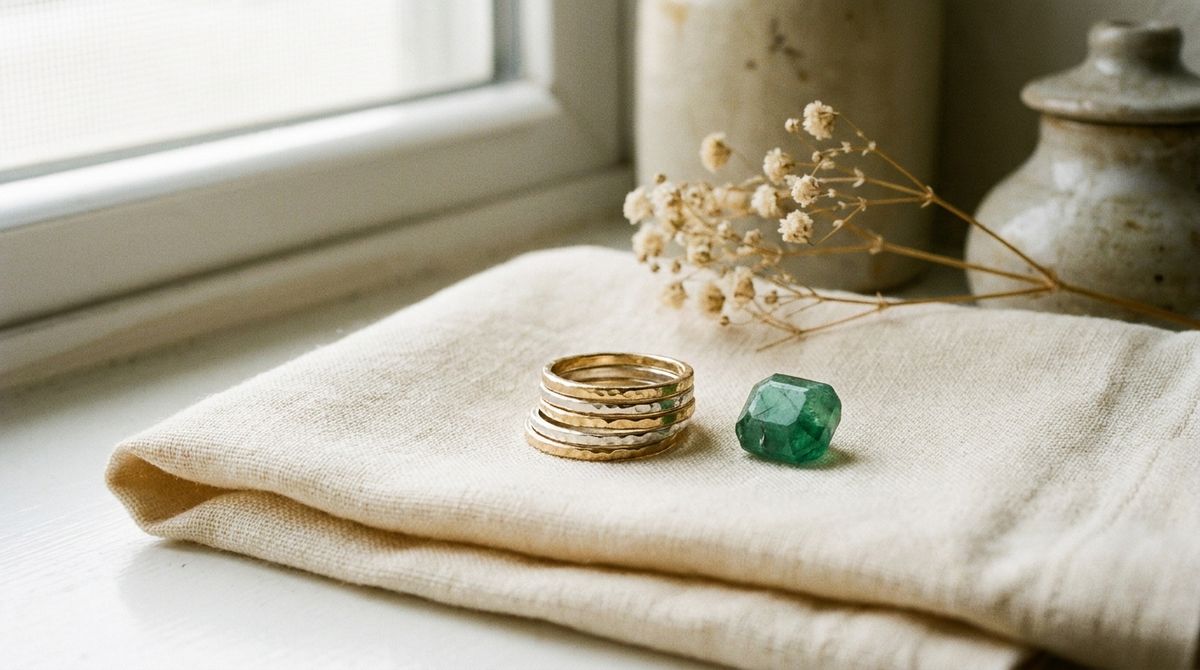
- Stackable name rings — individual thin bands, each carrying one name, meant to be worn together and added to over time.
A stackable name ring set is the format for someone who wants the ring to grow as the family does, without resizing or replacing anything already worn.
- Birthstone ring — a name paired with a stone that marks the child's birth month, either one stone or two set side by side.
A birthstone name ring covers one child; a two-birthstone ring covers two.
- Year ring — the birth year itself, instead of or alongside a name, for a wearer who wants the date rather than (or in addition to) the text.
- Mother-daughter matching set — two rings, not one, meant to be worn by two people rather than stacked on a single hand.
A mother-daughter ring set is built for that pairing specifically.
The same ten formats live together in the mom and grandma ring collection, where you can compare them side by side before deciding.
How Many Names, and in What Order
For a single child, the decision is straightforward. For two or more, two questions decide the format: how many names need to fit on a band that's still comfortable to wear, and does the order matter to the wearer.
Most buyers order names by birth order, oldest to youngest, left to right as the ring sits on the hand. That's the default we'd also recommend absent a strong reason otherwise — it's the convention most mothers and grandmothers expect, and it reads clearly to anyone who knows the family. If there's a reason to break that order — a blended family, a specific request from the recipient, a deceased child included out of birth sequence — say so plainly when you place the personalization, rather than leaving it to be inferred.
Three names is close to the practical ceiling for a single band that still reads clearly and fits comfortably. Beyond three, a stackable set solves the problem differently: instead of shrinking the text to fit more names on one ring, each child gets their own band, and the rings are simply added to the stack as the family grows. That also means a mother of two today can start with two rings and add a third later without replacing what she already has.
Birthstone and Year Rings
A birthstone adds a second layer of personalization beyond the name itself — it ties the ring to a specific month, and by extension a specific birth. For one child, a single stone next to or below the name is the simplest approach. For two children, a two-birthstone ring sets both stones side by side rather than forcing a choice between them.
If you're not certain which stone corresponds to a birth month, a quick reference removes the guesswork — our birthstone finder and a fuller breakdown in birthstones by month both cover the full twelve. Some months have more than one traditional stone (October and December both do), so it's worth checking rather than assuming.
A year ring takes a different approach to the same impulse: instead of a stone, it marks the birth year itself, either as the only detail on the ring or alongside a name. It reads less decoratively than a birthstone and more like a permanent record — some buyers prefer that plainness, particularly for a ring meant to commemorate rather than decorate.
Getting the Size Right When It's a Gift
A mothers ring given as a gift carries one real risk that a necklace doesn't: it has to fit. Here's how to get it right without asking the recipient outright and spoiling the surprise:
- Borrow a ring she already wears on the intended finger and measure the inside diameter in millimeters, or trace its inner edge on paper and measure the circle.
- If you can't borrow a ring, use a length of string or a thin strip of paper: wrap it around the base of the relevant finger, mark where it overlaps, then measure that length flat against a ruler.
- Ask a family member who'd know — a spouse, a sibling, an adult child — rather than guessing. It's a more reliable source than a visual estimate.
- When in doubt between two sizes, size up slightly rather than down. A ring that's a little loose can usually still be worn; one that doesn't fit over the knuckle can't be worn at all.
- If the ring is adjustable or comes in a format with some flexibility built in, note that in the listing before you order — not every format holds a size the same way.
If you're ordering for yourself, this is moot — measure your own finger directly and you're done.
What to Engrave (and What Not To)
The engraving is the part of the ring that can't be changed once it's made, so it's worth getting right before ordering rather than after.
Do:
- Use the name exactly as the recipient would want it read — a nickname if that's what the family actually calls the child, a full first name if that's the more permanent choice.
- Keep spelling and capitalization exactly as you want it to appear; we engrave what's submitted, not what we guess was intended.
- Decide on order before you submit the personalization, not after — birth order is the default, but say so explicitly if you want something else.
Don't:
- Don't mix formats you haven't confirmed fit — a long name squeezed onto a narrow band reads worse than a shorter version of the same name.
- Don't assume a birthstone month without checking it — a birthstone tied to the wrong month undercuts the whole point of choosing one.
- Don't submit a name with a typo expecting it to be caught — proofread the personalization field the same way you would an engraved headstone, because the ring is made from exactly what's entered.
Ring or Necklace — A Quick Note
If you're weighing a ring against a necklace for the same idea — multiple children's names on one piece — the two formats solve different problems. A ring sits on one hand and has limited room, which is why three names is close to its ceiling and why a stack solves "more than three" by adding rings rather than shrinking text. A necklace has more surface to work with and can hold more names, more charms, or a longer sequence without the same space constraint.
We've covered that necklace side — disc and heart pendant formats, how chain length affects how many names actually fit, and how to choose between a necklace, a bracelet, and a ring for a larger family — separately in our grandma necklace guide. If a ring is starting to feel tight for the number of names you need, that's the better next read.
Care and Materials
FARUZO mothers rings are made from 316L stainless steel with a gold-plated, rose gold-plated, or silver-tone plated finish. The steel base is nickel-safe and holds an engraving cleanly because the metal itself is hard — it won't soften or blur the way a plated but softer metal can over years of wear. It also resists the tarnishing and skin discoloration that plated brass is prone to.
To keep the finish looking new, avoid prolonged contact with water, lotion, and perfume, and store the ring separately from other jewelry to prevent surface scratching. Wipe it with a soft, dry cloth after wear.
Shipping and Returns
Personalized rings are made to order once the personalization details are submitted, so processing time runs longer than an off-the-shelf item — check the specific listing for its current production window before ordering if a date matters. Returns are accepted within 90 days of delivery.
Frequently Asked Questions
How many names can fit on a mothers ring?
A single band comfortably fits one to three names before the text has to shrink enough to affect readability. For more than three, a stackable set — one ring per child — keeps each name at a readable size instead of compressing all of them onto one band.
What order should the names go in?
Birth order, oldest to youngest, is the standard convention and what most recipients expect. If there's a reason to use a different order, specify it directly in the personalization rather than leaving it to be assumed.
Can I get a mothers ring with birthstones instead of names, or both?
Both is the more common choice — a name paired with the birthstone for that child's birth month. A ring with birthstones only, no names, is also available in formats that support it; check the specific listing for which personalization fields it offers.
Is FARUZO stainless steel jewelry safe for sensitive skin?
Yes. 316L stainless steel is nickel-safe, which makes it a common choice for people who react to the nickel content in some costume jewelry. It's not labeled nickel-free, but the alloy itself doesn't carry the nickel exposure that typically causes a reaction.