The gold hoop never really left, but what counts as "a hoop" has splintered. A search for hypoallergenic gold hoop earrings alone runs around 1,600 searches a month.
That single word — hypoallergenic — is doing a lot of work. It means the real question isn't just which style looks best, it's which metal won't leave an ear red and itchy by the end of the day.
Here's what's actually trending, how the sizes compare in millimeters, and how to buy a pair that holds up past the first wear.
At a glance
- Hoop diameters run from 10mm to 60mm+ — 25-35mm is the size most guides call the most versatile "everyday" hoop
- "Hypoallergenic gold hoop earrings" gets ~1,600 searches a month — the real question is what's under the plating, not the color
- FARUZO's hoops are plated over 316L stainless steel, not vermeil (silver) or an unspecified alloy — nickel-safe all the way through, not just coated to hide it
- Band width matters as much as diameter — a thick band on a small hoop reads very differently than the same width on a large one
The Styles Actually Trending Right Now
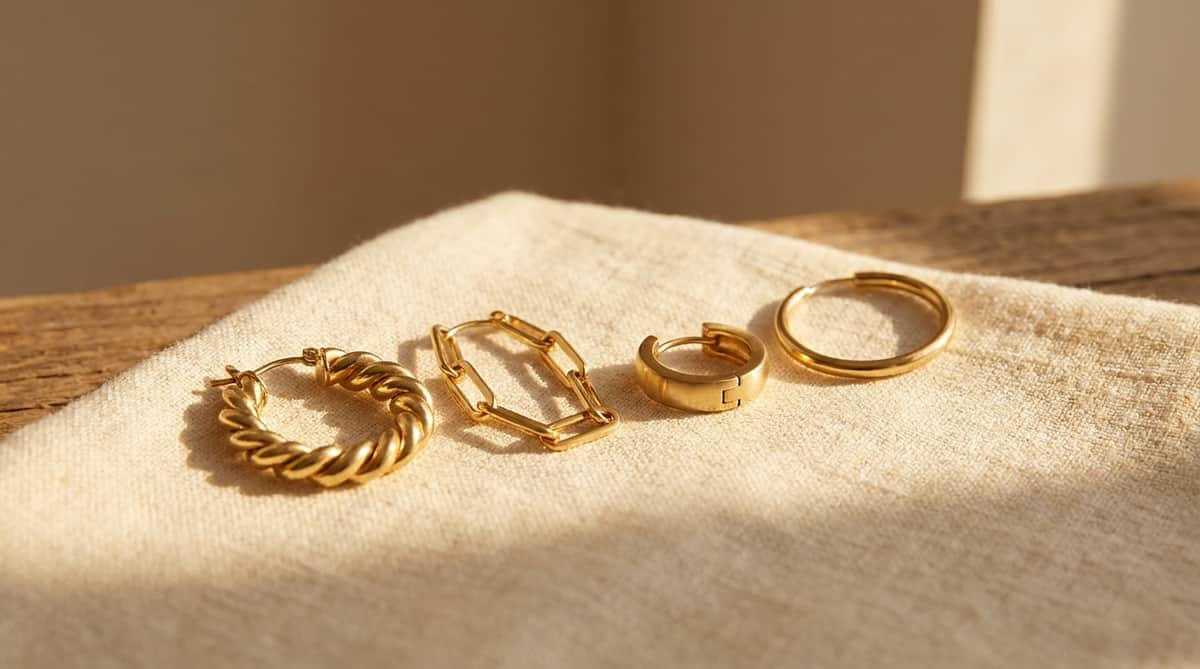
"Hoop" used to mean one shape. Now it's a category with real subtypes, each suited to a different look:
- Chunky hoops — thick-banded, often in twisted rope or geometric-cut textures; the current default for a single statement earring worn alone
- Paperclip-link hoops — a flattened, elongated-oval link shape borrowed from the paperclip chain trend, read as more modern/edgy than a round hoop
- Huggies — small hoops that sit flush against the lobe rather than swinging; see our full huggie earring guide for sizing specifics
- Ear-cuff hoops — styled to look like a hoop but clip on without a piercing, covered in our ear cuff trend guide
- Mismatched pairs — two different hoop styles worn together instead of a matched set, the "personality" pick that's grown fastest on social feeds
Hoop Sizes, Compared in Millimeters
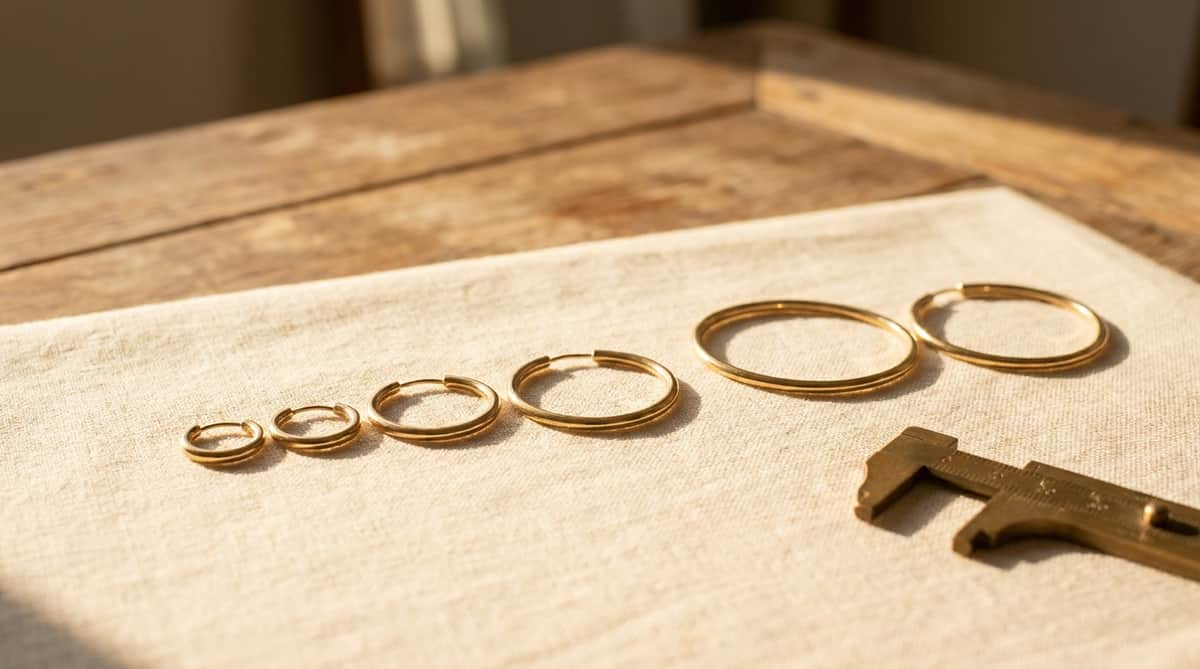
Hoops are measured by inner diameter, and the size changes the whole effect more than metal color or texture does. There's no single industry-standard naming convention — sellers disagree on where "medium" ends and "large" begins — but these are the ranges that show up most consistently:
- 10-15mm — small, close to the ear, barely noticeable under hair; the entry point for a first hoop
- 20-25mm — classic everyday size, visible but not a statement, works under most hairstyles
- 25-35mm — the size most guides call the most versatile "medium," noticeable from across a room without being costume-jewelry territory
- 40-60mm — bold, statement-sized; usually worn alone rather than stacked with anything else
- Band width (separate from diameter) — the thickness of the metal itself, commonly 14-18mm on bestselling chunky styles; a wide band at a small diameter reads very differently than the same width on a large one, so check both numbers before buying
Why "Hypoallergenic" Is the Word Everyone Searches
Hoops sit against the ear for hours at a stretch — longer than a stud in most cases, because the band touches skin along its whole curve, not just at the piercing. That's why "hypoallergenic" and "nickel free" show up in hoop searches far more than they do for a pendant.
The real culprit is nickel — the single most common contact allergen in jewelry. A huge share of cheap gold-tone jewelry is nickel-containing base metal under a thin gold wash, and that coating wears through with daily wear and friction.
FARUZO's hoops are plated over 316L stainless steel, not a nickel-alloy base. 316L is inherently nickel-safe, not just coated to hide it — the metal underneath the plating is the same safe metal all the way through.
That's a different claim than "hypoallergenic gold-filled" or "vermeil" pieces make, where the base metal itself may still contain nickel under the gold layer.
Metal: What "Gold" Actually Means on a Hoop
Shoppers researching this trend run into three different things all marketed as "gold hoops," and they are not interchangeable:
- Solid gold (10k-18k) — gold mixed with other metals for durability, priced by weight and karat; the only option that's genuinely gold all the way through
- Gold vermeil — sterling silver with a gold layer plated on top; the base metal is silver, not steel, and can still cause reactions in people sensitive to silver alloys
- Gold-plated steel — a base metal (ideally nickel-safe steel) with a gold-tone plating; FARUZO's hoops fall here, over 316L stainless steel specifically, not silver or a generic base alloy
None of these is "better" in an absolute sense — solid gold holds its plating forever because there's no plating to wear through, while gold-plated steel is far more affordable and, done over the right base metal, just as daily-wearable for most people.
How to Pick a Size and Style
A hoop that photographs well in a flat-lay and a hoop that's comfortable after eight hours are not always the same hoop. Match the size to how it'll actually be worn:
- Wearing hair down most days → 20-25mm classic size disappears less under hair than a small 10-15mm hoop does, oddly enough, because the bigger ring catches more light
- Wearing it as a solo statement piece → 40-60mm, and skip stacking anything else in that ear
- Multiple piercings in one ear → huggies at the lobe, a small 10-15mm hoop in a second piercing, never two large hoops stacked (they physically collide)
- Sensitive or reactive skin → confirm the base metal before the gold tone — ask what's under the plating, not just what color it is
Frequently Asked Questions
What size gold hoops are trending right now?
There's no single "correct" size — chunky, statement-sized hoops (40-60mm) are trending for a single standalone earring, while the 25-35mm range remains the most commonly recommended "versatile everyday" size. Huggies (10-15mm) are trending separately as a stacking piece rather than a standalone statement.
Are gold hoop earrings hypoallergenic?
Not automatically — "gold" describes the color or plating, not what's underneath it. A gold-tone hoop plated over a nickel-containing base metal can still cause a reaction even though the surface is gold. The base metal is what determines whether a piece is genuinely nickel-safe, which is why FARUZO plates over 316L stainless steel specifically rather than an unspecified alloy.
What's the difference between gold-filled and gold-plated hoops?
Gold-filled has a thicker, mechanically bonded layer of gold over a base metal (traditionally brass), which resists wearing through longer than standard plating. Gold-plated has a thinner electroplated layer. Neither term describes the base metal's nickel content on its own — that depends on what alloy sits underneath, which is worth asking about separately from the gold layer itself.
Can I wear gold hoops every day?
Yes, if the base metal is one that tolerates daily contact — solid gold, genuine gold-filled, or plating over a nickel-safe metal like 316L stainless steel. Daily wear is exactly the condition that wears through a thin, unverified plating fastest, so the base metal matters more for an everyday hoop than for a piece worn occasionally.
How do I know what size hoop will suit my face?
There's no universal rule, but smaller hoops (10-25mm) tend to read as understated and work under most hairstyles, while larger hoops (35mm+) draw more attention to the jawline and are usually worn with hair pulled back or styled away from the face so the earring isn't obscured.
Whatever size or style you land on, check what's actually under the gold before buying. FARUZO's personalized earrings are plated over 316L stainless steel specifically, so the hypoallergenic question is settled before the piece ever touches an ear — backed by a 90-day return window if the fit or size isn't right.
For the smallest end of the hoop spectrum, our huggie earring guide breaks down sizing in more depth, and types of earring backs covers the closures that keep a hoop secure through a full day of wear.