Black wedding bands have moved from a niche menswear pick to a mainstream option in the last decade, and the question people ask before buying one is almost always the same: does black actually mean something, or is it just a color choice? It's both. The material itself carries real history — black stones and dark metals have stood for strength, protection and solemn commitment for centuries — and the modern black ring market is really five different materials wearing the same color, each with very different durability trade-offs.
Where the Symbolism Comes From
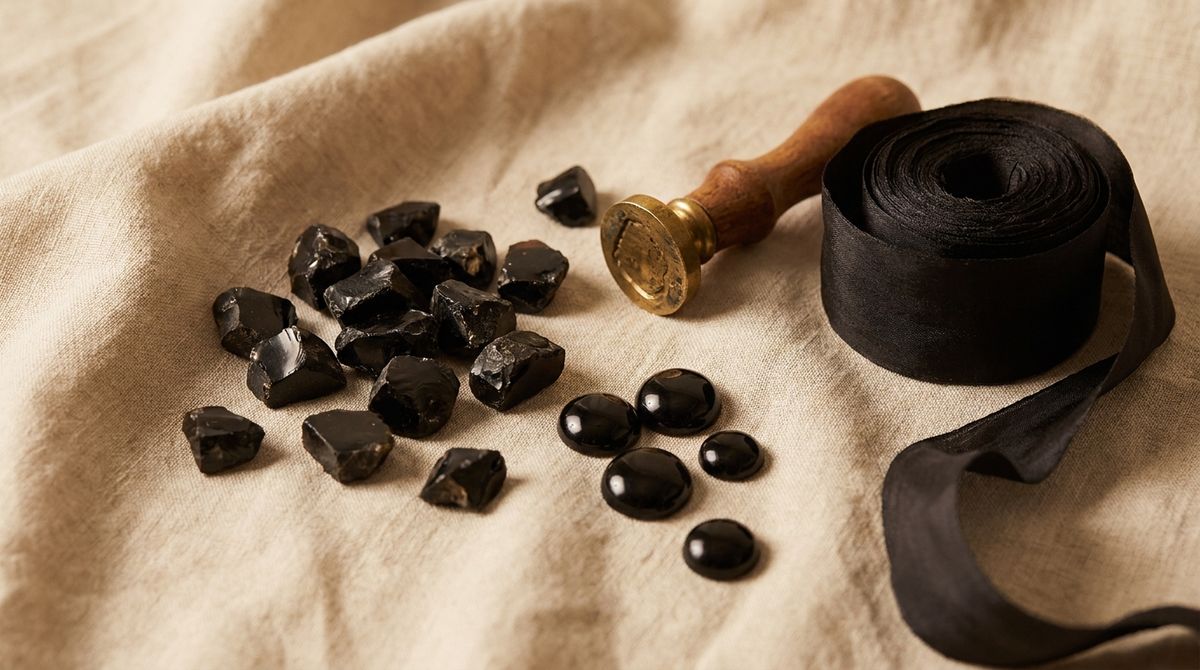
Long before black rings meant anything about weddings, black stones meant something about power and protection. Ancient Greek and Roman signet rings were frequently carved from black onyx, a banded form of chalcedony valued both because its dark, glossy surface held a wax seal impression cleanly and because it was associated with authority, stability and courage. Black remained a serious color in jewelry through the Victorian era, when black gemstones — onyx and jet especially — appeared in mourning and sentimental jewelry as a marker of solemnity, depth and constancy. That's the same cluster of ideas — permanence, gravity, an unbroken bond — that black wedding bands are chosen for today; the color didn't get reinvented for weddings, it got repurposed.
What a Black Band Signals Today
Most people who choose a black wedding band today aren't referencing Roman seal rings consciously — they're choosing it for a more immediate reason: it reads as strong, modern and individual next to the traditional gold band their father or grandfather wore. It's become especially popular with grooms who want a ring that doesn't look like fine jewelry at all, and with couples who deliberately pick two rings in different finishes — a classic metal for one partner, a black band for the other — rather than a matching pair. None of that is a smaller commitment than gold; it's the same promise in a finish that wears more like a tool than an heirloom.
Five Ways a Ring Actually Gets Its Black — and How They Differ
“Black wedding band” isn't one material. It's a color that five very different metals and ceramics can produce, and the durability, resizability and price gap between them is bigger than the visual difference on a finger:
- Black Zirconium — zirconium metal is naturally silvery-white; heating it to a high temperature grows a jet-black zirconium-oxide layer directly out of the surface. Because that black layer is chemically part of the metal rather than applied to it, it doesn't flake or fade with wear. Hardness sits around 9 on the Mohs scale once oxidized — diamond is the only thing that scratches it — and the ring is notably lightweight. Like the other hard options below, it can't be resized.
- Black Tungsten (Carbide) — among the most scratch-resistant ring materials available, second only to diamond in everyday wear. The trade-off is brittleness: tungsten carbide doesn't bend under a hard impact the way softer metals do, it can crack or chip, and like zirconium it cannot be resized once made.
- Black Ceramic — also around 9 on the Mohs scale and effectively scratch-proof in daily wear, lightweight, and generally hypoallergenic. It shares tungsten's brittleness trade-off; both materials can be shattered under deliberate pressure, which sounds alarming but is actually the standard way either ring gets safely removed in a medical emergency, since neither can be cut off like softer metal.
- Black Titanium — true solid-black titanium is uncommon, since titanium itself doesn't oxidize black the way zirconium does; most “black titanium” rings are titanium with a black coating or a black inlay rather than black all the way through. Base titanium is softer than the other three (around 6 on the Mohs scale) but is far more impact-tolerant, and it's the lightest metal of the group.
- Black-Finish Plated Metal — a black coating (black rhodium, black PVD, or a black oxide finish) applied over a base metal, the most affordable route to the look. Because the black is a surface layer rather than grown through the material, it's the option most likely to wear thin at points of repeated contact — the inside edge, a spot that rubs another ring — over years, unlike the through-black zirconium or ceramic options above.
Durability and Daily Wear
The practical question for any ring worn every day is how it holds up against knocks, not just scratches. On the Mohs hardness scale, tungsten carbide and ceramic both sit close to diamond for scratch resistance, black zirconium isn't far behind, and titanium trails all three — but hardness and toughness aren't the same thing. A harder material resists scratching better; a tougher one resists cracking better. Titanium is the softest of the four but the most forgiving of a hard knock against a doorframe or a dropped weight, while the three hardest options trade that flexibility for a surface that essentially never scratches.
Styling a Black Band
A black band doesn't have to match the rest of what you wear. It's common to pair it with a more traditional engagement ring on the other hand, or to build an intentional mixed-metal look rather than a matched set — our guide to mixing metals covers how to do that without it looking accidental. If you're stacking a black band alongside other rings on the same hand, the same rules that apply to any ring-stacking combination apply here too: vary the width and let one ring lead so the stack doesn't compete with itself.
Buying and Caring for a Black Ring
Ask what's actually making the ring black before you buy — an oxidized zirconium or ceramic ring and a plated one can look identical in a product photo but wear completely differently over a decade. If you're set on a black finish but also want the option to resize the ring later (for weight changes, or to pass it down), a plated finish over a resizable base metal is the only option on this list that allows it; the four solid black materials above are all sized once and worn as-is. For a ring built around a different kind of personal, wearable meaning — a name, a date, an engraving — rather than a color statement, FARUZO's personalized rings are made to order in your choice of finish.
Frequently Asked Questions
Does a black wedding band mean anything different from a gold one?
Not in terms of the commitment — a black band represents the same vow as any other metal. The color carries its own older associations (strength, protection, solemnity, drawn from black onyx signet rings and Victorian mourning jewelry), which is why many people choose it deliberately rather than by accident, but it isn't a lesser or more casual choice than gold.
Can a black wedding band be resized?
Usually not, if it's solid black zirconium, tungsten carbide or ceramic — the black color in those materials is either grown out of the metal itself or fired into a ceramic body, so the ring is made at one size and can't be cut and rejoined the way a gold or platinum band can. A black-plated ring over a standard resizable metal base is the exception.
Is black tungsten or black ceramic more durable?
Both sit close together at the top of the hardness scale for ring materials and both resist everyday scratching extremely well. The real difference is in what happens under a hard impact: either can crack or shatter rather than bend, which is a shared trade-off of both materials rather than a advantage of one over the other.
Will a black-plated ring fade over time?
It can. A plated black finish is a coating over a base metal, and coatings wear thinner with repeated contact — against a work surface, against another ring in a stack — over years. Black zirconium and black ceramic don't have this problem, since their black color isn't a separate applied layer.
What's the difference between black titanium and black zirconium?
True black titanium is uncommon — titanium doesn't naturally oxidize to black, so most rings sold as “black titanium” use a coating or a black inlay rather than solid black material all the way through. Black zirconium is different: heating the metal grows a genuinely black, chemically bonded oxide layer directly on its surface, which is why it's the more common choice when a buyer wants black that won't wear off.