The Fascinating Origin of Birthstones
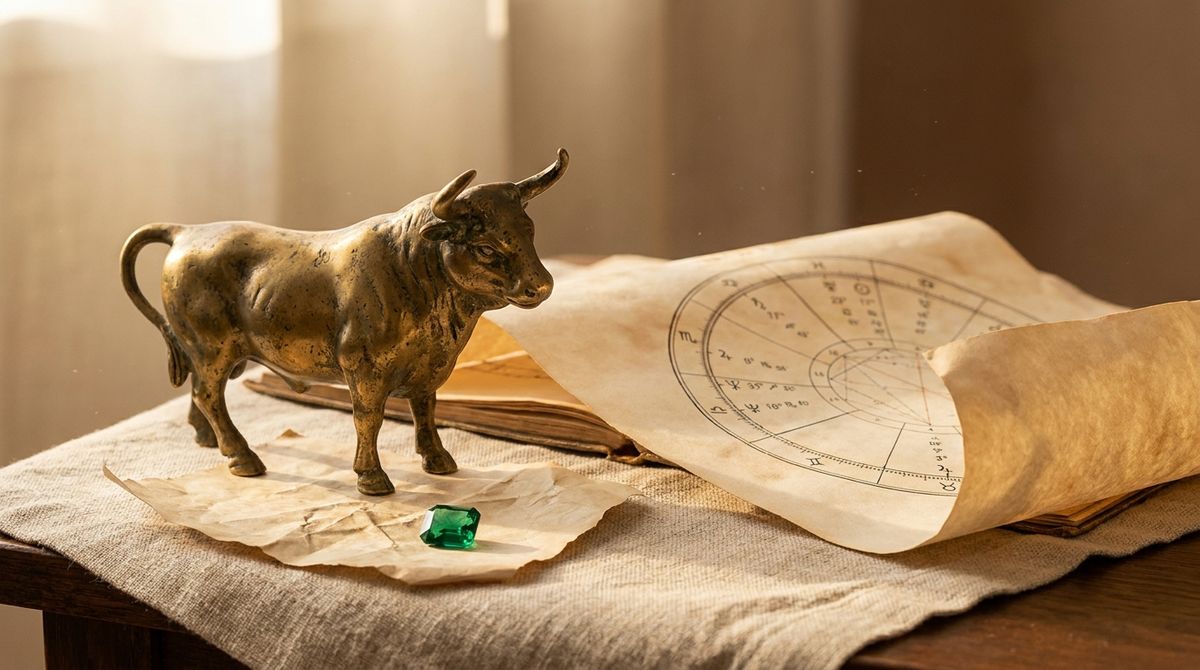
Birthstones have a very ancient history, starting some thousands of years ago with the Breastplate of Aaron described in the Book of Exodus. The high priest Aaron should wear a decorated breastplate, adorned with 12 stone species, which meant the association of one particular tribe each. Later, they evolved onto the symbolic with the linking of the 12 months of year and 12 signs of zodiac.
How Birthstones Became Linked to Calendar Months
While the original stones of Aaron's breastplate symbolized tribes, through the centuries they came to be associated with months and astrology in the following ways:
Ancient Civilizations: Gemstones started to be associated with the zodiac through various civilizations such as the Babylonians and Greeks, who viewed them as possessing metaphysical properties in the influence of the cosmos.
Early Christian Traditions: Over time, during the 8th and 9th centuries, scholars attributed many of the gemstones to particular months and suggested that an individual wear their birthstone for good luck.
Modern Birthstone Lists: In 1912, the American National Retail Jewelers Association, now called Jewelers of America, standardized the list to create the chart we use today.
Birthstones Meaning – What is Birthstones?
A birthstone is a stone assigned to the month of birth, believed to possess unique qualities related to personality, fortune, and spiritual energy. The word "birthstone" is derived from the combination of the words "birth" and "stone," reflecting very well its intimate connection with your month of birth.
The meaning, attributes, and mystical properties are believed to be associated with every birthstone. From the courage of rubies to the purity of pearls, these precious stones imbue jewelry with a deeper meaning for personal significance and are a perfect fit for custom necklaces, rings, bracelets, or charms.
Birthstone Chart: A Month-to-Month Guide to Birthstones
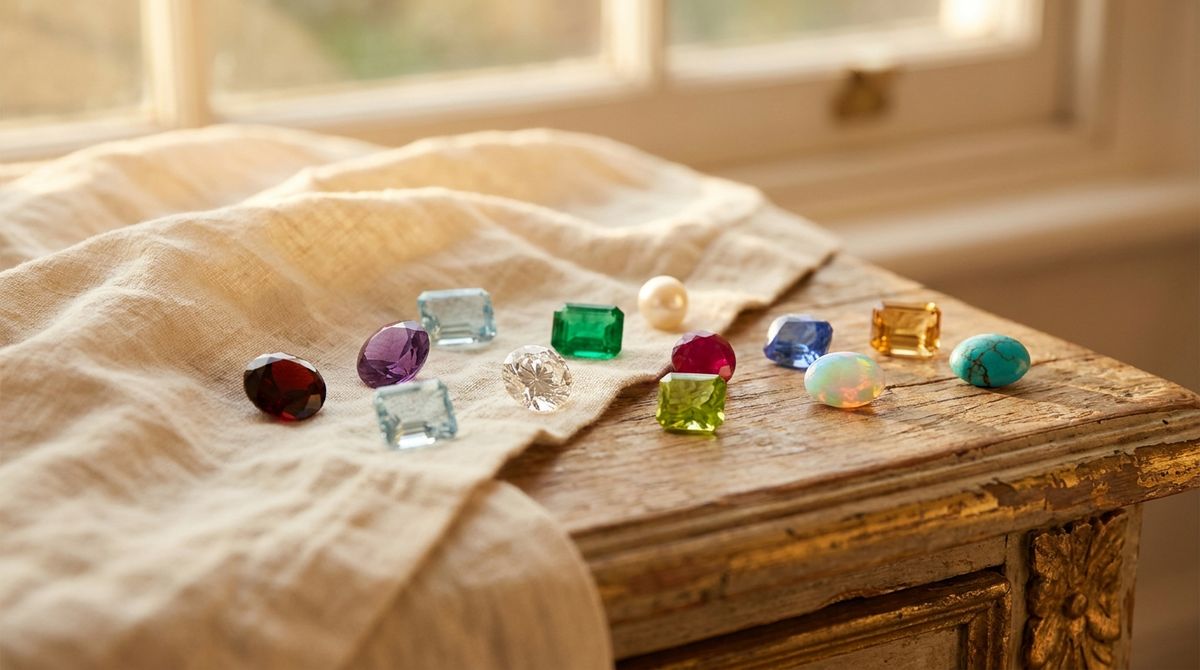
Here are some of the most popular birthstones and the meanings associated with each. Find your birthstone on this chart and learn about the attributes that make it unique.
January – Garnet
Garnet has long been valued since ancient times for its brilliant color and hardness. Often considered to offer protection for travelers, it is likewise believed to ensure growth in creativity and emotional healing. Garnet is January's only widely recognized birthstone — there is no commonly accepted second option for the month.
- Colour: Deep red - though garnets also exist in green, orange and purple hues
- Symbolism: Friendship, trust, and vitality
- Hardness: Mohs 6.5–7.5
- Classic shade: Deep wine-red (pyrope) is the color most associated with garnet
- Color range: The garnet family also spans green (tsavorite, uvarovite), orange (spessartine, sometimes called "mandarin garnet"), yellow (grossularite/hessonite), and rare color-change varieties
- Name origin: From the Latin "granatum" (seed) — deep red garnets resemble pomegranate seeds
- Care: Avoid ultrasonic cleaners on garnet, as they can damage certain varieties; clean instead with warm water, mild soap, and a soft brush
February – Amethyst
Amethyst is of the quartz family and, once upon a time, was considered one of those Cardinal gems: those thought to be precious because they were rare and beautiful. To the ancient Greeks, it was said to protect against drunkenness and inspire calm—a stone of emotional balance.
- Color: Purple
- Symbolism: Peace, loyalty, and clarity
March – Aquamarine
Aquamarine—aquamarine-colored ocean water (a member of the beryl family, as is the emerald)—derives its name from its resemblance to seawater. The sailors of old carried aquamarine with themselves for safe voyages and an unruffled sea.
- Color: Pale sky-blue to blue-green
- Symbolism: Bravery, confidence, tranquility, and clear communication
- Hardness: Mohs 7.5–8
- Name origin: From the Latin "aqua" (water) and "marina" (sea)
- Notable fact: The largest gem-quality aquamarine ever found weighed 110 kg (243 lb) — the "Dom Pedro," carved into an obelisk, now housed at the Smithsonian
April – Diamond
Diamonds are considered the hardest natural substance on Earth and signify unbreakable bonds. Brilliance and rarity give diamonds their symbolic meanings of eternal love and perfection.
- Color: Clear, though rare diamonds can appear in shades like blue, pink, or yellow
- Symbolism: Love, strength, and purity
- The 4Cs: Diamond quality and value are judged on four factors — cut, color, clarity, and carat
- Historical fact: The diamond engagement-ring tradition traces back to 1477, when Archduke Maximilian of Austria proposed to Mary of Burgundy with a diamond ring
- Marketing legacy: De Beers' "A Diamond Is Forever" campaign in the 1940s made diamonds synonymous with romance around the world
May – Emerald
The gemstones have been treasured since ancient times and are considered to be the stone of Venus, the Roman goddess of love. Cleopatra was famously enamored with emeralds — she owned Egypt's emerald mines and wore the stone for its symbolism of fertility and immortality.
- Color: Vivid green
- Symbolism: Growth, wisdom, and rebirth
- Beryl family: Emerald, aquamarine (March), and morganite are all members of the beryl family; their color comes from chromium, and sometimes vanadium
- What makes an emerald an emerald: Only deep, richly saturated green beryl qualifies as "emerald" — lighter stones are simply called "green beryl"
June – Pearl and Alexandrite
Unlike most other gemstones, pearls are an organic process in which mollusks naturally develop within the tissues of mollusk species. It is this natural luster and smooth feel that gives it the place of timeless classics. Its more common usage seems to relate to bridals due to the conventional associations with purity and grace.
- Color: White, cream, pink, gray, black, and other pastel shades
- Symbolism: Purity, innocence, and harmony
June's alternate birthstone, alexandrite, is a variety of chrysoberyl prized for its color-changing effect: green in daylight, red under incandescent light, a phenomenon known as pleochroism.
- Discovery: First found in Russia's Ural Mountains
- Name origin: Named after the future Tsar Alexander II
- Rarity: High-quality alexandrite remains rare, even though it is now also mined in Brazil, Sri Lanka, East Africa, and Madagascar
July – Ruby
Known as the "King of Gems," a ruby is a mineral type of corundum. Traditionally, warriors wore rubies to give them more bravery and strength. Rubies also symbolize love and are given to show one's love for another person.
- Color: Deep red or pinkish-red
- Symbolism: Courage, passion, vitality, love, and vigor
- Hardness: Mohs 9 — the third-hardest natural material, after diamond and moissanite
- Ruby vs. pink sapphire: Both are the same mineral, corundum; whether a stone is classified as ruby or pink sapphire depends on a color-depth threshold
- Inclusions: "Silk" inclusions are normal in rubies and can actually help confirm that a stone is natural rather than synthetic
August – Peridot
Peridot is a rare mineral that forms in the mantle of the Earth, not in the crust. This stone, associated with light and everything good, was a talisman in ancient Egypt to protect against evil spirits.
- Color: Lime green
- Symbolism: Prosperity, luck, and protection
- Olivine family: Peridot belongs to the olivine family, Mohs 6.5–7, and is one of only two gems — the other being diamond — that forms in the Earth's mantle; it is also found in pallasite meteorites
- Peridot vs. emerald: The two belong to entirely different mineral families (olivine vs. beryl) and different hues (yellow-green vs. blue-green)
- Nickname: Peridot is sometimes called the "evening emerald" — unlike most green stones, it keeps a warm gold-green glow under artificial light or candlelight rather than dulling
September – Sapphire
Sapphires are the colored type of corundum, and due to their rich color and hardness, they have become very popular. Traditionally, they were worn by royalty and clergy as a symbol of divine favor and honesty.
- Colour: Blue, but also in pink, yellow, green, violet, and colorless varieties — in fact, every corundum color except red is classified as sapphire
- Symbolism: Loyalty, trust, and wisdom
- Hardness: Mohs 9, the same as ruby, since both are corundum
- Sword and shield: Ruby and sapphire are often framed together — ruby for strength and courage, sapphire for trust and protection
- Heat treatment: Heat treatment is a normal, industry-accepted practice and doesn't make a sapphire any less genuine — the same holds true for citrine (see November)
October – Opal
Opals are made up of silica and water and exhibit a distinctive "fire" of colours. To the ancient world, an opal was magical and thus an embodiment of the rainbow itself. Black opals represent the most rare, while commanding high values due to this striking appearance.
- Color: Multicolored, exhibiting a play-of-color effect
- Symbolism: Confidence, faithfulness, and creativity
November – Citrine and Topaz
Topaz has been valued throughout history for its colors and spiritual properties. In medieval times, it was believed to ward off evil spells and sicknesses; thus, it was an important talisman.
- Color: Golden yellow, blue, pink
- Symbolism: Good fortune, healing, and joy
- Composition: Yellow topaz is an aluminum-fluorine silicate, Mohs 8, associated with strength, love, and wisdom
November's other birthstone, citrine, is a member of the quartz family, Mohs 7, associated with prosperity and energy.
- Buying-guide fact: Most citrine sold today is heat-treated amethyst or smoky quartz rather than naturally occurring citrine — chemically identical, but worth disclosing
- How to tell them apart: Natural citrine has an even golden hue, while heat-treated stones often show visible orange-brown color zoning
December – Turquoise, Tanzanite, and Zircon
Turquoise has been one of the oldest stones used by mankind, frequently appearing in Egyptian tombs and Native American relics. It is still valued for its soothing energy and striking color, hence remaining a popular choice in modern and traditional jewelry.
- Color: Blue/greenish blue opaque
- Symbolism: Protection, good fortune, and serenity
- Composition: Turquoise is a copper-aluminum phosphate, Mohs 5–6, mined for more than 3,000 years across Egypt, Persia, and Mesoamerica
December also has two alternate birthstones: tanzanite and zircon.
- Tanzanite: A variety of zoisite, Mohs 6–6.5, found only near Mount Kilimanjaro and discovered in 1967
- Zircon: A zirconium silicate, Mohs 6–7.5, discovered in some of the Earth's earliest crust — the oldest zircon crystals are more than 4.4 billion years old
- Common mix-up: Zircon is a natural mineral in its own right, unrelated to synthetic cubic zirconia beyond the similar-sounding name
- Zodiac note: Within December, Sagittarius runs through December 21, and Capricorn takes over from December 22–31
What is the Rarest Birthstone?
While diamonds are among the best-known and most desired gemstones, the rarest birthstone is actually tanzanite, an alternative birthstone for December. First discovered in the 20th century in Tanzania, tanzanite is extremely rare because of its few sources. Its striking blue-violet color makes it one of the most dazzling gemstones in the world. Other rare birthstones include alexandrite, which is the stone for June and red beryl. Rare birthstones are fantastic choices with which to make uniquely designed, one-of-a-kind pieces with custom necklaces or other one-of-a-kind statement pieces. Browse the full Birthstones & Zodiac hub for more month-by-month gemstone guides.
Frequently Asked Questions
Can I wear a birthstone that isn't from my birth month?
Absolutely. While birthstones are traditionally tied to your month of birth, many people choose a stone for its color, meaning, or the qualities they connect with. A garnet's symbolism of friendship and vitality or an amethyst's association with calm and clarity can resonate no matter when you were born, which is why birthstones are such a personal choice for custom jewelry.
Do some months have more than one birthstone?
Yes, several months offer more than one option. December, for example, includes turquoise, tanzanite, and zircon, with tanzanite being a rare blue-violet stone first discovered in Tanzania in the 20th century. June is another versatile month, with pearl as its classic stone alongside rarer alternatives like alexandrite, giving you choices for a more unique piece.
Are birthstones linked to your zodiac sign or your birth month?
Both, historically. The tradition began with the 12 stones of Aaron's breastplate representing the tribes of Israel, and over the centuries civilizations like the Babylonians and Greeks connected gemstones to the 12 zodiac signs. The month-based chart most people use today was standardized in 1912 by what is now Jewelers of America, so modern birthstones are organized by calendar month.
What does each birthstone symbolize?
Every birthstone carries its own meaning tied to personality, fortune, and spiritual energy. Rubies represent courage and passion, pearls symbolize purity and grace, emeralds stand for growth and wisdom, and sapphires signify loyalty and trust. These symbolic qualities are part of what makes a birthstone piece feel so personal and meaningful.
Which birthstone is best for a personalized necklace?
There's no single best choice, since the right stone depends on the meaning and color you love most. Popular picks like April's diamond for eternal love, July's ruby for passion, or May's vivid green emerald all make striking centerpieces. Rarer stones such as tanzanite or opal, with its shifting play-of-color, are wonderful for creating a truly one-of-a-kind custom piece. For a closer look at pairing one stone with an engraved design, see our birthstone name necklace guide.