Fifty-five years in, the gift lists agree on something the fiftieth anniversary never had to settle: emerald, on both the traditional and modern guides. But there's a wrinkle worth knowing before shopping for it.
The well-known gift list most couples picture — the one running from paper at year one to gold at year fifty — actually stops at fifty. Fifty-five comes from a separate, later list.
Here's where the emerald association for year fifty-five actually comes from, the alexandrite variant that shows up on a different version of the chart, and emerald anniversary jewelry ideas that work at any budget.
At a glance:
- Traditional and modern 55th-anniversary gift: emerald — both lists agree
- Gemstone-list alternative: alexandrite, from a separate 1957 list
- Why 55 feels less settled than year 50: the original 1937/1948 lists stop at fifty; 55 comes from a later, narrower list
- Durability note: emerald rates 7.5–8 on the Mohs scale but chips more easily than a similarly hard stone like sapphire
Why Fifty-Five Isn't on the Original List
The anniversary gift tradition most people recognize — paper, then tin, then silver, then gold — traces to a 1937 codification, extended at five-year intervals from year twenty through year fifty. A parallel "modern" list, built to give shoppers a gemstone-forward alternative to some of the more utilitarian traditional materials, was published in 1948 by a Chicago jeweler. Both of those original lists end at fifty.
What covers the years beyond that is a separate, later document: a gemstone-specific anniversary list an American gem trade body put out in 1957, extending the tradition further using stones rather than household materials. Fifty-five's answer comes from that 1957 list, not from the 1937 or 1948 ones the fortieth-through-fiftieth posts in this series have been drawing on.
That's worth knowing simply because it explains why year fifty-five feels slightly less universally agreed-upon than, say, year fifty's gold: it's working from a shorter track record and a narrower set of lists.
What the Later Lists Actually Say
The picture for fifty-five is mostly — but not entirely — settled:
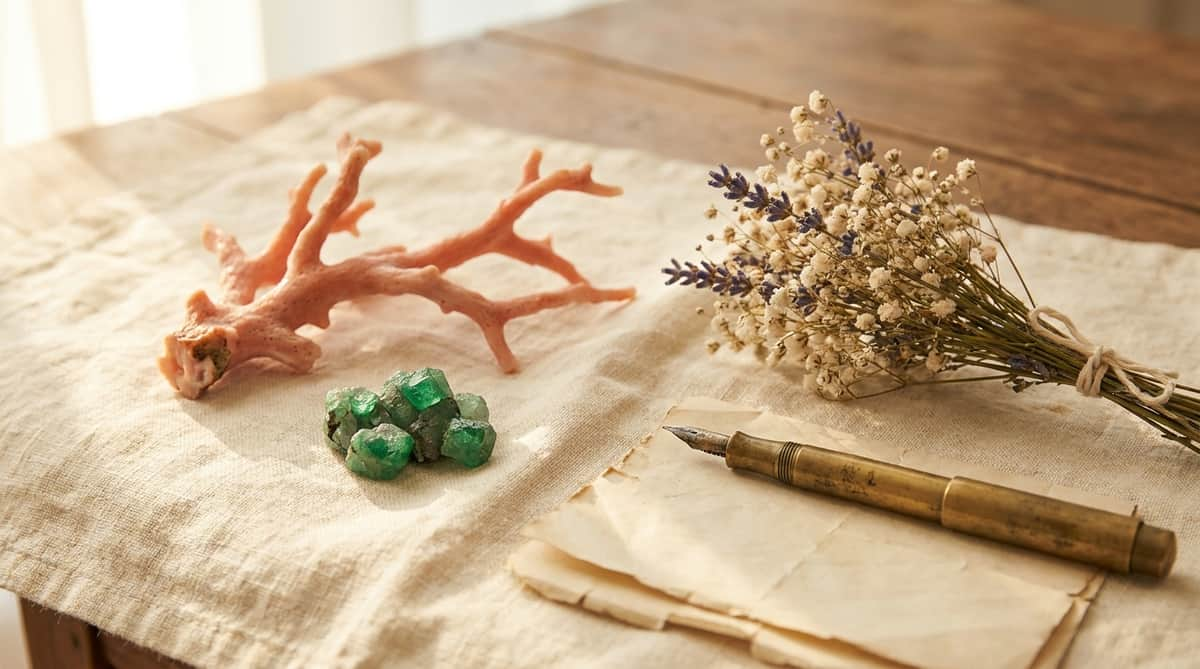
- Traditional gift: Emerald. Emerald is named as the traditional 55th-anniversary gift, with the milestone commonly called the "emerald anniversary."
- Modern gift: Also emerald. Unlike some earlier milestones on this series, where the traditional and modern lists diverge (thirty splits between pearl and diamond; twenty between china and platinum), most current lists give the same answer for both categories at year fifty-five.
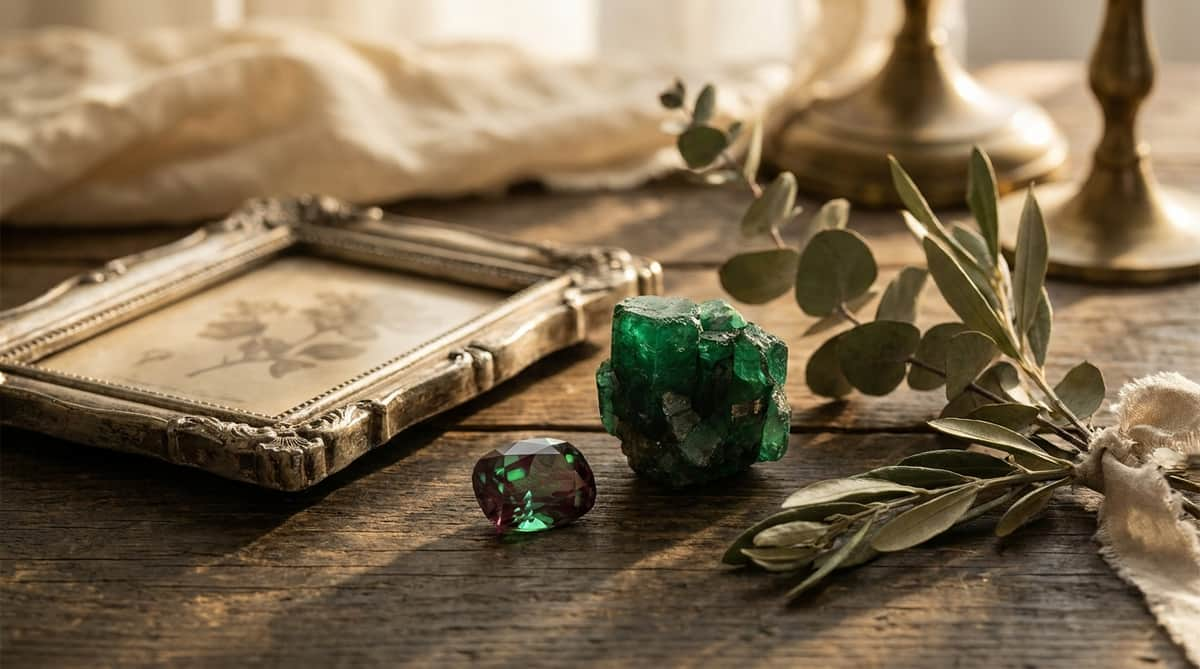
- Gemstone list: Alexandrite. The 1957 gemstone list assigns year fifty-five to alexandrite rather than emerald — a real point of difference between that list and the traditional/modern ones, not a typo or a rounding error.
Why Emerald, Specifically
Emerald's anniversary symbolism leans on qualities the gem has carried in Western jewelry tradition for centuries: a deep, saturated green long associated with renewal, vitality, and — fittingly for a couple fifty-five years into a marriage — enduring devotion.
As a mineral, emerald is a variety of beryl colored by trace chromium or vanadium, typically rated 7.5–8 on the Mohs hardness scale, which makes it reasonably durable for jewelry.
Emeralds are known for natural internal inclusions (sometimes called "jardin," French for garden) that make them more prone to chipping along existing fractures than a comparably hard stone like sapphire. That combination — real durability with real fragility at the same time — is part of why emerald jewelry is traditionally treated a little more carefully than a diamond or ruby piece of similar hardness.
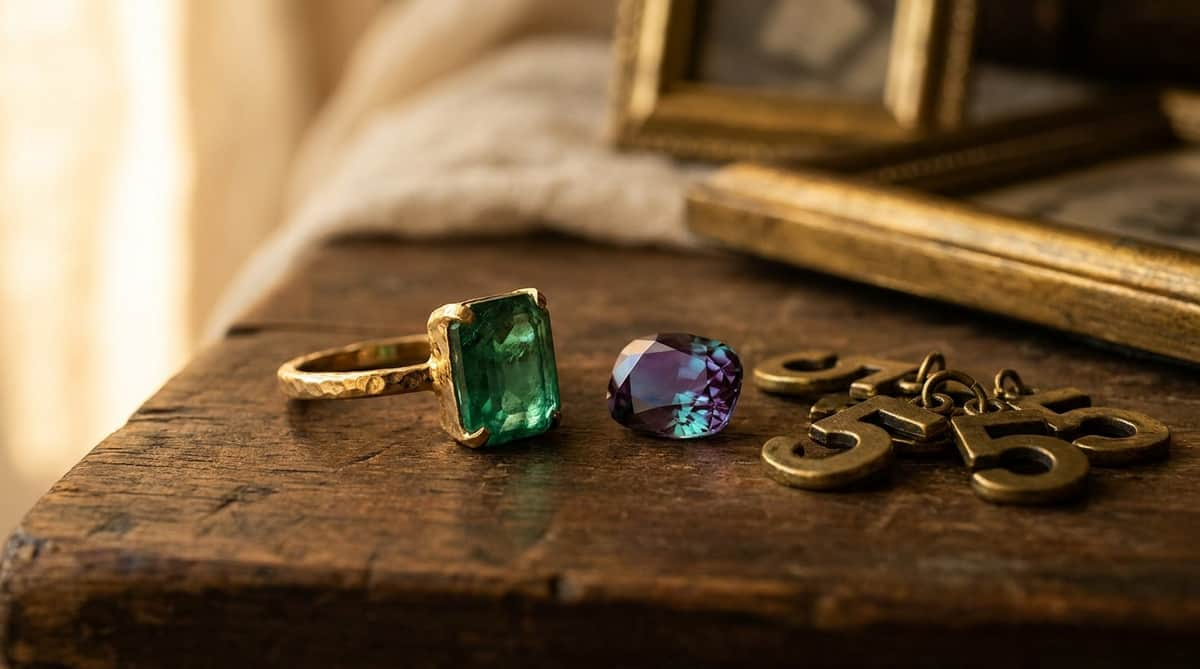
Alexandrite, the gemstone-list alternative, is a variety of chrysoberyl best known for genuinely changing color depending on the light source — green to bluish-green in daylight, shifting toward red or purplish-red under incandescent light.
Natural alexandrite of good quality is rare and priced accordingly, which is a practical reason most anniversary shoppers lean toward emerald or a color-shift simulant instead of a natural stone when fifty-five lands on alexandrite specifically.
Emerald (or Alexandrite) Jewelry Ideas at Any Budget
- Solid emerald, graded and certified: The most literal reading of the traditional gift — a genuine emerald center stone, typically set with extra care given to its fracture-prone nature, best suited to a ring or pendant meant as a true heirloom piece.
- Smaller or included-grade emerald: A real emerald at a lower clarity grade carries the same symbolism at a meaningfully lower price point than a flawless stone, and is a common, honest way to give the real gem without the premium.
- Emerald-green accent, no gemstone: An engraved piece finished or accented in emerald-green tones reads the anniversary color without the cost or care requirements of a genuine stone — a practical option for daily-wear pieces.
- Alexandrite simulant: Lab-grown color-change corundum or synthetic alexandrite mimics the color-shift effect at a fraction of natural alexandrite's cost, a reasonable way to nod to the gemstone-list variant without chasing a rare natural stone.
Ring, Necklace, or Bracelet for Year Fifty-Five
A ring works well when the gift is meant to sit alongside an original wedding set rather than replace it. An emerald-accented band on the opposite hand is a common way to mark the milestone without disturbing decades-old rings already in daily wear. FARUZO's personalized rings collection covers engraved bands that can carry the anniversary date or initials alongside a green-toned accent stone.
For something meant for daily wear rather than special occasions, a pair of engraved couples necklaces marks the year through a shared, everyday piece rather than a single ring. A personalized name necklace with the anniversary date is a simpler, lower-cost way to mark the fifty-fifth without a gemstone purchase at all.
Continuing the Anniversary Series
Fifty-five follows the same approach as the milestones before it in this series: what the actual lists say, where the material comes from, and jewelry ideas that translate the tradition honestly.
See the 40th anniversary gift guide for ruby, the milestone where the traditional and modern lists last agreed before fifty, or the full anniversary gift guide by year for every milestone in one place.
Frequently Asked Questions
What is the traditional 55th wedding anniversary gift?
Emerald. Emerald is named as both the traditional and modern 55th-anniversary gift, and the milestone is commonly called the "emerald anniversary."
Why does the 55th anniversary sometimes list alexandrite instead of emerald?
A separate gemstone-specific anniversary list appeared in 1957, distinct from the older 1937 traditional and 1948 modern lists. That gemstone list assigns alexandrite, not emerald, to year fifty-five — a genuine difference between lists rather than an error.
Why doesn't the original anniversary gift list cover year 55?
The well-known traditional list most people picture — running from paper at year one through gold at year fifty — ends at fifty. Years beyond that, including fifty-five, come from later additions published separately, which is part of why fifty-five has slightly less universal agreement than earlier milestones.
Is emerald durable enough for an anniversary ring worn daily?
Emerald rates 7.5–8 on the Mohs hardness scale, which is reasonably durable, but natural emeralds commonly contain internal inclusions that make them more prone to chipping along existing fractures than a similarly hard stone like sapphire. A protective setting and careful wear matter more for emerald than for many other gemstones of comparable hardness.
What's a lower-cost alternative to a natural alexandrite gift?
Lab-grown color-change corundum or synthetic alexandrite reproduces the stone's signature light-dependent color shift at a fraction of the cost of a natural alexandrite, which is genuinely rare and priced accordingly in fine quality.