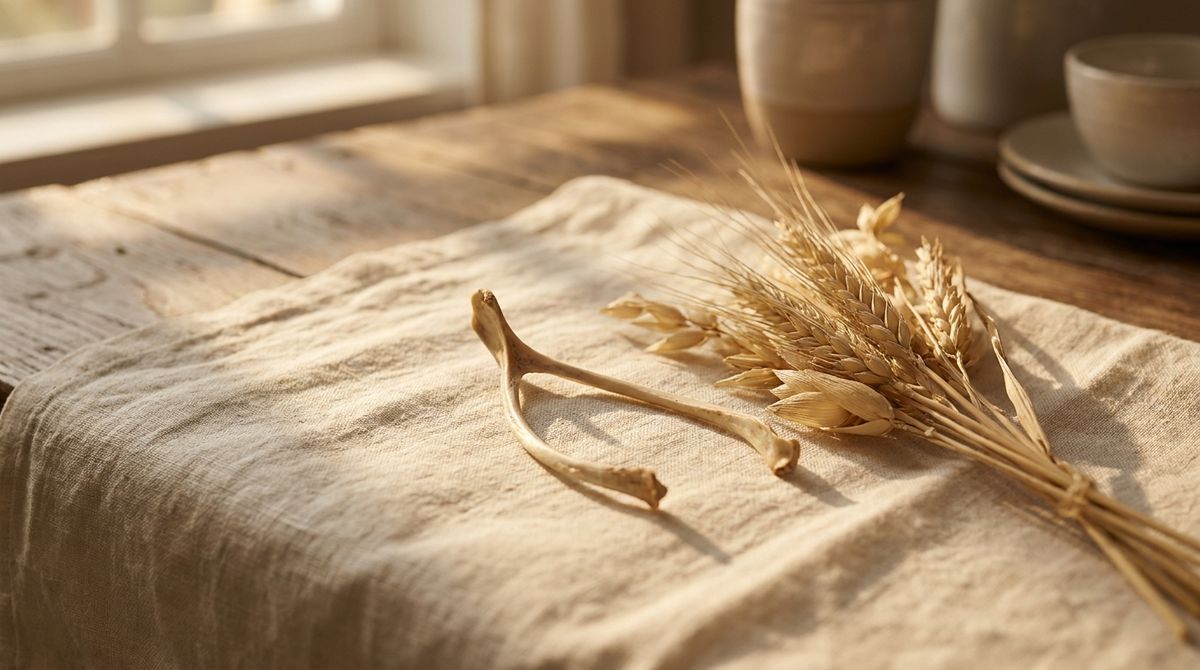
Two people hook their little fingers around a dried turkey bone, someone squeezes their eyes shut, and — snap. Whoever ends up holding the bigger piece gets a wish. It is one of the oldest superstitions still practiced at the dinner table, and almost nobody who plays it knows that the little Y-shaped bone in their hand once belonged to a Roman fortune-teller's chicken.
The wishbone has carried our hopes for more than two thousand years. Here is where it comes from, what it really means, how to win the break — and why the shape quietly became a favorite in jewelry.
What the wishbone actually is
Before it was a wish, it was a spring. The wishbone is a bird's furcula — two collarbones fused into a single springy V at the front of the chest. When a bird flaps, the furcula bends and rebounds like a drawn bow, storing and releasing energy with every wingbeat. It is one of the small mechanical marvels that make flight possible.
The bone is far older than any Thanksgiving. Furculae have been found in theropod dinosaurs — Tyrannosaurus rex and Velociraptor among them — which is part of how paleontologists trace the line from dinosaurs to modern birds. The thing you snap over dessert is, in a real sense, a dinosaur bone.
From Etruscan oracle to your dinner table
The superstition begins with the Etruscans, a civilization that flourished in central Italy before Rome. They kept chickens not only for food but as living oracles, believing the birds could read the will of the gods. In a ritual called alectryomancy — literally 'rooster divination' — a priest would scratch a circle on the ground, divide it into the letters of the alphabet, scatter grain, and read the future from the order in which a sacred hen pecked. It was, more or less, a chicken-powered Ouija board.
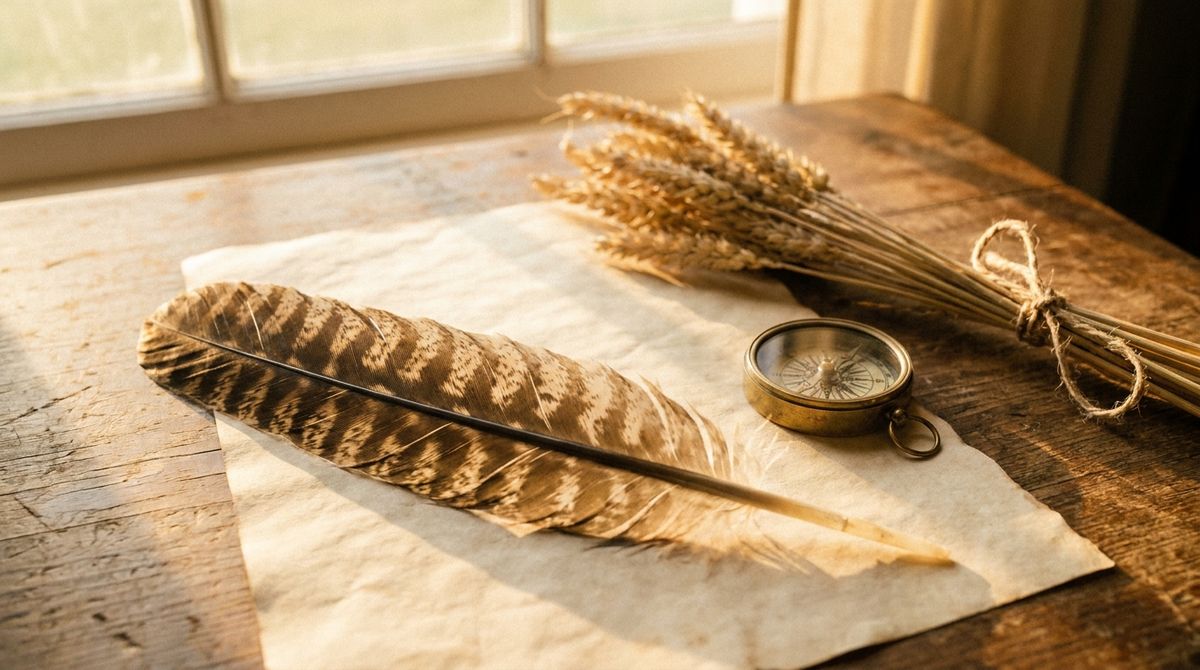
When such a bird was killed, its furcula was treated as sacred. The Etruscans set the bone in the sun to dry and preserve its supposed powers, then stroked it gently while making a wish. No breaking, no contest — just a quiet hand on a lucky bone.
Why the Romans started breaking it
The Romans, who borrowed freely from Etruscan custom, took up the wishing bone too. But there were never enough furculae to go around — one bird, one bone, and a great many people who wanted a wish. The Roman fix was pure practicality: two people took hold of the same bone, each made a wish, and pulled. Whoever came away with the larger piece won. The snap turned a private ritual into a shared game — and gave us a phrase we still use for a sudden stroke of fortune: a 'lucky break.'
Merrythought: the bone crosses to England and America
Roman legions carried the custom across the empire, and it took root in Britain. By the seventeenth century the English had their own name for it — the merrythought — coined for the merry wishes and hopeful thoughts made over it. Settlers brought the tradition to America, where the plentiful native turkey, with its larger bird and larger bone, became the star of the ritual. The plain word 'wishbone' appears in American English around the middle of the nineteenth century, and it stuck.
What the wishbone symbolizes
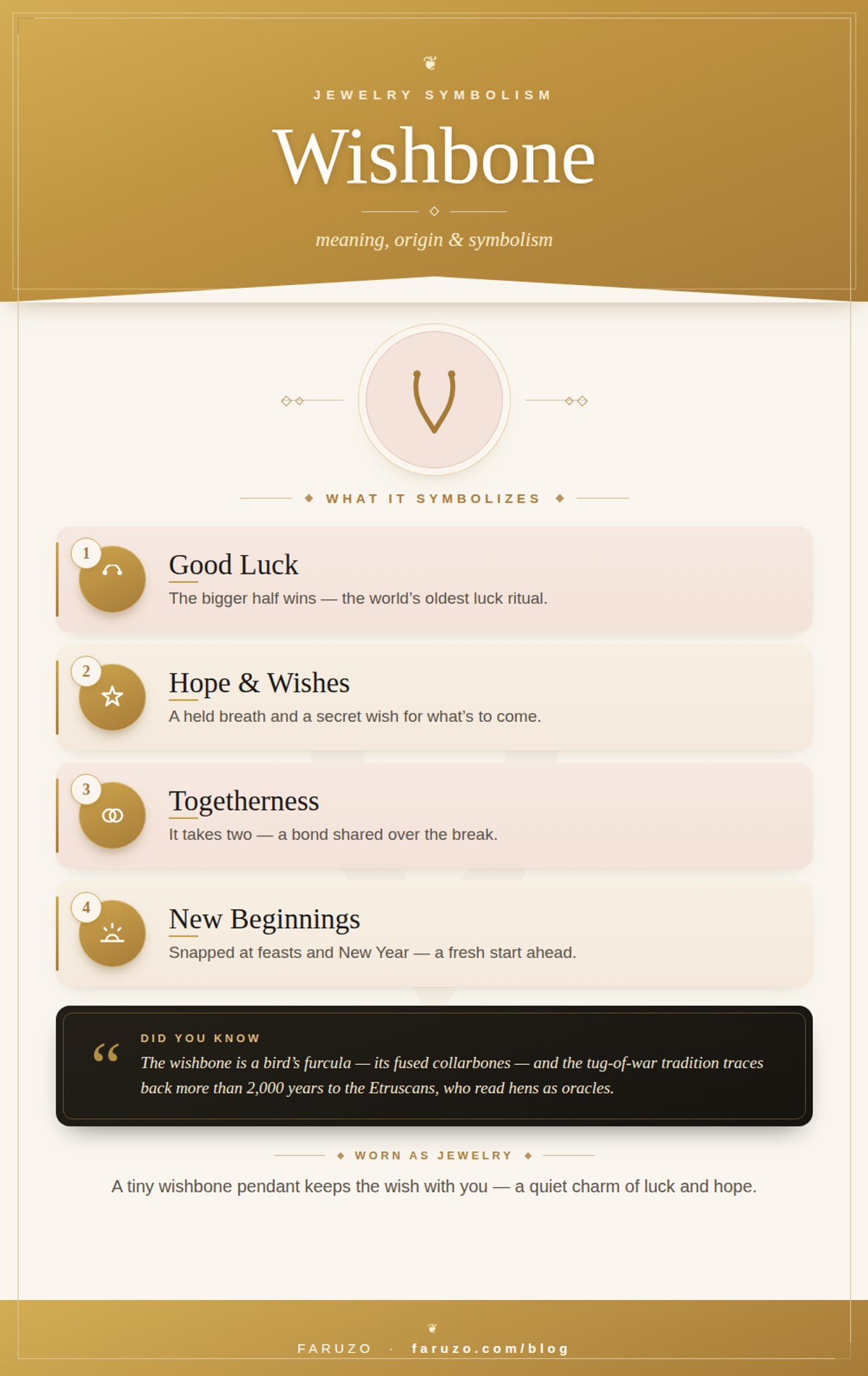
Strip away the history and the wishbone means something simple and generous: hope. It stands for good luck, for wishes worth making, and for the quiet faith that the future can still bend in your favor. Because the ritual needs two people, it carries a second meaning too — connection. Two hands, two hopes, one bone between them.
That is why the wishbone belongs among the other great good-luck emblems. Like the horseshoe, it turns an everyday object into a small charm against misfortune. You will find it in our wider guide to jewelry symbolism, among the symbols people have worn for centuries to keep hope close.
The rules of the break — and who gets the wish
The ritual is refreshingly strict for something so playful. The wishbone has to be dried first; a fresh furcula is too flexible to snap cleanly, so it is usually left out for a few days after the meal. Two people take an end each — traditionally with the little finger — make a silent wish, and pull. The larger piece wins the wish. And if the bone breaks clean down the middle, so both halves are equal? Tradition says both people get their wish: a shared stroke of luck, and arguably the best outcome of all.
How to win the wishbone
There is a little skill hidden inside the superstition. Grip low, close to the thick base of the V where the bone is strongest, and keep your section short so it cannot flex and give way. Hold your hand steady and let the other person do the pulling — the bone tends to break over the highest point of tension, leaving the steadier, lower hand with the longer piece. None of it is guaranteed. But then, neither is a wish.
Wearing the wish
A bone you break only once is a fragile place to keep a wish, which is why the shape moved long ago from the table to the jewelry box. Rendered in gold or silver, the wishbone becomes a slim, elegant talisman — worn at the throat or wrist as a daily nudge to keep hoping, and a natural gift for a threshold moment: a graduation, a wedding, a new job, or a friend facing something uncertain. Give one and you are saying something warmer than 'good luck' — you are handing over a wish.
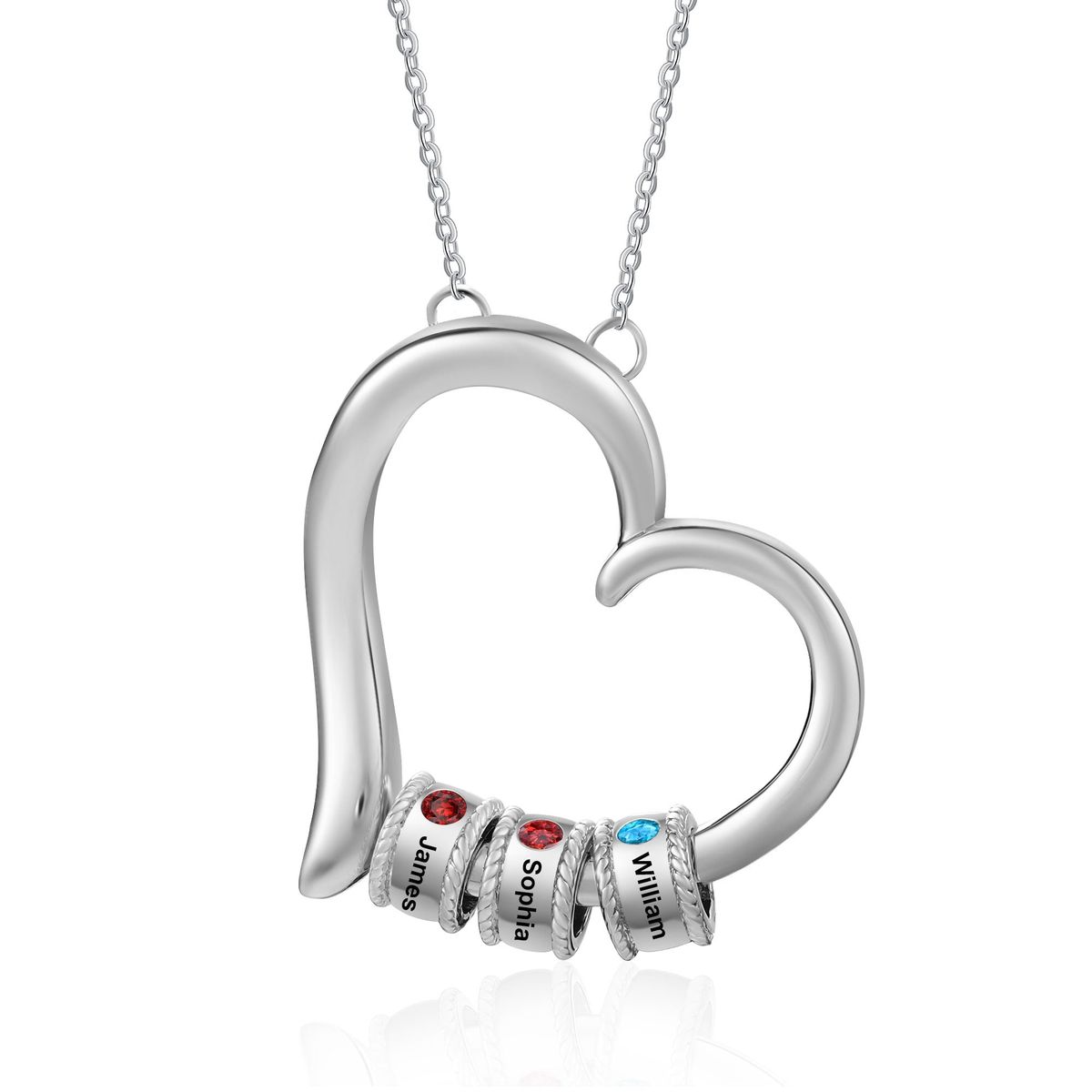
If you would rather carry a name or a birthstone than a symbol, a personalized charm necklace works the same quiet magic: it turns a hope, or a person, into something you can hold.
Frequently Asked Questions
What does a wishbone symbolize?
A wishbone symbolizes good luck, hope and wishes coming true. Because the traditional ritual takes two people, it also stands for connection and shared fortune, which is why wishbone jewelry is often given as a token of support between friends, partners or family.
Is it good luck to wear a wishbone?
Yes — a wishbone is worn as a good-luck charm and a symbol of hope. Many people choose wishbone jewelry as a daily reminder to stay hopeful, or wear it through a new chapter such as a move, a wedding or the start of something uncertain.
What does it mean when the wishbone breaks in the middle?
If the wishbone snaps cleanly in the center so both pieces are equal, tradition holds that both people get their wish. Far from a failed break, it is considered the luckiest result of all — a sign of shared fortune and harmony.
Who gets the wish when you break a wishbone?
The person left holding the larger piece keeps their wish. Both people make a silent wish before pulling, but only the bigger 'lucky break' is said to come true — unless the bone splits evenly, in which case both wishes count.
What is a wishbone actually called?
A wishbone is anatomically called the furcula, from the Latin for 'little fork.' It is formed from a bird's two collarbones fused together, and it works as a spring that helps power the wings in flight.
Is wishbone jewelry a good gift?
Wishbone jewelry makes a thoughtful, meaningful gift for almost any occasion — birthdays, graduations, weddings, or a 'just because.' It carries a universally positive message of luck and hope, and its delicate shape suits nearly every style, which is part of why it is such a popular gift between close friends and family.
For more than two thousand years — from an Etruscan altar to a Thanksgiving table to a fine gold chain — the wishbone has done one small, hopeful job: it gives us somewhere to put a wish. Break one, wear one, or simply make the wish. The tradition asks for nothing more than a little faith that things might go your way.