A push present is a gift — usually from a partner — to mark the fact that a woman just gave birth. The term itself is modern, but the idea behind it isn't.
Jewelry gifts to new mothers show up across cultures and centuries. One of the best-documented early examples is Napoleon giving Empress Marie Louise a diamond necklace after the birth of their son in 1811 — a piece now in the Smithsonian's collection. What's changed is mostly the name and how openly people talk about it.
At a glance:
- Not expected — surveys show only about 38% of new mothers report receiving one, and opinion is nearly split (45% against the custom vs. 28% in favor).
- No fixed budget — treated like any other meaningful occasion gift, not a separate higher bar.
- Four common categories — birthstone pieces, name necklaces, rings, and engraved bracelets, each suited to a different moment.
- Timing is flexible — the hospital, coming home, or a later milestone like the first Mother's Day all work.
Is a Push Present Actually Expected?
No — and most etiquette writers are explicit about that. There's no rulebook here; one widely quoted etiquette line on the subject is simply "the standard is that there is no standard."
A 2004 BabyCenter survey found that only about 38% of new mothers said they'd received one. In a 2015 viewer survey run by Today, 45% of respondents said they were against the custom outright, versus 28% in favor.
That split is worth knowing before assuming a push present is a box to check — for a lot of couples, it genuinely isn't.
What tips the decision for the couples who do give one is usually simpler than tradition: it's a way to mark a specific, hard thing she just did, separate from the gifts a baby shower or the baby's own arrival already bring.
Framed that way, it's less an obligation and more a personal call — same as choosing a push present's timing. Some couples do it right in the delivery room; others wait until she's home and the dust has settled.
What Makes a Push Present Different from a Baby Gift
A baby shower and a nursery full of gear are both about the baby. A push present is deliberately not — it's addressed to her, specifically, for the pregnancy and the birth itself, not for anything the baby needs.
That's why jewelry is such a common choice: it's one of the only gift categories that's unambiguously about the recipient, with no practical use for an infant at all. A stroller attachment says "congratulations on the baby." A necklace with her new title or her baby's birthstone says "congratulations on you."
Push Present Ideas, Compared
These are the personalized jewelry categories that come up most often, compared by what they actually involve rather than just listed:
- Birthstone necklace or bracelet — simplest to personalize (just a birth month, no spelling or wording decisions), typically the lowest-commitment price point of the group, easy to layer with a baby's birthstone alongside an older sibling's on a growing-family piece. See a full breakdown in our birthstone name necklace guide.
- Name necklace with the baby's name — the most personal option since it carries an actual name rather than a symbol, best given once the name is settled (not useful as a delivery-room surprise unless the name was already decided), and the one new moms most often wear daily afterward since it reads as "mom jewelry" rather than a one-off gift.
- Push-present ring — closest in feel to an engagement ring, usually the highest price point of the group, and the one most likely to need a sizing conversation beforehand rather than being a surprise.
- Engraved bracelet with the birth date — a middle-ground option: no name-spelling decision needed in advance (a date is set the moment the baby arrives), and it can genuinely be sourced and engraved same-day in a way a custom name piece often can't be.
None of these is "correct" — the point of a push present, if a couple decides to do one at all, is that it fits her, not a formula.
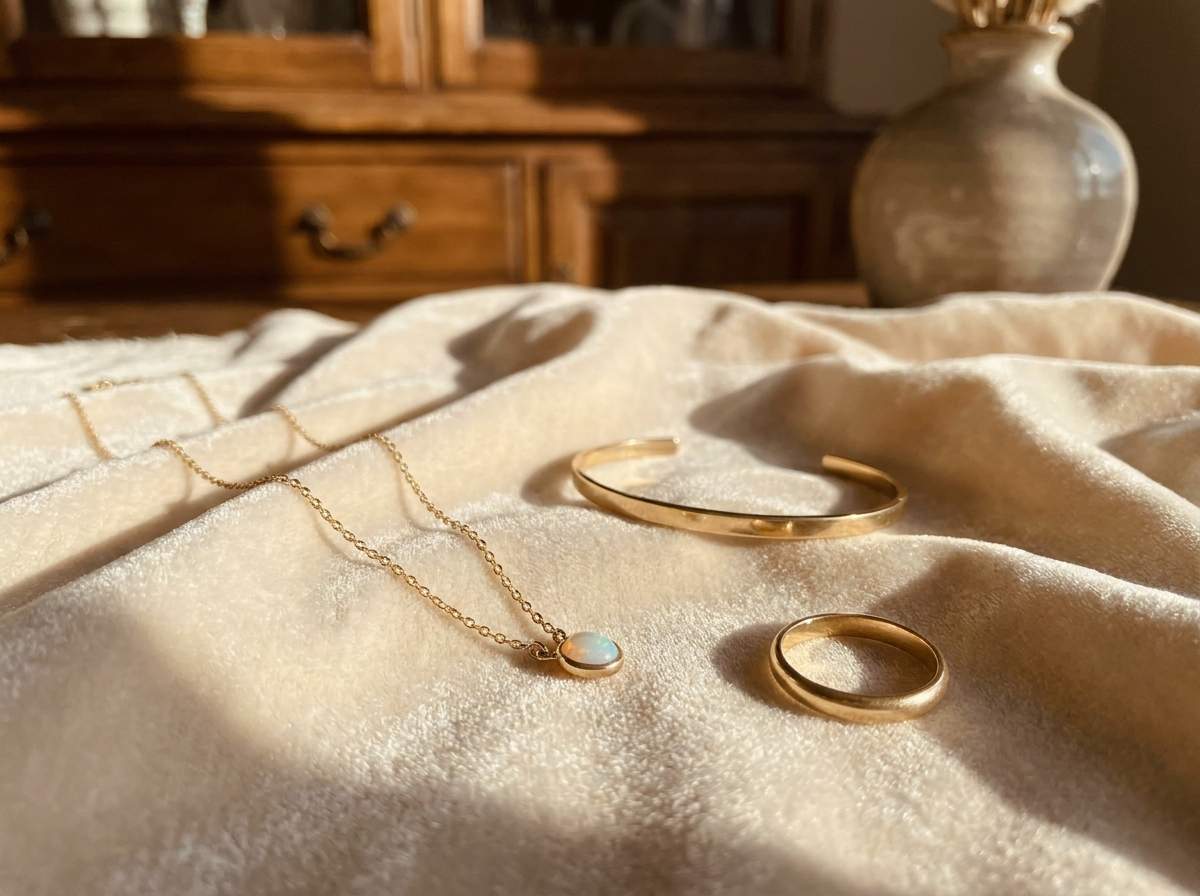
Budget: There's No Standard Here Either
Celebrity coverage of push presents (a Bentley, a diamond-and-sapphire necklace) has skewed public perception of what's "normal." But there's no published consensus figure for an everyday budget — unlike, say, the engagement-ring "X months' salary" guideline that gets quoted (and debated) elsewhere.
Most etiquette writers treat the amount as a personal decision tied to what a couple would ordinarily spend on a meaningful gift for each other — not a separate, higher bar just because a baby's involved.
If a number helps as a sanity check, pricing a personalized necklace or bracelet the way you would any other significant occasion gift is a reasonable starting point.
Timing and How to Handle It
Because there's no etiquette requirement, timing is whatever works:
- In the hospital — a small, low-commitment piece (a birthstone pendant, a simple bracelet) that doesn't need sizing or last-minute personalization.
- After coming home — more room for something that needs the baby's actual name, exact birth weight, or a ring sizing conversation that's easier to have once things have calmed down.
- On a later date — a first Mother's Day or the baby's first birthday, for couples who'd rather not add one more decision to the days right after delivery.
One practical note worth repeating from etiquette writers on the subject: if the gift is meant as a private, between-the-two-of-you gesture, keep it separate from the baby shower, which is the explicitly public gift-giving occasion. Mixing the two tends to dilute both.
If You're Not Sure What She'd Want
The safest personalization choices are the ones that don't require guessing her taste in metal finish or chain style on the day of. A classic name necklace in a neutral everyday metal covers more ground than a trend piece would.
FARUZO's personalized pieces plate over 316L stainless steel, which is nickel-safe for sensitive skin — a genuinely practical point for a new mom who may be wearing a piece daily, including through newborn sweat, spit-up, and however many showers she actually gets to that week.
For more first-year gift ideas beyond the push present itself, our Christmas gifts for new moms guide covers the rest of year one.
Frequently Asked Questions
What exactly is a push present?
A gift, usually from a partner, given to mark childbirth — most often jewelry, though some couples choose practical gifts like help with chores, a spa visit, or money toward the child's future instead. It's informal and optional, with no fixed etiquette rule about who gives one or when.
Is a push present expected or required?
No. Surveys on the subject are mixed — one found only about 38% of new mothers had received one, and a separate viewer survey found nearly as many people opposed to the custom as in favor of it. It's a personal choice, not an obligation.
How much should a push present cost?
There's no standard figure. Celebrity examples (cars, major jewelry) get disproportionate attention, but most etiquette guidance treats the budget the same way you'd treat any other meaningful occasion gift for a partner — scaled to what's normal for the two of you, not a separate higher bar.
When do people usually give a push present?
Whenever it fits. Some give it in the delivery room right after birth, some wait until the new mother is home and settled, and others fold it into a later milestone like the baby's first birthday. There's no required timing.
What's the most popular type of push present?
Jewelry is the most commonly cited category by far, with necklaces and rings mentioned most often. Within jewelry, personalized pieces — a name, a birthstone, or a birth date — tend to feel more specific to the occasion than an unpersonalized piece would.