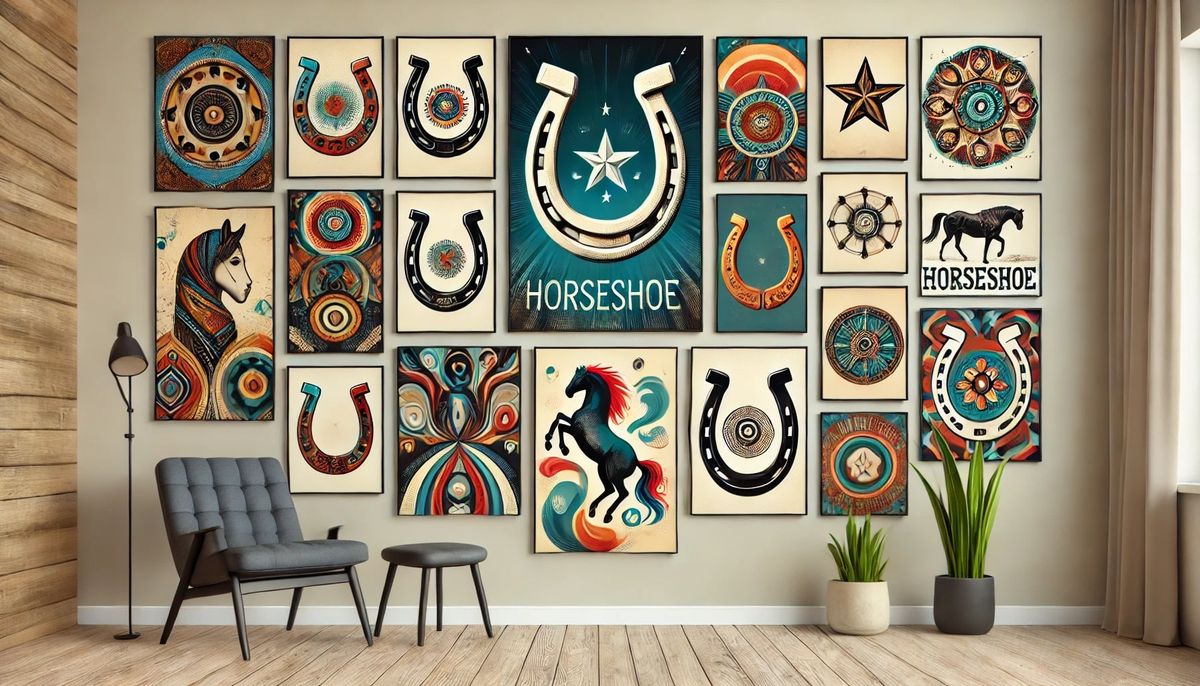
Walk any old farming town in Europe or America and look above the doors: sooner or later you will find a rusted horseshoe nailed over the frame, sometimes generations old, never taken down. No one remembers who hung it. Everyone knows why. Of all the world's luck charms, the horseshoe may be the only one people still install on their homes — and the story of how a piece of farrier's iron earned that job involves a saint, the Devil, and a bargain sealed at a forge.
Why the horseshoe means luck
The horseshoe's power was never one superstition — it is three ancient beliefs fused into a single object. First, the material: iron was long held to be magical because it survives fire, and folk tradition across Europe treated it as a repellent to evil spirits, witches and mischievous fairies. Second, the shape: a horseshoe is a crescent, and crescent forms echoed the moon — fertility, renewal, protection — in cultures from the Mediterranean to the Celtic north. Third, the maker: blacksmiths, who tamed fire and iron at once, were considered lucky men, and objects from their forges carried a little of that charge. Iron, moon, smith — put them together and you get an amulet sturdy enough to last a thousand years.
St. Dunstan and the Devil: the legend behind the door
The tale that fixed the horseshoe above the door comes from tenth-century England. Dunstan — a real historical figure who worked metal and rose to become Archbishop of Canterbury — was laboring at his forge when the Devil himself walked in and demanded to be shod. Dunstan recognized his customer, and instead of shoeing the hooves gently, nailed the red-hot iron on so painfully that the Devil howled for mercy. Dunstan agreed to remove the shoe on one condition: that the Devil swear never to enter any house with a horseshoe hung above its door. The bargain stuck. The story was retold for centuries and cemented in print by Edward G. Flight's 1871 verse 'The Horse Shoe: The True Legend of St Dunstan and the Devil' — and to this day, the horseshoe over the threshold is a quiet re-signing of Dunstan's contract.
Why seven nails?
Tradition holds that a horseshoe should be fastened with seven nails — and the number is no accident. Seven has been the West's luckiest number for millennia: seven days of the week, seven classical planets, seven wonders. A found horseshoe with all seven nails still in place was considered the strongest charm of all, and older custom ranked a found shoe far above a bought one — luck, the thinking went, should arrive by accident, like the shoe itself.

Up or down? Both answers are right
The great horseshoe debate has two honest camps. Hung with the ends pointing up, the shoe is a vessel: it collects good luck and holds it, and turning it down would spill the fortune out. Hung with the ends pointing down, it is a fountain: luck pours continuously over everyone who passes beneath it — which is why blacksmiths themselves often hung the shoe points-down over the forge door. Neither version is older or more correct; nineteenth-century illustrations show both. Choose the story you prefer: hoard your luck, or shower it on your guests.
The horseshoe across cultures
Though the Dunstan legend is English, the charm traveled everywhere horses did. Celtic communities treated iron as proof against the fair folk, and crescent-shaped amulets guarded thresholds long before Christianity arrived. Romans nailed iron talismans to ward off plague and evil; Mediterranean and Middle Eastern traditions folded the crescent's lunar protection into their own doorway charms. By the time the horseshoe crossed the Atlantic with European settlers, it was already a universal shorthand for good fortune — which is why it hangs today in ranches in Texas, pubs in Ireland and logos of everything from boots to casinos.
Wearing the luck: horseshoe jewelry
A charm that guards a doorway shrinks naturally to guard a person. Horseshoe pendants took off in the Victorian era — often worn points-up, tiny vessels of fortune at the collarbone — and never left. Today the horseshoe sits alongside the wishbone and the other luck emblems in our jewelry symbolism guide as a gift that says: I want good things to find you. It suits threshold moments — a new home, a new job, a wedding, exam season — and pairs beautifully with a personalized piece carrying a name or date, so the luck knows exactly whom it belongs to.
Frequently Asked Questions
Is it better to hang a horseshoe up or down?
Both traditions are legitimate. Ends-up turns the shoe into a cup that gathers and stores luck; ends-down makes it a spout that pours luck over everyone who walks beneath. Blacksmiths traditionally hung theirs points-down over the forge door. Pick the meaning you like — the protection, by legend, works either way.
Why is a horseshoe considered lucky?
Three reasons braided together: it is made of iron, which folklore held could repel evil; it is shaped like a crescent moon, an ancient symbol of protection and fertility; and it comes from the blacksmith's forge, a trade long considered charmed. The St. Dunstan legend — the Devil's promise never to enter a home with a horseshoe above the door — sealed its reputation.
Is a found horseshoe luckier than a bought one?
Tradition says yes. A horseshoe found by chance — ideally with its nails still in it — was considered the most powerful charm, because luck is supposed to arrive uninvited. A gifted horseshoe ranks next, carrying the giver's good wishes; a bought one still works, the old-timers allowed, but you're expected to add the luck yourself.
What do the seven nails on a horseshoe mean?
A horseshoe is traditionally fixed with seven nails, and seven is the classic lucky number of Western folklore. A shoe that kept all seven was prized; each nail was sometimes read as an extra measure of fortune.
Can you wear a horseshoe, or does it only work on doors?
Horseshoe jewelry carries the same symbolism in wearable form and has been popular since the Victorian era. Most wearers orient the horseshoe points-up, the 'holds your luck' position, though points-down — luck flowing to you — has its fans too. Either way it makes a meaningful gift for new beginnings.
Does a horseshoe ever lose its luck?
Folklore says the charm endures as long as the shoe hangs — which is why old horseshoes are left in place for generations. If one falls, tradition treats it as spent rather than cursed: thank it, and hang another.
A crescent of iron, seven nails, and a saint's hard bargain: the horseshoe has guarded doors for over a thousand years and shows no sign of retiring. Hang it up to keep your luck, hang it down to share it — or wear one, and take the whole arrangement with you.