
Once upon a time, choosing an engagement ring—or any fine jewelry, really—felt simple: you saved up, bought a diamond, and that was that.
But now?
Moissanite has entered the chat.
And it’s shaking up all the old rules.
Suddenly, you’re not just picking between ring styles—you’re asking bigger questions:
Is moissanite better than diamond?
Does moissanite look fake?
Is it smart to spend so much on a diamond when moissanite is so much more affordable?
Good news: you’re not alone. And better news?
There’s no wrong answer—just the right one for you.
Let’s break it down the way real people shop—not just what’s shiny on paper.
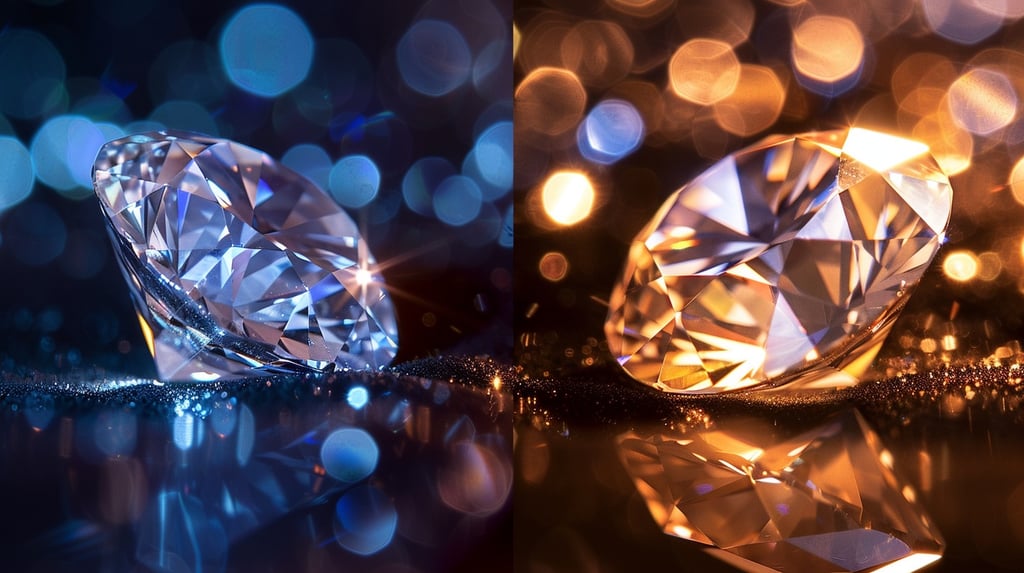
💎 What Is Moissanite, Anyway? (And No, It’s Not Fake)
First things first: moissanite isn’t just a cheap knockoff pretending to be a diamond.
It’s its own incredible gemstone—with a backstory that sounds straight out of a sci-fi movie.
The quick version:
- Moissanite was first discovered in 1893 by Henri Moissan (hence the name) in a meteor crater.
- It’s basically space dust that naturally forms silicon carbide crystals.
- Natural moissanite is crazy rare—so today, it’s lab-created to make it accessible.
And because it’s lab-grown, moissanite is often more ethically sourced and sustainable than mined diamonds.
Bottom line:
Moissanite isn’t “fake.” It’s just different—just like sapphires or emeralds are different from diamonds.
✨ Moissanite vs. Diamond: The Real Differences That Actually Matter
Let’s get honest here—not every difference between moissanite and diamond is obvious just by looking.
But if you want to choose smart, you should know what’s going on beneath the sparkle.
➔ 1. Brilliance (How They Sparkle)
Both moissanite and diamond are famous for their sparkle—but they don’t sparkle the same way.
- Diamonds: Classic sparkle—bright white light flashes, elegant and crisp.
- Moissanite: More “fire”—meaning colorful rainbow flashes under the light.
If you love a stone that throws rainbows across the room when the sun hits it, moissanite might just steal your heart.
If you want a cooler, whiter sparkle that’s more understated, diamond might feel more like you.
🎯 Real talk:
Only gem experts (and maybe your friend who’s way too into jewelry TikTok) will even notice the difference on your hand.
➔ 2. Color (Near-Colorless… But Not Always)
Both moissanite and diamonds can be near-colorless, but there’s a catch.
- Top-grade moissanite is often D-F color range (basically icy white).
- Lower-grade moissanite might show a slight yellow, grey, or green tint in certain lights.
Diamonds, depending on their grade (D-Z scale), can also show color—but you’re paying a lot more for those top “D” colorless stones.
🎯 Quick tip:
If you’re going big (like 2 carats+), color differences become easier to notice.
For smaller stones, most people will never see it.
➔ 3. Hardness (Durability for Daily Wear)
If you’re wearing your ring every day (especially engagement rings), you want a stone that can handle life.
- Diamonds: 10 on the Mohs hardness scale (the hardest naturally occurring material).
- Moissanite: 9.25 on the Mohs scale (still crazy tough—harder than sapphire or ruby).
Bottom line:
Both moissanite and diamonds are durable enough for daily wear—no babying needed.
➔ 4. Price (Big Difference Here)
This is where moissanite vs diamond becomes a real conversation.
- Moissanite: Way more affordable. A 1-carat moissanite might cost $500–$800.
- Diamond: A 1-carat diamond can easily run $5,000–$8,000 depending on quality.
🎯 Real example:
If you’re dreaming of a massive stone without a massive bill (or you’d rather spend the difference on a personalized necklace, an amazing honeymoon, or, you know, food), moissanite lets you think big without breaking the bank.
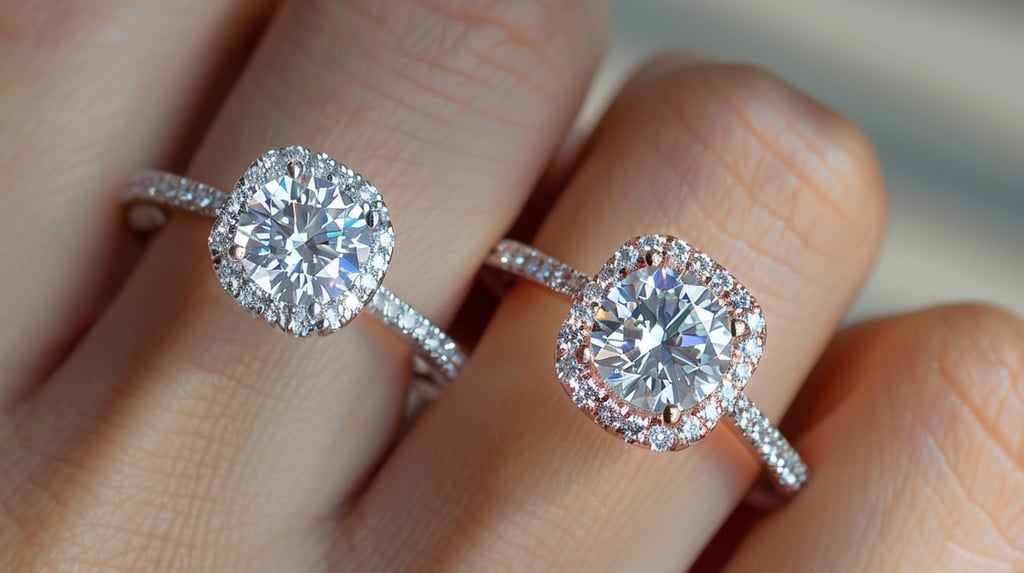
✋ How They Feel on Your Hand (Not Just Look)
Here’s something most “comparison charts” never talk about:
It’s not just how moissanite and diamond look — it’s how they feel when you wear them.
- Diamonds have a denser, heavier feel because carbon is heavier than silicon carbide. When you wear a diamond, it tends to sit heavier on your hand.
- Moissanite is lighter, airier. It sparkles like mad but doesn’t weigh down your finger the same way.
Neither feeling is “better”—it’s just personal.
Some people love the satisfying heft of a diamond.
Others love the barely-there feel of moissanite, especially for larger stones or multiple rings.
❤️ Choosing Based on Lifestyle and Meaning (Not Just Price Tags)
It’s easy to get caught up in sparkle wars or price comparisons—but real jewelry choices often have more to do with your life, your priorities, and your heart.
Here’s when each one might make more sense:
💎 When Diamond Wins
- You want a family heirloom to pass down for generations.
- You love tradition, history, symbolism.
- You have the budget—and you want the classic prestige.
- You value rarity and natural origin more than size.
✨ When Moissanite Wins
- You want a bigger, flashier stone without spending $10K.
- You’re building your first big jewelry piece and want it gorgeous and guilt-free.
- You care about ethical sourcing and sustainability.
- You love sparkle—but you love smart decisions even more.
(And honestly? Choosing a brilliant 2-carat moissanite and using the saved money to buy a personalized jewelry piece or book your dream honeymoon? That’s pretty legendary.)
❓ Real Talk: Does Moissanite Look “Fake”?
This comes up all the time, so let’s cut through it:
Short answer: No, it doesn’t look fake.
Long answer: It doesn’t look identical to a diamond—because it’s not supposed to.
- Moissanite has more “fire” (rainbow sparkle) than a diamond, especially under bright light.
- In soft lighting (like candlelight or diffused daylight), most people honestly can’t tell the difference.
- Only a trained gemologist—or someone actively inspecting your hand—might notice the slight difference in brilliance.
Here’s what actually matters:
If you love it, and it makes you feel incredible every time you look down at your hand?
Then it’s 100% real, valuable, and perfect for you.
🎯 True style tip:
Confidence sells sparkle better than any certification ever could.
🔎 When to Pick Moissanite (And When to Pick Diamond)
If you’re stuck between the two, here’s the gut-check guide:
➔ Pick Moissanite if:
- You want size and sparkle without draining your savings.
- You value ethical, low-impact stones.
- You’re designing custom necklaces or rings where flexibility matters (bigger stones, bolder designs).
- You love the idea of a gemstone that came from stardust.
➔ Pick Diamond if:
- You want a traditional heirloom that will never lose value.
- You value rarity, historical prestige, and investment.
- You prefer a heavier, whiter sparkle over fiery rainbow flashes.
📋 Quick Real-World Comparison Table
| Feature | Moissanite | Diamond |
|---|---|---|
| Brilliance | More fire (rainbow sparkles) | Classic white sparkle |
| Hardness | 9.25 Mohs (very durable) | 10 Mohs (extremely durable) |
| Weight | Lighter | Heavier feel |
| Price | More affordable (bigger stone for less) | Significantly higher cost |
| Ethical sourcing | Always lab-created | Can be mined or lab-created |
| Longevity | Wears beautifully for decades | Wears beautifully for generations |
The Style Hub
Learn, Shine, and Stay on Trend.
Gold vs. Silver Jewelry: What Suits Your Skin Tone Best?
Choosing between gold and silver isn’t just about preference—it’s about knowing what enhances your natural
Aug
The History and Symbolism of Charm Necklaces
Charm necklaces aren’t just pretty pieces of jewelry. They’re time capsules. Worn stories. Tiny symbols
Jul
How to Tell If Silver Is Real: The Ultimate Guide to Authenticating Silver
Whether you’re sorting through a box of heirlooms, evaluating a coin collection, or just curious
Jul
Parts of a Necklace: The Ultimate Guide to Every Hidden Detail
Necklaces are more than accessories. They’re stories draped around our necks—symbols of love, rebellion, culture,
Jul
The Broken Jewelry Theory: Hidden Messages in Shattered Trinkets
When Jewelry Breaks, What Is It Trying to Say? It always seems to happen at
Jul
Bangle vs Bracelet vs Cuff: Key Differences
Confused between a bangle, a bracelet, and a cuff? You’re not alone. These three wrist
Jul
Ancient Coin Jewelry: History You Can Wear
A Journey Through Time: What Makes Ancient Coin Jewelry So Alluring? There’s something undeniably captivating
Jul
Does Stainless Steel Turn Green?
Unveiling the Truth Behind Metal Discoloration and How to Prevent It Quick Answer: No, genuine
Jul