
Whether you’re sorting through a box of heirlooms, evaluating a coin collection, or just curious about that “925” stamp on your necklace, knowing how to tell if silver is real can save you time, money, and disappointment. With counterfeits and silver-plated items flooding the market, authenticating silver—at home or through experts—is more relevant than ever.
Why It’s Important to Test Silver
Genuine silver carries not just aesthetic value but also investment potential. Sterling silver, in particular, is used in fine jewelry, antiques, coins, and even tableware. Unfortunately, not everything that shines is precious. Misleading markings, expertly plated counterfeits, and deceptive designs make it essential to know how to identify the real thing.
“I once bought a set of ‘sterling’ spoons at a flea market—turns out they were just silver-coated brass. Lesson learned. Always test.” —A collector’s cautionary tale
Understanding Silver Types: Sterling, Fine, and Plated
Before jumping into tests, it’s vital to understand the terminology surrounding silver:
- Fine Silver (99.9% pure): Typically stamped “999,” soft and used for bullion and some artisanal jewelry.
- Sterling Silver (92.5% pure): Stamped “925,” durable and the industry standard for most jewelry and flatware.
- Silver-Plated: A thin silver coating over a base metal like brass or nickel. Not valuable.
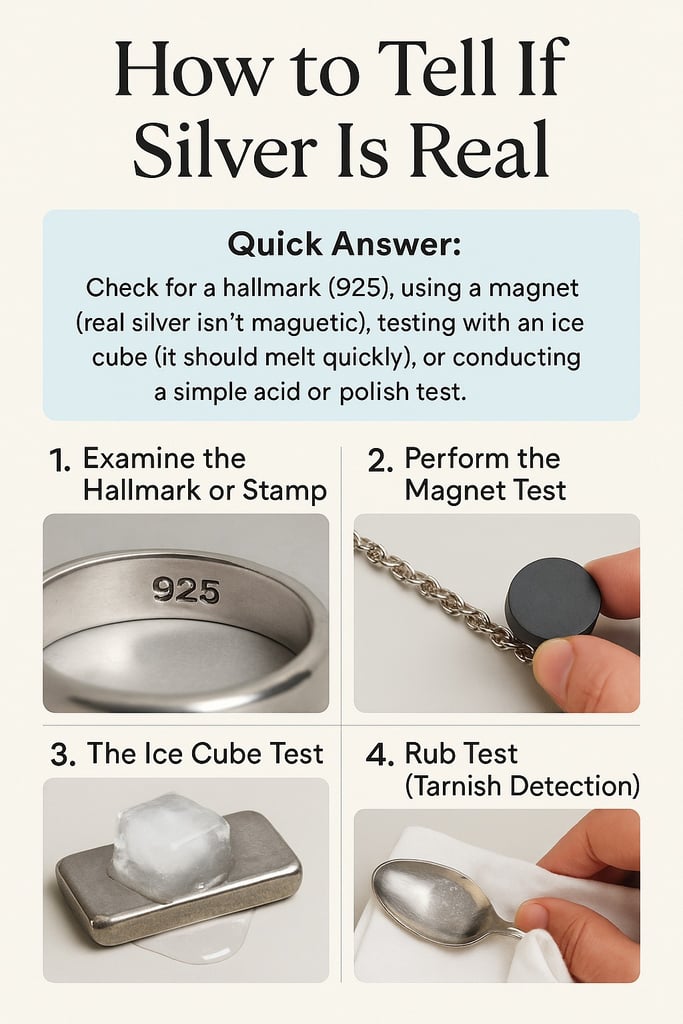
1. Examine the Hallmark or Stamp
This is often the easiest first step. Authentic silver usually includes a discreet stamp indicating its purity.
Look For These Common Silver Stamps:
- 925 or .925 (Sterling silver)
- 999 or .999 (Fine silver)
- Sterling
- “Mex 925”, “Italy 925”, or “925S” (Country-based variations)
But beware: counterfeit items sometimes bear fake stamps. Always combine this with at least one physical test.
2. Perform the Magnet Test
Silver is diamagnetic, meaning it will not be attracted to a magnet. Grab a strong rare-earth magnet (like a neodymium) and gently hover it over your silver item. If it clings or moves abruptly—it’s likely not real silver.
3. The Ice Cube Test: Thermal Conductivity in Action
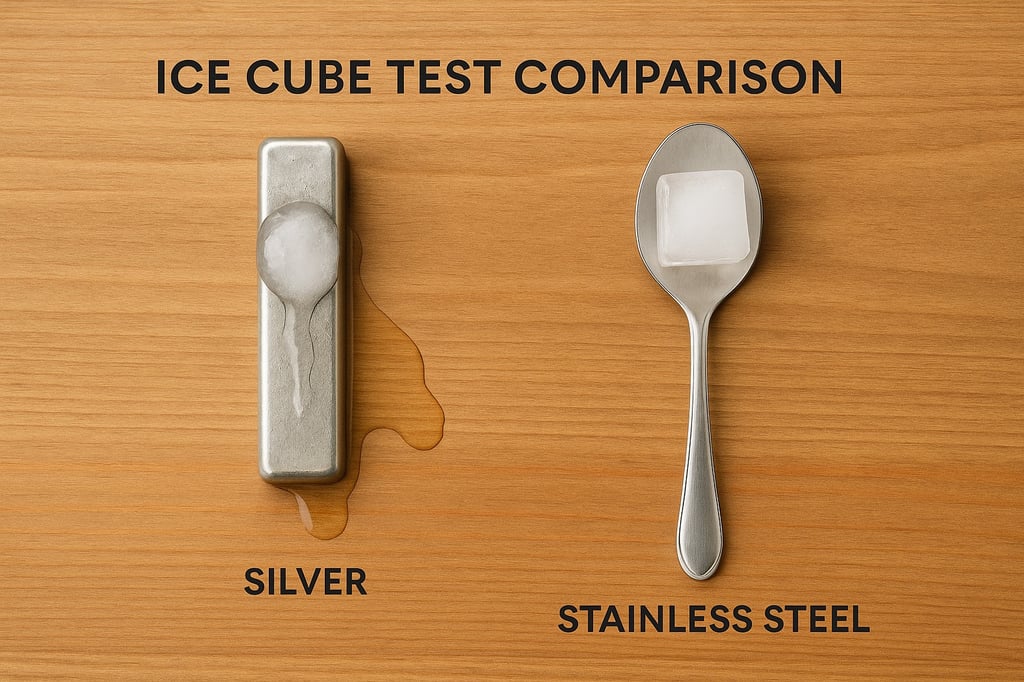
This method is wonderfully simple. Place an ice cube on top of your silver item. Real silver conducts heat very efficiently, so the ice should melt much faster than it would on other metals or ceramic surfaces.
Try this test side-by-side with a stainless steel spoon to observe the contrast. If your silver item is real, the difference will be obvious.
4. Rub Test (Tarnish Detection)
Take a clean white cloth and rub it vigorously on the item. If it’s real silver, the cloth may come away with black or gray marks—this is due to oxidation, which occurs naturally on silver.
No marks? That’s not proof it’s fake—it may simply be clean or plated—but tarnish is a good clue.
5. The Odor Test
Real silver doesn’t smell like anything. Base metals like copper, brass, or nickel often emit a metallic or sulfuric scent. Hold the item close to your nose after warming it in your hands. If there’s a detectable odor—it’s probably not genuine silver.
6. The Ping Test (Coin Ring Test)
Tap your silver coin or flatware with another piece of metal and listen carefully. Real silver emits a high-pitched, bell-like “ping” sound, whereas fakes or plated metals often sound dull or flat.
You can also balance the item on your finger and lightly tap with a pen or another coin. Some collectors even use apps that measure sound frequency to authenticate coins.
7. The Acid Scratch Test
If you’re willing to get a bit destructive, the acid test offers solid proof. Here’s how it works:
- Use a testing stone or scratch the surface of the item discreetly.
- Apply a small drop of silver test acid (usually nitric acid-based).
- Observe the color change: cream or bright red usually means silver; green or brown indicates fakes.
Caution: This test can permanently mark the item. Use on inconspicuous areas or scrap pieces.
Supplies Needed for Acid Testing:
- Silver acid test kit
- Scratch stone
- Protective gloves and goggles
- Well-ventilated workspace
8. Advanced Silver Testing Methods (For Professionals & Collectors)
If the piece is especially valuable or antique, it may be worth investing in advanced testing methods. These provide precise results without guesswork, and in some cases, without any damage to the item.
XRF Testing (X-Ray Fluorescence)
XRF analyzers are used by pawnshops, jewelers, and assay offices. These handheld devices scan the metal’s surface and identify the elements within. The result is a detailed purity reading in seconds—with zero harm to the object.
Fire Assay (Cupellation)
This is the most accurate method used by refineries and mints. It involves melting the metal and separating impurities through a crucible. Fire assay delivers near-perfect accuracy but is destructive and usually reserved for bullion or industrial-scale testing.
Touchstone Testing
This is a traditional technique where a sample is scratched onto a stone, then treated with acid. Jewelers compare the resulting color to known samples. It’s moderately invasive and excellent for jewelry or flatware with questionable markings.
9. Regional Hallmark Systems: What to Look for Worldwide
Different countries have distinct hallmarking traditions. If your item has an unusual stamp, check below before writing it off as a fake:
| Country | Common Hallmarks | Notes |
|---|---|---|
| United Kingdom | Lion Passant, Town Mark, Date Letter | Often accompanied by “925” or “Sterling” |
| France | Minerva Head | Used since 1838 for silver above 800 fineness |
| Italy | Star + number + province abbreviation (e.g., *123 VI) | Signifies registered silver manufacturers |
| United States | “Sterling”, “925”, no official hallmarking | Less standardized, often brand-based |
| Israel | “Israel 925” or Hebrew stamps | Check for clarity and manufacturer registration |
If your hallmark looks suspicious or partial, consult online databases such as 925-1000.com or national assay offices for verification.
Comparison of Testing Methods
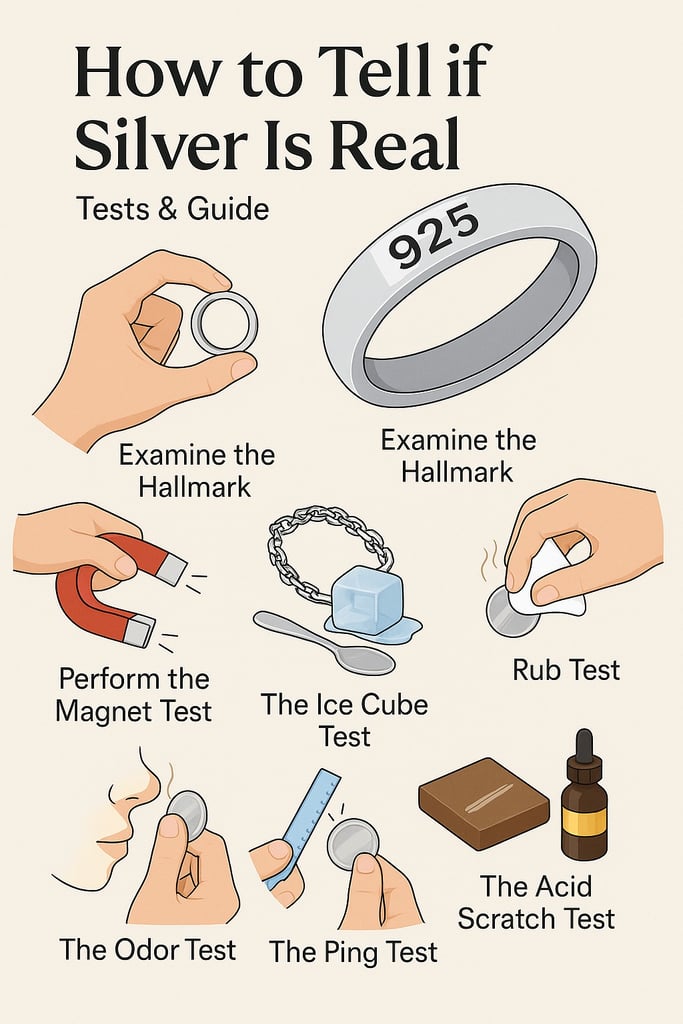
Let’s break down all the methods into a quick reference guide for ease of use:
| Method | Accuracy | Invasive? | Recommended For |
|---|---|---|---|
| Hallmark Inspection | Medium | No | Quick visual ID |
| Magnet Test | Low | No | Preliminary check |
| Ice Cube Test | Medium | No | Coins, flatware |
| Acid Test | High | Yes | Scrap, scrap jewelry |
| XRF Analyzer | Very High | No | Investments, antiques |
| Fire Assay | Extreme | Yes (Destructive) | Professional or industrial |
Smart Buying & Selling Tips for Silver
- Bring a magnet and loupe when browsing flea markets or antique shops.
- Ask for documentation or a receipt stating “genuine silver” or “sterling.”
- Use acid tests on scrap silver first before attempting on a valuable piece.
- Resell through reputable dealers who understand silver and will test properly.
- Be cautious with deals that seem “too good.” If it’s a steal, it might not be real.
Common Myths About Silver Authentication
- “Silver always tarnishes.” Not true. Fine silver (999) rarely does, and clean sterling may not show tarnish for years.
- “Fake silver is always magnetic.” Some fakes are non-magnetic, using copper or aluminum bases.
- “You can just bite it to test.” That works for gold, not silver—and even then, only in movies.
- “If it says ‘925,’ it’s legit.” Unfortunately, fakes often bear counterfeit stamps.
Frequently Asked Questions (FAQs)
Q: Can you use vinegar to test silver?
A: While vinegar may tarnish silver, it can also corrode fake metals and lead to misleading results. It’s not reliable.
Q: How do you test silver chains?
A: Use the magnet test, then the polish test on an inconspicuous area. If possible, test the clasp separately—it’s often a different metal.
Q: Is silver-plated worth anything?
A: Usually not, unless the item has historical or artistic value. Plating is extremely thin and holds little silver content.
Q: Can I test silver without damaging it?
A: Yes! Use the magnet, ice, and ping tests, or go to a jeweler with an XRF scanner for a non-destructive reading.
Conclusion: Trust, Test, and Verify
Learning how to tell if silver is real isn’t just about preserving your wallet—it’s about preserving heritage, avoiding scams, and collecting with confidence. Whether you’re a jewelry lover, investor, or treasure hunter, keep this guide close by. Combine multiple testing methods, trust your instincts, and when in doubt—consult a professional.
The Style Hub
Learn, Shine, and Stay on Trend.
Gold vs. Silver Jewelry: What Suits Your Skin Tone Best?
Choosing between gold and silver isn’t just about preference—it’s about knowing what enhances your natural
Aug
The History and Symbolism of Charm Necklaces
Charm necklaces aren’t just pretty pieces of jewelry. They’re time capsules. Worn stories. Tiny symbols
Jul
How to Tell If Silver Is Real: The Ultimate Guide to Authenticating Silver
Whether you’re sorting through a box of heirlooms, evaluating a coin collection, or just curious
Jul
Parts of a Necklace: The Ultimate Guide to Every Hidden Detail
Necklaces are more than accessories. They’re stories draped around our necks—symbols of love, rebellion, culture,
Jul
The Broken Jewelry Theory: Hidden Messages in Shattered Trinkets
When Jewelry Breaks, What Is It Trying to Say? It always seems to happen at
Jul
Bangle vs Bracelet vs Cuff: Key Differences
Confused between a bangle, a bracelet, and a cuff? You’re not alone. These three wrist
Jul
Ancient Coin Jewelry: History You Can Wear
A Journey Through Time: What Makes Ancient Coin Jewelry So Alluring? There’s something undeniably captivating
Jul
Does Stainless Steel Turn Green?
Unveiling the Truth Behind Metal Discoloration and How to Prevent It Quick Answer: No, genuine
Jul