
Some jewelry speaks louder than words—and the Celtic knot necklace is one of them. Worn close to the heart, it whispers stories of ancient warriors, sacred trees, eternal love, and unbreakable bonds. It’s more than a design; it’s a living emblem passed down through centuries of Irish, Scottish, and Welsh tradition.
Whether you’re drawn to it for spiritual reasons, cultural pride, or sheer admiration of its design, the meaning behind a Celtic knot necklace goes far deeper than the eye can see. This symbol is as endless as the lines that form it—woven with myth, memory, and meaning.
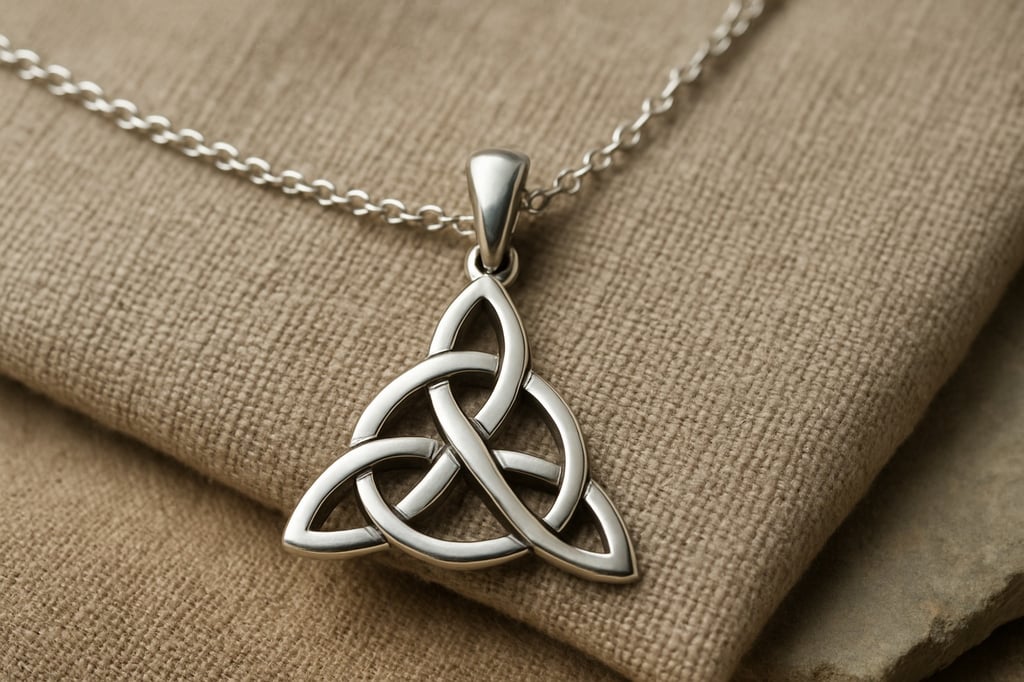
Where It All Began: The Ancient Roots of Celtic Knots
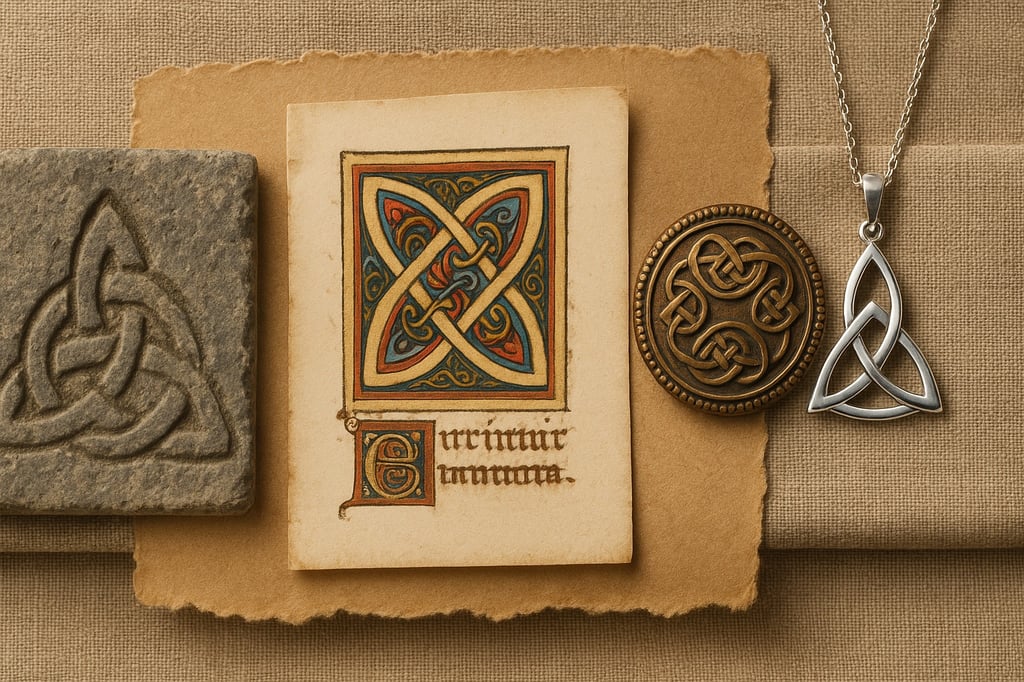
The origins of the Celtic knot trace back to around the 3rd or 4th century CE, emerging within early Christian and pagan Celtic societies across what is now Ireland, Scotland, and parts of Britain. These intricate patterns weren’t just decorative—they were sacred.
Found etched into stone crosses, illuminated manuscripts like the Book of Kells, and jewelry unearthed from burial sites, the knots symbolized life’s infinite nature. Their looping, never-ending lines suggested cycles: birth, death, rebirth. Harmony. Unity. The interwoven nature of spirit and matter.
Some historians believe the designs even predate Christianity—linked to older Druidic and tribal traditions—representing the interconnectedness of all living things.
Popular Celtic Knot Designs & What They Mean
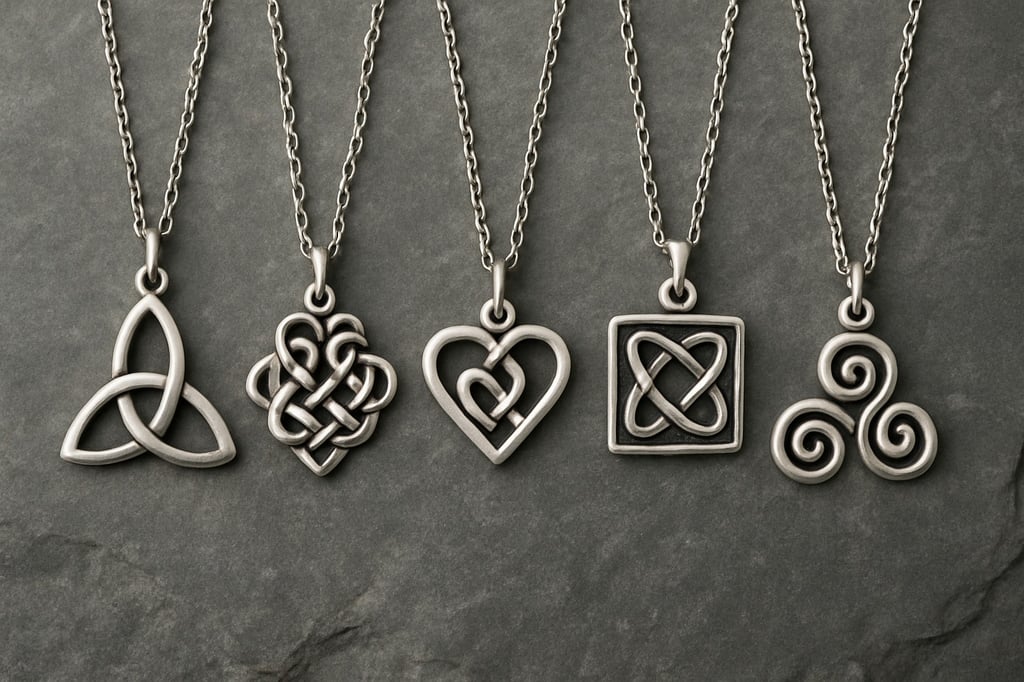
Each Celtic knot carries its own distinct message. Let’s explore some of the most well-known knot designs often featured in necklaces and their symbolic meaning:
| Celtic Knot | Symbolism |
|---|---|
| Trinity Knot (Triquetra) | Represents the power of threes: mind, body, spirit—or maiden, mother, crone. Often associated with divine femininity or the Holy Trinity. |
| Dara Knot | Derived from the Gaelic word “Doire” (oak tree), it symbolizes inner strength, rooted wisdom, and endurance through hardship. |
| Lover’s Knot | Two interlacing hearts or loops—eternal love, unity between soulmates, and emotional harmony. Often exchanged between partners. |
| Shield Knot | An ancient symbol of protection and warding off evil. Historically carved into weapons or worn by warriors going into battle. |
| Spiral Knot | Linked to personal growth, evolution, and the journey of life. Commonly connected with transformation and spiritual awakening. |
| Josephine Knot | A design often seen in sailor’s rope patterns, symbolizing interconnectedness and safe passage through life’s turbulence. |
Though each knot tells a slightly different story, all share a common theme: eternity, connection, and continuity. That’s what makes them especially meaningful when worn as a necklace—kept close to the heart, these symbols become deeply personal talismans.
Celtic Knots in Modern Times: More Than Aesthetic
In today’s world, wearing a Celtic knot necklace means different things to different people. For some, it’s a nod to their Irish or Scottish ancestry. For others, it’s a spiritual symbol—a quiet connection to earth-based traditions or divine energies.
But across the board, Celtic knots resonate because they communicate something we all feel: the desire to be connected. To loved ones. To nature. To the divine. To a lineage that reaches back through time.
Modern interpretations may pair these knots with gemstones, metals like silver or gold, or personal inscriptions. Whether minimalist or ornate, the emotion behind the piece never changes—it stands for something unbroken.
Who Wears Them—and Why
The beauty of the Celtic knot necklace is its universality. It transcends age, gender, and style. It’s worn by:
- Romantic partners as symbols of devotion
- Spiritual seekers looking for grounding or deeper connection
- Heritage holders honoring Celtic ancestry
- Art lovers drawn to the hypnotic symmetry of the design
Whether bought for oneself or given as a gift, it becomes a personal statement. And that’s where its real magic lies—not in its origin, but in the meaning the wearer breathes into it.
Celtic Knots Across Cultures: Echoes Beyond Ireland
Though rooted in ancient Celtic traditions, the visual and spiritual allure of the knot has reached far beyond the British Isles. As Celtic tribes migrated and traded, their art found new homes—and interpretations—in other cultures and belief systems.
In early Christianity, Celtic knots were seamlessly woven into religious manuscripts, crosses, and sacred jewelry. Monks saw the unbroken lines as symbols of eternal life and the divine mystery of creation. The Trinity Knot, in particular, was reinterpreted to represent the Father, Son, and Holy Spirit.
In Norse cultures, similar interlacing knotwork appears in Viking art and runestones—often as protection sigils. Even in East Asian cultures, endless knot motifs exist with parallel meanings: harmony, longevity, and interconnected destiny.
It’s a reminder that sacred geometry is a language all civilizations seem to speak—one that transcends borders and time.
How to Choose the Right Celtic Knot Necklace
If you’re drawn to the idea of wearing a Celtic knot necklace, trust that instinct—it’s likely connecting with something deep inside you. Here are some ways to guide your selection:
Let Your Values Lead
- For love and unity: Choose a Lover’s Knot or Josephine Knot.
- For strength and resilience: The Dara Knot or Shield Knot offers grounding symbolism.
- For spiritual balance: The Trinity Knot (Triquetra) or Spiral Knot is ideal.
Consider the Material
- Silver: Traditionally associated with the moon, intuition, and reflection.
- Gold: Symbolic of the sun, warmth, abundance, and strength.
- Wood or stone pendants: For a more earthy, grounded expression.
Personalize It
Some modern pieces allow engraving—of initials, a date, or a word that holds personal power. Others are combined with gemstones like emerald (Ireland’s stone), garnet, or sapphire for added meaning.
Celtic Knot Necklace: Frequently Asked Questions
Are all Celtic knots the same?
No. While all Celtic knots share the core feature of interlaced lines, each design (Triquetra, Dara, Lover’s Knot, etc.) holds its own meaning and historical context.
Do you have to be Irish or Celtic to wear one?
Not at all. Many wear Celtic knot necklaces to honor spiritual beliefs, symbolize life values, or simply for the beauty of the design. It’s a universal symbol of connection.
Can I wear one as a man?
Absolutely. Celtic knots are genderless symbols, and many men wear them for strength, grounding, or cultural identity. Styles range from minimal to bold, so there’s something for everyone.
Is it appropriate as a gift?
Yes—and it’s deeply meaningful. A Celtic knot necklace makes an excellent gift for birthdays, anniversaries, rites of passage, or moments of encouragement and connection.
What if I don’t know the exact meaning of the knot I’m wearing?
That’s okay. The beauty of these symbols is that they carry both collective and personal meaning. Over time, the necklace often becomes part of your own story.
The Style Hub
Learn, Shine, and Stay on Trend.
Gold vs. Silver Jewelry: What Suits Your Skin Tone Best?
Choosing between gold and silver isn’t just about preference—it’s about knowing what enhances your natural
Aug
The History and Symbolism of Charm Necklaces
Charm necklaces aren’t just pretty pieces of jewelry. They’re time capsules. Worn stories. Tiny symbols
Jul
How to Tell If Silver Is Real: The Ultimate Guide to Authenticating Silver
Whether you’re sorting through a box of heirlooms, evaluating a coin collection, or just curious
Jul
Parts of a Necklace: The Ultimate Guide to Every Hidden Detail
Necklaces are more than accessories. They’re stories draped around our necks—symbols of love, rebellion, culture,
Jul
The Broken Jewelry Theory: Hidden Messages in Shattered Trinkets
When Jewelry Breaks, What Is It Trying to Say? It always seems to happen at
Jul
Bangle vs Bracelet vs Cuff: Key Differences
Confused between a bangle, a bracelet, and a cuff? You’re not alone. These three wrist
Jul
Ancient Coin Jewelry: History You Can Wear
A Journey Through Time: What Makes Ancient Coin Jewelry So Alluring? There’s something undeniably captivating
Jul
Does Stainless Steel Turn Green?
Unveiling the Truth Behind Metal Discoloration and How to Prevent It Quick Answer: No, genuine
Jul