
A Journey Through Time: What Makes Ancient Coin Jewelry So Alluring?
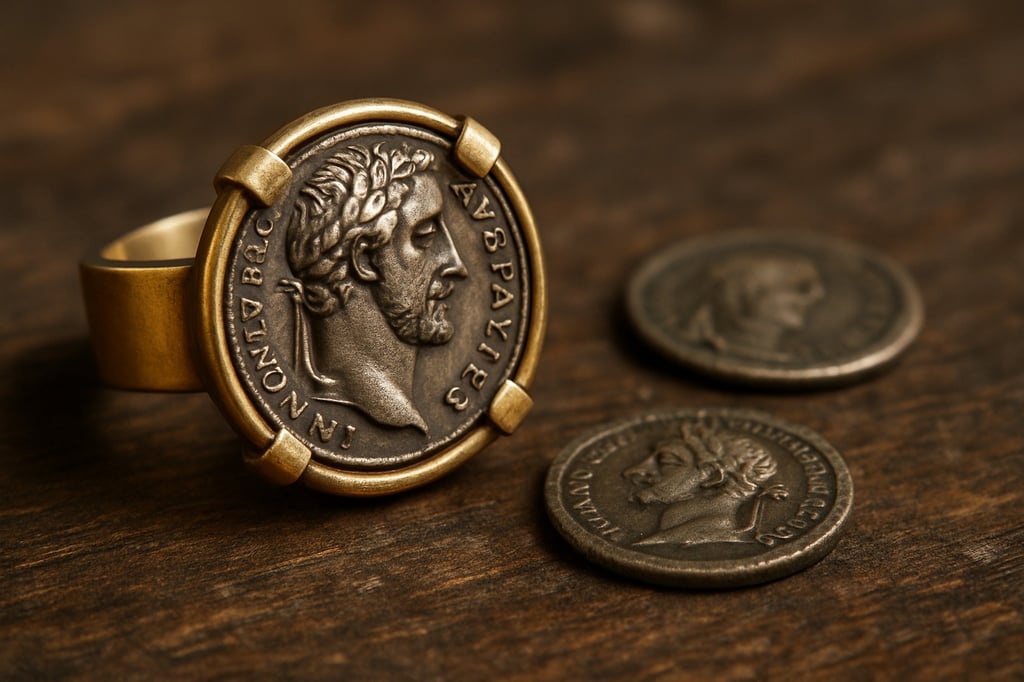
There’s something undeniably captivating about wearing a fragment of history around your neck or on your wrist. Ancient coin jewelry isn’t just decoration—it’s legacy. These handcrafted pieces, set with coins once held by emperors, merchants, or pilgrims, invite the wearer into a tactile connection with civilizations long past.
Whether you’re drawn to the stoic profile of Julius Caesar or the weathered gleam of a Greek drachma, each coin carries a story. Worn as pendants, rings, or even cufflinks, these artifacts are both aesthetically striking and historically profound.
✨ What Is Ancient Coin Jewelry?
Definition:Ancient coin jewelry refers to adornments made using genuine coins from historical periods such as Ancient Greece, Rome, Byzantium, or early Biblical eras, often mounted into precious metal settings.
These coins—sometimes dating back over two millennia—are carefully cleaned and integrated into modern designs without altering their core structure. The result? An accessory that’s as meaningful as it is elegant.
In today’s fashion circles, this jewelry has emerged as a favorite of both trendsetters and antique collectors, offering timeless style while maintaining deep personal and cultural significance.
🔍 Quick Glance: Why People Choose Ancient Coin Jewelry
- 🔸 Historical Value: Each piece holds centuries of legacy.
- 🔸 Uniqueness: No two coins are exactly the same.
- 🔸 Craftsmanship: Handset in fine metals by skilled artisans.
- 🔸 Conversation Starter: These aren’t just accessories—they’re stories.
📜 History Worn: The Evolution of Coin Jewelry Through Civilizations
The use of coins as personal adornment isn’t a new concept. Ancient civilizations often carried coins not just for commerce, but as amulets, gifts, or status symbols. Let’s take a brief walk through the timeline of this captivating art form:
🏛️ Greek Coin Jewelry (600–100 BCE)
Among the earliest adopters, the Greeks produced silver tetradrachms emblazoned with the likes of Athena, Hercules, and Alexander the Great. These coins often doubled as religious tokens, worn by travelers for divine protection.
🏺 Roman Empire (100 BCE–400 CE)
The Roman denarius was minted in mass and often bore the likeness of emperors, gods, or military victories. Roman women sometimes wore coins as earrings or brooches, especially those bearing the face of the reigning emperor—showing both allegiance and status.
⛪ Byzantine Coin Jewelry (400–1450 CE)
The Byzantine solidus introduced religious iconography into coinage, prominently displaying images of Christ or Christian saints. Jewelry from this era often reflected both spiritual and economic power.
✡️ Biblical Era Coins
Coins like the Widow’s Mite or Judean prutah hold strong Biblical significance. Used as daily currency in ancient Israel, they’ve become particularly popular in Christian and Jewish jewelry traditions today.
⚓ Shipwreck and Spanish Treasure Coins
From the depths of the ocean, salvaged Spanish doubloons and “Pieces of Eight” are now repurposed as luxurious jewelry. These shipwreck coins, often encrusted with marine patina, come with certificates of origin—making them rare collector’s items.
💍 Types of Ancient Coin Jewelry
While pendants are perhaps the most iconic, ancient coin jewelry spans a wide range of forms, each offering a distinct expression of style and meaning.
📿 Pendants & Necklaces
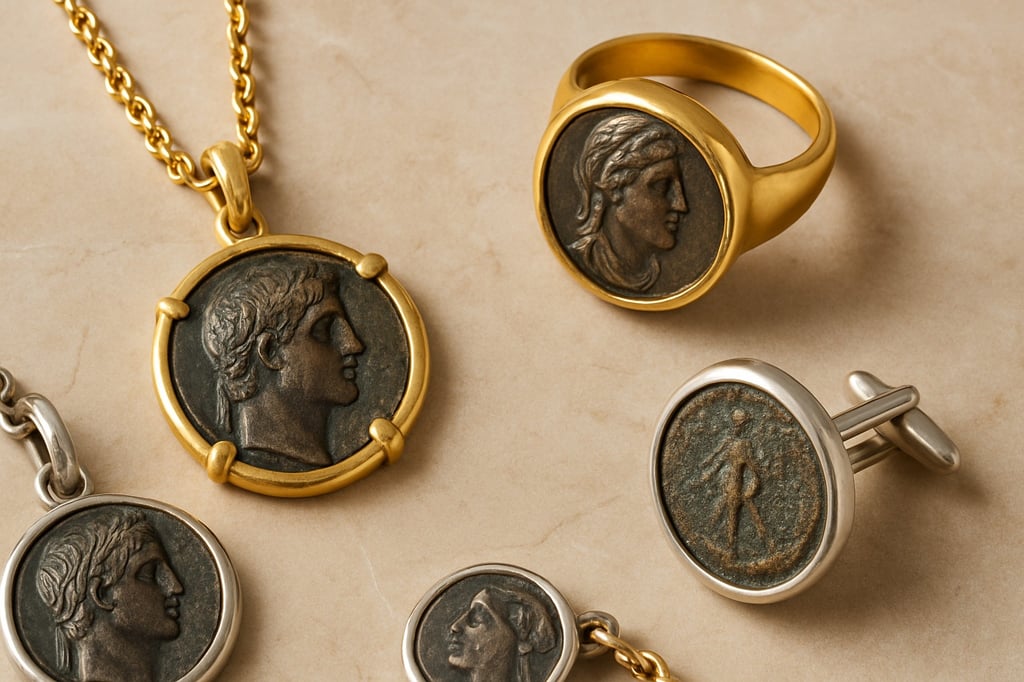
Often set in a bezel or floating mount, coin pendants are elegant yet bold. A silver tetradrachm hung on a fine chain, for instance, becomes a piece of wearable sculpture.
💍 Rings
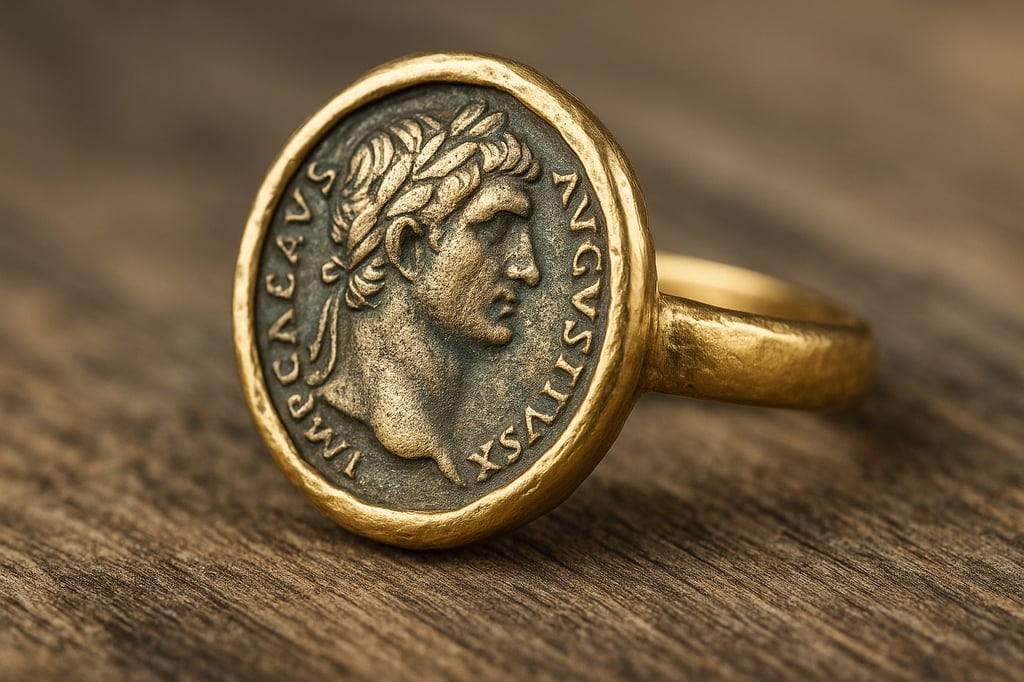
Compact coins such as Roman bronze or Byzantine coppers are ideal for rings. These can be both subtle and striking, especially when paired with modern gold or platinum bands.
🧷 Earrings
Perfect for matched pairs, small coins are transformed into earrings that feel lightweight and timeless. Particularly popular are Widow’s Mite earrings and Greek drachma studs.
🧳 Bracelets & Cufflinks
Roman soldier motifs and shipwreck coins make for compelling wristwear. Cufflinks with authentic coins speak volumes in a corporate or formal setting.
🔐 Is It Real? How to Authenticate Ancient Coin Jewelry
With the rising popularity of antique aesthetics, there’s also an unfortunate influx of replicas. Authenticity is paramount when it comes to ancient coin jewelry. Here’s how you can be sure you’re getting the real deal.
✔️ Tips for Verifying Authenticity
- Certificate of Authenticity (COA): Always request one from a reputable dealer.
- Numismatic Appraisal: Coins should be evaluated by certified numismatists.
- Wear and Patina: Genuine coins exhibit natural wear, oxidation, and inscriptions that show age.
- Weight & Metal Testing: Authentic coins will conform to historical specs for their type.
💡 How Can You Tell If an Ancient Coin Necklace Is Real?
Check for: authentic wear patterns, precise historical weight, COA from a trusted source, and visible inscriptions. When in doubt, consult a licensed numismatist.
🔨 The Art Behind the Setting: From Coin to Jewelry
The transition from ancient coin to modern jewelry is more than a technical process—it’s a delicate dance between preservation and reinvention. Expert jewelers treat each coin with reverence, ensuring its integrity remains intact throughout the setting process.
🔧 Ethical Sourcing & Cleaning
Reputable artisans obtain ancient coins through archaeological markets, estate sales, or certified numismatic channels. Coins are meticulously cleaned using non-invasive methods—never polished aggressively, as this could erase vital historical markings.
🪙 Mounting Techniques
- Bezel Setting: The coin is framed in a protective metal border, secure yet visible on both sides.
- Prong or Claw Setting: Minimal metal is used so the coin remains the centerpiece.
- Flip Mount: Allows wearers to alternate between the obverse (front) and reverse (back) of the coin.
- Fusion Designs: Blending coins with diamonds, emeralds, or sapphires to create a striking juxtaposition of old and new.
⚖️ Preserving Historical Integrity
Responsible coin jewelers make it a point not to drill, reshape, or damage the coin. Instead, the settings are designed around the coin’s dimensions, curves, and even imperfections, allowing it to shine authentically.
💡 How to Style Ancient Coin Jewelry with Modern Flair
Coin jewelry is remarkably versatile. Whether you’re dressing for a black-tie gala or a weekend brunch, these pieces can elevate your ensemble while adding historical character.
👚 Everyday Looks
A Greek silver drachma pendant on a leather cord pairs beautifully with a crisp white shirt. Small Roman bronze coins make excellent subtle rings or earrings for daily wear—classic without being ostentatious.
💃 Statement Occasions
Layering necklaces with various coin sizes creates a rich, bohemian look. A bold gold denarius ring or Byzantine solidus pendant can steal the spotlight at formal events. Pair with simple silhouettes to let the jewelry speak.
🧔 Men’s Coin Jewelry
Coin cufflinks, tie clips, or thick chain pendants exude quiet power. Roman soldier motifs or shipwreck coins are especially popular among men seeking to wear history with a rugged edge.
👗 Styling Tip:
Layer coin necklaces of varying lengths with minimalist chains. Let one large pendant take center stage while smaller ones add texture and rhythm to your look.
💰 Wearable Wealth: Investment Potential of Ancient Coin Jewelry
Beyond aesthetics, ancient coin jewelry carries real economic value. For collectors and investors alike, these pieces combine tangible history with rising demand, often outperforming contemporary fine jewelry in the long term.
📈 Factors That Drive Value
- Rarity: Limited mintage or historically significant coins (e.g., Caesar assassination denarii) hold more value.
- Metal Type: Gold and silver coins naturally carry intrinsic worth.
- Condition: Coins with clear inscriptions and preserved details are more sought after.
- Provenance: Certified origin or archaeological background enhances both authenticity and price.
🎯 Collector Strategy
Savvy buyers often focus on a specific era or empire—such as Roman emperors, Biblical coins, or shipwreck treasures. Curated collections built over time not only yield personal joy but may gain substantial financial appreciation.
🧽 Care & Maintenance: Protecting Your Ancient Heirloom
While these coins have survived millennia, caring for them properly ensures they’ll continue to shine for generations to come.
🚫 What to Avoid
- ❌ Harsh Chemicals: Never expose coin jewelry to bleach, vinegar, or polishing compounds.
- ❌ Water Immersion: Avoid swimming or showering with coin pieces.
- ❌ UV Exposure: Direct sunlight may discolor certain ancient metals over time.
✅ Best Practices
- ✔️ Store pieces in soft, anti-tarnish cloths or pouches.
- ✔️ Wipe with a dry microfiber cloth after wearing.
- ✔️ Have pieces inspected annually by a professional jeweler.
📦 Pro Tip:
Use a silica gel packet in your jewelry box to reduce humidity, which can accelerate tarnishing and corrosion in antique metals.
❓ FAQs: Common Questions About Ancient Coin Jewelry
-
Can I wear ancient coin jewelry every day?
Yes, but it’s best to choose smaller, protected settings for daily wear and save more delicate pieces for special occasions. -
Are all ancient coins legal to own?
Yes—if obtained through legitimate sources and not looted from protected archaeological sites. Reputable dealers provide provenance documentation. -
Do real ancient coins lose value if turned into jewelry?
Not necessarily. Coins that are already worn or incomplete typically don’t hold numismatic value but make excellent jewelry. High-value coins are often mounted in reversible, non-permanent settings. -
Can I customize a piece using my own coin?
Absolutely. Many jewelers offer bespoke services where you can supply your own coin for setting. -
How old are most coins used in jewelry?
Anywhere from 1,500 to over 2,500 years old. The most common pieces date back to Ancient Greece, Rome, and the Byzantine period.
🔚 The Past Is Always Present
In an age of mass production, ancient coin jewelry stands as a defiant celebration of craftsmanship, individuality, and heritage. It bridges generations—not just in design, but in meaning.
Whether you’re a collector, a history lover, or simply someone who appreciates timeless design, there’s no better way to keep the past close than by wearing a piece of it. Choose your coin. Tell your story. And pass it on.
The Style Hub
Learn, Shine, and Stay on Trend.
Gold vs. Silver Jewelry: What Suits Your Skin Tone Best?
Choosing between gold and silver isn’t just about preference—it’s about knowing what enhances your natural
Aug
The History and Symbolism of Charm Necklaces
Charm necklaces aren’t just pretty pieces of jewelry. They’re time capsules. Worn stories. Tiny symbols
Jul
How to Tell If Silver Is Real: The Ultimate Guide to Authenticating Silver
Whether you’re sorting through a box of heirlooms, evaluating a coin collection, or just curious
Jul
Parts of a Necklace: The Ultimate Guide to Every Hidden Detail
Necklaces are more than accessories. They’re stories draped around our necks—symbols of love, rebellion, culture,
Jul
The Broken Jewelry Theory: Hidden Messages in Shattered Trinkets
When Jewelry Breaks, What Is It Trying to Say? It always seems to happen at
Jul
Bangle vs Bracelet vs Cuff: Key Differences
Confused between a bangle, a bracelet, and a cuff? You’re not alone. These three wrist
Jul
Ancient Coin Jewelry: History You Can Wear
A Journey Through Time: What Makes Ancient Coin Jewelry So Alluring? There’s something undeniably captivating
Jul
Does Stainless Steel Turn Green?
Unveiling the Truth Behind Metal Discoloration and How to Prevent It Quick Answer: No, genuine
Jul