
Your engagement ring isn’t just a piece of jewelry—it’s a symbol of love, a reminder of one of the happiest moments in your life. But over time, daily wear takes its toll. Lotion, soap, dirt, and even the natural oils from your skin can make your ring look dull and lifeless.
The good news? You don’t need a professional jeweler to bring back that fresh, just-said-“yes” sparkle. With a few simple techniques, you can safely clean your engagement ring at home and keep it looking flawless for years to come.

Table of Contents
- How Often Should You Clean Your Engagement Ring?
- The Best Ways to Clean an Engagement Ring at Home
- How to Clean Your Engagement Ring Based on Metal & Gemstone
- What NOT to Use on Your Engagement Ring
- How to Keep Your Engagement Ring Clean Longer
- FAQs About Cleaning Engagement Rings
How Often Should You Clean Your Engagement Ring?
- ✔ Weekly: A quick at-home clean to remove daily dirt buildup.
- ✔ Monthly: A deeper clean for extra sparkle.
- ✔ Every 6-12 months: A professional cleaning and inspection to check for loose stones.
Regular cleaning prevents grime from dulling your diamond or gemstone, so it always catches the light beautifully.
The Best Ways to Clean an Engagement Ring at Home
1. The Classic Soap & Warm Water Method (Safe for All Rings)
This method is gentle, effective, and safe for almost all engagement rings—whether your ring has a diamond, sapphire, or another precious gemstone.
- ✔ Step 1: Fill a small bowl with warm water and add a few drops of mild dish soap (avoid anything with moisturizers or harsh chemicals).
- ✔ Step 2: Let your ring soak for 20-30 minutes to loosen any buildup.
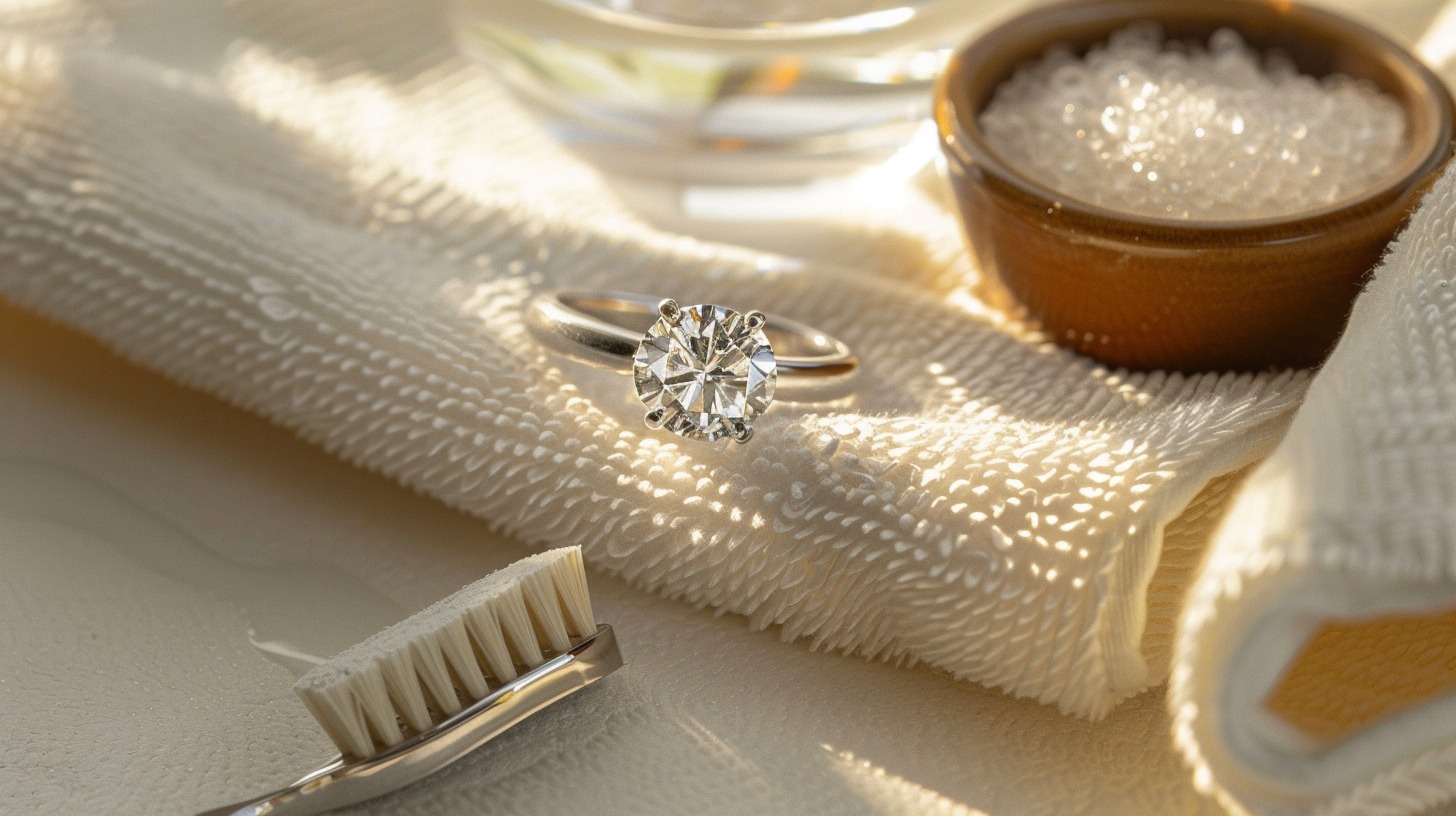
- ✔ Step 3: Use a soft-bristled toothbrush (like a baby toothbrush) to gently scrub around the stone, prongs, and band.
- ✔ Step 4: Rinse under lukewarm running water (plug the drain or rinse in a bowl to be safe!).
- ✔ Step 5: Dry with a soft microfiber cloth—no paper towels, as they can scratch the metal.
This method works well for gold, platinum, and most gemstones, including diamonds, rubies, and sapphires.
2. Baking Soda & Vinegar (For an Extra Deep Clean on Gold & Diamonds)
If your ring still looks dull after a soap soak, this natural method can help. It’s especially great for solid gold rings with diamonds, but avoid it if your ring has soft gemstones like opals or pearls.
- ✔ Step 1: Mix ½ cup white vinegar with 2 tablespoons of baking soda.
- ✔ Step 2: Let your ring soak for 15-20 minutes (you’ll see fizzing—this is normal!).
- ✔ Step 3: Use a soft brush to gently clean the setting.
- ✔ Step 4: Rinse thoroughly under warm water and dry with a lint-free cloth.
Pro Tip: Baking soda is a great natural cleaner, but don’t use it on white gold—it can strip the rhodium plating over time.
3. Professional Jewelry Cleaners (Easy & Convenient)
If you prefer a store-bought solution, a commercial jewelry cleaner can save time. Just make sure it’s ammonia-free, as ammonia can weaken certain metal settings over time.
- ✔ Step 1: Follow the instructions on the bottle.
- ✔ Step 2: Typically, you’ll dip your ring in the cleaner for a few minutes.
- ✔ Step 3: Use a soft brush to remove any stubborn dirt.
- ✔ Step 4: Rinse and dry carefully.
These cleaners work best on diamonds, gold, and platinum but may not be safe for soft gemstones like emeralds or pearls—always check the label.
4. Ultrasonic Cleaners (For a Professional-Level Clean at Home)
If you want jeweler-quality results, an ultrasonic cleaner is a great investment. These devices use high-frequency sound waves to shake loose dirt and grime from even the tiniest crevices.
- ✔ Best for: Diamond, gold, and platinum rings.
- ✔ Avoid for: Pearls, opals, emeralds, or vintage rings—the vibrations can loosen or damage delicate stones.
Tip: Don’t overuse ultrasonic cleaners—excessive cleaning can weaken settings over time.
How to Clean Your Engagement Ring Based on Metal & Gemstone
| Metal/Gemstone | Best Cleaning Method | Avoid |
|---|---|---|
| Diamond (Gold or Platinum) | Soap & water, baking soda & vinegar | Bleach, harsh chemicals |
| White Gold | Soap & water | Baking soda, vinegar (can strip rhodium plating) |
| Rose Gold | Soap & water | Baking soda, vinegar (may dull finish) |
| Gemstones (Sapphires, Rubies, etc.) | Soap & water | Ultrasonic cleaners for soft stones |
What NOT to Use on Your Engagement Ring
- 🚫 Toothpaste – Too abrasive; can scratch metal and stones.
- 🚫 Bleach or chlorine – Can weaken metal settings.
- 🚫 Household cleaners – Often contain harsh chemicals that damage gemstones.
- 🚫 Boiling water – Sudden temperature changes can crack certain stones.
- 🚫 Paper towels – Can scratch both the metal and gemstone surfaces.
Stick to gentle, tried-and-true methods to keep your ring safe.
How to Keep Your Engagement Ring Clean Longer
- ✔ Take it off when applying lotion, cooking, or cleaning – Buildup happens fast.
- ✔ Avoid wearing it in pools, hot tubs, or the gym – Chemicals and sweat can tarnish it.
- ✔ Store it properly – Keep your ring in a soft jewelry pouch or dish when not wearing it.
- ✔ Schedule professional cleanings – A jeweler can check for loose stones and deep clean your ring every 6-12 months.
FAQs About Cleaning Engagement Rings
How often should I clean my engagement ring?
A quick clean once a week, a deeper clean once a month, and a professional clean every 6-12 months is ideal.
Can I clean my ring with toothpaste?
No! Toothpaste is too abrasive and can scratch your metal and gemstone.
What’s the best way to clean a diamond engagement ring?
A mild soap and warm water soak with a soft toothbrush is the safest and most effective method.
With the right care, your engagement ring will continue to sparkle just as brightly as the day you first slipped it on.
The Style Hub
Learn, Shine, and Stay on Trend.
Gold vs. Silver Jewelry: What Suits Your Skin Tone Best?
Choosing between gold and silver isn’t just about preference—it’s about knowing what enhances your natural
Aug
The History and Symbolism of Charm Necklaces
Charm necklaces aren’t just pretty pieces of jewelry. They’re time capsules. Worn stories. Tiny symbols
Jul
How to Tell If Silver Is Real: The Ultimate Guide to Authenticating Silver
Whether you’re sorting through a box of heirlooms, evaluating a coin collection, or just curious
Jul
Parts of a Necklace: The Ultimate Guide to Every Hidden Detail
Necklaces are more than accessories. They’re stories draped around our necks—symbols of love, rebellion, culture,
Jul
The Broken Jewelry Theory: Hidden Messages in Shattered Trinkets
When Jewelry Breaks, What Is It Trying to Say? It always seems to happen at
Jul
Bangle vs Bracelet vs Cuff: Key Differences
Confused between a bangle, a bracelet, and a cuff? You’re not alone. These three wrist
Jul
Ancient Coin Jewelry: History You Can Wear
A Journey Through Time: What Makes Ancient Coin Jewelry So Alluring? There’s something undeniably captivating
Jul
Does Stainless Steel Turn Green?
Unveiling the Truth Behind Metal Discoloration and How to Prevent It Quick Answer: No, genuine
Jul